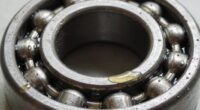
Understanding grease thickener compatibility is vital to prevent equipment issues. Not all thickeners mix well, and incompatible combinations can reduce lubrication effectiveness, cause separation, or lead to system failures. Compatibility charts showing ratings like compatible, incompatible, or borderline guide your choices, but testing and proper cleaning are essential. If you want to guarantee long-term performance and avoid costly mistakes, keep exploring practical tips and testing methods to safely switch or blend greases.
Key Takeaways
- Compatibility charts often focus solely on thickener types, but base oils and additives significantly influence compatibility outcomes.
- Always verify compatibility through testing methods like FTIR spectroscopy and penetration tests, not just chart labels.
- Greases with similar thickener types (e.g., calcium complex with calcium stearate) are usually compatible, but confirm with testing.
- Incompatible thickener combinations can cause separation, hardening, or loss of lubrication properties, risking equipment damage.
- Proper cleaning and small-scale testing are essential before switching or blending different grease thickener types.

Mohs' Hardness Test Kit for Industrial Applications
As an affiliate, we earn on qualifying purchases.
As an affiliate, we earn on qualifying purchases.
Why Thickener Compatibility Matters in Grease Performance

Thickener compatibility is vital because mixing incompatible greases can markedly reduce lubrication performance and cause equipment failures. When you combine greases with different thickener types, the resulting mixture may not behave as expected, leading to issues like decreased shear stability, altered drop points, or inconsistent consistency. These problems can cause increased wear, overheating, and even catastrophic failure. Compatibility guarantees that the grease maintains its intended properties, providing reliable protection for your equipment. Using incompatible greases can also complicate maintenance, requiring complete cleaning and reapplication to prevent performance deterioration. Additionally, understanding the thickener types involved helps ensure optimal performance and longevity of the lubrication system. Accordingly, understanding which thickeners work well together and which don’t is key for maintaining ideal lubrication, extending equipment life, and avoiding costly downtime.
industrial grease compatibility chart
As an affiliate, we earn on qualifying purchases.
As an affiliate, we earn on qualifying purchases.
Types of Thickeners and Their Compatibility Ratings
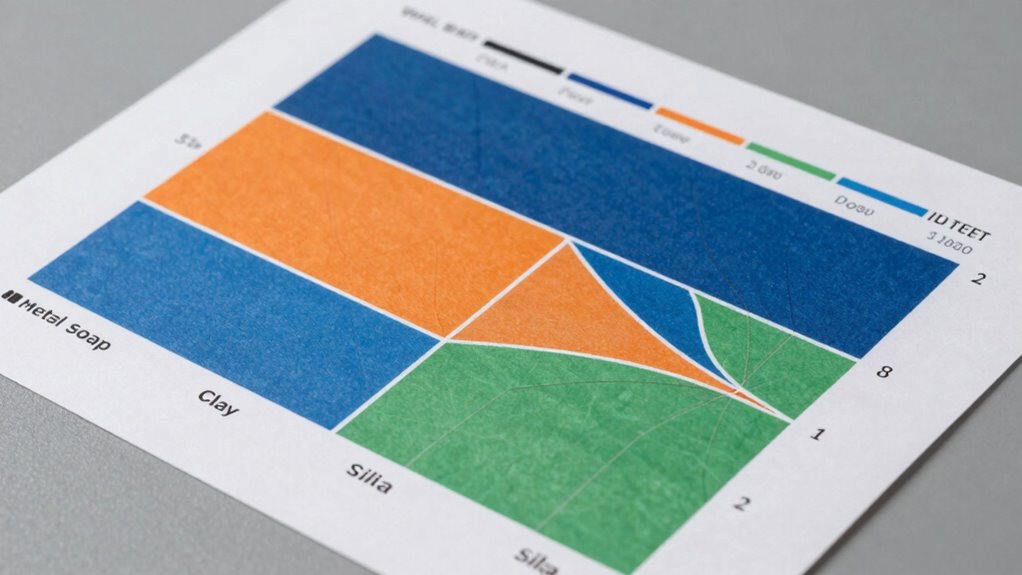
Understanding thickener compatibility is vital when selecting or switching greases, as ratings like compatible (C), incompatible (I), and borderline (B) guide your choices. Keep in mind that charts can have limitations and conflicts, so relying solely on them isn’t enough. Always test mixtures and follow proper cleaning procedures to guarantee maximum grease performance. Additionally, considering regional flavor profiles can help ensure that the grease you select aligns with specific environmental or operational conditions for optimal effectiveness.
Thickener Compatibility Overview
Knowing which thickener types can be mixed safely is essential for maintaining ideal grease performance. Compatibility affects properties like shear stability, consistency, and temperature resistance. Here’s a quick overview:
| Thickener Pair | Compatibility Rating | Notes |
|---|---|---|
| Aluminum Complex & Calcium Stearate | I | Incompatible, cause property shifts |
| Calcium Complex & Calcium Stearate | C | Compatible, stable mixture |
| Lithium & Clay | I | Incompatible, risks separation |
| Lithium & Calcium Sulfonate | C | Usually compatible, good blend |
Always test mixtures, especially borderline cases, to prevent performance issues. Proper understanding of compatibility helps you avoid costly mistakes and ensures consistent grease quality. Understanding thickener compatibility is key to optimizing grease formulations and performance.
Chart Limitations and Conflicts
While compatibility charts provide valuable guidance, they often have limitations that can lead to confusion or misinterpretation. Many charts focus solely on thickener types, ignoring factors like base oil, additives, or operating conditions such as temperature and shear. Conflicting information exists; for example, some charts label lithium-calcium soap combinations as incompatible, yet these blends have seen commercial success. Polyurea’s compatibility varies widely due to differences in structure, sparking debate among formulators. These inconsistencies mean you can’t rely solely on charts for decision-making. Instead, consider testing mixtures where compatibility is uncertain, especially in borderline cases. Always remember that charts are guides, not rules, and practical testing helps ensure your grease performs reliably under real-world conditions. Additionally, understanding the compatibility factors involved can help you make more informed choices beyond just relying on static charts.
Practical Mixing Recommendations
When mixing greases with different thickeners, it’s important to take into account their compatibility ratings to avoid performance issues. Start by thoroughly cleaning the old grease to prevent contamination. If the compatibility chart indicates a “C” for compatible, you can blend the greases, but always test the mixture’s properties, like shear stability and consistency. For borderline (“B”) pairs, perform small-scale tests to observe any changes in consistency or lubrication performance. If the rating is “I,” you must fully purge the old grease before applying a new one, as mixing incompatible thickeners can cause softening, hardening, or separation. Always follow testing procedures like ASTM D6185 to confirm the mixture’s suitability, especially during changeovers or when unsure of compatibility.
grease testing FTIR spectroscopy
As an affiliate, we earn on qualifying purchases.
As an affiliate, we earn on qualifying purchases.
How to Read Compatibility Charts for Greases
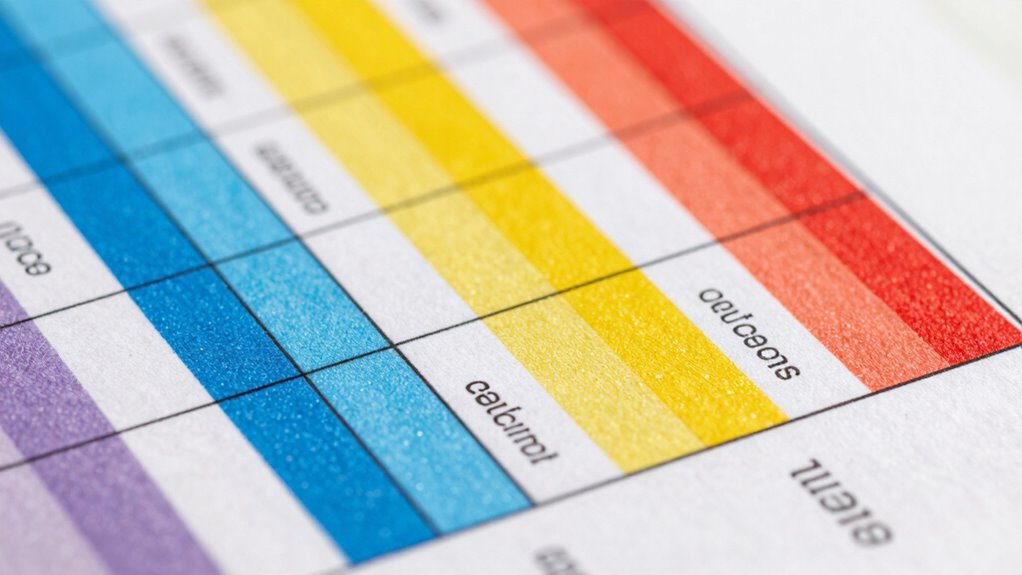
Compatibility charts for greases are essential tools that help you determine which thickener types can be mixed without compromising performance. To read these charts effectively, focus on the compatibility ratings: C means compatible, I indicates incompatible, and B is borderline. Locate the thickener types you’re considering and check their intersection; a C confirms safe mixing, while an I signals you should avoid blending. Borderline (B) suggests testing is necessary to assess suitability for your application. Keep in mind, these charts evaluate thickener compatibility only, not base oils or additives. Also, review key compatibility pairs to understand specific interactions, especially if mixing different types. When in doubt, conduct practical tests and follow mixing guidelines to ensure ideal grease performance without risking failure.

Performance Tool W54209 Grease Fitting Cleaning Tool
- Product Type: Grease Fitting Cleaning Tool
- Compatibility: Fits angled and straight fittings
- Ease of Use: Cleans solidified grease easily
As an affiliate, we earn on qualifying purchases.
As an affiliate, we earn on qualifying purchases.
Simple Tests to Check Grease Compatibility
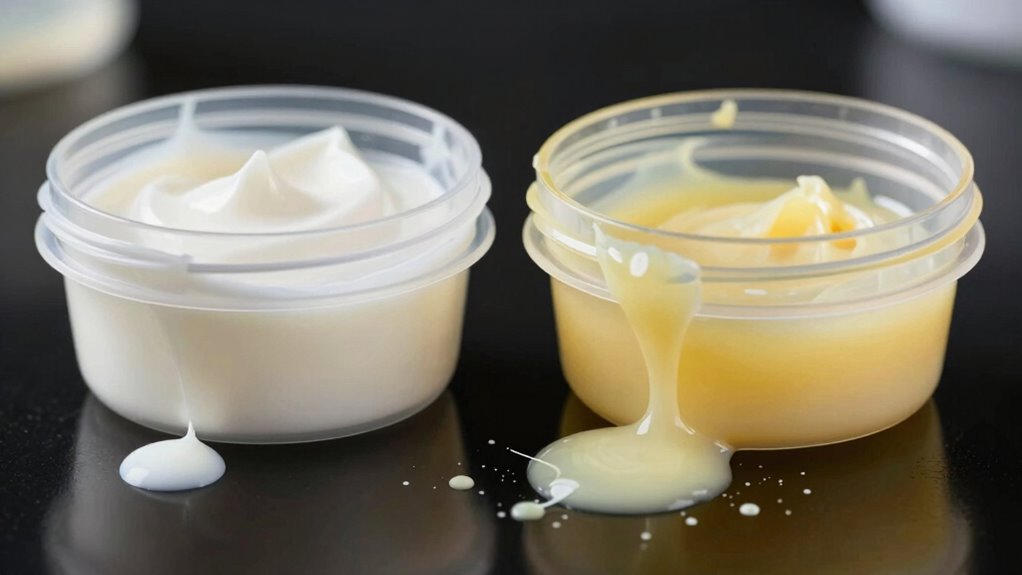
You can start by visually inspecting grease samples for changes in color, texture, or separation after mixing. Analytical tests like FTIR spectroscopy help identify chemical compatibility by comparing spectral data. These simple methods provide quick, effective insights into whether greases will perform well together. Additionally, solar system safety considerations ensure that the chosen greases do not adversely affect equipment longevity or safety standards.
Visual Inspection Methods
Visual inspection is a quick and straightforward way to assess grease compatibility before performing more complex tests. Look for obvious signs like color changes, separation, or unusual textures. Incompatible mixes often show a distinct color shift or a gritty, uneven consistency. Compatible greases blend smoothly, maintaining a uniform appearance. Borderline cases might display slight separation or color variation, requiring closer examination. Use this simple table as a guide:
| Observation | Compatible (C) | Incompatible (I) | Borderline (B) |
|---|---|---|---|
| Color | Uniform | Discolored | Slight variation |
| Texture | Smooth | Gritty | Slight granularity |
| Separation | No | Yes | Slight presence |
| Consistency | Stable | Soft/hardened | Slight change |
Additionally, understanding free floating phenomena can help in interpreting some of these signs, especially in complex systems.
Analytical Testing Techniques
Analytical testing techniques provide straightforward methods to evaluate grease compatibility quickly and reliably. You can perform simple tests like mixing greases at different ratios—such as 10:90, 50:50, and 90:10—and then assess their properties. The ASTM D6185 standard guides you through testing drop point, shear stability, and consistency after storage, revealing how the mix behaves over time. You might also use a 50:50 mix with a 60-stroke penetration test to detect hardening or softening. FTIR spectroscopy offers a more sophisticated approach, comparing wavelength matches between greases to identify chemical differences. These techniques help you determine if greases are compatible, borderline, or incompatible, ensuring reliable lubrication and avoiding unexpected failures during operation. Additionally, understanding lubricant specs and their verification methods is essential for making informed compatibility decisions.
What to Do When Greases Don’t Mix Well
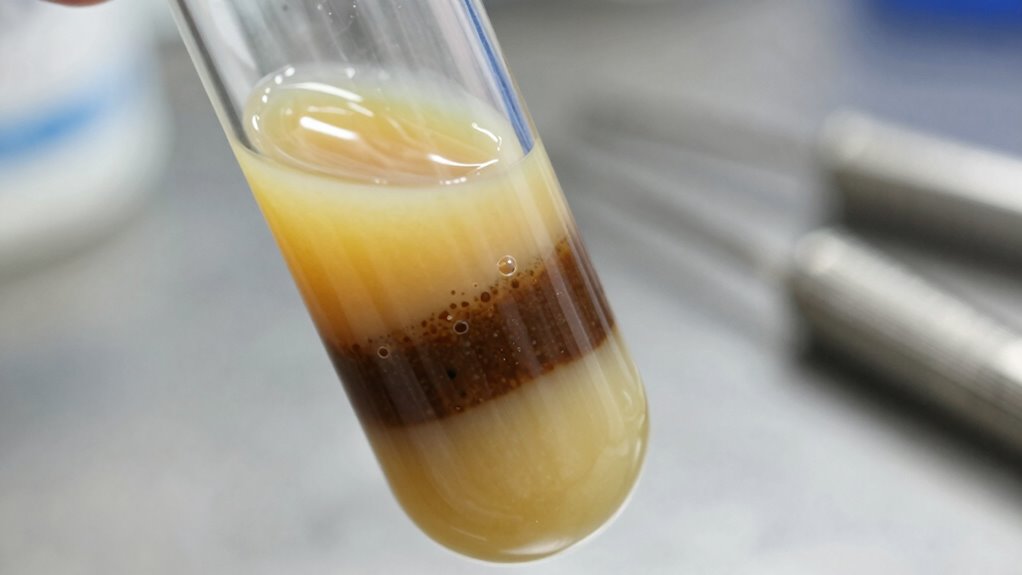
When greases don’t mix well, it’s essential to take immediate steps to prevent potential lubrication failures. First, stop using the contaminated grease. Next, thoroughly clean all equipment and components to remove old grease residues. If incompatible greases are mixed, the resulting performance may be compromised, risking equipment damage. To visualize, consider this table:
| Step | Action | Result |
|---|---|---|
| 1 | Drain old grease | Removes incompatible residues |
| 2 | Clean thoroughly | Prevents cross-contamination |
| 3 | Re-lubricate with a compatible grease | Restores proper lubrication |
| 4 | Test the new mixture | Ensures performance and safety |
Using compatible greases or full purging helps avoid ongoing issues. When in doubt, consult compatibility charts or perform testing. Additionally, understanding the grease thickener types can guide you in selecting compatible lubricants to prevent mixing problems.
Best Practices for Switching or Mixing Greases
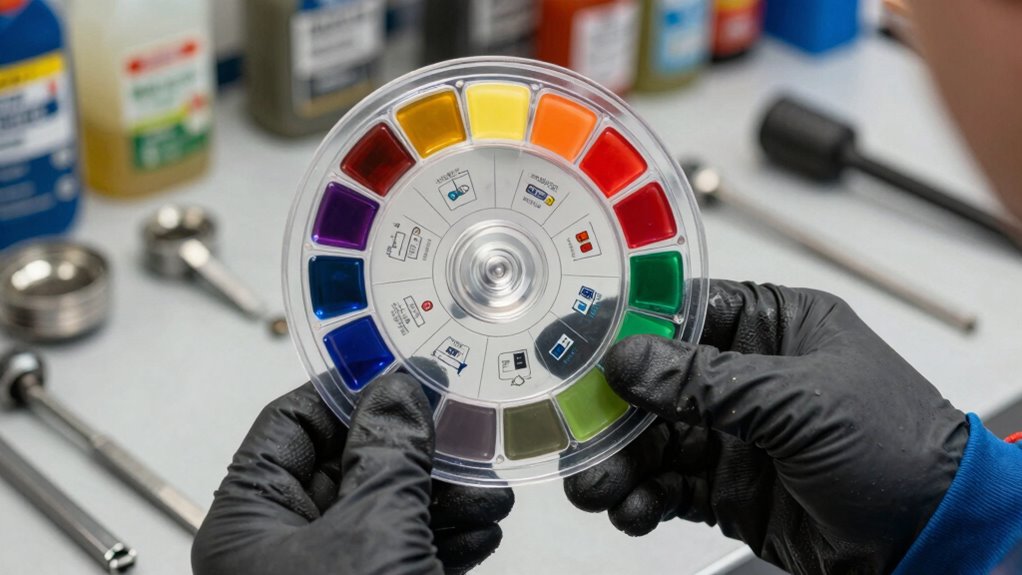
To guarantee reliable lubrication when switching or mixing greases, follow a systematic approach that prioritizes compatibility and cleanliness. First, completely clean the equipment to remove old grease, preventing contamination or mixed compatibility issues. Next, verify the compatibility of the new grease with the existing one using a compatibility chart or testing methods like ASTM D6185 or FTIR spectroscopy. If the greases are compatible, you can mix them gradually, starting with small amounts to monitor performance. For incompatible greases, fully purge the old grease before applying the new. Always observe equipment during and after the transition for any signs of inconsistent lubrication, such as unusual noise or temperature changes. Properly managing the switch guarantees optimal performance and prevents premature failure. Additionally, understanding the measurement accuracy of your testing tools can help ensure the compatibility assessment is precise and reliable.
Key Tips for Ensuring Grease Compatibility
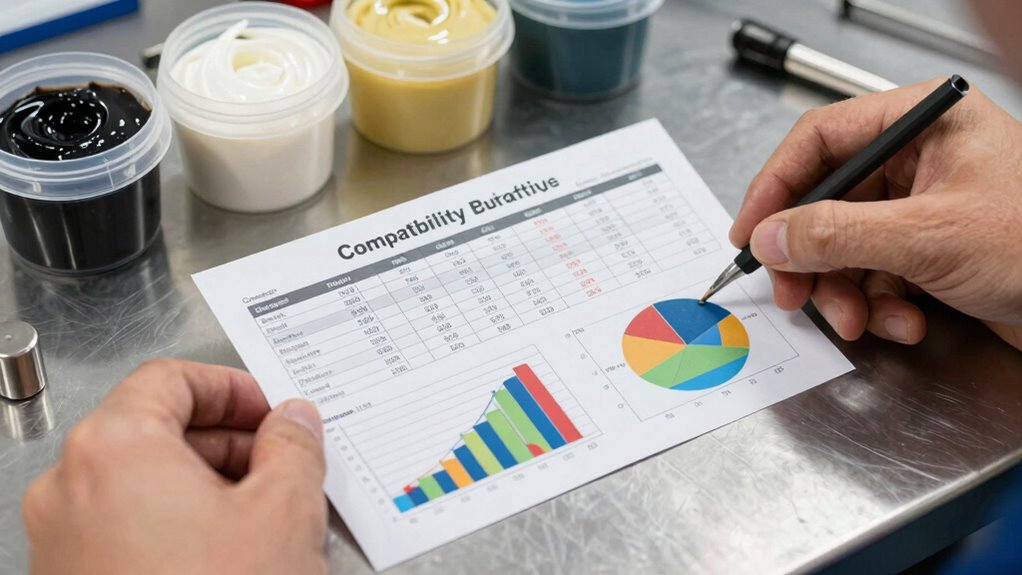
Ensuring grease compatibility is crucial for maintaining ideal lubrication and preventing equipment failures. First, always clean old grease thoroughly before switching or mixing. Residual grease can cause incompatible interactions, risking performance loss or damage. Use compatibility charts as your guide, but remember they have limitations; testing mixtures with ASTM D6185 or penetration tests provides better assurance. When mixing greases, start with small batches and observe changes in consistency or shear stability. Borderline cases require cautious monitoring during operation. If in doubt, purge the old grease completely and apply a fresh, compatible product. Also, consider the specific application conditions—temperature, load, and shear—to confirm the chosen greases perform well together. Proper preparation and testing are key to avoiding costly mistakes. Additionally, understanding piercing care and hygiene can help prevent contamination that might compromise grease performance over time.
Frequently Asked Questions
Can Incompatible Greases Cause Equipment Failure?
Yes, incompatible greases can cause equipment failure. When you mix greases with incompatible thickeners, it can lead to inconsistent lubrication, reduced stability, and potential breakdown of the grease film. This compromises the protection of moving parts, increases friction, and may cause overheating or wear. Always verify compatibility before switching or blending greases, and clean old grease thoroughly to prevent mixing incompatible types that could harm your equipment.
How Long Does It Take for Mixed Greases to Degrade?
Mixed greases can start to degrade within days to weeks, depending on factors like temperature, shear, and compatibility. You’ll notice performance drops, such as reduced lubrication or altered consistency, usually within this timeframe. To guarantee ideal equipment operation, monitor the mixture regularly and perform testing like drop point or shear stability assessments. Proper cleaning before switching greases also helps prevent premature degradation, extending the lifespan of your lubrication system.
Are There Visual Signs Indicating Incompatible Grease Mixing?
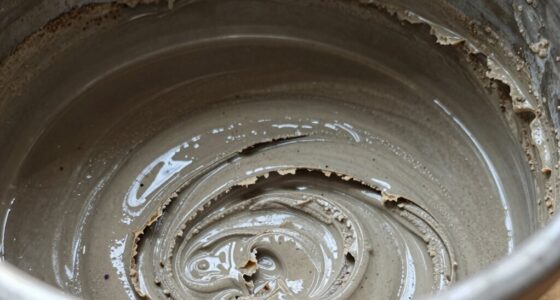
When mixing incompatible greases, you might notice signs like changes in color, separation, or uneven consistency. You could see a greasy film or lumps forming, and the grease may become harder or softer than normal. Sometimes, the mixture loses its original smoothness or stability. Keep an eye out for these visual clues, and if you spot them, it’s best to clean and replace the grease to prevent equipment issues.
Is It Safe to Mix Different Thickener Types Temporarily?
You should avoid mixing different thickener types temporarily unless you’re sure they’re compatible. Mixing incompatible greases can lead to reduced lubrication, inconsistent performance, or failure. If you must combine them, thoroughly clean old grease first, then test small batches with proper procedures like ASTM D6185 or penetration tests. Always monitor the mixture closely and switch to a compatible grease as soon as possible to prevent potential damage or operational issues.
Do Temperature Variations Affect Grease Compatibility Over Time?
Temperature variations can impact grease compatibility over time by altering its properties, such as consistency and shear stability. When exposed to fluctuating temperatures, incompatible greases may soften, harden, or separate, risking lubrication failure. You should monitor how different greases behave under temperature changes, especially if mixing or shifting. Always test mixtures after temperature cycling to confirm the performance remains reliable and avoid potential equipment damage.
Conclusion
By understanding grease thickener compatibility, you’re steering your machinery clear of potential pitfalls—like a captain avoiding icy waters. Keep a close eye on compatibility charts, perform simple tests, and follow best practices when switching greases. When you pay attention to these details, you’ll guarantee your equipment runs smoothly and lasts longer, like a well-oiled machine working in perfect harmony. Staying informed is your best tool to keep everything running seamlessly.