

Using a maintenance decision tree helps you focus on fixing the root cause rather than just symptoms. It guides you to analyze equipment condition, predict failures, and choose the best action—repair, replace, or preventive measures—based on data. This approach reduces unnecessary repairs, indicates developing issues early, and minimizes downtime. By consistently addressing causes, you improve reliability and cut costs. Keep exploring, and you’ll discover how this strategy can transform your maintenance approach.

Get business pricing on garage and car supplies
- Business-only prices and quantity discounts
- Tax-exempt purchasing
- Multiple users, one account, clear invoices
Key Takeaways
- The decision tree emphasizes identifying and addressing root causes rather than just repairing visible symptoms.
- It integrates predictive and preventive maintenance strategies for comprehensive issue resolution.
- Data analysis and sensor insights guide whether to repair, replace, or schedule preventive actions.
- Focusing on root causes reduces recurring failures and minimizes long-term maintenance costs.
- Systematic decision-making enhances equipment reliability and operational efficiency by fixing underlying problems.
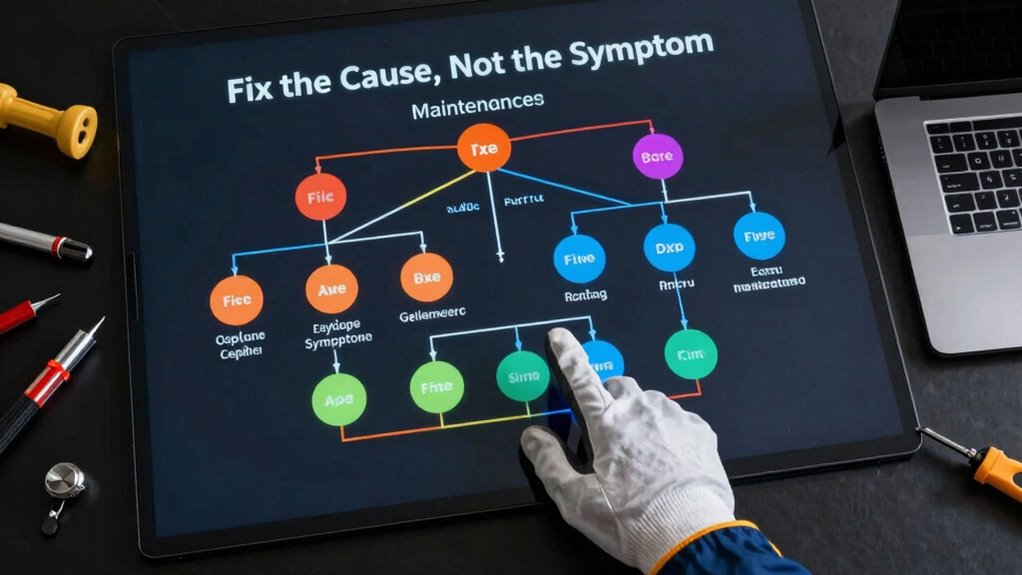
Have you ever wondered how maintenance teams decide whether to repair, replace, or perform preventive care on equipment? It’s a critical decision that can affect your operations’ efficiency and costs. The key lies in understanding the maintenance decision tree, a systematic approach that helps determine the best action based on the equipment’s condition and future risk. At its core, this process integrates predictive maintenance and preventive strategies to optimize asset management. Predictive maintenance uses data and sensors to monitor equipment health in real time, allowing you to predict failures before they happen. By analyzing trends and patterns, you can identify the precise moment when intervention is needed, avoiding unnecessary repairs or replacements. This approach ensures that maintenance efforts are both timely and targeted, reducing downtime and extending equipment lifespan.
Preventive strategies, on the other hand, are planned activities performed at regular intervals regardless of the current condition. They help prevent unexpected failures and keep your machinery running smoothly. When combined with predictive maintenance, preventive strategies create a thorough maintenance plan that balances proactive care with reactive responses. The decision tree guides you through this process by asking key questions: Is the equipment showing signs of degradation? What’s the likelihood of failure if we wait? What are the costs associated with repair versus replacement? If sensors indicate a developing issue, predictive maintenance suggests addressing it before it escalates into a breakdown. Conversely, if the equipment remains stable, preventive strategies might involve scheduled inspections or component replacements to maintain reliability.
This decision-making framework helps you avoid the trap of fixing symptoms rather than causes. Instead of reacting to failures after they occur, the maintenance decision tree encourages a focus on root causes. This way, you’re not just patching up equipment temporarily; you’re reducing the likelihood of recurring issues. By leveraging data-driven insights for predictive maintenance, you make smarter, more informed decisions about when to intervene. The goal is to minimize total cost of ownership, which includes repair costs, downtime, and the risk of catastrophic failure. Whether you choose to repair, replace, or perform preventive care, the decision should be based on the evidence gathered through monitoring and analysis. Additionally, understanding asset condition monitoring can significantly enhance your predictive maintenance capabilities. This strategic approach ultimately ensures your assets operate at peak efficiency, saving you money and extending equipment life, while addressing problems at their root cause instead of just their symptoms.
As an affiliate, we earn on qualifying purchases.
Frequently Asked Questions
How Can I Identify the Root Cause Efficiently?
To identify the root cause efficiently, you should start with diagnostic methods like visual inspections, data analysis, and testing. Use root cause analysis techniques such as the 5 Whys or fishbone diagrams to trace problems back to their origin. These methods help you systematically eliminate symptoms and focus on underlying issues, saving time and preventing recurring failures. Always document findings to improve future diagnostics.
What Tools Assist in Implementing the Decision Tree?
Think of tools as your guiding compass through a storm; they help you navigate complexity. Predictive analytics software and maintenance scheduling tools act as this compass, illuminating the root cause. These tools analyze data trends and optimize maintenance plans, ensuring you address issues before they escalate. By using them, you transform reactive fixes into proactive solutions, safeguarding your equipment and streamlining operations with precision and confidence.
How Does Preventative Maintenance Fit Into the Tree?
Preventive maintenance fits into the decision tree by guiding you to implement preventive strategies early on, helping you identify potential issues before they become symptoms. You should incorporate maintenance scheduling into your plan, regularly inspecting and servicing equipment. This proactive approach minimizes downtime, extends equipment life, and ensures you address root causes rather than just fixing surface-level problems. By prioritizing preventive maintenance, you keep operations running smoothly and reduce costly repairs.
Can the Decision Tree Adapt to Different Industries?
Yes, the decision tree can modify to different industries through industry-specific adaptations, allowing you to tailor maintenance strategies effectively. Its core principles support cross-sector applicability, so you can implement it across manufacturing, healthcare, or transportation. By customizing decision points to match your industry’s unique equipment and risks, you ensure that your maintenance approach remains efficient, proactive, and aligned with your operational needs.
What Training Is Necessary for Staff to Use the Decision Tree Effectively?
Prepare, practice, and prioritize training to proficiently use the decision tree. You’ll want staff to grasp preventive strategies and develop diagnostic dexterity. Empower your team through hands-on guidance, emphasizing problem prevention rather than just patching symptoms. Provide clear instructions, case studies, and ongoing support so staff confidently diagnose issues, decide swiftly, and implement solutions effectively. This proactive approach guarantees maintenance mastery, minimizing downtime and maximizing productivity.
equipment condition monitoring tools
As an affiliate, we earn on qualifying purchases.
As an affiliate, we earn on qualifying purchases.
Conclusion
By following the maintenance decision tree, you become a detective uncovering the root cause instead of just patching symptoms. Think of it as tending a garden—remove weeds at their source to prevent future overgrowth, rather than trimming leaves that hide underlying issues. When you fix the cause, you nurture a healthier, more resilient system. Remember, addressing the core problem is like planting seeds for long-lasting, trouble-free operations—your best bet for a thriving, trouble-free future.
maintenance decision tree software
As an affiliate, we earn on qualifying purchases.
As an affiliate, we earn on qualifying purchases.
As an affiliate, we earn on qualifying purchases.
Fall Picks
fall essentials
As an affiliate, we earn on qualifying purchases.