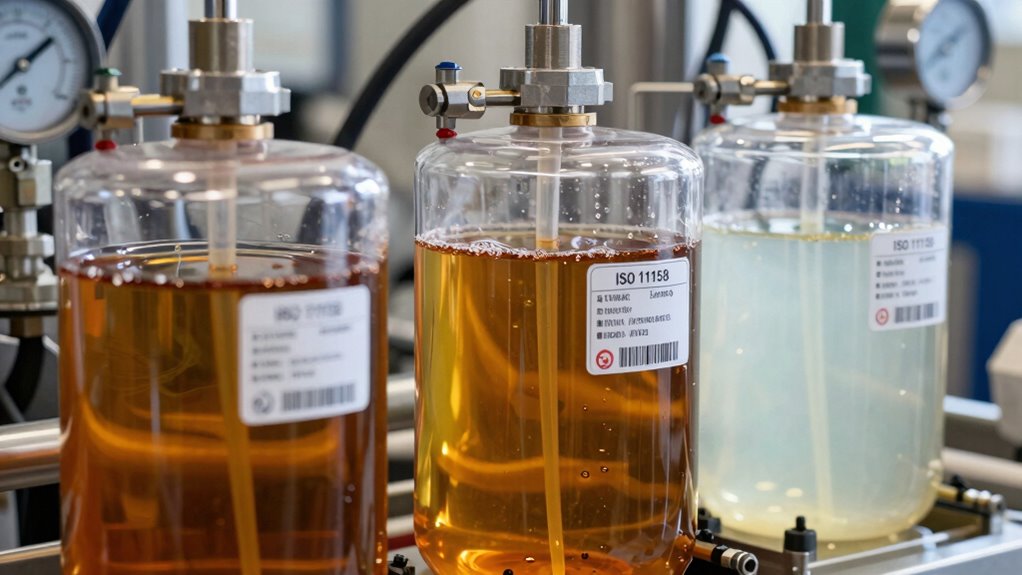

ISO 11158 helps you understand the different categories of hydraulic oils based on their additives, viscosity, and performance standards, ensuring you choose the right lubricant for your machinery’s safety and efficiency. It organizes oils into groups like HM and HV for specific applications, which can prevent costly mistakes and improve system longevity. Knowing these categories makes selecting compatible oils easier, and if you keep exploring, you’ll discover how to optimize your hydraulic system further.

Get business pricing on garage and car supplies
- Business-only prices and quantity discounts
- Tax-exempt purchasing
- Multiple users, one account, clear invoices
Key Takeaways
- ISO 11158 classifies hydraulic oils based on additive type, viscosity, and performance requirements for easy identification.
- It categorizes oils into types like HM and HV, indicating anti-wear properties and suitability for different applications.
- Proper understanding of these categories ensures compatibility with machinery, enhancing efficiency and reducing maintenance costs.
- The classification system helps meet international standards, simplifying procurement and certification processes worldwide.
- Staying informed about these categories guides selection of the most appropriate hydraulic oil for specific operational needs.

Have you ever wondered how lubricants are classified and standardized worldwide? It’s an important question because choosing the right hydraulic oil depends heavily on understanding these classifications. ISO 11158 provides a clear framework by establishing hydraulic oil standards that help you identify oils suitable for specific applications. These standards categorize hydraulic oils into different types based on their additive content, viscosity, and overall performance. Recognizing these oil categories isn’t just about compliance; it directly impacts the efficiency, longevity, and safety of your machinery.
Understanding hydraulic oil classifications is essential for optimal machinery performance and safety.
In the domain of hydraulic oil standards, each category has a specific significance. For example, some oils are designed for general purposes, offering broad compatibility with various hydraulic systems. Others are formulated for high-pressure or high-temperature environments, where specialized additives are necessary to prevent wear and thermal degradation. The classification system outlined in ISO 11158 makes it easier for you to select the right oil by providing standardized labels and specifications. This helps you avoid costly mistakes, such as using an incompatible oil that could cause system failure or reduce equipment lifespan.
Understanding the oil category significance means recognizing how different categories serve different operational needs. For instance, Type HM oils are high-performance, anti-wear hydraulic oils suitable for demanding industrial applications. They contain specific additives that protect your system’s components under high stress. Conversely, Type HV oils are more versatile, designed for general use with moderate load conditions. Knowing these distinctions helps you match the oil to your equipment’s requirements, ensuring ideal performance and reducing maintenance costs.
The classification process also aids in compliance with international standards, making it easier to procure and certify lubricants for global operations. When you see an oil labeled according to ISO 11158, you instantly know its category and intended use. This consistency simplifies procurement and reduces the risk of selecting an unsuitable lubricant. Furthermore, it enhances safety by ensuring that your hydraulic systems operate with oils that meet recognized quality benchmarks.
Additionally, understanding these classifications can help you stay informed about emerging content formats and innovations in hydraulic oils, which can lead to improved system performance and sustainability.
As an affiliate, we earn on qualifying purchases.
Frequently Asked Questions
How Often Should Hydraulic Oils Be Replaced for Optimal Performance?
You should replace hydraulic oil every 2,000 to 4,000 hours of operation or as recommended by the manufacturer. Regular oil recycling helps you prevent oil contamination, which can impair performance. Keep an eye on oil condition through routine checks, and if you notice contamination or degradation, change the oil sooner. Proper maintenance ensures peak performance, extends equipment life, and reduces downtime.
Can Hydraulic Oil Categories Change Based on Equipment Usage?
Sure, your hydraulic oil categories can change based on equipment usage—who knew oils had a personality? Oil category variability exists because different machinery demands specific classifications; heavy-duty equipment might need a more robust oil, while delicate systems prefer lighter options. So, you should always match your oil to your equipment’s needs, ensuring peak performance and avoiding the dreaded “oil mismatch” meltdown. Keep an eye on those classifications!
Are There Environmental Impacts Associated With Different Hydraulic Oil Types?
Yes, different hydraulic oil types have varying environmental impacts. You should consider environmental regulations that promote eco-friendly alternatives, reducing pollution and ecosystem harm. Using biodegradable or low-toxicity oils can minimize your environmental footprint, especially in sensitive areas. By choosing eco-friendly options, you comply with regulations and contribute to sustainability efforts, ensuring your equipment operates efficiently while protecting the environment from harmful chemical runoff and waste.
How Do Temperature Variations Affect Hydraulic Oil Selection?
Sure, temperature fluctuation is no joke when it comes to hydraulic oil. You’ll need to make viscosity adjustments to guarantee ideal performance. Cold temps thicken the oil, making it harder to flow, while hot temps thin it out, risking wear and tear. So, you’ve got to pick a hydraulic oil that adapts, or you’ll be constantly battling inconsistent performance. It’s almost like the oil’s temperature has a mind of its own!
What Are the Signs of Hydraulic Oil Degradation in Machinery?
You’ll notice hydraulic oil degradation through signs like increased engine noise, sluggish response, or visible contamination. Oil contamination from dirt or water can accelerate wear, while decreased filter efficiency allows particles to circulate, harming components. Regularly inspecting the oil and filters helps catch these issues early. If you see discoloration, frothing, or sediment, it’s time to change the oil to prevent costly damage and keep machinery running smoothly.
As an affiliate, we earn on qualifying purchases.
Conclusion
Understanding ISO 11158 helps you choose the right hydraulic oil for your equipment, ensuring peak performance and longevity. Did you know that using the correct oil category can extend machinery life by up to 30%? By applying this knowledge, you reduce maintenance costs and prevent costly breakdowns. So, next time you select hydraulic oil, remember the importance of ISO 11158 standards—they truly matter in real life for efficiency and durability.
As an affiliate, we earn on qualifying purchases.
As an affiliate, we earn on qualifying purchases.
Halloween Picks
halloween
As an affiliate, we earn on qualifying purchases.