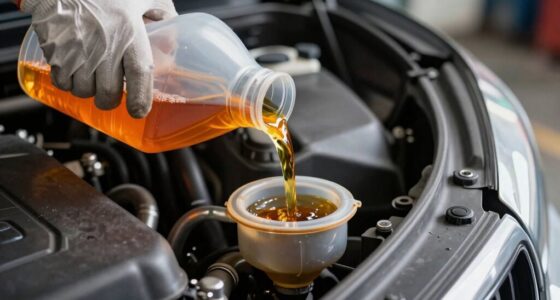
Mixing different ATF brands can be safe if the fluids are compatible and meet the same specifications, like Dexron or Mercon. However, using incompatible brands or mixing synthetic and conventional fluids might cause chemical reactions, foam, or reduced lubrication, risking transmission damage. It’s best to stick to the recommended fluid and avoid long-term mixing. If you want to know more about safe practices and potential risks, keep exploring this topic.

Get business pricing on garage and car supplies
- Business-only prices and quantity discounts
- Tax-exempt purchasing
- Multiple users, one account, clear invoices
Key Takeaways
- Mixing compatible ATFs meeting the same standards (e.g., Dexron, Mercon) usually poses minimal risks.
- Synthetic blends from reputable brands may be safely topped off if they share similar formulations.
- Combining incompatible or different formulations can cause chemical reactions, foam, or additive breakdown.
- Always check manufacturer guidelines and technical data sheets before mixing fluids.
- Long-term use of mixed fluids should be avoided; a complete fluid flush and refill with correct fluid is recommended.

Mixing different brands of automatic transmission fluid (ATF) can seem like a convenient solution, but it’s important to understand the risks involved. While it might seem harmless to top off your transmission with a different brand or type, the compatibility of fluids isn’t always guaranteed. Many vehicles, especially those using synthetic blends, rely on specific formulations to ensure smooth operation and protection. Synthetic blends combine synthetic and conventional oils, offering a balance of performance and affordability. When you mix these with other fluids, you risk diluting the specialized properties that make synthetic blends effective, potentially leading to issues like increased wear, reduced lubrication, or shifting problems. Compatibility is a critical factor here, as not all ATFs are formulated the same way. Not all ATFs are created equal, even if they claim to meet the same specifications. Different brands have proprietary additives and friction modifiers tailored to their formulations. Mixing incompatible fluids can cause chemical reactions, foam formation, or degradation of essential additives. This can compromise the fluid’s ability to protect your transmission, especially under high-stress conditions. If you’re considering mixing fluids, always check the manufacturer’s recommendations and look for fluids that meet the same standards, such as Dexron or Mercon specifications. Using fluids with matching specifications minimizes the risk of adverse reactions and ensures your transmission continues to operate smoothly. However, there are times when mixing ATF brands might be acceptable. If you’re in a pinch and can’t find the exact fluid your vehicle requires, topping off with a compatible synthetic blend from a reputable brand can be less risky than using a conventional or incompatible fluid. Always verify that the fluids are compatible by reviewing their technical data sheets or consulting your vehicle’s manual. In some cases, mixing small amounts of different synthetic blends may not cause immediate problems, but it’s still a good idea to flush and replace the fluid with the correct type as soon as possible. Remember, the goal is to maintain the integrity of the transmission’s lubrication system and prevent long-term damage.
Products Worth Considering

DEWALT 20V MAX XR Hammer Drill and Impact Driver Combo Kit with Two 4Ah Batteries and Charger

DEWALT 20V MAX Drill and Impact Driver Combo Kit (DCK277D2)

Milwaukee M18 FUEL 1/2-Inch High Torque Impact Wrench with Friction Ring Kit
As an affiliate, we earn on qualifying purchases.
Frequently Asked Questions
Can Mixing Different ATF Brands Damage My Vehicle?
Mixing different ATF brands can sometimes damage your vehicle if the transmission fluid compatibility isn’t clear, as brand mixing risks include chemical incompatibilities that may lead to transmission issues. You should check your vehicle’s owner manual and stick to the recommended fluid to prevent problems. When mixing brands, verify they’re compatible, but it’s generally safer to use the same brand to avoid potential damage and maintain proper transmission performance.
How Can I Tell if My ATF Is Mixed Improperly?
A stitch in time saves nine. To tell if your ATF is mixed improperly, check for changes in transmission performance, such as slipping or rough shifting. If you notice these, it might indicate incompatible synthetic vs. conventional oils or additive issues, as not all ATF brands are fully compatible. Use a dipstick test or professional analysis to confirm. If in doubt, drain and replace with the correct, compatible fluid.
Is Mixing ATF Brands Safe for All Vehicle Types?
Mixing ATF brands isn’t always safe for all vehicle types, especially if you use synthetic blends or oil additives that aren’t compatible. Always check your vehicle’s owner manual and stick to recommended ATF types. Mixing different brands can cause issues like poor lubrication or damage, particularly in older or specialized transmissions. When in doubt, consult a mechanic to guarantee you’re using the right fluid, preventing costly repairs down the line.
What Are the Signs of ATF Compatibility Issues?
You’ll notice signs of ATF compatibility issues if you see fluid contamination or transmission slipping. Fluid contamination appears as dark, gritty fluid or a foul smell, indicating impurities. Transmission slipping happens when your vehicle shifts gears unexpectedly or hesitates, which could mean incompatible or degraded fluid. Keep an eye out for these symptoms, and if you notice them, it’s best to flush and replace the fluid to prevent further damage.
Does Mixing ATF Affect Vehicle Warranty Coverage?
Mixing different ATF brands might seem harmless, but it could affect your vehicle’s warranty coverage if it conflicts with manufacturer policies. Some manufacturers specify using only their recommended fluids, and mixing brands might be viewed as a deviation from those guidelines. To keep your warranty intact, it’s best to consult your owner’s manual or talk to your dealer before blending ATF brands, ensuring you stay on the safe side.
Conclusion
While mixing different ATF brands might seem risky, it’s often fine if you stick to similar types and avoid mixing additives. Some experts believe that as long as the fluids are compatible, you won’t cause damage. However, always check your vehicle’s manual first. The truth is, most modern ATFs are designed to be somewhat interchangeable, so if you’re in a pinch, a little mixing usually won’t hurt—just don’t make it a habit.