Petroleum exposure in brake fluid can cause rubber seals and components to swell, crack, or become brittle, leading to leaks and reduced hydraulic pressure. When brake fluid is contaminated with oil or other petroleum-based substances, it accelerates deterioration of rubber parts, compromising brake responsiveness and safety. If you want to understand how to prevent such damage and protect your brake system, there’s more important information you should know.

Get business pricing on garage and car supplies
- Business-only prices and quantity discounts
- Tax-exempt purchasing
- Multiple users, one account, clear invoices
Key Takeaways
- Petroleum-based brake fluids cause rubber seals to swell, crack, and become brittle, leading to leaks.
- Oil contamination in brake fluid accelerates rubber deterioration, reducing component lifespan.
- Exposure to petroleum products compromises rubber’s elasticity and integrity, impairing brake system performance.
- Contaminants like oil and dirt degrade rubber parts, increasing the risk of hydraulic failure.
- Regular brake fluid maintenance and using compatible fluids help prevent petroleum-related rubber damage.
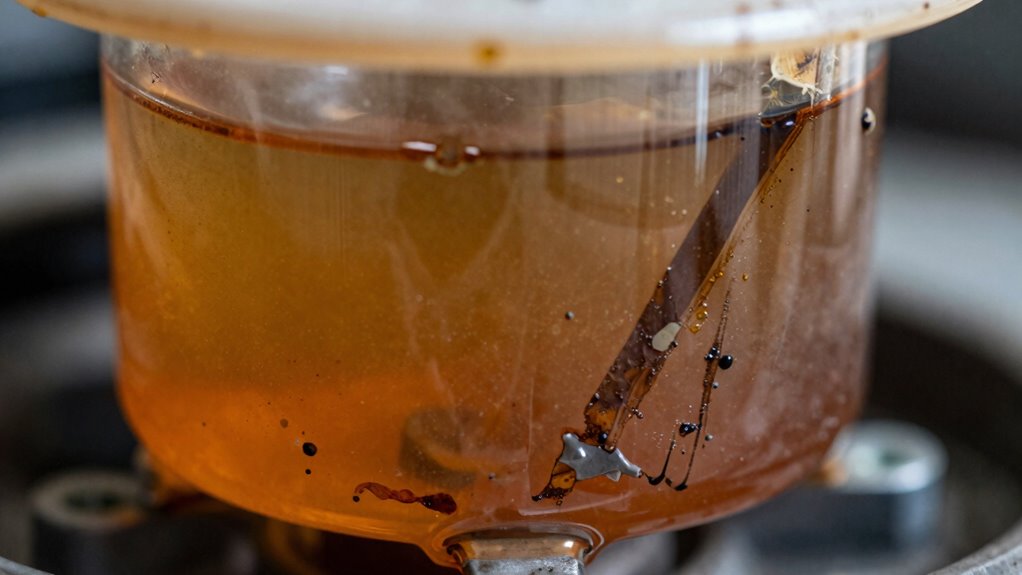
Brake fluid contamination occurs when impurities such as water, dirt, or oil enter the brake system, compromising its performance. This contamination can lead to decreased braking efficiency, increased stopping distances, and even complete brake failure if left unchecked. To prevent this, proper brake system maintenance is essential. Regularly inspecting and replacing brake fluid helps minimize the risk of contamination and keeps your brake system functioning reliably. Understanding how fluid degradation processes occur can help you recognize signs of trouble early and take corrective action before damage worsens.
Over time, brake fluid naturally degrades due to exposure to moisture and heat. When water seeps into the brake system—either from environmental humidity or through small leaks—it mixes with the brake fluid. Since brake fluid is hygroscopic, it absorbs moisture, which lowers its boiling point. This process, known as fluid degradation, makes the brake fluid less effective at transferring force from the pedal to the brake pads. As the fluid becomes more water-laden, the risk of vapor lock increases, leading to spongy brakes or a complete loss of braking power. Moisture absorption accelerates this process, highlighting the importance of regular fluid flushes. Regular brake fluid flushes are crucial to remove accumulated water and contaminants, helping maintain ideal performance.
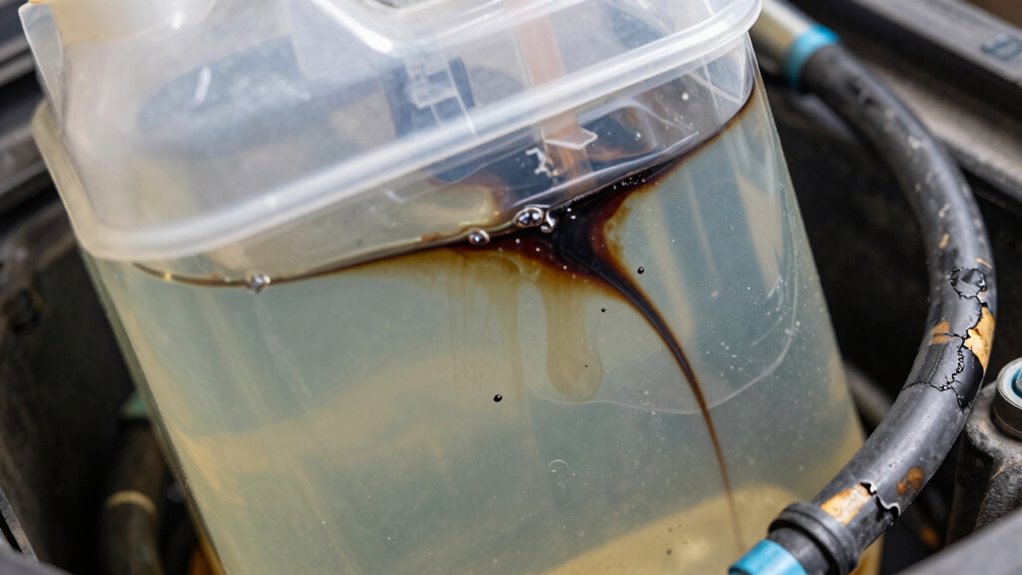
Dirt and debris can also enter the brake system through worn or damaged seals, cracks in hoses, or during improper maintenance procedures. Once inside, these particles can clog or damage delicate components like the master cylinder or calipers, impairing brake responsiveness. Oil contamination, although less common, occurs when engine oil leaks into the brake lines or if incompatible fluids are used during repairs. Oil creates a slick film on rubber seals and brake components, reducing their ability to grip and respond effectively. This can cause sluggish brake response, increased pedal travel, or even system failure.
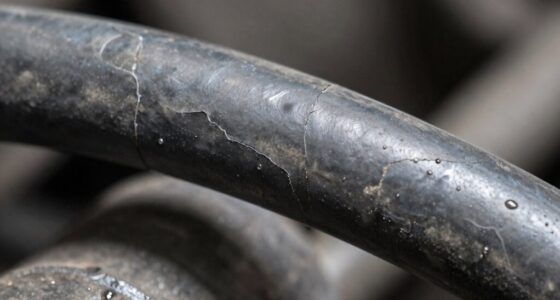
Rubber components within the brake system are particularly vulnerable to petroleum exposure, which accelerates deterioration. Contact with contaminated brake fluid causes rubber to swell, crack, or become brittle, compromising the integrity of seals and hoses. Over time, this degradation leads to leaks and reduced hydraulic pressure, further impairing braking performance. To avoid these issues, sticking to recommended brake fluid types and scheduling regular maintenance checks are indispensable. Proper brake system maintenance not only extends the lifespan of rubber parts but also guarantees your braking system remains safe and responsive.
As an affiliate, we earn on qualifying purchases.
Frequently Asked Questions
How Can I Prevent Brake Fluid Contamination in My Vehicle?
To prevent brake fluid contamination, always store brake fluid in a sealed, labeled container away from contaminants. Use only brake fluid compatible with your vehicle’s rubber components, ensuring proper rubber material compatibility. Regularly check and replace brake fluid according to your manufacturer’s guidelines, and avoid mixing different types. Keep the brake system clean and inspect for leaks to prevent exposure to contaminants that can harm rubber parts.
What Are the Signs Indicating Rubber Degradation Due to Fluid Exposure?
Imagine your brake system crying out for help. You’ll notice rubber swelling and fluid discoloration as clear signs of degradation. These symptoms indicate rubber’s failing health, succumbing to harmful petroleum exposure. When rubber swells or fluid turns dark or cloudy, it’s a warning that contamination is damaging your brake components. Don’t overlook these signs—act quickly to prevent costly repairs and ensure your vehicle’s safety.
Are There Specific Types of Brake Fluid That Are Less Harmful?
Synthetic brake fluids are generally less harmful to rubber components because they resist moisture absorption and have a stable chemical composition. Mineral-based options also tend to be gentler on rubber, but they may not perform as well in extreme conditions. You should choose synthetic fluids for better compatibility with various rubber parts, and always follow your vehicle manufacturer’s recommendations to avoid potential damage or degradation.
How Often Should Brake Fluid Be Tested for Contamination?
Think of your brake fluid as the heartbeat of your braking system—regular checkups keep it healthy. You should perform routine testing every 12 months or sooner if you notice issues like spongy brakes. This routine testing helps with contamination detection early, preventing rubber components from being damaged by harmful petroleum exposure. Staying vigilant guarantees your brakes stay responsive and safe, much like a well-tuned instrument ready to perform at a moment’s notice.
Can Contaminated Brake Fluid Cause Safety Hazards During Driving?
Yes, contaminated brake fluid can cause safety hazards during driving. It affects your brake system by reducing fluid effectiveness, leading to decreased braking power. Additionally, petroleum exposure causes rubber deterioration in components like brake lines and seals, increasing the risk of leaks or failure. If you notice any signs of contamination, such as spongy pedals or brake fluid leaks, get your brake system examined immediately to ensure safe driving.
As an affiliate, we earn on qualifying purchases.
Conclusion
If you ignore brake fluid contamination, you’re risking more than just a quick fix—you could face catastrophic failure that puts your safety and everyone around you in unimaginable danger. Petroleum exposure can silently destroy your brake system like a predator stalking its prey, leading to costly repairs or tragic accidents. Stay vigilant, check your brake fluid regularly, and never underestimate the power of proper maintenance. Protect yourself and your loved ones—your safety depends on it.
brake system rubber seal replacement
As an affiliate, we earn on qualifying purchases.
As an affiliate, we earn on qualifying purchases.
As an affiliate, we earn on qualifying purchases.
Evergreen bestsellers Picks
bestsellers
As an affiliate, we earn on qualifying purchases.