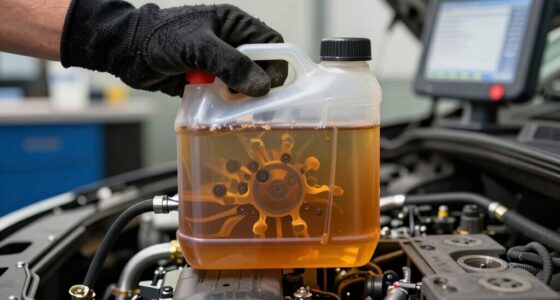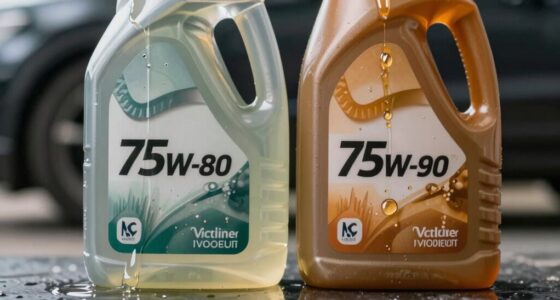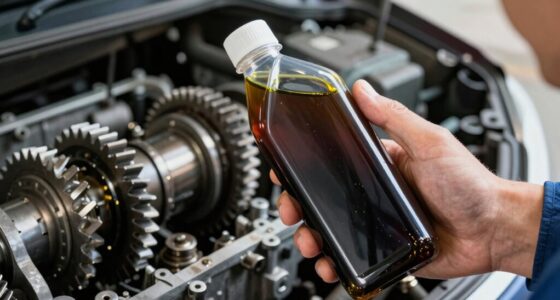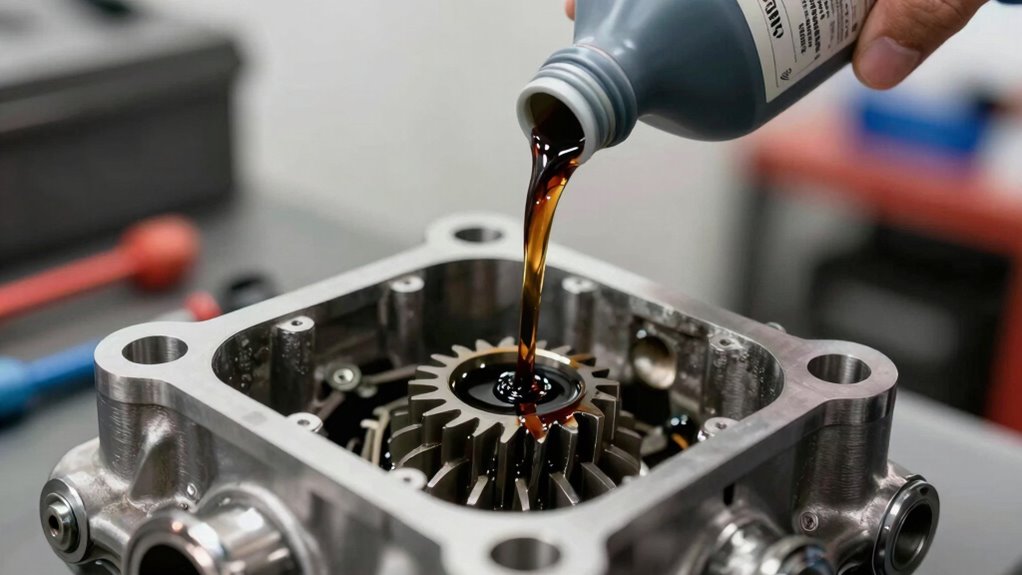

If your limited slip differential is experiencing chatter, slipping, or noise during turns or acceleration, adding a friction modifier can help improve clutch engagement and reduce these issues. However, if your differential runs smoothly without noise or vibration, you likely don’t need any additives. Always check manufacturer guidelines and be cautious with proprietary systems, as additives can sometimes cause more harm than benefit. To learn more about proper application and troubleshooting, keep exploring.
Key Takeaways
- Add friction modifiers only if there is persistent chatter, slipping, or noise during turns or acceleration.
- Do not add additives if the differential operates smoothly without noise or clutch issues.
- Check manufacturer guidelines; proprietary systems like Spartan LSD may require specific lubricants, and additives could void warranties.
- Ensure compatibility with existing gear oil, whether synthetic or conventional, before applying friction modifiers.
- Use additives to improve traction and reduce clutch chatter but avoid them if the differential functions quietly and properly.

Lubegard 42851 Limited Slip Supplement, 4 fl. oz.
- Reduces differential noise: Eliminates chatter and squeals
- Universal compatibility: Works with all makes and models
- Protects against rust: Inhibits rust and corrosion
As an affiliate, we earn on qualifying purchases.
As an affiliate, we earn on qualifying purchases.
Do You Need to Add Friction Modifiers to Your Differential?
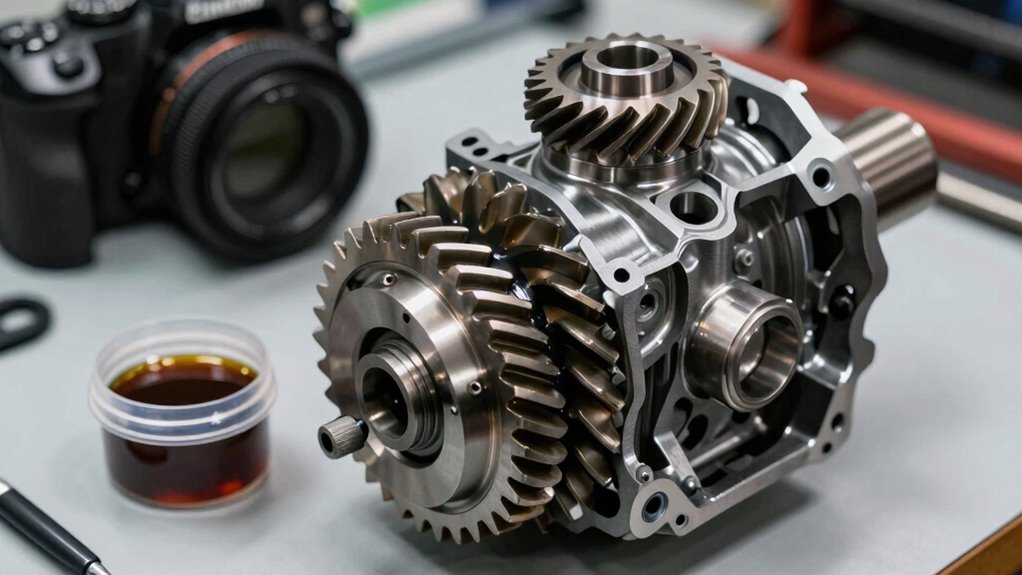
Deciding whether you need to add friction modifiers to your differential depends on its condition and performance. If your limited slip differential is chattering, making noise, or experiencing harsh engagement, adding friction modifiers can help. These additives improve clutch contact by altering the gear lube’s frictional properties, reducing slipping and sticking. Use them when chatter persists despite using the manufacturer-recommended gear oil. However, if your differential operates smoothly with no noise or vibration, you probably don’t need to add anything. Also, avoid additives if your system is designed for a specific type of limited slip, like a helical LSD, which doesn’t rely on clutch friction. Always consider the condition of your differential before deciding to add friction modifiers, ensuring you don’t interfere with its designed operation.

ACDelco GM Original Equipment 10-4003 Limited Slip Axle Lubricant Additive – 4 oz
- Reduces differential temperature: Specially formulated to lower differential heat
- Prevents rust: Protects against rust and corrosion
- Extends clutch and gear life: Prolongs the lifespan of clutches and gears
As an affiliate, we earn on qualifying purchases.
As an affiliate, we earn on qualifying purchases.
How to Tell If Your Limited Slip Differential Is Chattering or Noisy
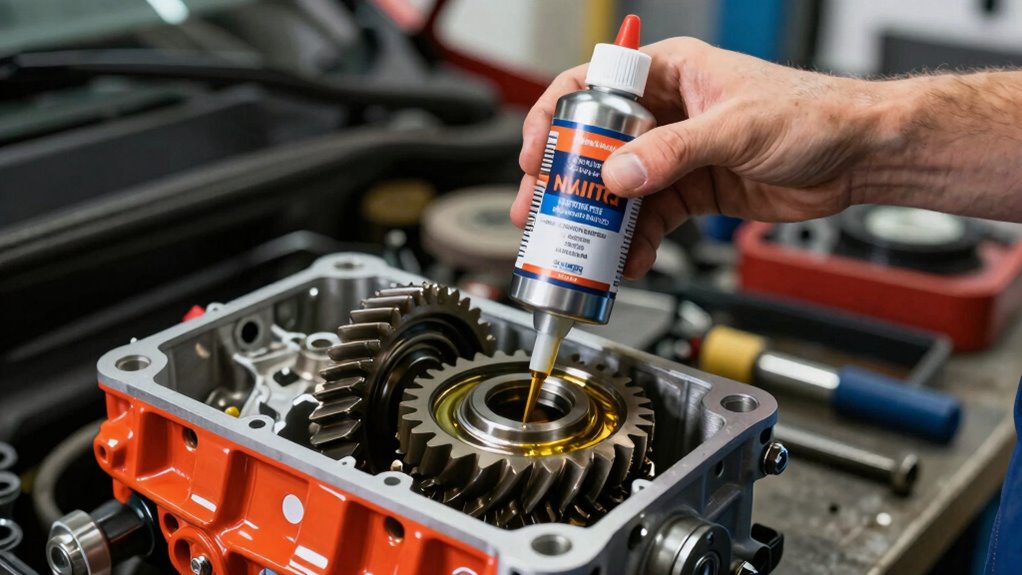
If your limited slip differential is causing unusual noises or vibrations, it’s important to identify whether it’s chattering or simply noisy during operation. Chattering usually manifests as a rhythmic, grinding, or clicking sound when turning or accelerating, often due to clutch plates slipping or sticking. Noisy operation, on the other hand, might sound like whining, humming, or whirring, which can be normal depending on the gear lube or system design. Pay attention to when the noise occurs—if it’s during sharp turns or acceleration, it’s likely chattering. If the noise persists during steady driving or turns, it might just be normal gear noise. Proper diagnosis helps determine if additives are needed to reduce clutch chatter or if the noise is harmless. Understanding the comparative advantage of your differential system can help in deciding whether maintenance or part replacement is necessary.
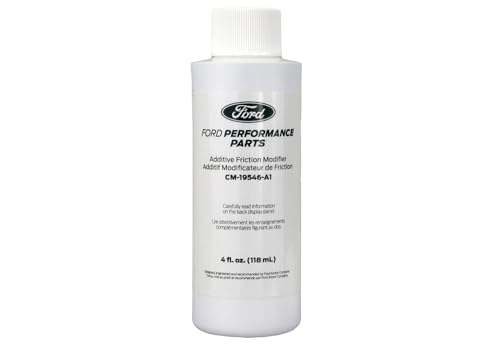
Ford Friction Modifier Additive, Clutch Type Limited Slip Differential, 3.80 oz Bottle, Each
- Country of Origin: Made in China
- Package Dimensions: 1.78 x 10.67 x 1.78 cm
- Fit Type: Vehicle Specific
As an affiliate, we earn on qualifying purchases.
As an affiliate, we earn on qualifying purchases.
When Not to Use Friction Modifiers in Your Gear Oil
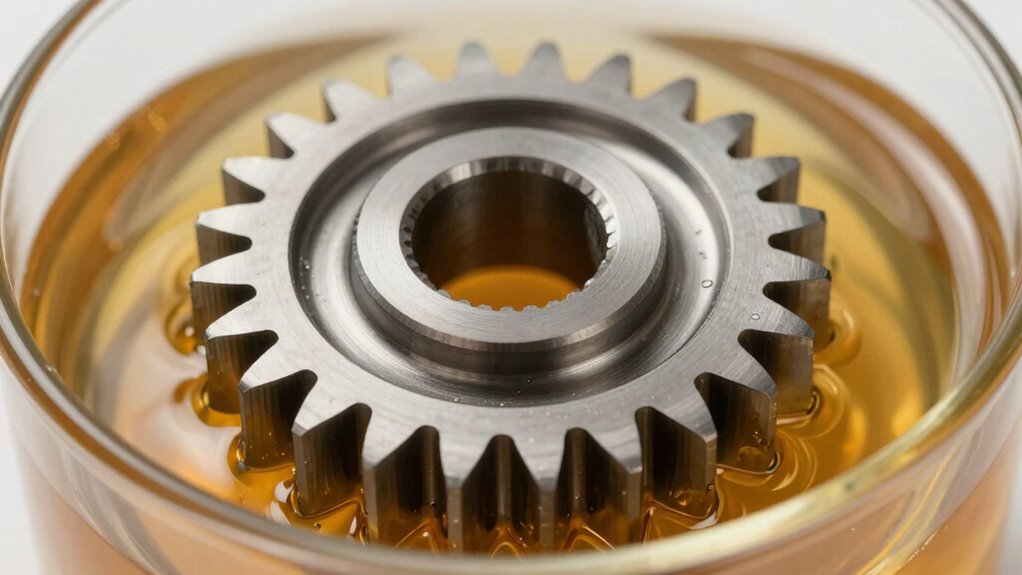
If your differential isn’t making noise or chattering, adding friction modifiers isn’t necessary and could even cause issues. Some proprietary systems require specific lubricants, so using generic additives might void warranties or disrupt performance. Always check your vehicle’s manufacturer guidelines before applying friction modifiers. Additionally, understanding breast cancer symptoms can help in early detection, emphasizing the importance of tailored vehicle maintenance over generic solutions.
No Chatter Present
You might wonder whether adding friction modifiers is necessary when your differential isn’t making any noise. If there’s no chatter, slipping, or harsh engagement, it’s best to leave the gear oil as is. Friction modifiers are designed to address specific issues like clutch chatter or uneven engagement, not to improve performance when everything runs smoothly. Adding them unnecessarily can alter the oil’s properties, potentially causing more harm than good. Many synthetic gear lubes already contain proper friction levels for typical operation. If your differential functions quietly and smoothly, avoid adding friction modifiers. Doing so ensures your system remains balanced and prevents unnecessary wear or interference with the components’ designed friction characteristics. It’s also important to consider the Free Floating system, which relies on natural movement and minimal friction adjustments. Stick with the manufacturer’s recommendations unless a problem arises.
Proprietary System Requirements
Certain proprietary gear oil systems are designed to operate without additional friction modifiers. If your vehicle’s manufacturer explicitly states that no friction modifiers are needed, don’t add them. Using aftermarket additives in these systems can interfere with specialized lubrication formulas, leading to poor performance or damage. For example, gear drives like Spartan Helical LSDs rely on specific friction characteristics, and adding modifiers can disrupt their design. Similarly, parts store friction modifiers may not match the proprietary formulations required for certain transmissions or limited-slip differentials. Always consult your owner’s manual or manufacturer’s guidelines before adding any additive. If your system is functioning smoothly without chatter or noise, it’s best to leave it as is and avoid unnecessary modifications. Additionally, understanding proprietary system requirements helps prevent inadvertent damage caused by incompatible additives.
ACDelco GM Original Equipment 10-4003 Limited Slip Axle Lubricant Additive – 4 oz
- Reduces differential temperature: Specially formulated to lower differential heat
- Prevents rust: Protects against rust and corrosion
- Extends clutch and gear life: Prolongs the lifespan of clutches and gears
As an affiliate, we earn on qualifying purchases.
As an affiliate, we earn on qualifying purchases.
Choosing the Right Gear Oil Additive for Your Limited Slip Differential
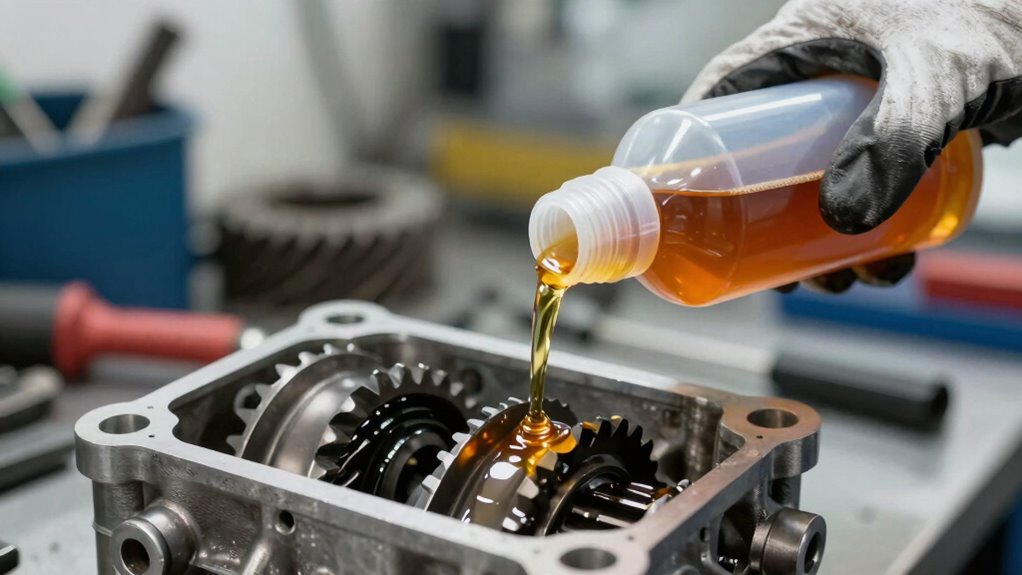
When selecting a gear oil additive for your limited slip differential, you need to take into account oil compatibility and how effective the additive will be with your existing lubricant. Not all additives work equally well across different oil types or system designs, so choosing the right one depends on understanding these factors. By paying attention to compatibility and performance considerations, you can ensure smoother operation and longer-lasting components. Additionally, considering affiliate disclosure can help you make informed purchase decisions when selecting quality additives.
Oil Compatibility Considerations
Choosing the right gear oil additive for your limited slip differential depends on ensuring compatibility with your existing lubricant. You don’t want to risk damaging your gears or reducing performance. First, check if your current gear oil is synthetic or petroleum-based; most additives work with both. Next, verify compatibility with GL-5 or other specifications your vehicle requires. Consider whether your differential needs a friction modifier or if your current gear oil already contains one. Be cautious with gear-driven limited slips like Spartan Helical LSD—some additives may not be suitable. Finally, review manufacturer recommendations and avoid mixing incompatible products. Additionally, understanding the contrast ratio of your projectors can help you select the right lighting conditions for optimal performance.
Additive Effectiveness Factors
How do you guarantee the additive you select will effectively improve your limited slip differential’s performance? First, consider your differential type. Clutch-type differentials benefit from friction modifiers that reduce chatter and enhance traction. Confirm the additive is compatible with your gear oil—synthetic or petroleum-based—and meets your vehicle’s specifications. Pay attention to dosage; typically, a 1:25 dilution is effective for noise reduction. Check if your differential has worn clutches or exhibits chatter; this indicates a need for additive use. Avoid additives in systems that don’t experience slipping or chatter, as they won’t provide benefits. Finally, select proven products like AMSOIL Slip Lock or Champion additives, which are designed for specific applications, ensuring optimal performance and protection.
Step-by-Step: How to Add Limited Slip Friction Modifiers Correctly
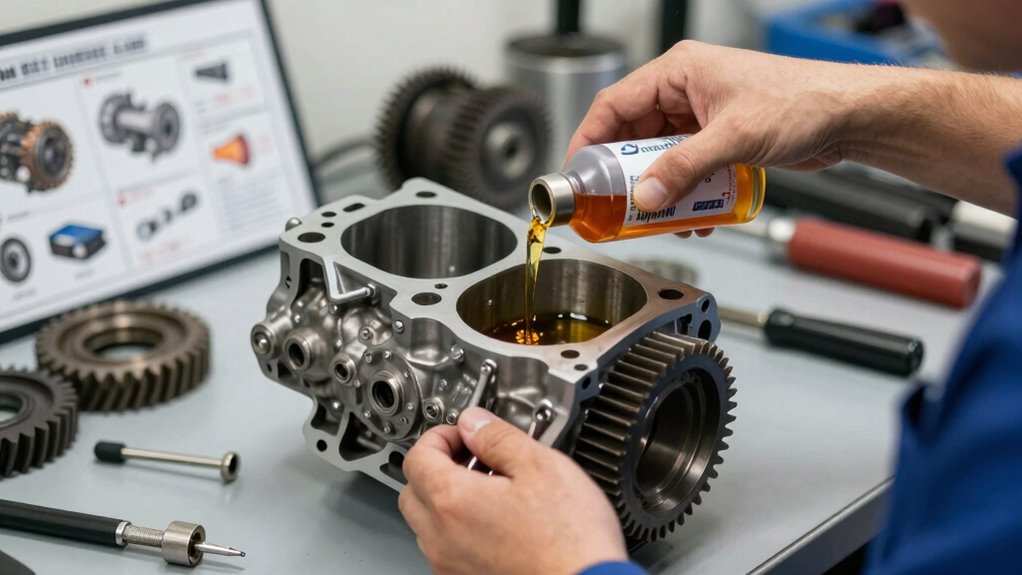
Adding limited slip friction modifiers correctly is straightforward if you follow a few key steps. First, ensure your differential is experiencing chatter or slipping issues. Next, squeeze the entire tube of additive directly into the differential housing. Then, dilute the additive in the recommended ratio of 1:25 with your gear oil. Be sure to use compatible gear oils, like synthetic or petroleum-based lubricants, to prevent any adverse reactions. Here’s what to keep in mind:
- Confirm the differential needs additive—don’t add if no chatter exists
- Use compatible gear oils, like synthetic or petroleum-based lubricants
- Avoid adding in gear-driven limited slips or proprietary systems unless specified
- Mix thoroughly by driving or manually rotating the wheels
- Recheck for noise and smoothness after a short drive
Following these steps guarantees proper application and peak performance.
How Additives Improve Traction and Reduce Clutch Chatter
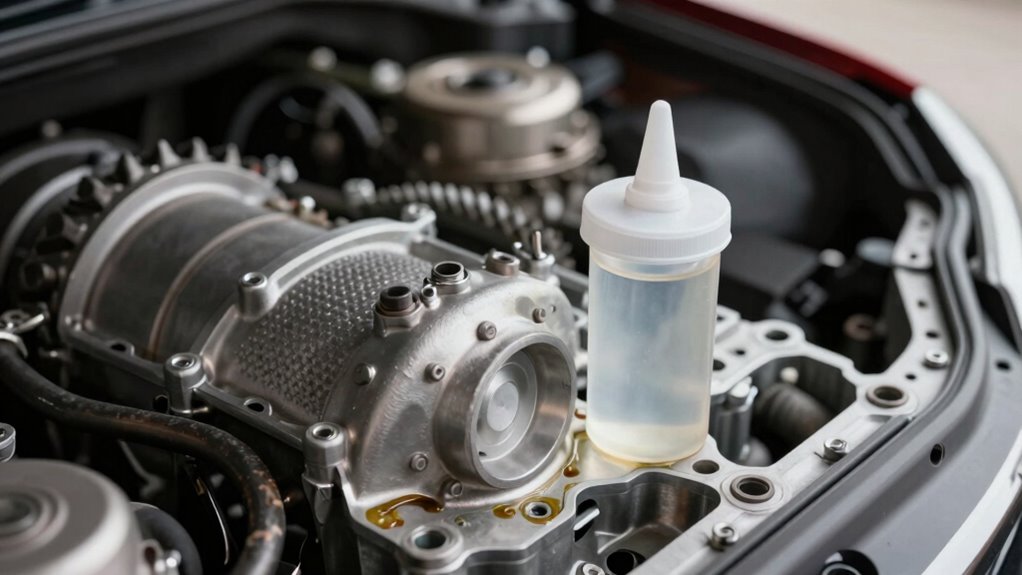
Limited slip additives enhance traction by optimizing the friction characteristics within your differential. They help clutch plates engage more effectively, transferring torque smoothly and reducing slip when needed. This improved friction means your wheels grip better on slippery surfaces, boosting overall performance. Additionally, additives minimize clutch chatter by smoothing out the clutch engagement and disengagement cycles. Chatter occurs when the clutches alternate between slipping and sticking, causing noise and vibration. By altering the oil’s friction properties, these additives ensure consistent clutch operation, preventing abrupt shifts that lead to noise. Proper application techniques are crucial for optimal results and to avoid potential damage. As a result, you get a quieter ride, reduced tire wear, and enhanced traction. This makes additives especially useful in conditions demanding maximum grip, like snow, mud, or ice, where critical clutch engagement is essential for safety and control.
Troubleshooting Differential Noise: Is an Additive the Fix?
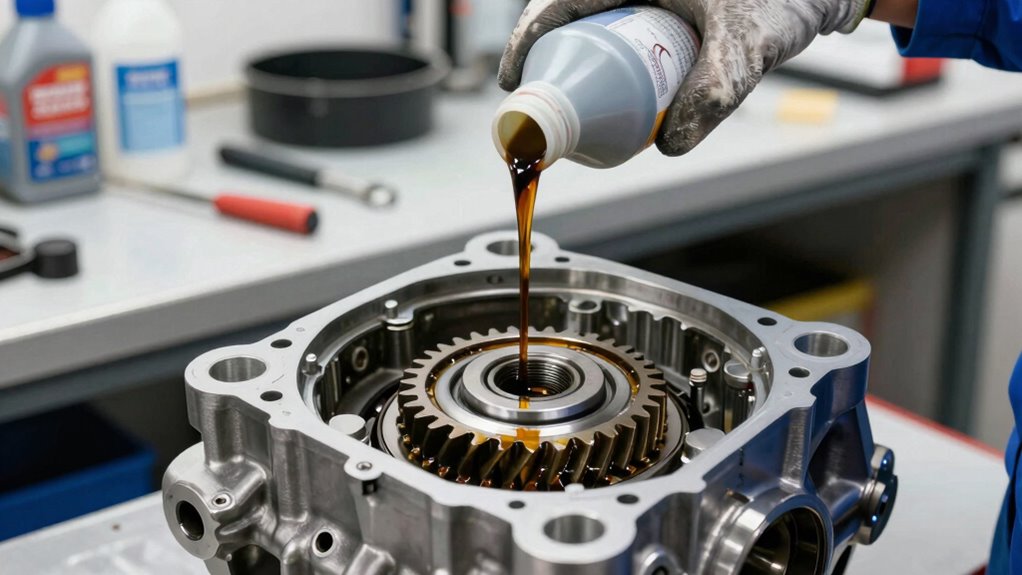
When your differential starts making noise, it’s tempting to assume a serious mechanical problem, but sometimes the solution is simpler—an additive might just quiet things down. If chatter or whining persists despite proper lubrication, adding a friction modifier can help. It works by altering the gear lube’s frictional properties, reducing clutch sticking and chatter. Before adding anything, check if your gear oil already contains a compatible additive. If noise remains, consider these points:
- Confirm the additive matches your differential type
- Use the recommended dilution ratio (usually 1:25)
- Ensure the additive suits your gear lubricant (synthetic or petroleum)
- Avoid using parts-store friction modifiers in proprietary systems
- Remember, if no noise exists, an additive isn’t necessary
- Smart lock and office gear can be part of a comprehensive security upgrade to prevent theft of valuable equipment
Proper troubleshooting can save you time and prevent unnecessary repairs.
FAQs About Limited Slip Additives and Differential Maintenance
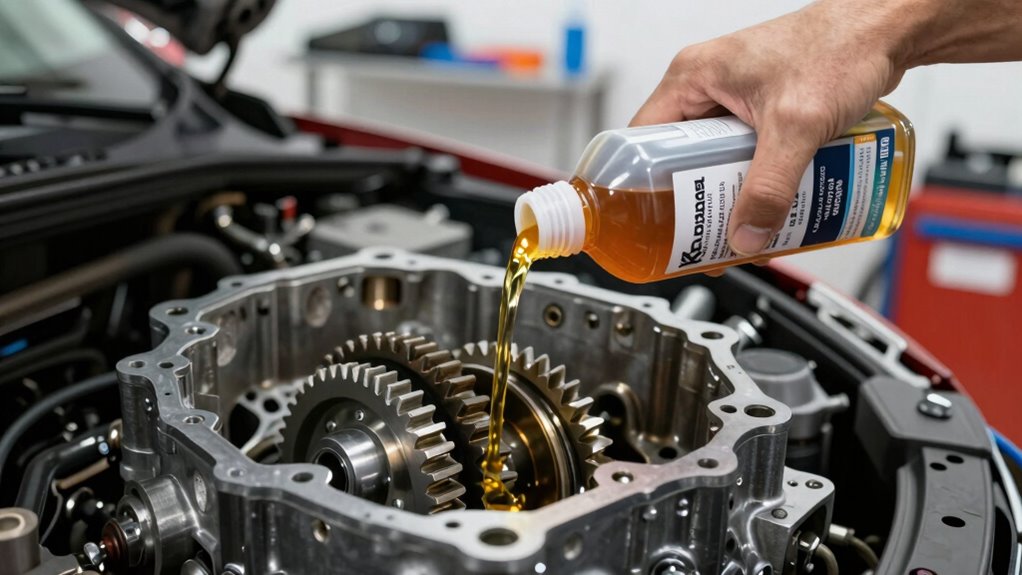
Understanding the role of limited slip additives can help you maintain ideal differential performance and prevent common issues like chatter or uneven tire wear. These additives modify gear lube friction, reducing clutch chatter and ensuring smooth operation. They’re best used when chatter persists despite proper gear lube or when clutches are worn. However, not all differentials need additives; some synthetic lubes already contain friction modifiers. Proper application can extend differential life and improve traction performance, especially in limited-slip systems.
Should You Add Friction Modifiers? Key Takeaways for Your Differential
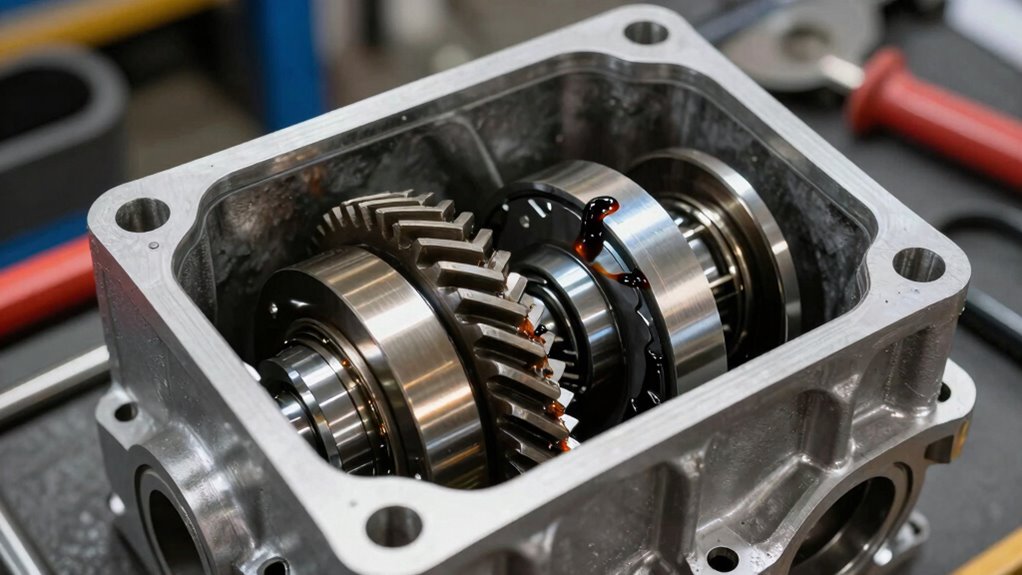
Deciding whether to add friction modifiers to your differential depends on its current condition and performance. If you’re experiencing chatter or uneven traction, additives can help smooth operation and improve efficiency. Consider these key points:
- Use friction modifiers when chatter persists despite proper gear lube.
- Add for worn clutches or specific friction material issues.
- Apply at 1:25 dilution to quiet noise and reduce harshness.
- Avoid if your differential runs quietly or is in good condition.
- Be cautious with gear-driven limited slips, like Spartan Helical LSDs, which often don’t need additives.
- Proper gear lube and additive compatibility are essential for optimal results.
Friction modifiers work well with synthetic or conventional gear oils, especially in clutch-type LSDs. They can prevent clutch sticking, enhance traction, and extend differential life when used appropriately.
Frequently Asked Questions
Can All Types of Limited-Slip Differentials Benefit From Friction Modifiers?
Not all limited-slip differentials benefit from friction modifiers. If your differential is functioning smoothly without chatter, adding friction modifiers isn’t necessary. However, if you notice noise, vibration, or slipping, applying a suitable additive can improve performance. Always check your system’s specifications before adding anything, as some gear oils or limited-slip setups, like Spartan Helical LSDs, don’t require or may even be harmed by friction modifiers.
How Often Should I Add Limited Slip Additives to My Differential?
About 80% of chatter issues in limited-slip differentials can be resolved with a single additive treatment. You should add limited slip additives only when you notice chatter, vibration, or harshness, typically every 30,000 to 50,000 miles, or if you’ve serviced the differential. If your differential remains quiet and smooth, there’s no need for frequent reapplication. Always follow the manufacturer’s recommendations and use the correct dilution ratio for ideal results.
Will Adding Friction Modifiers Void My Vehicle’s Warranty?
Adding friction modifiers generally won’t void your vehicle’s warranty if you use the correct product and follow the manufacturer’s instructions. However, if you use incompatible additives or make modifications that cause damage, your warranty could be affected. Always check your vehicle’s warranty terms and consult your manufacturer or a professional mechanic before adding any additives. Using reputable products like AMSOIL and following proper procedures helps protect your warranty coverage.
Are There Any Signs That Indicate a Friction Modifier Is Incompatible?
You’ll know a friction modifier is incompatible if you notice increased noise, vibration, or harshness after adding it. If your differential starts chattering or sticking, that’s a sign it doesn’t work well with your system. Avoid using incompatible additives if your vehicle’s manufacturer advises against friction modifiers or if your differential isn’t designed for them. Always check your vehicle’s specs and consult the manufacturer before adding any additives.
Can I Use Limited Slip Additives in Older, Worn Differentials?
A stitch in time saves nine, so don’t wait too long to add limited slip additives. You can use them in older, worn differentials if you’re experiencing chatter or slipping, but only if the clutch plates are still intact. If the wear is excessive or the parts are badly damaged, additives won’t fix the problem and could even cause more issues. Always assess the condition before applying, and follow the manufacturer’s recommendations.
Conclusion
Knowing when to add limited slip additives can save you from throwing good money after bad. If your differential’s acting up or chattering, it’s worth considering friction modifiers. But don’t just add them blindly—know when they’re needed and when to hold back. Remember, sometimes a little maintenance goes a long way, and you don’t want to fix what isn’t broken. Stay informed, and you’ll keep your differential running smooth as butter.