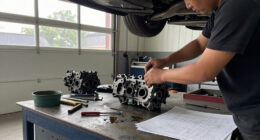
Automotive maintenance becomes easier to understand when you stop treating every component as an isolated part. Engine oil, transmission fluid, grease, coolant, and hydraulic fluid belong to connected systems that lubricate, cool, clean, and transmit force. Filters manage contamination, pumps move fluid, coolers shed heat, thermostats regulate flow, and gauges reveal what is happening before a warning light appears.
This guide is an orientation to those systems and the garage tools used to maintain them. Whether you service a daily driver, tow vehicle, project car, equipment fleet, or home workshop, the same priorities apply: use the correct fluid, keep it clean, control its temperature, deliver it where needed, and diagnose changes before they become expensive failures.
Start with the Fundamentals of Fluid Maintenance
Every maintenance plan should begin with the vehicle or equipment manufacturer’s specifications. The owner’s manual and service information identify fluid type, viscosity, capacity, service intervals, filter requirements, and inspection procedures. Those details matter because two fluids that appear similar may use different additive packages or friction characteristics.
Most fluid-related problems fall into a few broad categories:
- Insufficient fluid caused by leaks, consumption, or an incorrect fill procedure
- Contamination from wear debris, dirt, water, fuel, coolant, or degraded seals
- Excessive heat caused by heavy loads, restricted flow, poor airflow, or mechanical faults
- Incorrect pressure or flow caused by pump wear, blockages, damaged lines, or unsuitable viscosity
- Overextended service intervals that allow additives and filtration capacity to become depleted
A useful routine combines scheduled service with observation. Check fluid level and condition correctly, inspect hoses and fittings, note fresh residue around seals, and watch for changes in temperature, noise, vibration, shifting, or operating pressure. A single observation rarely proves the cause, but several related symptoms can point toward the right diagnostic path.
As an affiliate, we earn on qualifying purchases.
Engine Oil: Lubrication, Filtration, and Condition
Engine oil forms a protective film between moving surfaces, carries heat away from loaded parts, suspends contaminants, and transports debris toward the filter. Its effectiveness depends on the correct viscosity, a healthy circulation system, adequate filtration, and sensible change intervals.
The conventional full-flow oil filter must pass enough oil to protect the engine without creating excessive restriction. During inspection, external condition can reveal gasket leaks, impact damage, or installation problems, but the filter’s interior offers more information. Cutting open a used filter allows the media and trapped material to be examined without relying only on the appearance of drained oil.
A purpose-built cutter helps open the canister with less risk of introducing the metal shavings produced by saws or abrasive tools. If filter inspection is part of your maintenance or diagnostic routine, compare the options in this guide to the best oil filter cutter tools. Once opened, inspect the media under good lighting and treat findings as evidence to interpret—not an automatic diagnosis. The quantity, size, color, and magnetic properties of debris all provide context.
When Bypass Filtration Makes Sense
A bypass filter handles only a portion of the oil flow at a time, typically using finer filtration than the primary full-flow filter. It supplements rather than casually replaces the engine’s standard filtration arrangement. These systems tend to attract owners interested in enhanced contamination control, extended-service programs supported by oil analysis, or engines that accumulate substantial operating hours.
Installation quality is crucial. Routing, fitting selection, return location, hose protection, leak checks, and compatibility with the application matter as much as the filter itself. The overview of engine bypass oil filter systems provides a useful starting point for comparing system layouts. Any decision about longer oil intervals should be based on appropriate maintenance guidance and condition monitoring rather than filtration alone.
As an affiliate, we earn on qualifying purchases.
Managing Oil Temperature and Auxiliary Circuits
Oil must become warm enough to flow properly and shed moisture, yet sustained excessive temperature accelerates degradation and reduces the margin provided by its viscosity. Modified engines and vehicles used for towing, racing, or prolonged heavy-load operation may use auxiliary oil coolers, but adding a cooler creates another design question: how should flow be controlled while the oil is cold?
An inline oil thermostat directs or regulates flow according to temperature so an auxiliary cooler does not continually remove heat during warm-up. Selecting one requires attention to hose size, port style, routing, packaging, expected flow, and the temperature strategy appropriate for the application. Review the guide to inline oil thermostats when planning a controlled cooler circuit.
Consider the whole system before installing components. Long hose runs, restrictive fittings, poor mounting locations, and inadequate protection from heat or abrasion can undermine an otherwise sound design. After installation, verify fluid level, inspect every connection under operating conditions, and recheck for leaks after heat cycling.
As an affiliate, we earn on qualifying purchases.
Transmission Heat: Measurement Before Modification
Automatic transmissions use fluid for lubrication, hydraulic control, torque transfer, and cooling. That workload makes temperature especially important. Towing, steep grades, high ambient temperatures, slow off-road travel, repeated acceleration, and torque-converter slip can increase heat generation.
A temperature gauge gives the driver information that a dashboard warning may not provide until conditions are already severe. Gauge selection includes more than display style: the kit must suit the vehicle’s electrical system, sender arrangement, mounting location, and intended measurement point. Some installations measure fluid in a pan, line, or test port, and readings should always be interpreted according to where the sender is located. The comparison of transmission temperature gauge kits can help organize those choices.
Establish a baseline under normal driving before drawing conclusions. Then compare similar loads, routes, speeds, and ambient conditions. A stable pattern is more useful than a single isolated reading. Unexpected changes may justify checking fluid level, cooler airflow, line condition, transmission operation, and measurement accuracy.
Choosing an Auxiliary Transmission Cooler
If operating conditions demonstrate a need for additional heat rejection, a transmission cooler may increase cooling capacity. Stacked-plate designs use multiple fluid passages and cooling fins in a compact assembly. Selection should account for physical dimensions, available airflow, connection sizes, mounting hardware, hose compatibility, and the vehicle’s existing cooler circuit.
Explore the guide to stacked-plate transmission coolers for relevant comparison points. Placement is critical: a cooler needs airflow without being left vulnerable to road debris or interfering with other heat exchangers. Lines should be secured away from sharp edges, exhaust heat, suspension travel, and moving components. Confirm the correct plumbing arrangement for the vehicle rather than assuming one universal routing pattern.
As an affiliate, we earn on qualifying purchases.
Grease Delivery for Chassis, Equipment, and Shop Work
Grease remains essential wherever a lubricant must stay in place and resist being displaced. Common service points include bearings, bushings, steering joints, hinges, pins, couplers, and agricultural or construction equipment. The correct grease must be compatible with the component, operating environment, and any lubricant already present.
More grease is not always better. Over-greasing can damage seals, increase heat, or push contaminants into an assembly. Under-greasing allows the protective film to break down. Clean the fitting before attaching the coupler, deliver lubricant according to the service procedure, and watch for signs such as seal movement or fresh grease appearing at an intended relief path.
A grease gun with a digital meter can help when the job calls for tracking the quantity dispensed rather than estimating by handle strokes. This may be valuable for repeatable service routes or equipment with specified lubrication amounts. Consult the guide to grease guns with digital meters to compare formats and features relevant to controlled delivery.
Hydraulic Systems and Portable Power
Hydraulic systems use pressurized fluid to create controlled force. In automotive and garage settings, they may operate lifts, presses, cylinders, pullers, dump mechanisms, ramps, and specialized service equipment. A portable hydraulic power unit combines major fluid-power components into a movable package, but it must be matched carefully to the job.
Start with the actuator and duty cycle. Required pressure, flow, reservoir capacity, valve configuration, power source, connector style, and fluid compatibility all affect suitability. Pressure determines available force in relation to cylinder area, while flow influences movement speed. Choosing solely by maximum pressure can therefore produce a system that behaves very differently from what the task requires.
The guide to portable hydraulic power units highlights options for applications where mobility matters. Hydraulic work also demands disciplined safety practices: depressurize before disconnecting lines, never search for a pinhole leak with bare hands, keep couplers clean, support raised loads mechanically, and replace damaged hoses rather than improvising repairs.
Vibration as a Diagnostic Signal
Not every fluid-system problem announces itself with a visible leak. Bearings, pumps, motors, fans, pulleys, and rotating assemblies often change their vibration pattern as wear, imbalance, looseness, misalignment, or structural issues develop. A handheld vibration analyzer can turn a subjective impression—“this machine feels rough”—into a measurement that can be recorded and compared.
The strongest use case is trend monitoring. Take readings at consistent locations, with the equipment operating under comparable conditions, and document speed and load. One number without context may be misleading, while a series of repeatable measurements can reveal deterioration. For tool-selection considerations, see the guide to handheld vibration analyzers.
Vibration data should be combined with other evidence. Unusual noise, rising temperature, metal in a filter, changing pressure, and increasing vibration together create a more meaningful diagnostic picture. Measurement technique matters too: inconsistent sensor position or machine operating state can make normal variation appear to be a fault.
Build a Practical Garage Workflow
A good garage workflow separates inspection, diagnosis, service, and verification. Begin with the complaint or maintenance objective, gather specifications, and inspect before removing parts. Record fluid levels, temperatures, leak locations, and operating symptoms. This preserves information that may disappear once fluid is drained or components are disturbed.
During service, keep fluids and tools organized. Label transfer equipment, prevent dirt from entering open ports, use suitable drain containers, and keep incompatible lubricants separate. Replace sealing washers, O-rings, filters, or damaged fittings where the procedure calls for them. Torque fasteners appropriately and avoid using thread sealant where it could contaminate a system or interfere with grounding.
Verification closes the loop. Refill using the correct procedure, run or drive the equipment as required, check fluid level again, inspect for leaks, and confirm that the original symptom has changed. For modifications such as coolers, thermostats, gauges, or bypass filters, inspect the installation again after several heat cycles.
Choose Tools by the Decision They Help You Make
The best garage tool is not necessarily the one with the longest feature list. It is the one that supplies reliable information or controlled action for a defined task. An oil-filter cutter helps expose trapped debris. A temperature gauge establishes operating trends. A digital-meter grease gun supports measured delivery. A vibration analyzer makes changes easier to track. A hydraulic power unit supplies force where the pressure, flow, and controls match the actuator.
Before buying, define the vehicle or equipment, operating conditions, connection requirements, measurement range, installation space, frequency of use, and maintenance obligations. Then use the linked guides to examine the relevant category in depth. That system-level approach keeps the focus where it belongs: cleaner fluids, controlled temperatures, dependable lubrication, safer hydraulic work, and earlier recognition of developing mechanical problems.