TL;DR

Get business pricing on garage and car supplies
- Business-only prices and quantity discounts
- Tax-exempt purchasing
- Multiple users, one account, clear invoices
Pepco has approved ConnectDER’s Solar MSA, EV MSA and IslandDER MSA for installation in its Washington, DC-area service territory. The company says its EV adapter can provide a connection for home charging at the meter and may avoid some electrical panel upgrades, but project-specific requirements still apply.
Pepco has approved ConnectDER’s meter socket adapters for installations in its Washington, DC-area service territory, allowing the company’s products for solar, battery storage and residential EV charging to be used there. ConnectDER says its EV MSA can connect charging equipment at a home’s meter and may reduce the need for some service-panel upgrades.
The approval covers ConnectDER’s Solar MSA, EV MSA and IslandDER MSA, according to the company. These meter socket adapters, also called meter collars, connect to a home’s existing meter socket. The EV MSA is designed to provide a power connection for residential EV charging equipment.
ConnectDER says the approach can help installers avoid or reduce work on a building’s service panel and electrical service capacity. Its company description says the EV MSA may allow a high-power charger to be added to a home with an existing 100-amp panel without upgrading that panel. This is a product capability claim, not a guarantee that every home or charger installation can proceed without electrical upgrades.
The source report says ConnectDER’s devices are UL-listed and National Electrical Code-compliant and have received utility approvals in 54 US utility service territories. Pepco is the latest utility named in the report. It does not provide a list of all territories or describe the terms and scope of Pepco’s approval.
How Approval Could Affect DC Installations
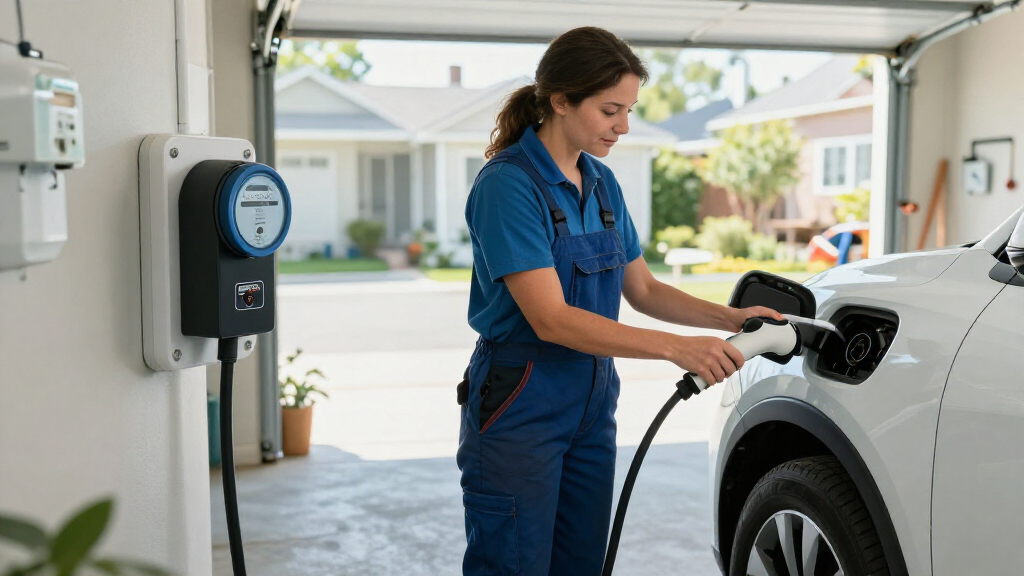
Pepco’s approval gives installers in its service area another option to connect home energy equipment without automatically treating a panel replacement or service-capacity increase as the starting point. If a site is suitable, connecting at the meter could reduce the labor, cost and disruption associated with electrical work, and could make some EV charging or solar projects easier to carry out.
The practical effect will depend on the home, the charging equipment, utility requirements and local permitting. The approval does not mean that all residents can install a charger without changes to their electrical systems, nor does it establish a particular cost or installation-time saving. Those outcomes need to be assessed for each project.
Products Worth Considering

Autel MaxiCharger AC Home Level 2 EV Charger, 50A, Hardwired J1772, Wi-Fi, 25-Foot Cable

DEWALT 20V MAX 1/4-Inch Impact Driver Kit with Battery and Charger (DCF787D1)
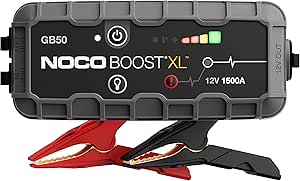
NOCO Boost GB50 1500A UltraSafe Jump Starter, 12V Lithium Battery Booster
As an affiliate, we earn on qualifying purchases.
Meter-Socket Connection and Prior Approvals
A meter socket adapter fits between a home’s electric meter and its meter socket, creating a connection point for equipment such as an EV charger or distributed energy resource. ConnectDER markets separate products for solar, EV charging and islanding applications. Its stated purpose is to avoid some work inside a building’s electrical panel, where available capacity can constrain new equipment.
The report describes the Pepco decision as a new utility approval and says ConnectDER products had already received approvals in 54 utility service territories. It identifies Washington, DC, as the area served by Pepco, but does not detail whether the approval applies across Pepco’s full territory or specify any installation conditions. Utility acceptance is one part of an installation; it does not replace checks of the home’s wiring, equipment compatibility, permits or applicable electrical rules.
“ConnectDER’s meter socket adapters have helped us make solar and EV charging accessible to more DC residents without requiring expensive electrical upgrades.”
— Joseph Sigwarth, executive director of operations at DC-based Solar Solution
Site Requirements and Approval Conditions
The report does not say when Pepco’s approval took effect, whether it covers every installation in the utility’s territory, or what technical, inspection or permitting conditions apply. It also does not identify which charger models or home configurations are compatible with the EV MSA.
ConnectDER’s claim that its adapter can avoid an upgrade for some homes should not be read as a universal outcome. Whether a particular home can add charging equipment without panel work depends on its existing electrical service and the proposed load. The source provides no independent test results, project cost figures or installation-time data for Pepco customers.
Installers Assess Eligible Homes
Homeowners considering the EV MSA will need to confirm with an installer whether the adapter is suitable for their electrical system and charging plans, and what permits or utility steps are required. The source report does not announce a rollout date, installation target or follow-up milestone for Pepco’s service area.
Further details on approval conditions, compatible equipment and actual project outcomes would clarify how broadly the adapters can be used locally. Until those details are available, the confirmed development is Pepco’s approval for installations—not a blanket exemption from electrical upgrades or project reviews.
Key Questions
What has Pepco approved?
Pepco approved ConnectDER’s Solar MSA, EV MSA and IslandDER MSA for installation in its Washington, DC-area service territory, according to the source report.
Does the EV MSA mean a home will not need a panel upgrade?
Not necessarily. ConnectDER says the adapter may let some homes add high-power charging without upgrading an existing 100-amp panel. Whether that works depends on the home, its electrical service and the equipment being installed.
What does a meter socket adapter do?
It connects at a home’s existing electric meter socket and can provide a connection point for equipment such as residential EV charging. ConnectDER says this may reduce the need for some panel or service upgrades.
Does Pepco’s approval cover every home in the area?
The report does not specify the exact geographic scope or conditions of the approval. Homeowners should ask a qualified installer and confirm applicable utility and permitting requirements for their address.
Are installation savings confirmed?
No project-wide savings figures are provided. A DC-area installer said the adapters can reduce disruption, cost and labor in its experience, but the report gives no independent cost or time comparisons.
Source: chargedevs.com