TL;DR

Get business pricing on garage and car supplies
- Business-only prices and quantity discounts
- Tax-exempt purchasing
- Multiple users, one account, clear invoices
A Bruegel policy brief estimates that requiring EU-made battery cells could add €2,100 to the production cost of an EV with a 60-kWh battery. The report warns that buyers could pay more if automakers pass on the added costs, but the final effect depends on the rules, subsidies and companies’ pricing decisions.
A September 22 policy brief from Brussels-based think tank Bruegel estimates that requiring batteries to use EU-made cells could add €2,100 to the cost of an electric car with a 60-kWh battery, a cost consumers may face if automakers pass it on. The estimate highlights a trade-off in efforts to strengthen Europe’s car industry: local production could support jobs and reduce reliance on China, but may make some EVs more expensive.
Bruegel’s estimate assumes battery-cell costs rise from €50 to €85 per kilowatt-hour under a local-production requirement. Across a 60-kWh battery, that €35-per-kWh difference amounts to €2,100. The report also estimates that a proposed low-carbon steel requirement could add €200 per vehicle, while simplifying vehicle approval could save manufacturers €61 per car.
Those figures describe potential production costs, not a confirmed increase in retail prices. The report’s authors say what buyers ultimately pay would depend on the final rules, government subsidies and how much of the added cost automakers choose to pass through. The source material does not specify a final policy or a confirmed date for implementation.
The burden could fall more heavily on people shopping for lower-priced EVs, for which an added cost may be harder to absorb. Bruegel’s concern is that protecting manufacturers without addressing the cost difference could leave consumers—and potentially taxpayers through public support—with part of the bill.
The Cost of Local Battery Rules
The debate matters to buyers because policies intended to build a European battery supply chain may affect vehicle prices and access to affordable EVs. If manufacturers pass production costs on to customers, the effect could be especially relevant for buyers with fewer lower-cost models to choose from. If governments subsidize the difference instead, some costs could fall on public budgets.
For policymakers, the challenge is balancing industrial capacity and supply-chain security against the price of new cars and the pace of electric-vehicle adoption. Bruegel argues protection should be temporary and give European manufacturers time to make cheaper EVs. That is the think tank’s policy position, not an adopted EU commitment described in the source material.
The brief also points to a risk in restricting imports: fewer Chinese vehicles could mean less price competition or higher prices for the vehicles that remain available. The precise effect would depend on how any restrictions are designed and how manufacturers respond.
Products Worth Considering

Autel MaxiCheck MX808S Bidirectional OBD2 Diagnostic Scanner
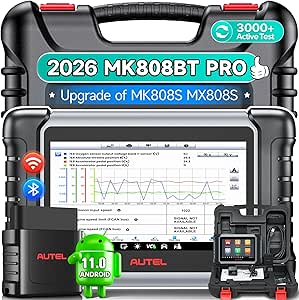
Autel MaxiCOM MK808BT PRO Bidirectional OBD2 Diagnostic Scanner

Autel MaxiSYS MS906 MAX Automotive Diagnostic Scanner, 10.1-Inch
As an affiliate, we earn on qualifying purchases.
Industry Pressure and Battery Capacity
Bruegel’s warning comes amid pressure on Europe’s automotive sector. The report says EU car production fell 19% since 2019 and that buyers purchased 2.2 million fewer new cars in 2025 than in 2019. It puts employment across the wider automotive sector at about 14 million people. These figures indicate the scale of the industry at stake, but do not establish that battery rules alone caused the production or sales changes.
The report also notes continuing exports and around €3 billion in quarterly investment in battery and EV factories. At the same time, it cites difficulties in building a competitive local battery industry, including Northvolt’s failure, Porsche’s retreat from manufacturing at Cellforce, and shelved ACC factories. It says European plants can still depend on Asian equipment and expertise.
Foreign investment is already part of that capacity picture, according to Bruegel: South Korean firms own 65% of European battery-cell manufacturing capacity, while Chinese companies own 55% of capacity currently under construction. The report presents outside expertise as a way to help European factories develop, rather than treating local ownership as the only measure of industrial strength.
“Protection should be temporary and give European carmakers time to build cheaper EVs.”
— Bruegel policy brief
Prices Depend on Final Policy
The estimate is not a forecast of a confirmed retail-price increase. The source material does not establish which proposed requirements will become law, how they would be phased in, or whether governments would offset extra production costs with subsidies. It is also unclear how much automakers would absorb rather than pass on to buyers.
The brief’s figures apply to specified assumptions, including a 60-kWh battery; the source does not provide a single price estimate for every EV or battery size. Nor does it quantify how any import restrictions or temporary limits on vehicles from China would affect prices, sales or European production. Those outcomes would depend on the terms of any agreement and how companies and customers respond.
Final Rules Will Set the Costs
The next key development is the final design of any EU local-content or low-carbon steel requirements, including whether they are adopted, how quickly they take effect and whether public support accompanies them. The source material gives no confirmed timetable for those decisions.
Bruegel also discusses a possible temporary agreement with China to limit the number of electric cars and plug-in hybrids sent to Europe. It says such an arrangement could give European manufacturers more time to develop cheaper EVs, with a clear end date and tighter restrictions if China broke the deal. The brief presents this as a proposal; no agreement or implementation details are confirmed in the material provided.
Key Questions
Could an EU-made battery requirement add €2,100 to every EV?
No. Bruegel estimates a €2,100 production-cost increase for an EV with a 60-kWh battery under its stated cell-cost assumptions. The figure is not a confirmed retail-price rise and does not apply automatically to every vehicle.
Would buyers definitely pay more?
That is not established. The effect on buyers would depend on the final rules, subsidies and how much of the added cost automakers pass on.
What other costs does the brief estimate?
Bruegel estimates a proposed low-carbon steel requirement could add €200 per car, while simplifying vehicle approval could save manufacturers €61 per car. These are estimates, not confirmed effects of rules already in force.
Why does Bruegel support a temporary approach?
The think tank says temporary protection could give European automakers time to develop cheaper EVs. It also warns that protection could leave consumers or taxpayers bearing extra costs if local production remains more expensive.
Are limits on Chinese EV imports confirmed?
No such new agreement is confirmed in the supplied material. Bruegel discusses a temporary limit as a possible policy approach, but its terms and whether it will be pursued remain unclear.
Source: insideevs.com