TL;DR

Get business pricing on garage and car supplies
- Business-only prices and quantity discounts
- Tax-exempt purchasing
- Multiple users, one account, clear invoices
General Motors has laid out a technology roadmap built around a new centralized vehicle computer, AI tools for product development and a broader role for OnStar. GM says an in-vehicle AI assistant will arrive later this year, while the 2028 Cadillac Escalade IQ is set to debut the new architecture and eyes-off driving; timing for next-generation EVs remains unclear.
General Motors has outlined a technology roadmap that links AI-assisted vehicle development, a redesigned OnStar experience, a central vehicle computer and planned eyes-off driving. At a New York presentation, CEO Mary Barra, President Mark Reuss and Chief Product Officer Sterling Anderson described plans that begin reaching customers later this year and expand from 2028, including a new architecture due to debut in the 2028 Cadillac Escalade IQ.
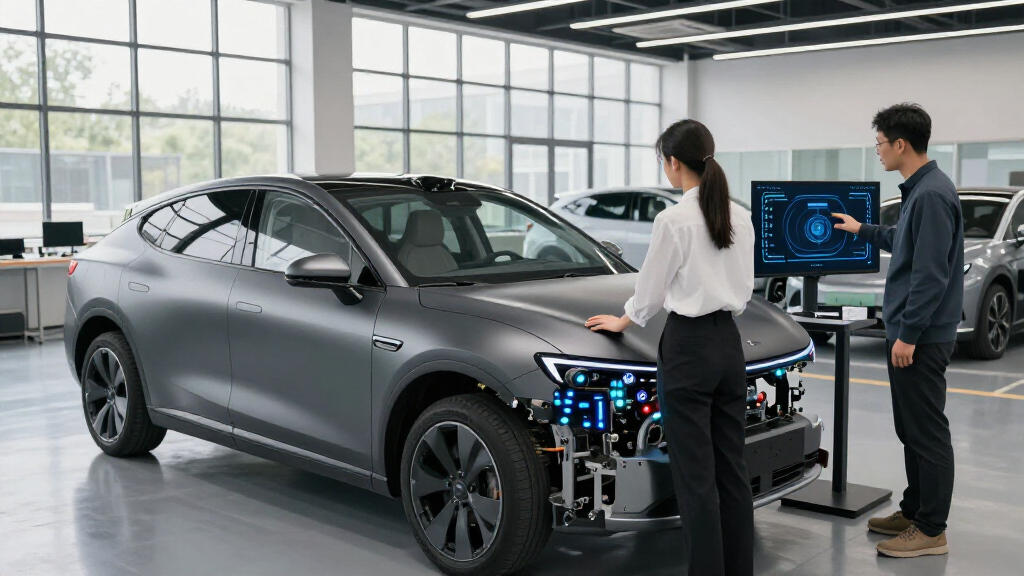
GM says the new electrical architecture will consolidate vehicle computing into one central computer, replacing a more distributed arrangement of electronic control units. The company says the system will provide 40 times more computing power than its current systems, reduce wiring by 30% and support faster operations and over-the-air software updates. A GM spokesperson likened its processing capacity to that of 40 laptops.
The architecture is scheduled to debut in the 2028 Cadillac Escalade IQ and later extend to GM’s full-size trucks and SUVs, including both gasoline and electric models, according to the presentation. The Escalade IQ is also expected to introduce GM’s eyes-off autonomous driving system, an expansion of its existing hands-free Super Cruise driver-assistance technology. GM has not provided detailed operating limits or availability information for the new system.
GM also plans an AI assistant integrated into vehicles, beginning later this year in the 2027 Cadillac Lyriq, before expanding to other gasoline and electric models. The automaker described a unified OnStar app for next year, intended to replace separate Chevrolet, Cadillac, Buick and GMC apps. Its proposed features include managing family vehicles, permitted location sharing and asking the system to prepare a vehicle before a scheduled departure.
On the engineering side, Sterling Anderson said AI could cut vehicle development cycles from four to five years to about half that time. He also cited aerodynamic simulations falling from 60 hours to 60 seconds and structural analysis from months to hours. Those are GM’s stated results and projections; the company did not provide independent validation or a full account of how they were measured.
A Software Platform Across GM Vehicles
The plan matters because GM is treating computing and software as a common foundation across its brands and vehicle types, rather than as separate features attached to individual models. A central architecture could make updates and new functions easier to deliver across a large lineup, while a shared OnStar app and assistant would give owners a more consistent interface across Chevrolet, Cadillac, Buick and GMC vehicles.
For buyers, the potential benefits include more capable in-car assistance and vehicles that can gain software features after purchase. But the practical value will depend on what GM releases, which models receive it, and whether systems work reliably in everyday use. The company has not said whether AI-driven efficiency gains will reduce vehicle prices. Barra pointed to GM’s existing vehicles priced at $30,000 or less, but did not commit to passing savings on to customers.
Eyes-off driving carries a separate safety and regulatory significance. GM’s description signals a move beyond hands-free assistance, but the announcement does not establish where or under what conditions drivers may take their eyes off the road. The distinction between a system’s marketing description and its actual operational limits will matter to drivers and regulators.
in-car AI assistant for Cadillac Lyriq
As an affiliate, we earn on qualifying purchases.
As an affiliate, we earn on qualifying purchases.
From Super Cruise to Central Computing
GM already offers Super Cruise, a hands-free driver-assistance system. The new eyes-off system is presented as a further step, while the planned central computer would change the electrical foundation that supports vehicle functions. Many modern vehicles distribute tasks among numerous electronic control units; GM argues that consolidating computing will make software updates and future features easier to manage.
The roadmap also connects vehicle technology to a longer-term EV plan. GM said future electric vehicles are expected to use lithium manganese-rich batteries, which it says have 33% greater energy density than lithium iron phosphate batteries. The company also described electric motors with 40% fewer parts than current Ultium motors and a projected 20% increase in range per kilowatt-hour. GM did not set a launch date for these next-generation EVs; a spokesperson said development is expected to start in 2028.
The Drive reported that industry analyst Paul Waatti of AutoPacific praised the technology discussed but cautioned that execution is the key test for GM. That assessment reflects the gap between a company roadmap and features that reach customers and perform as promised.
““You can imagine what that does for iteration speed.””
— Sterling Anderson, GM chief product officer, as quoted by The Drive
eyes-off autonomous driving system Cadillac Escalade IQ
As an affiliate, we earn on qualifying purchases.
As an affiliate, we earn on qualifying purchases.
Delivery Dates and System Limits
Several parts of the plan remain without firm schedules. GM has not announced when its next-generation EVs will reach showrooms, beyond saying development is expected to begin in 2028. The company’s projections for battery density, motor parts and range efficiency have not yet been tied to specific production models or independently verified results.
GM has also not detailed the operating conditions for eyes-off driving, including where it will work, what drivers must do when the system requests intervention, or whether the feature will be available across the country. The company has not specified which vehicles beyond the Escalade IQ will receive the central architecture first, or released pricing for the planned app and AI functions. Its claims about faster development and simulation times likewise lack publicly described measurement methods in the source report.
central vehicle computer GM 2028 models
As an affiliate, we earn on qualifying purchases.
As an affiliate, we earn on qualifying purchases.
First Releases Set for 2026
The first customer-facing milestone is the planned launch of an in-vehicle OnStar AI assistant later in 2026, starting with the 2027 Cadillac Lyriq. GM says a unified mobile app is planned for next year. The next major vehicle milestone is the 2028 Escalade IQ, which is expected to introduce the central computer and eyes-off driving system.
GM is expected to provide more information as these products approach launch, including feature availability, operating requirements and model coverage. The timing and specifications of the next-generation EVs remain later-stage questions: the company has said development should start in 2028 but has not announced a retail arrival date.
As an affiliate, we earn on qualifying purchases.
Key Questions
What is the main change GM announced?
GM presented a roadmap centered on AI, a unified OnStar experience and a central vehicle computer, alongside plans for eyes-off driving and future EVs.
When will GM’s in-car AI assistant arrive?
GM says the assistant will launch later in 2026, first in the 2027 Cadillac Lyriq, with expansion to other gasoline and electric vehicles planned afterward.
Which vehicle gets GM’s central computer first?
The new architecture is scheduled to debut in the 2028 Cadillac Escalade IQ. GM says it will later expand to full-size trucks and SUVs.
When will GM’s next-generation EVs go on sale?
GM has not announced a sales date. A company spokesperson said development is expected to begin in 2028, but the launch schedule remains unknown.
What is known about GM’s eyes-off driving system?
GM says the system will debut in the 2028 Escalade IQ as an expansion of Super Cruise. The company has not yet detailed its operating limits, driver responsibilities or geographic availability.
Source: rss
Halloween Picks
halloween
As an affiliate, we earn on qualifying purchases.