
TL;DR

Get business pricing on garage and car supplies
- Business-only prices and quantity discounts
- Tax-exempt purchasing
- Multiple users, one account, clear invoices
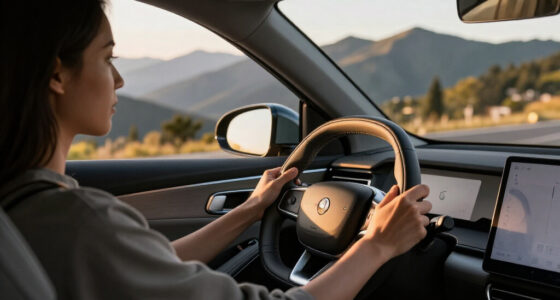
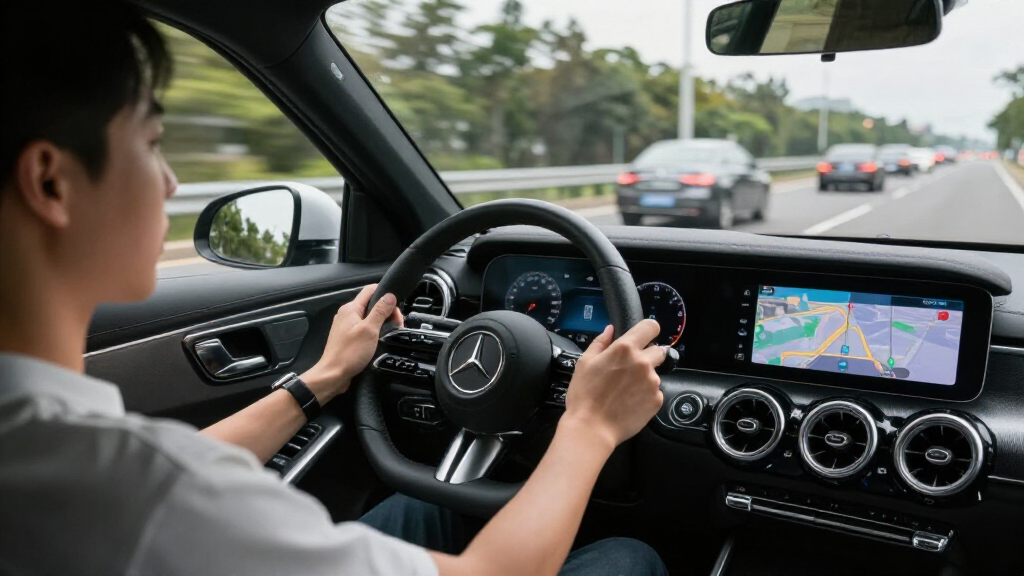
Mercedes plans to offer MB.Drive Assist Pro, a supervised point-to-point driving system, on many electric and combustion models early next year, including eligible vehicles through an over-the-air update. It can operate hands-free on controlled-access highways but requires a hand on the wheel on surface streets. Whether that is safer or less convenient than Tesla’s FSD (Supervised) depends on driver expectations; the systems’ performance has not been compared here under controlled conditions.
Mercedes plans to offer MB.Drive Assist Pro, a supervised, point-to-point driving system, on a large number of its electric and combustion vehicles early next year. Unlike Tesla’s FSD (Supervised), Mercedes’ system requires drivers to keep a hand on the wheel on surface streets, even though it can operate hands-free on controlled-access highways. The distinction matters to drivers weighing convenience against a more restrictive approach to supervision.
InsideEVs reports that drivers will be able to enter a destination and have the Mercedes system drive there and park. The feature is planned for vehicles including the new CLA, and eligible vehicles already on the road will be able to receive it through an over-the-air update. The report does not list every compatible model or provide a price, launch date, or complete set of operating conditions.
Mercedes describes MB.Drive Assist Pro as a Level 2 system, which means the driver remains responsible for supervising the vehicle. The company calls it “Level 2 Plus Plus.” On surface streets, the system requires the driver to keep a hand on the wheel; on controlled-access highways, it can drive hands-free. Tesla’s FSD (Supervised) is also described in the report as Level 2, but allows hands-free operation in more situations. Hands-free operation does not mean the driver can stop paying attention.
Mercedes also points to its perception hardware as a distinction. The report says MB.Drive Assist Pro uses cameras alongside five radar sensors and 12 ultrasonic sensors, feeding data to an Nvidia-powered computer. Christoph von Hugo, Mercedes’ head of active safety, said that using different sensor inputs increases performance and safety. That is the company’s rationale; the source provides no independent, controlled comparison showing that this hardware makes the system safer or more capable than Tesla’s.
Convenience Meets Driver Responsibility
The hands-on-wheel rule may shape whether the system appeals to people who want point-to-point assistance or, more specifically, the hands-free experience they associate with Tesla. Some Tesla owners interviewed by InsideEVs said a hand-on-wheel requirement on city streets would feel like a step back. Others may see the requirement as a practical way to stay ready for sudden changes in urban traffic. Those reactions are individual preferences, not evidence that one system performs better.
The policy also reflects a difference in how the manufacturers describe the driver’s role. Mercedes’ Jörg Burzer told InsideEVs that the dividing line between Level 2 and Level 3 is responsibility: under Level 2, the human remains responsible; at Level 3, the vehicle’s system is responsible within its operating conditions. The distinction has real implications for how drivers must use the technology. A feature that steers and navigates does not, by itself, make a car autonomous or transfer responsibility away from its driver.
Products Worth Considering

Nextbase 222X Front and Rear Dash Cam

Vantrue S1 Pro Max Dual 4K Dash Cam with Front and Rear STARVIS 2 Sensors

Nextbase Piqo 1K Smart Dash Cam, 1080p
As an affiliate, we earn on qualifying purchases.
How Mercedes Defines Level Two
The report frames MB.Drive Assist Pro as Mercedes’ alternative for drivers interested in automated driving but who may prefer a different brand, vehicle design, or interior to Tesla. Its point-to-point function is intended to handle a trip from a selected destination, while the driver remains responsible for monitoring the car.
Mercedes’ approach is grounded in the SAE automation levels cited by the company. Burzer said highways have fewer variables for a Level 2 system to handle than surface streets, where traffic situations are more complex. He also said Mercedes customer research suggests European drivers like a requirement to keep a hand on the wheel in cities, while acknowledging he did not know whether U.S. customers would feel the same way. The report offers no broad survey results or direct, standardized comparison of customer preferences.
“There is a very important borderline between the levels. That borderline is that with Level 2 Plus Plus, you are responsible. At Level 3, the machine, the car, the software stack, is responsible.”
— Jörg Burzer, Mercedes chief technology officer, speaking to InsideEVs
Launch Details and Performance Questions
The report says the feature is planned for early next year, but does not give an exact launch date, pricing, a full list of eligible vehicles, or the precise countries and roads where each function will be available. It also does not specify all driver-monitoring rules or the system’s operating limits in different weather and traffic conditions.
It remains unclear how U.S. drivers will respond to the hands-on-wheel requirement. Mercedes’ comments about European customers do not establish a preference among U.S. buyers. Nor does the available reporting settle whether Mercedes’ additional sensors translate into better real-world performance or safety than Tesla’s approach. The user accounts in the report describe personal experience, not a controlled comparison, and Tesla’s system is also identified as supervised rather than autonomous.
Rollout and Model Eligibility
Mercedes is expected to add MB.Drive Assist Pro to a broad range of electric and combustion models early next year, with over-the-air access planned for eligible vehicles that have already been purchased. The next useful details will be the confirmed launch date, model list, pricing, and regional availability, along with the system’s operating conditions and driver-monitoring requirements. Until those are published and the feature is assessed in use, buyers cannot make a full comparison based on the information in the report.
Key Questions
What is Mercedes MB.Drive Assist Pro?
It is a supervised point-to-point driving system that lets a driver enter a destination and have the car drive there and park, according to InsideEVs. The driver remains responsible for monitoring the vehicle.
Does MB.Drive Assist Pro require hands on the wheel everywhere?
No. The report says it can operate hands-free on controlled-access highways, but requires a hand on the wheel on surface streets.
When will Mercedes offer the system?
Mercedes plans to add it to many electric and combustion models early next year, and eligible vehicles already purchased are expected to receive it through an over-the-air update. The report does not give an exact date.
Is MB.Drive Assist Pro autonomous driving?
The report identifies it as a Level 2 supervised system. Mercedes says the driver remains responsible; hands-free operation in some conditions does not mean the driver can stop monitoring the car.
Is Mercedes’ system safer than Tesla FSD?
The source does not establish that. Mercedes says its combination of cameras, radar, and ultrasonic sensors increases performance and safety, but the report provides no independent head-to-head test confirming a safety advantage.
Source: insideevs.com