ABS bleeding involves removing trapped air from your brake system to make certain of proper braking performance. You’ll need a scan tool when replacing the ABS module, activating the system, or troubleshooting ABS warnings, as manual methods aren’t enough. For simple brake fluid changes without system interference, manual bleeding works fine. Understanding when to use each technique is key to safe, effective repairs—continue exploring to learn the best approach for your vehicle.
Key Takeaways
- Use a scan tool for ABS bleeding after pump or module replacement requiring system activation.
- Manual bleeding suffices for routine brake fluid changes without ABS system interference.
- A scan tool provides real-time data, ensuring proper valve operation and system readiness during bleeding.
- When troubleshooting ABS warning lights or faults, a scan tool is essential for accurate diagnostics and system resets.
- If no ABS system issues are present, basic manual bleeding is adequate without a scan tool.

FOXWELL Car Scanner NT604 Elite OBD2 Scanner ABS SRS Transmission, Check Engine Code Reader for Cars and Trucks, Diagnostic Scan Tool with SRS Airbag, Automotive Diagnostic Tool with Live Data
[Easy to Use—Work Out of the Box] + [FOXWELL 2026 New Version] FOXWELL NT604 Elite scan tool is…
As an affiliate, we earn on qualifying purchases.
As an affiliate, we earn on qualifying purchases.
What Is ABS Bleeding and Why Is It Important?
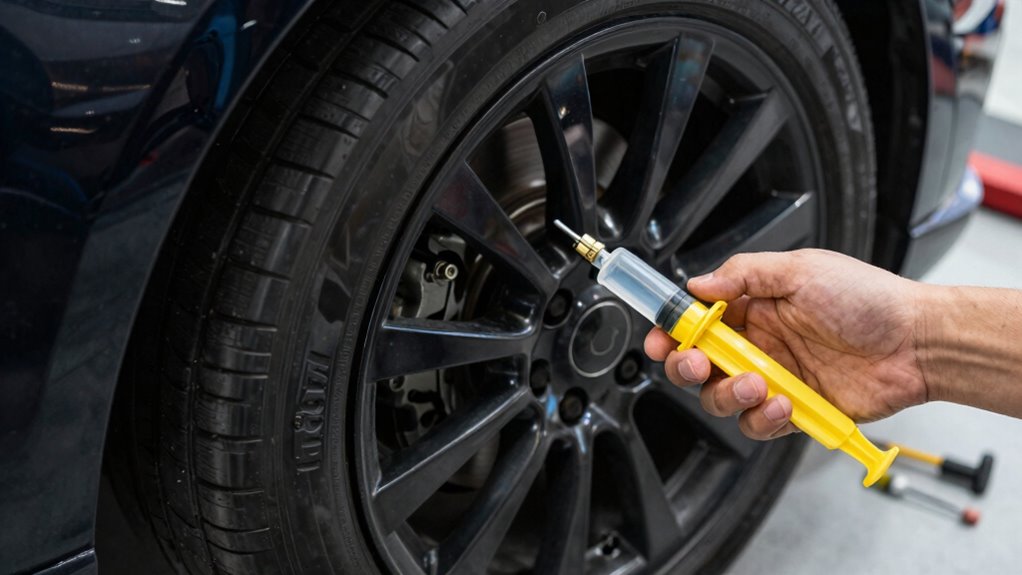
What exactly is ABS bleeding, and why does it matter? ABS bleeding is the process of removing air trapped inside your vehicle’s anti-lock braking system hydraulic module. Air gets into the system during brake repairs, leaks, or when replacing the ABS pump or module. Trapped air causes a spongy brake pedal and reduces braking effectiveness, which can compromise your safety. Unlike traditional brake bleeding, manual methods often aren’t enough because the ABS module’s valves and pump need to be activated to expel air properly. This process ensures your braking system works reliably, providing firm pedal feel and maximum stopping power. Proper ABS bleeding is essential for maintaining safe, responsive brakes, especially after repairs involving the ABS components. Incorporating proper technique into your brake maintenance can help prevent common issues caused by air entrapment.
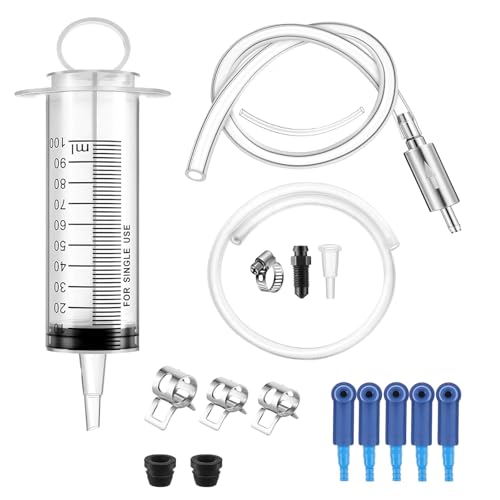
RDGXAED Brake Bleeder Kit – One Way Check Valve Hose Bleeding Kit 100ml Syringe, 50cm Hose, Oil Fluid Extractor Pump, Adapter – Brake Bleeder Tool for Motorcycle Cars Brake System Repair Maintenance
Complete Brake Bleeding Kit: Includes a 100ml syringe, 19.7in hose, adapter, pressure clamp, connector, valve, 5.91in and 14.17in…
As an affiliate, we earn on qualifying purchases.
As an affiliate, we earn on qualifying purchases.
Do You Need a Scan Tool or Manual Method? When to Use Each
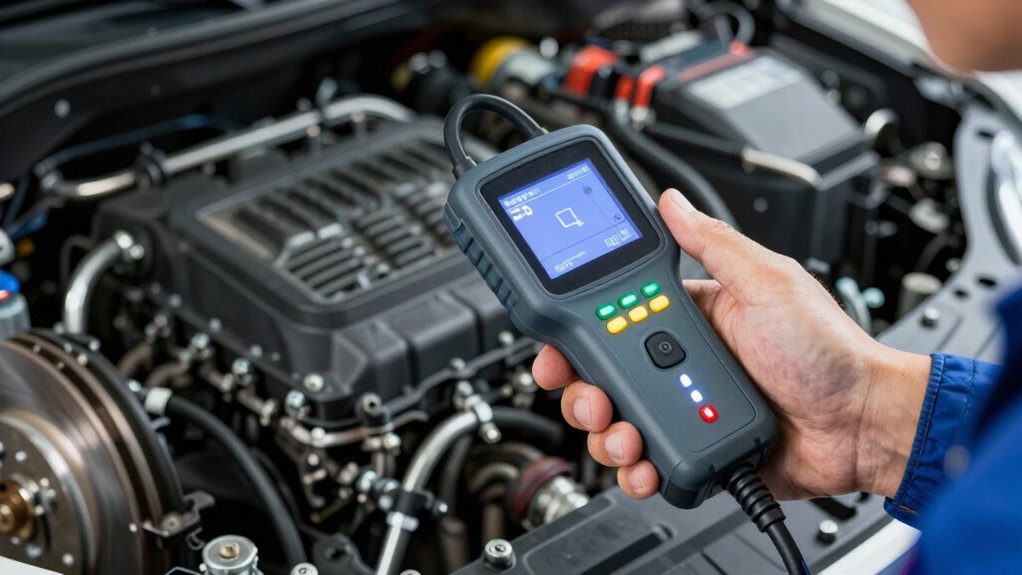
Deciding whether to use a scan tool or stick with manual bleeding depends on the specific situation and your vehicle’s system. If you’ve replaced the ABS pump, module, or computer, a scan tool is crucial to activate the system and remove trapped air. Manual methods work for basic brake line bleeding without ABS involvement. Consider this table:
| When to Use a Scan Tool | When Manual Bleeding is Enough |
|---|---|
| ABS pump or module replacement | Bleeding non-ABS brake lines |
| Air trapped inside ABS system | Routine brake fluid changes |
| Electronic brake system activation | Low-traction stops manually tested |
Using a scan tool guarantees complete bleeding of the ABS module, while manual methods are quicker for simple tasks. Choose based on system complexity. Additionally, understanding digital concepts can help in navigating modern brake systems effectively.
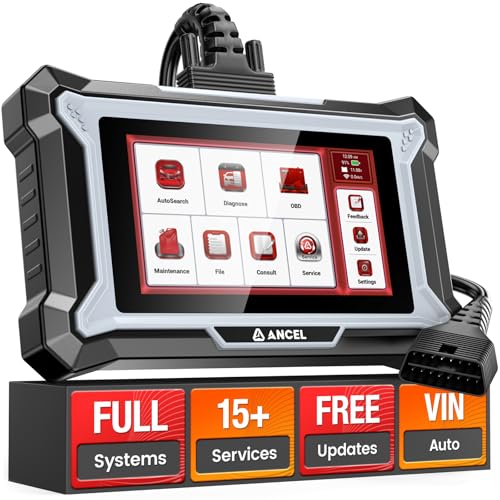
ANCEL DS200 Full System OBD2 Scanner with 15+ Reset Services – Oil/BMS/Brake Reset, DPF Regen, Injector Coding, ABS Bleeding, Free Lifetime Updates, Online Customer Service
[Stop Overpaying for Pro Diagnostics.] – The ANCEL DS200 was built for a simple reason: to give skilled…
As an affiliate, we earn on qualifying purchases.
As an affiliate, we earn on qualifying purchases.
How to Bleed ABS Brakes Step-by-Step (Using a Scan Tool)
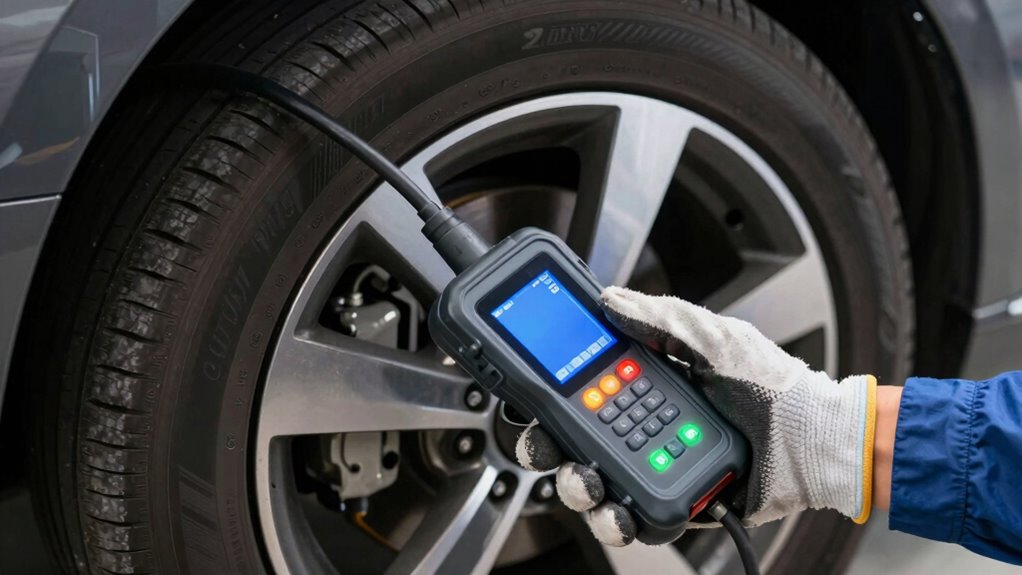
Before starting, make sure your vehicle is on level ground and the parking brake is engaged. Next, connect your scan tool and follow its guided steps to activate the ABS pump and valves. A thorough appliance inspection can help identify potential issues early, ensuring safe brake operation. Finally, verify that the brake pedal feels firm and responsive before driving.
Preparing Your Vehicle
To guarantee a successful ABS brake bleed using a scan tool, start by preparing your vehicle properly. Park it on a level surface and engage the parking brake. Place wheel chocks behind the tires to prevent movement. Gather all necessary tools, including brake fluid, wrenches, tubing, rags, and your scan tool. Check the brake fluid reservoir and top it off with the recommended brake fluid, ensuring it’s clean and free of contaminants. Inspect the brake system for leaks or damage. Before connecting the scan tool, make sure the battery is fully charged to avoid interruptions. Clear any diagnostic trouble codes related to the ABS system. Proper preparation ensures a smooth bleeding process and helps prevent issues during activation. Understanding ABS operation can help you better anticipate potential issues during the bleeding process.
Using the Scan Tool
Wondering how to effectively bleed your ABS brakes with a scan tool? First, connect your scan tool to the vehicle’s OBD-II port and turn on the ignition. Follow the on-screen prompts to access the ABS bleed function. Use the tool to activate the pump and valves, which expels trapped air from the ABS module. During this process, you may need to manually bleed each wheel afterward to ensure all air is out. Here’s a quick guide:
| Step | Action | Equipment Needed |
|---|---|---|
| 1 | Connect scan tool | OBD-II cable |
| 2 | Select ABS bleed | On scan menu |
| 3 | Follow prompts | Brake fluid, wrenches |
| 4 | Manually bleed wheels | Brake wrench |
This method guarantees a complete purge of air, restoring brake pedal firmness. Proper use of a scan tool ensures that the ABS system functions correctly after bleeding.
Verifying Brake Pedal Firmness
Making certain your brake pedal feels firm after bleeding the ABS system is a crucial step in confirming a successful repair. To verify firmness, press the pedal with steady, moderate force. It should feel solid and not spongy or soft. If it feels squishy or sinks when held, air may still be trapped in the system. Using a scan tool helps confirm that the ABS pump and valves have cycled properly during bleeding. After the scan tool activates the ABS pump, re-press the pedal and check for firmness. Repeat the process if necessary. A firm pedal indicates that air has been expelled and the system is functioning correctly. Always test the brakes gently at first to ensure responsiveness before driving. Proper pedal firmness guarantees peak braking performance and safety.
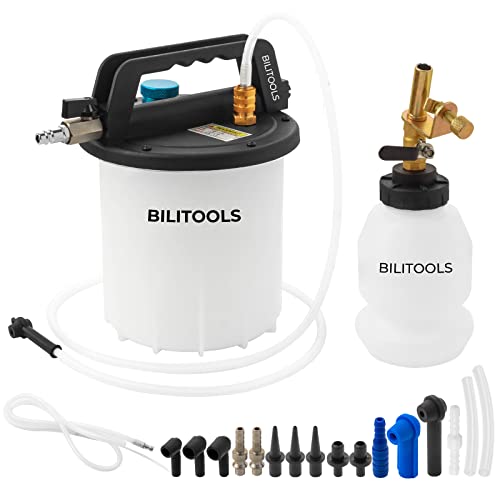
BILITOOLS 3L Brake Bleeder Vacuum Pump Kit Air Compressor, Universal One Person Pneumatic Brake System Clutch Fluid Bleeding Extractor Tool with Adapters & 1L Refilling Bottle
【One-Person Brake Bleeding Made Easy】 Connects to air compressor to let you bleed brakes or clutch lines on…
As an affiliate, we earn on qualifying purchases.
As an affiliate, we earn on qualifying purchases.
Manual ABS Bleeding: When and How to Do It
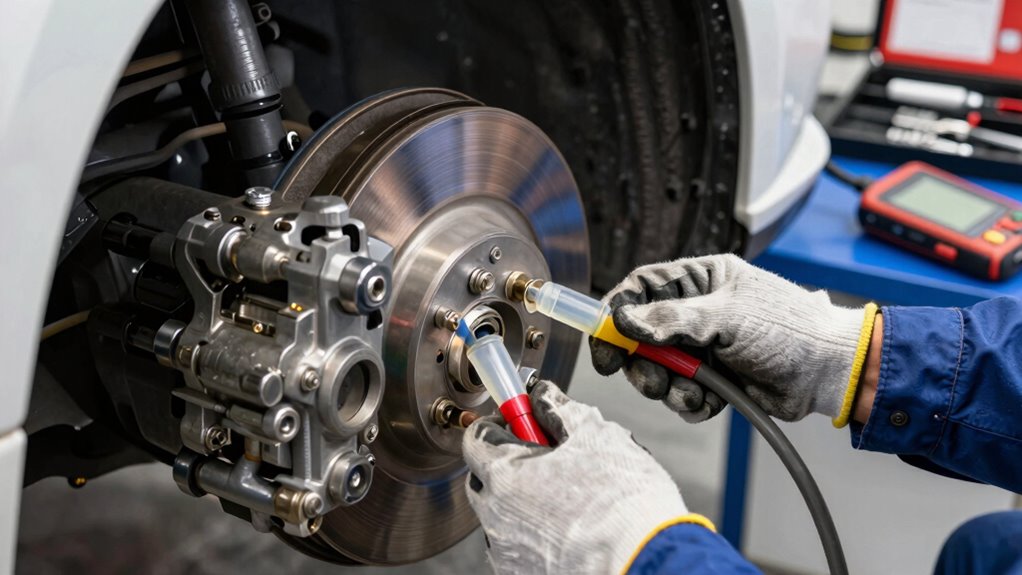
Manual ABS bleeding is appropriate when the ABS system hasn’t been recently serviced or when air has only entered the brake lines, not the ABS module itself. In this case, you can often complete the process without a scan tool. Start by ensuring the vehicle is on level ground, with the parking brake engaged and wheel chocks in place. Fill the brake fluid reservoir to the recommended level. Connect your tools—wrenches, tubing, and possibly a pressure bleeder—and bleed the wheels manually, starting from the furthest from the master cylinder. Pump the brake pedal firmly to help push air out of the lines. If no air is trapped inside the ABS module, a simple manual bleed can restore brake feel. Always verify pedal firmness before testing driveability. Additionally, understanding the airless paint spraying process can help prevent introducing air into the brake system during maintenance.
Troubleshooting Common ABS Bleeding Problems
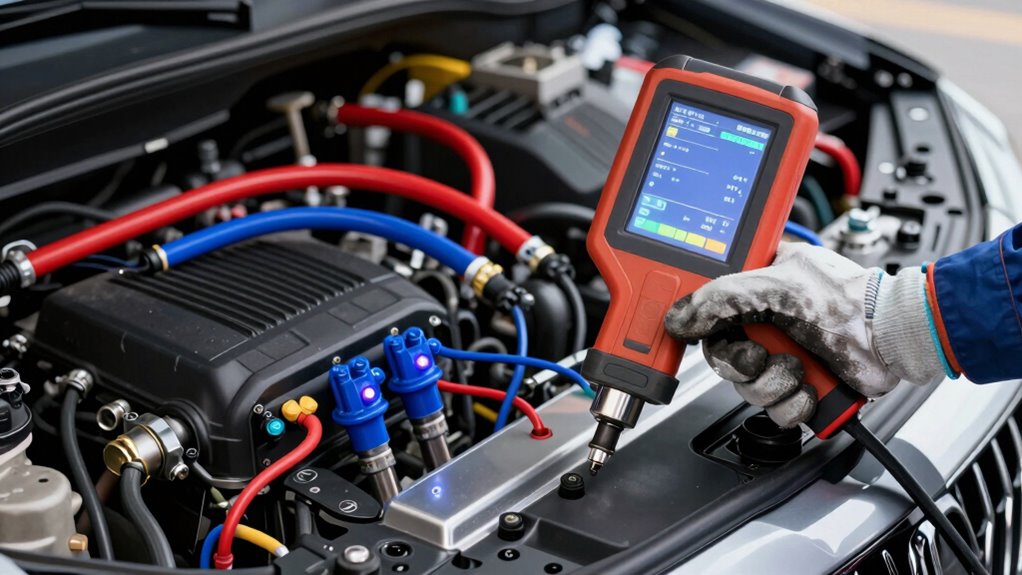
Troubleshooting common ABS bleeding problems often involves identifying issues like trapped air that won’t fully purge, faulty valves, or sensor errors. If your brake pedal remains soft or spongy after bleeding, air might still be trapped. Faulty ABS valves can prevent proper fluid flow, causing incomplete bleeding. Sensor errors, like ABS warning lights, can also interfere. To diagnose, check the following:
| Issue | Symptoms | Solution |
|---|---|---|
| Trapped air | Spongy pedal, poor braking | Use scan tool to cycle ABS pump/valves |
| Faulty valves | No ABS activation, error codes | Replace or repair valves |
| Sensor errors | Warning lights, no ABS control | Check sensor connections, replace if needed |
Choosing the Right Scan Tool for ABS Bleeding and Diagnostics
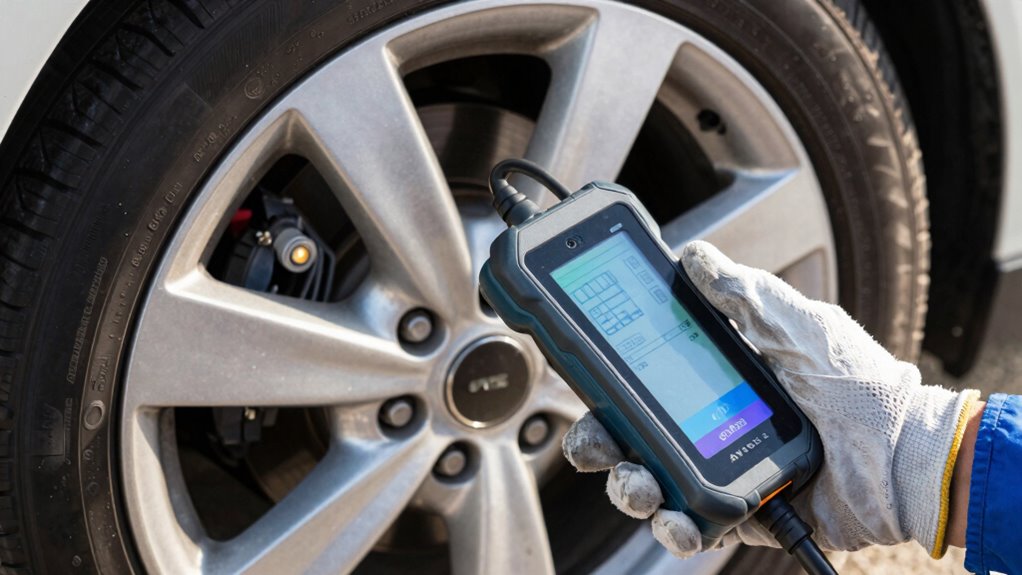
Choosing the right scan tool is essential for effective ABS bleeding and diagnostics because not all tools offer the same capabilities. You need a device that can activate the ABS pump and valves to expel trapped air efficiently. Look for tools with bi-directional control, which allow you to manually command the ABS system during bleeding. Compatibility is vital—ensure the scanner supports your vehicle’s make and model. User-friendly guided procedures can simplify the process, especially if you’re DIY-ing. Affordable options like the Foxwell NT809 or Autel MaxiSYS 906Pro-TS deliver reliable features without breaking the bank. Also, check for lifetime updates and live data functions to stay current with vehicle software. The right tool makes ABS bleeding smoother and more effective, saving you time and effort. Incorporating bi-directional control capabilities can significantly improve the success rate of your bleeding procedure.
Frequently Asked Questions
Can I Bleed ABS Brakes Without a Scan Tool?
Yes, you can bleed ABS brakes without a scan tool for simple brake line air removal. Manual bleeding works if no air is trapped inside the ABS module. Just perform traditional two-person bleeding, guarantee the brake fluid reservoir stays topped up, and make controlled stops to activate ABS manually. However, if air is inside the ABS module after repairs, using a scan tool becomes necessary to fully purge the system and ensure proper brake function.
How Often Should I Perform ABS Bleeding?
Think of your brake system like a delicate musical instrument; it needs tuning when it’s out of harmony. You should bleed your ABS brakes only when air enters the system, typically after repairs or leaks. Regularly, there’s no need to do it. Keep an eye on your brake pedal feel and warning lights. If you notice sponginess or reduced braking, it’s time for a bleed to restore safe, responsive stopping power.
Is ABS Bleeding Necessary After Changing Brake Fluid?
No, ABS bleeding isn’t usually necessary after changing brake fluid if no air has entered the system. You can perform a simple manual bleed to remove air from the brake lines, which is sufficient in most cases. However, if you notice spongy brakes or reduced stopping power, especially after ABS repairs or component replacements, then using a scan tool to bleed the ABS system becomes essential to guarantee all trapped air is expelled effectively.
What Are Signs of Trapped Air in the ABS System?
Did you know that about 20% of brake failures are caused by trapped air? When air is trapped in your ABS system, you’ll notice a spongy brake pedal, longer stopping distances, or a warning light on your dashboard. You might also feel a lack of responsiveness during hard braking or hear strange noises. If these symptoms appear, it’s time to bleed the ABS system to restore proper brake function.
Can Faulty ABS Modules Affect Bleeding Procedures?
Faulty ABS modules can complicate bleeding procedures because they may not respond correctly during activation, preventing proper air removal. You might notice inconsistent brake pedal feel or warning lights, indicating issues. Without a functioning module, the system may not cycle properly, making it harder to purge trapped air. In such cases, using a scan tool becomes essential to activate the module and guarantee complete bleeding, restoring braking performance.
Conclusion
Knowing when to use a scan tool versus manual methods can save you time and frustration. Whether you’re bleeding your ABS brakes or troubleshooting issues, understanding the process helps keep your vehicle safe. So, next time you face brake problems, ask yourself: do I need that high-tech scan tool or can I manage it manually? Staying informed ensures you make the right choice for effective, safe brake maintenance.