

Temperature swings in storage areas often cause condensation because cool surfaces reach dew point faster when temperatures drop or fluctuate suddenly. To prevent this, keep your storage environment stable by enhancing insulation, improving ventilation, and monitoring humidity levels. Elevate items and seal gaps to reduce contact with cold surfaces and external moisture infiltration. Managing these factors can considerably decrease condensation risks. Stay with us to learn more effective strategies for controlling storage climate and protecting your items.
Key Takeaways
- Maintain consistent indoor temperatures to prevent surfaces from reaching dew point and causing condensation.
- Improve insulation and ventilation to stabilize temperature fluctuations and reduce moisture buildup.
- Use dehumidifiers and moisture absorbers to control humidity levels during temperature shifts.
- Elevate stored items and seal entry points to prevent external moisture infiltration and cold surface contact.
- Regularly monitor temperature and humidity with calibrated sensors to detect and address condensation risks early.

DEWALT Grease Gun 20V MAX, Cordless Electric Grease Gun 42” Hose, 10,000 PSI, Variable Speed Triggers, Tool Only (DCGG571B)
DEWALT cordless grease gun can power through clogged grease fittings with a motor that delivers up to 10,000...
As an affiliate, we earn on qualifying purchases.
Why Do Temperature Swings Cause Condensation in Storage?

Temperature swings cause condensation in storage because when warm, moist air enters a cooler container, it cools down and releases moisture as liquid water. As the air’s temperature drops, its capacity to hold water vapor decreases, causing excess moisture to condense on surfaces. Sudden temperature changes, especially between day and night, create ideal conditions for this process. For example, a warm day followed by a cool night can cause the interior surfaces of your storage to reach or fall below the dew point, leading to water droplets forming. This is especially problematic in environments with high humidity, where more moisture is available to condense. Understanding this process helps you recognize why temperature fluctuations are a key factor in storage moisture problems. Proper ventilation can also help reduce moisture buildup and prevent condensation issues.

934330T Hydraulic Tank Desiccant Breather - Universal Fit for Parker Reservoirs, Moisture-Removing Dehumidification Filter (Stock in US)
934330T For Use With Parker All Hydraulic Reservoirs
As an affiliate, we earn on qualifying purchases.
How Seasonal Changes Lead to Moisture Problems in Storage Areas
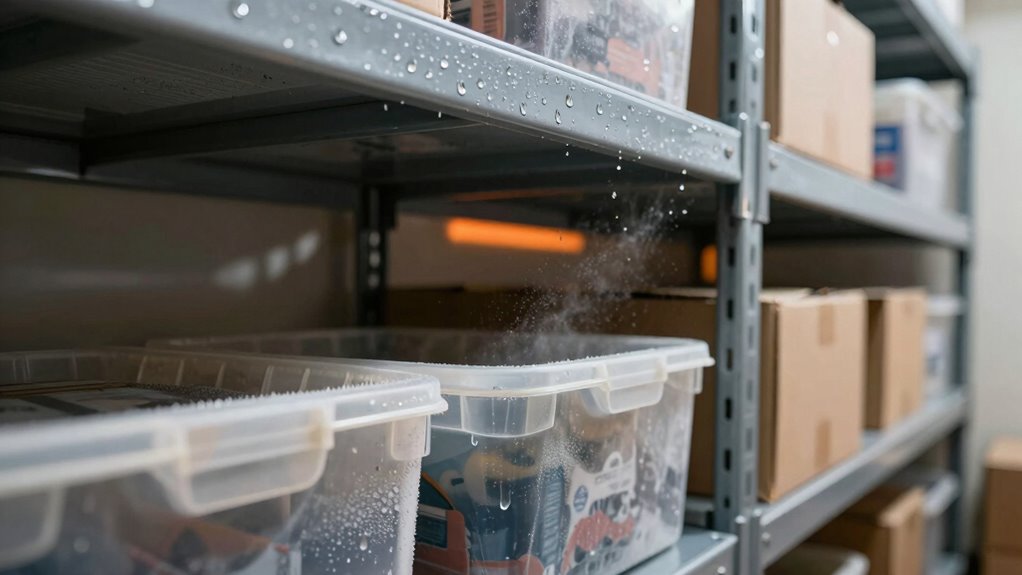
Seasonal changes markedly impact moisture levels in storage areas by altering environmental conditions and moisture sources. During spring, rain and snowmelt increase ground moisture, raising humidity inside storage spaces. Summer often brings high humidity levels, creating ideal conditions for condensation, especially when cool surfaces meet warm, moist air. Fall’s frequent rain can cause leaks and introduce dampness, elevating the risk of moisture buildup. In winter, warm air entering cold containers condenses quickly on metal walls, leading to moisture problems. These seasonal shifts cause fluctuating temperatures and humidity, making it harder to maintain a stable environment. Without proper management, these changes can lead to condensation, mold growth, and damage to stored items, emphasizing the need for proactive moisture control strategies throughout the year. Additionally, understanding the contrast ratio of your storage environment can help you identify areas prone to moisture buildup and take targeted measures to prevent it.

Hydraulic Tank Desiccant Breather 934330T Breather Filter suitable for Parker Dehumidification Filter Element Fits All Hydraulic Reservoirs
934330T For Use With Parker All Hydraulic Reservoirs
As an affiliate, we earn on qualifying purchases.
Signs That Condensation Is Developing and What to Watch For

When condensation begins to form, you’ll notice certain signs that indicate moisture is accumulating on surfaces. Look for water droplets on walls, ceilings, or stored items—these are clear indicators. You might also see foggy or hazy windows or reflective patches on metal surfaces. A musty smell in the storage area suggests mold or mildew starting to develop due to excess moisture. Warped or swollen packaging and rust spots on metal parts are additional warning signs. Keep an eye out for damp spots or streaks on floors and walls, especially after temperature fluctuations. Proper ventilation can help reduce the risk of condensation and moisture buildup. If you notice any of these signs, it’s a sign that moisture is settling in and condensation is likely forming. Addressing these early signs helps prevent more severe moisture problems down the line.

Hydraulic Fluid Reservoir Air Breather with Dipstick | Dump Cap Breather Replacement for Automotive Hydraulic Systems | Red Dehumidifier Cap(∅1inches)
【Built-In Dipstick for Easy Monitoring】This hydraulic fluid reservoir air breather features a convenient built-in dipstick, allowing you to...
As an affiliate, we earn on qualifying purchases.
Simple Ways to Reduce Temperature Fluctuations and Prevent Moisture
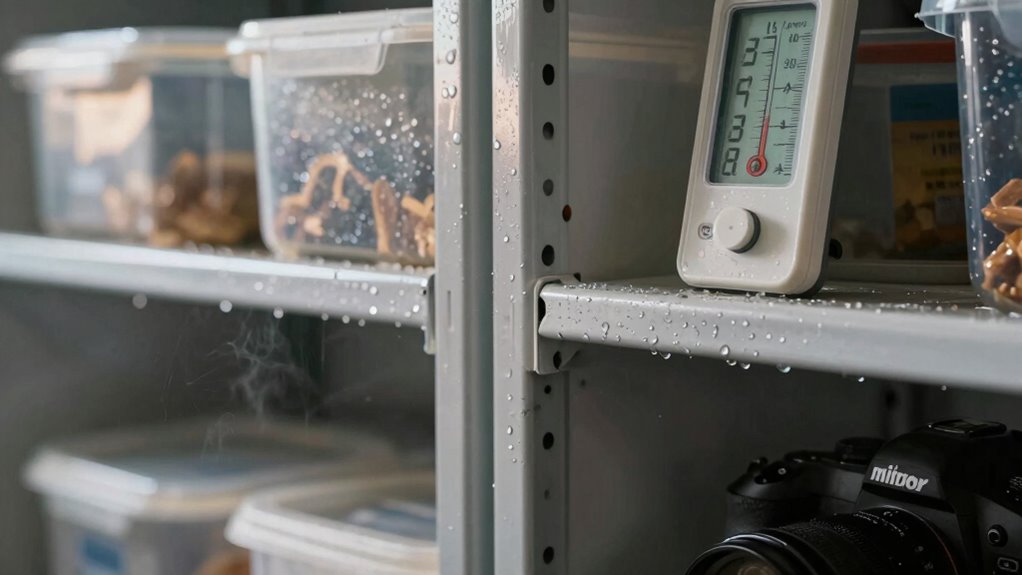
You can reduce temperature fluctuations by improving your insulation to keep interior conditions stable. Ensuring proper ventilation helps prevent moisture buildup and allows warm, moist air to escape. Combining these strategies creates a more consistent environment, minimizing the risk of condensation and moisture damage. Regular maintenance of ultraviolet protection can also help preserve insulation effectiveness over time.
Enhance Insulation Effectiveness
Enhancing insulation is a straightforward way to stabilize temperatures and prevent moisture buildup in storage areas. By improving wall and ceiling insulation, you reduce temperature swings that cause condensation. Use high-quality insulation materials like spray foam, rigid panels, or mineral wool to create a thermal barrier. Guarantee all gaps, cracks, and joints are sealed tightly to prevent air leaks, which can undermine insulation performance. Adding reflective barriers can also reflect heat and maintain consistent interior temperatures. Proper insulation minimizes the temperature difference between the storage space and the outside environment, reducing the likelihood of surfaces reaching dew point. Effective insulation practices help maintain a stable environment, minimizing moisture issues and extending the lifespan of stored items. Regularly inspect and maintain insulation to address wear or damage promptly. Effective insulation keeps the environment stable, curbing condensation and extending the lifespan of stored items.
Improve Ventilation Strategies
Effective ventilation is essential for reducing temperature fluctuations and controlling moisture buildup in storage areas. Proper airflow helps balance indoor and outdoor temperatures, preventing cold spots that promote condensation. Install vents or exhaust fans to allow moist, warm air to escape and fresh air to enter, reducing humidity levels. Ensure vents are strategically placed to promote cross-ventilation, especially near high-moisture sources. Regularly maintain and clean ventilation systems to keep airflow unobstructed. Using exhaust fans during humid conditions can markedly lower interior moisture. Additionally, incorporating vents that can be adjusted or closed during extreme weather helps maintain stable temperatures. Proper ventilation is a crucial factor in managing indoor humidity and preventing condensation issues. Effective ventilation minimizes temperature swings, reduces condensation risk, and creates an environment that’s less hospitable to mold and microbial growth.
Monitoring Humidity and Temperature to Keep Storage Dry
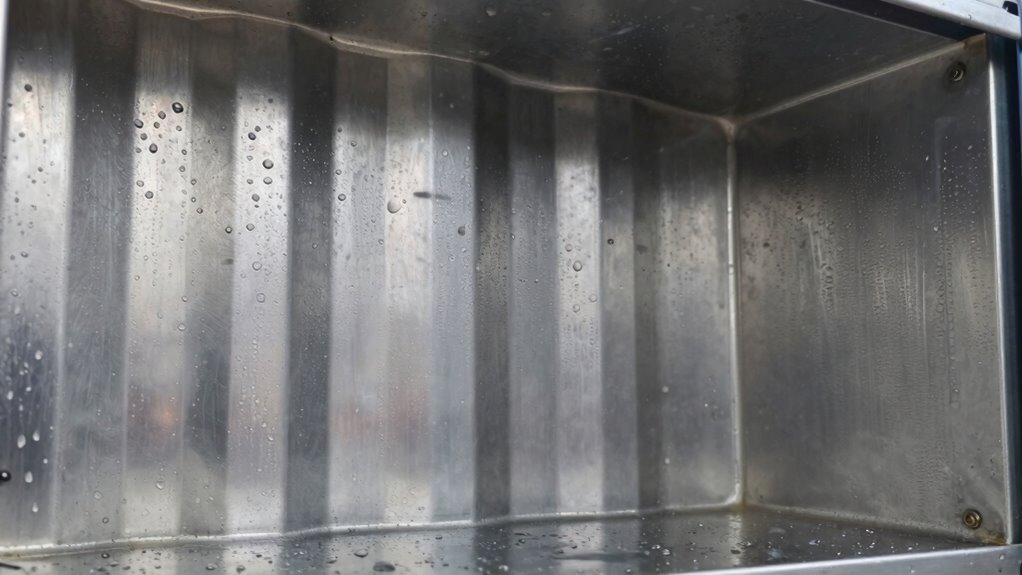
To keep your storage dry, you need to measure humidity accurately with reliable hygrometers. Understanding how temperature and humidity relate helps you predict condensation risks and adjust controls effectively. Regular monitoring ensures you catch issues early and maintain ideal storage conditions. Being aware of regional flavor profiles can also guide optimal storage practices for different types of coffee and tea.
Accurate Humidity Measurement Techniques
How can you guarantee your storage environment stays dry and free from condensation? The key is using accurate humidity measurement techniques. Invest in a reliable hygrometer, preferably digital, that provides precise readings of relative humidity and temperature. Place the device in multiple locations within your storage area to monitor variations and identify problem zones. Regularly calibrate your hygrometers to maintain accuracy, especially after temperature swings or power outages. Record measurements consistently to track trends over time. Combining these readings with temperature data helps you understand when conditions approach dew point, allowing proactive adjustments. Using accurate tools and consistent monitoring enables you to manage humidity effectively, preventing condensation and protecting your stored items from moisture damage. Additionally, understanding power cord standards can help ensure safe electrical setups in your storage environment, minimizing fire risks.
Temperature and Humidity Correlation
Monitoring both temperature and humidity together provides a clearer picture of your storage environment’s moisture risks. When you track these variables simultaneously, you can better anticipate condensation points and prevent moisture buildup. Temperature fluctuations directly influence humidity levels; as temperatures drop, RH rises, increasing condensation risk. Conversely, warming can lower RH and reduce moisture problems. To manage this effectively, consider these key factors:
- Rapid temperature changes cause significant RH shifts, affecting condensation.
- Cooler surfaces tend to reach dew point faster during temperature drops.
- Insulation minimizes temperature swings, stabilizing RH.
- Proper ventilation helps balance moisture levels, preventing excess humidity buildup.
- Utilizing humidistats and thermometers allows for precise monitoring of environmental conditions, enabling timely adjustments to prevent condensation.
Long-Term Strategies to Protect Your Storage From Condensation

Long-term protection against condensation requires implementing thorough strategies that address temperature stability and moisture control. You should invest in high-quality insulation for walls and ceilings to reduce temperature fluctuations, preventing surfaces from reaching dew point. Installing vents or airflow systems helps remove moist air and maintain consistent humidity levels. Using dehumidifiers or moisture absorbers like silica gel can effectively manage indoor humidity, especially during humid seasons. Elevating stored items on pallets encourages air circulation and minimizes contact with cold surfaces. Regularly monitoring humidity with hygrometers allows you to detect changes early. Seal cracks, gaps, and doors to prevent external moisture infiltration. Incorporating climate control systems can further optimize storage conditions and prevent condensation issues over time. Over time, maintain these systems and make gradual temperature adjustments to avoid sudden condensation, ensuring your storage remains dry and protected.
Frequently Asked Questions
How Does Insulation Help Prevent Condensation in Storage Areas?
Insulation helps prevent condensation by maintaining a stable temperature inside your storage area. It acts as a barrier, reducing heat transfer and minimizing temperature swings that cause surfaces to reach dew point. With consistent temperatures, your surfaces stay above the dew point, preventing moisture from condensing. Proper insulation also reduces the risk of cold spots, allowing moisture management to be more effective and keeping your stored items dry and protected.
What Are the Best Types of Vents for Moisture Control?
You should choose vents that promote effective airflow and moisture removal, like adjustable louver vents or ridge vents. These allow moist air to escape while preventing rain and dust from entering. Installing vents with screens or dampers helps control humidity levels and prevent condensation buildup. Regularly check and clean them to guarantee proper function. Proper vent placement and size are key to maintaining balanced moisture and reducing condensation risks in your storage area.
How Often Should Humidity Levels Be Checked in Storage Containers?
Ever wondered how often you should check humidity levels? You should monitor humidity at least once a week, especially during seasonal changes or after weather events. Regular checks help you catch rising moisture early, preventing mold and condensation issues. Use a hygrometer for accurate readings, and increase frequency during high humidity seasons. Consistent monitoring keeps your storage environment stable and protects your valuable items effectively.
Can Dehumidifiers Eliminate All Condensation Risks?
Dehumidifiers substantially reduce condensation risks, but they can’t eliminate them entirely. You need to monitor humidity levels regularly and combine dehumidification with other strategies like insulation, ventilation, and sealing gaps. Keeping humidity below 55% is ideal, but fluctuations can still occur due to temperature swings. So, rely on dehumidifiers as part of an all-encompassing approach rather than a sole solution to prevent moisture buildup.
What Maintenance Practices Are Most Effective for Long-Term Moisture Prevention?
In the age of dial-up internet, you understand the importance of consistent maintenance. To prevent long-term moisture buildup, regularly inspect and seal cracks, gaps, and doors. Keep vents clear, use hygrometers to monitor humidity, and maintain insulation. Schedule routine checks, especially after weather shifts, and consider adding moisture absorbers. These proactive steps help control condensation, preserving your storage and ensuring it stays dry through changing seasons.
Conclusion
By controlling temperature swings, you can prevent costly moisture damage. Did you know that up to 50% of storage losses are caused by condensation-related issues? Regularly monitoring humidity and staying vigilant for signs of moisture can save you money and protect your inventory. Implement simple strategies today to maintain stable conditions, and you’ll greatly reduce the risk of condensation. Keep your storage dry and secure by staying proactive—it’s a small effort with big results.