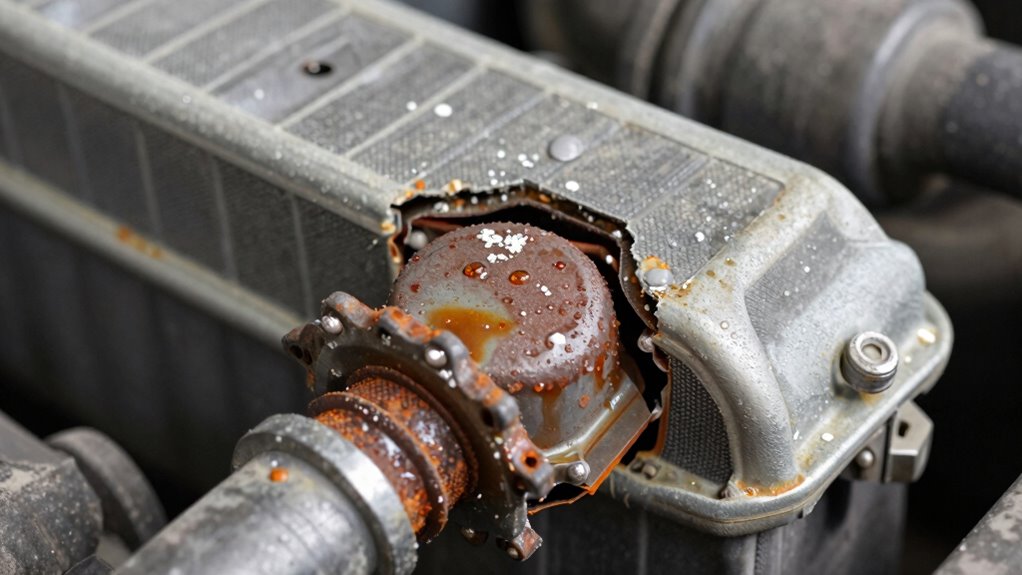

If you want to spot coolant corrosion early, look for signs like discolored, murky, or foamy coolant in the reservoir, which can signal contamination. Check the radiator surface—brown or reddish hues hint at rust buildup. Pay attention to strange odors like sweet or burnt smells and watch for rust, cracks, or bulges on hoses and radiators. Ignoring these signs can lead to overheating and costly repairs, but understanding these clues can help you keep your system healthy.
Open a free Amazon Business account
Business pricing, bulk buying and tax-exempt orders.
As an affiliate, we earn on qualifying purchases.
Key Takeaways
- Discolored, rusty, or murky coolant indicates early corrosion and contamination in the cooling system.
- Foamy or milky coolant suggests head gasket failure or debris buildup often ignored.
- Rusty or reddish radiator surfaces signal initial corrosion points most drivers overlook.
- Sweet or burnt smells near the vehicle may reveal unnoticed coolant leaks and overheating.
- Cracked, bulging, or soft hoses are signs of heat damage and corrosion-related deterioration often ignored.
As an affiliate, we earn on qualifying purchases.
How to Recognize Coolant Corrosion Signs in Your Vehicle
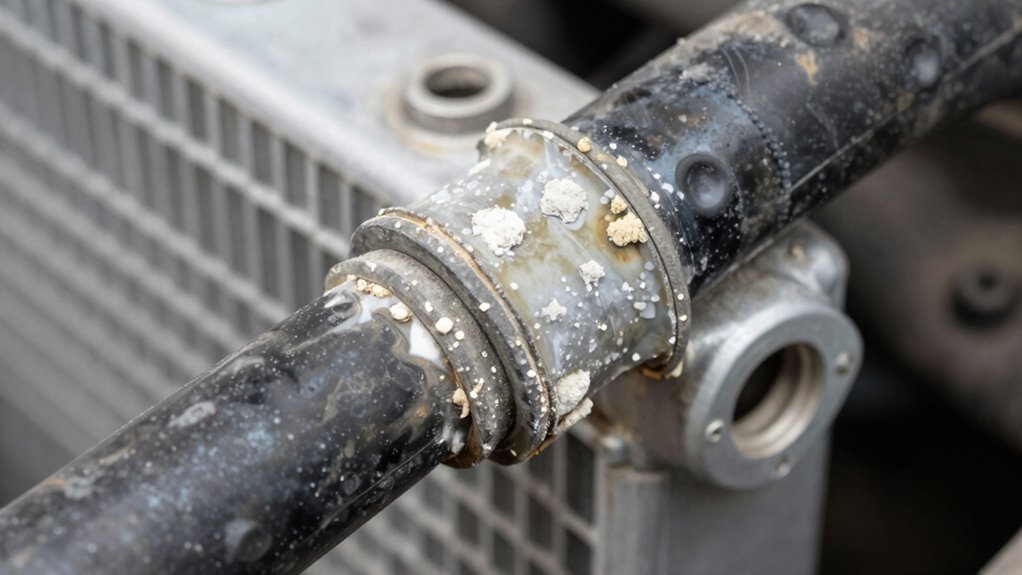
To recognize coolant corrosion signs in your vehicle, start by inspecting the coolant in the reservoir. Look for discoloration—rusty, brown, or murky fluid indicates early corrosion or contamination. Coolant that appears clear and vibrant, such as green, orange, pink, or blue, is a sign of healthy fluid. If the coolant looks milky, foamy, or has particles floating in it, it could signal head gasket failure or debris buildup. Check the radiator surface for a brownish or reddish hue, which suggests corrosion beginning. Also, note any yellowish shift from the original hue, indicating rust accumulation. Regular visual inspection helps catch corrosion early before it causes more serious damage, saving you time and costly repairs down the line. Proper maintenance of your cooling system is essential to prevent coolant corrosion and extend the life of your vehicle.
As an affiliate, we earn on qualifying purchases.
What Do Coolant Color Changes and Fluid Looks Tell You?
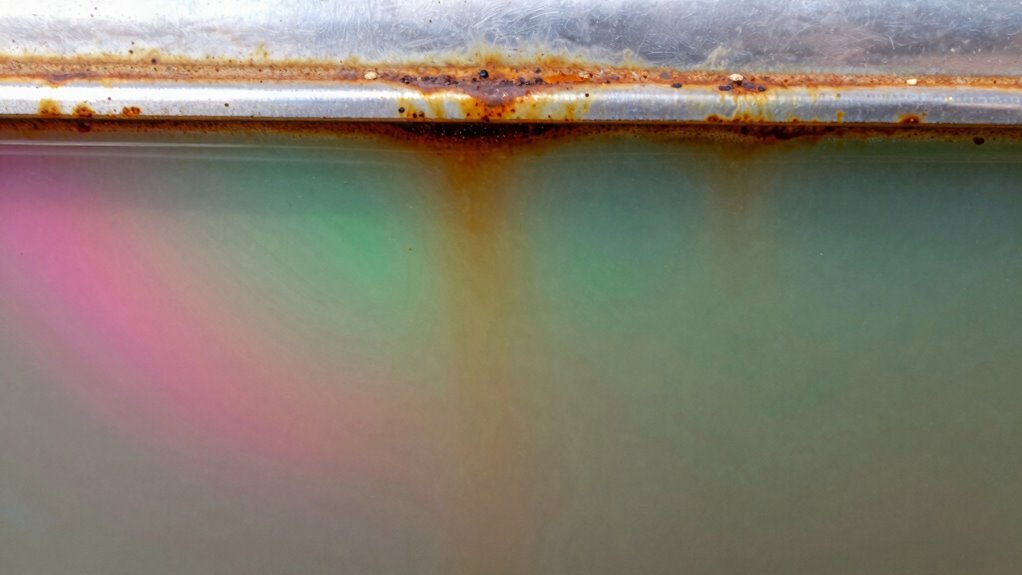
When inspecting your coolant, the color and appearance can reveal a lot about its condition and the health of your cooling system. Clear, vibrant coolant such as green, orange, pink, or blue indicates proper fluid health. If the coolant looks rusty, brown, or murky, it signals contamination or early corrosion. A milky or foamy appearance suggests coolant-oil mixing, pointing to a head gasket issue. A brownish or reddish hue on the radiator surface shows corrosion beginning, while a yellowish tint from green coolant indicates rust buildup. Changes in fluid look aren’t just superficial; they warn of internal problems that could lead to engine damage. Regularly check your coolant’s appearance to catch early signs of trouble and maintain ideal system performance. Coolant deterioration can accelerate if coolant color changes are ignored, increasing the risk of costly repairs.
As an affiliate, we earn on qualifying purchases.
Detecting Odors and Surface Damage That Signal Problems
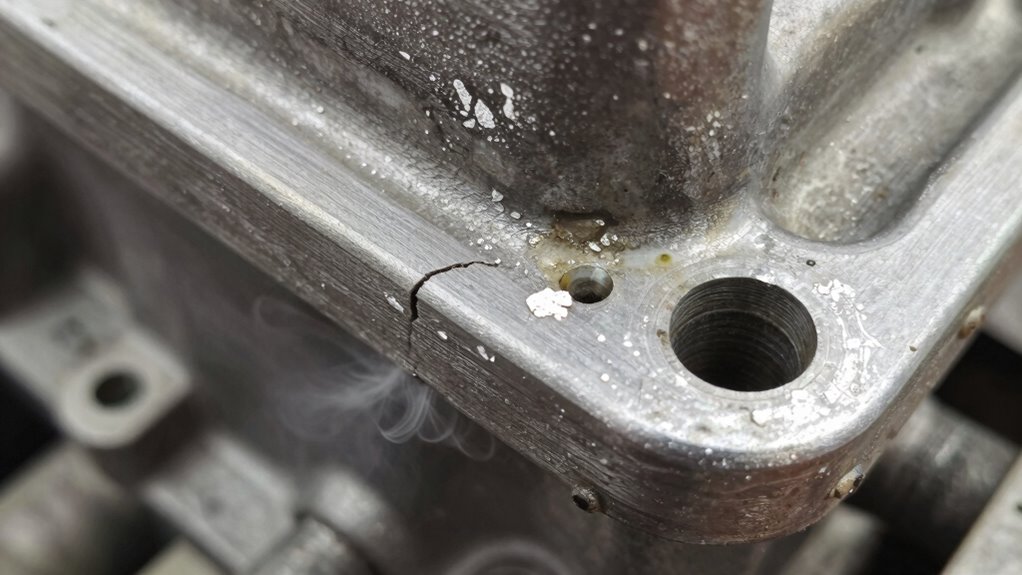
Detecting unusual odors and surface damage can reveal critical cooling system issues before they escalate. You should be alert for specific smells and visual clues that point to trouble. For example, a sweet, sugary scent near your vehicle or inside the cabin indicates a coolant leak, while a burned sweet smell suggests overheating or boiling antifreeze. An oily, greasy texture with a corresponding smell signals possible fluid contamination. Surface damage like rust scaling or corrosion on the radiator and hoses shows early deterioration. Cracks, bulges, or soft spots on hoses warn of imminent failure. Discolored or chalky residue on components often signals aging or heat damage. Recognizing these signs early helps you address issues before costly repairs or engine damage occur. Pay particular attention to early warning signs, as timely detection can prevent more serious complications.
As an affiliate, we earn on qualifying purchases.
Why Overheating Happens and How Corrosion Affects Temperature
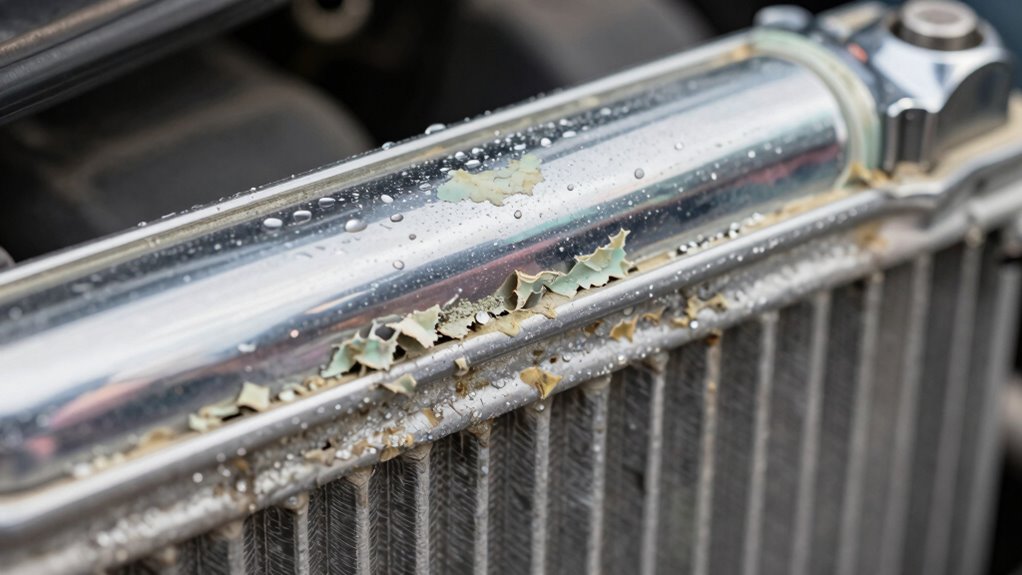
Overheating occurs when the cooling system fails to regulate engine temperature effectively, often due to corrosion that hampers coolant flow and heat transfer. Corrosion forms deposits that clog passages, reducing coolant circulation and insulating engine parts. This buildup traps heat, causing the engine temperature to rise beyond safe limits. As heat transfer diminishes, components like the radiator and hoses weaken, increasing leak risks. The table below highlights how corrosion impacts temperature regulation:
| Corrosion Type | Effect on Coolant Flow | Impact on Heat Transfer | Resulting Temperature Change |
|---|---|---|---|
| Scale Deposits | Block narrow passages | Insulate engine parts | Elevated engine temperature |
| Rust Buildup | Restricts coolant movement | Disrupts heat dissipation | Sudden overheating |
| Corroded Radiator Fins | Reduce airflow cooling efficiency | Impairs heat exchange | Prolonged high engine temp |
| Leaking Components | Loss of coolant reduces system pressure | Limits heat removal | Overheating and potential engine damage |
Additionally, understanding coolant corrosion helps in identifying early signs and preventing costly repairs.
Tips to Prevent Coolant Corrosion and Keep Your System Healthy
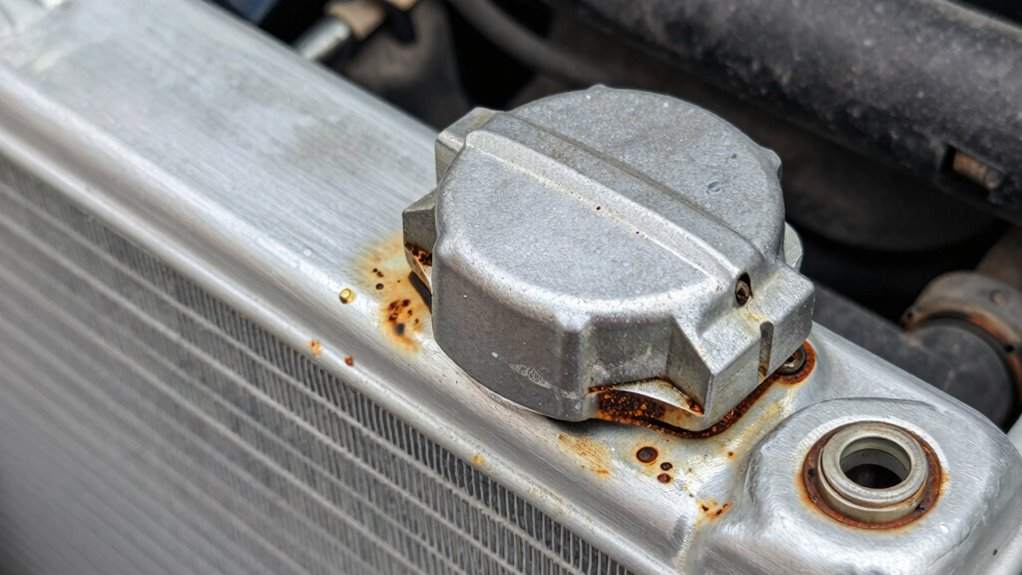
Regular maintenance and proper coolant management are your best defenses against corrosion that can compromise your cooling system. To keep everything running smoothly, always check coolant levels regularly and top off with the correct type. Flushing and replacing coolant as recommended prevents buildup of rust and debris. Use corrosion inhibitors designed for your vehicle, and ensure the system is properly sealed to prevent leaks. Additionally, inspect hoses and radiator surfaces for cracks, discoloration, or damage. Keep an eye on temperature gauges and address overheating immediately. Regularly check for visual signs of corrosion or leaks, and schedule professional inspections periodically. Staying proactive helps maintain system integrity, reduces repair costs, and extends the lifespan of your cooling components. Understanding coolant chemistry and how it interacts within your system can also help you choose the right preventative measures.
Frequently Asked Questions
Can Coolant Corrosion Occur Without Visible Leaks or Puddles?
Yes, coolant corrosion can happen without visible leaks or puddles. You might notice internal issues like rust buildup, reduced cooling efficiency, or engine overheating without any obvious external signs. Corrosion gradually damages radiator components, hoses, or internal engine parts, often going unnoticed until a major failure occurs. Regular inspections and fluid tests help catch corrosion early, even when no leaks or puddles are present, preventing costly repairs.
How Often Should I Check Coolant Quality for Early Corrosion Signs?
You should check your coolant quality at least every 6 months or every 3,000 to 5,000 miles, whichever comes first. While it’s easy to overlook, neglecting these checks can lead to unexpected engine damage. Regular inspections help you catch early signs like discoloration, foam, or strange odors. Don’t wait for leaks or overheating—staying proactive keeps your cooling system healthy and your engine running smoothly.
Are There Specific Driving Habits That Accelerate Coolant Corrosion?
You accelerate coolant corrosion if you frequently drive short distances, causing the engine to stay cold and not reach ideal temperature for coolant circulation. Hard driving, heavy loads, or towing also increase engine heat, speeding up corrosion. Skipping regular maintenance, neglecting coolant checks, or delaying radiator flushes can worsen the problem. To protect your system, avoid rapid accelerations and guarantee proper cooling system maintenance.
What Are the Long-Term Effects of Ignoring Coolant Discoloration?
Ignoring coolant discoloration is like trusting a faulty time machine—eventually, it leads to catastrophic breakdowns. Over time, rust and debris corrode your radiator and hoses, causing leaks and overheating. This damages engine parts, reduces efficiency, and shortens your vehicle’s lifespan. If you neglect these signs, you risk costly repairs, engine failure, or even total engine destruction, turning your reliable ride into an expensive paperweight.
Is It Safe to Drive With Minor Surface Rust on the Radiator?
You shouldn’t drive with minor surface rust on the radiator. While it might seem harmless, rust can weaken radiator metal over time, increasing the risk of leaks or failure. Continuing to operate your vehicle could lead to overheating or more severe damage. It’s best to have a mechanic inspect the radiator promptly and consider replacing or treating it to prevent costly repairs and make certain your vehicle stays safe and reliable.
Conclusion
Don’t disregard dangerous diagnostic details. Diligently detect discolorations, odors, and damaged surfaces to dodge costly repairs. By being vigilant about vibrant fluids and foul smells, you prevent potential problems from progressing. Regularly review your radiator’s health, restore coolant clarity, and reinforce your system’s strength. Stay savvy, steer clear of serious setbacks, and safeguard your vehicle’s essentiality. Remember, proactive attention prevents pricey problems—protect your ride before corrosion causes chaos.
Flea & tick season Picks
flea and tick prevention
As an affiliate, we earn on qualifying purchases.