
Hydrodynamic lubrication depends on both speed and viscosity to form a strong, stable lubricant film that keeps surfaces apart under load. As your speed increases, lubricant flows more effectively into the gap, thickening the film. Higher viscosity also helps support heavier loads by resisting flow and building pressure. If you keep exploring, you’ll understand how balancing these factors optimizes equipment performance and extends its lifespan.

Get business pricing on garage and car supplies
- Business-only prices and quantity discounts
- Tax-exempt purchasing
- Multiple users, one account, clear invoices
Key Takeaways
- Increased speed draws more lubricant into the gap, forming a thicker film that supports higher loads.
- Higher viscosity fluids resist flow, creating thicker, more stable films at given speeds.
- Faster movement enhances pressure buildup within the lubricant film, improving load support.
- Proper viscosity ensures sufficient pressure generation at operating speeds to prevent surface contact.
- Speed and viscosity together determine the film’s stability, affecting the effectiveness of hydrodynamic lubrication.
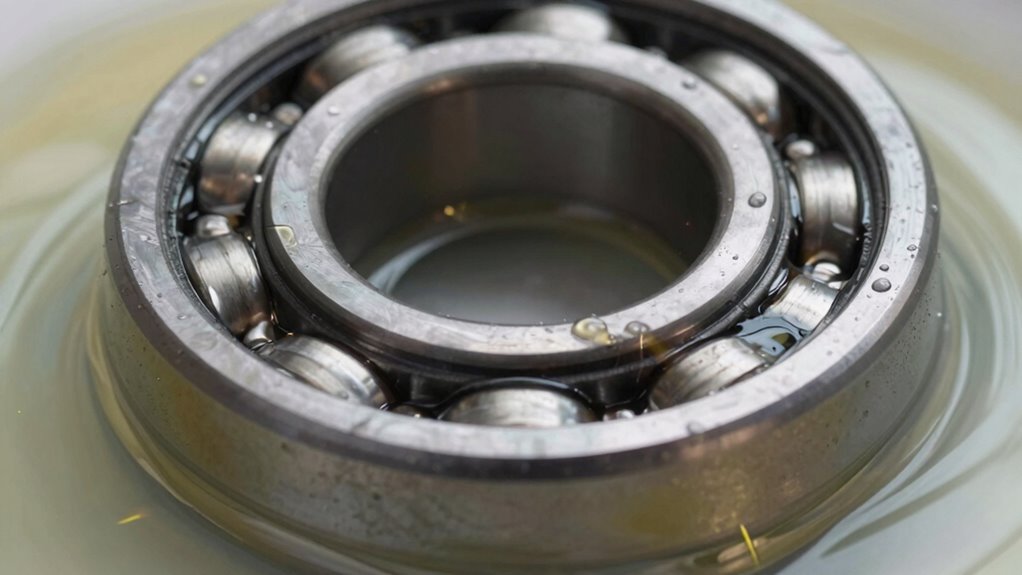
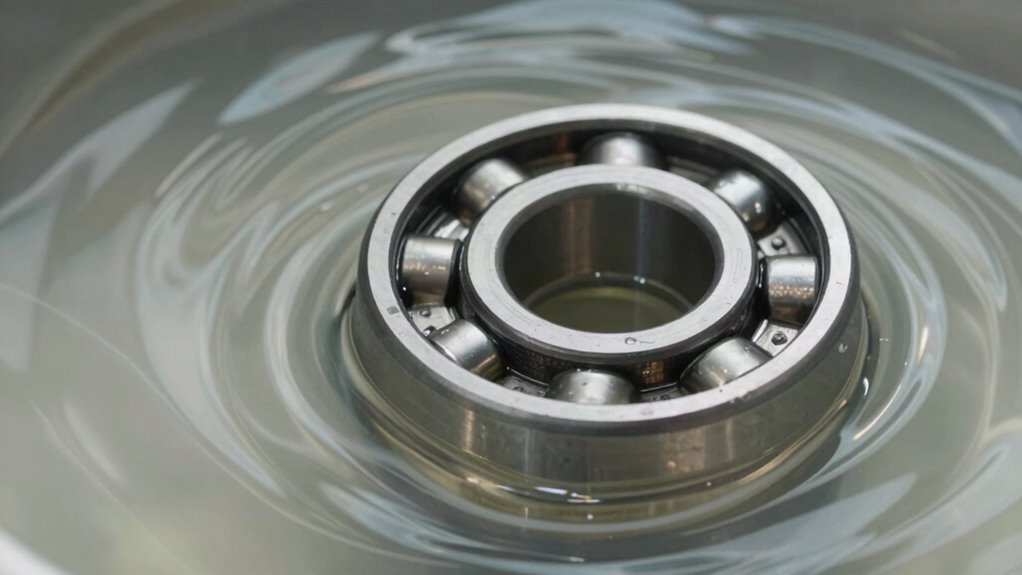
Hydrodynamic lubrication occurs when a thick film of lubricant completely separates moving surfaces, reducing friction and wear. This fluid film is essential because it supports the load between surfaces, preventing direct contact and minimizing damage. When you understand how the fluid film forms and behaves, you’ll see why speed and viscosity are so closely linked in maintaining effective lubrication. As you increase the relative speed between surfaces, the lubricant is drawn into the gap more efficiently, creating a thicker fluid film. This thicker film enhances the load capacity because it can bear more weight without breaking down or allowing contact between surfaces. Conversely, if the speed drops, the fluid film may become too thin, risking metal-to-metal contact and increasing wear.
The key to hydrodynamic lubrication lies in the way the lubricant flows and responds to the movement of the surfaces. When surfaces move at higher speeds, the lubricant is forced into the narrowing space, generating a pressure that supports the load. The pressure buildup depends on the lubricant’s viscosity; higher viscosity fluids resist flow more and tend to form thicker films at given speeds. This is why viscosity directly influences the load capacity—the more viscous the lubricant, the better it can maintain a robust fluid film at higher loads, even if the speed isn’t very high. However, if the lubricant is too viscous, it may increase power losses due to higher resistance, so selecting the right viscosity is a balancing act.
Your choice of lubricant viscosity impacts how effectively the fluid film can sustain loads under different operating conditions. When operating at high speeds, a lower viscosity lubricant might be sufficient because the increased flow naturally boosts the fluid film thickness. But under heavy loads or slower speeds, a higher viscosity lubricant is often necessary to prevent the film from breaking down. It’s important to remember that the fluid film’s stability depends not just on viscosity but also on the surface geometry and the relative motion. Proper design ensures that at the operating speeds, the lubricant can generate enough pressure to support the load effectively. Additionally, understanding hydrodynamic principles helps in selecting the most suitable lubricant for specific applications.
As an affiliate, we earn on qualifying purchases.
Frequently Asked Questions
How Does Temperature Affect Hydrodynamic Lubrication?
Temperature effects considerably impact hydrodynamic lubrication by altering fluid viscosity. As temperature rises, the fluid’s viscosity decreases, making it thinner and reducing its ability to form a strong lubricating film. This can lead to increased friction and wear. Conversely, lower temperatures increase viscosity, creating a thicker film that better separates surfaces but might cause resistance. You should monitor temperature to maintain ideal lubrication performance.
Can Hydrodynamic Lubrication Operate at Very Low Speeds?
You might wonder if hydrodynamic lubrication works at very low speeds. The truth is, it struggles, risking lubrication breakdown and increased bearing wear. When speed drops too low, the oil can’t generate enough pressure to fully separate surfaces, leading to metal contact. This breakdown accelerates wear and damages components. So, without sufficient speed, hydrodynamic lubrication becomes unreliable, making maintenance and proper operation critical to prevent costly failures.
What Materials Are Best Suited for Hydrodynamic Bearings?
When selecting materials for hydrodynamic bearings, you should focus on those with excellent wear resistance and compatibility with lubricants, like bronze, babbitt, or specific plastics. These materials guarantee proper material selection, which directly impacts bearing longevity. Metals with good conformability and fatigue strength provide durability at high speeds, while advanced composites or coated surfaces can reduce friction and extend the bearing’s lifespan, making your equipment more reliable over time.
How Does Surface Roughness Influence Lubrication Performance?
You might think rougher surfaces improve lubrication, but in reality, surface roughness can hinder performance. A smoother surface creates a better surface texture, reducing friction and allowing the lubricant to form a stable film. Roughness control is vital; too much roughness causes uneven lubrication, leading to increased wear and potential failure. By maintaining ideal surface texture, you guarantee efficient hydrodynamic lubrication and longer bearing life.
Are There Environmental Factors Impacting Hydrodynamic Lubrication Efficiency?
Environmental factors like contaminants and humidity can considerably impact hydrodynamic lubrication efficiency. You might notice that environmental contaminants, such as dust or dirt, degrade the lubricant’s ability to form a proper film, leading to increased wear. Humidity effects, especially moisture, can dilute or weaken the lubricant, reducing its viscosity. To maintain peak performance, you should protect equipment from these environmental influences and guarantee proper sealing and maintenance.
high viscosity lubricants for machinery
As an affiliate, we earn on qualifying purchases.
As an affiliate, we earn on qualifying purchases.
Conclusion
So, next time you see machinery in motion, remember how speed and viscosity dance together beneath the surface. Hydrodynamic lubrication isn’t just about smooth operation—it’s a delicate balance that keeps everything running. But what happens when conditions shift? The secret lies in understanding this invisible force. Stay curious, because uncovering these hidden connections could change how you see everyday motion—and reveal surprises lurking in plain sight.
machine lubrication oil viscosity
As an affiliate, we earn on qualifying purchases.
As an affiliate, we earn on qualifying purchases.
industrial lubricant for high load
As an affiliate, we earn on qualifying purchases.
As an affiliate, we earn on qualifying purchases.
Halloween Picks
halloween
As an affiliate, we earn on qualifying purchases.