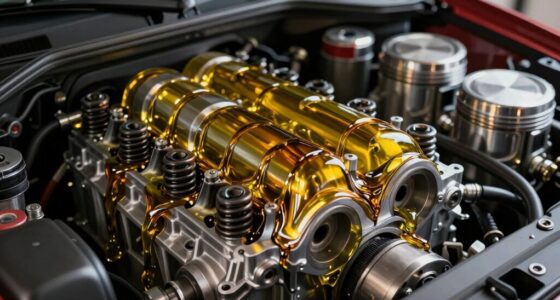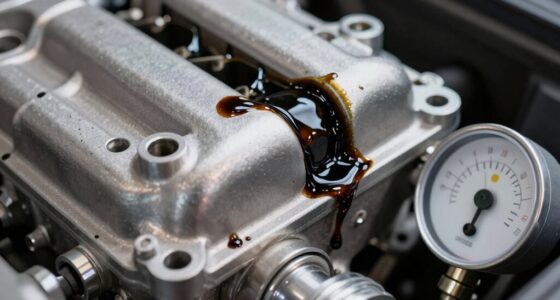

Under high load conditions, nitration in lubricating oils accelerates rapidly, producing reactive nitro-oxidation compounds that worsen oil aging. Elevated temperatures and mechanical stress promote reactions that increase acidity and sludge formation, leading to faster deterioration. This process interacts with oxidation and additive effects, compromising oil quality and equipment performance. If you want to understand how to control or monitor these changes, exploring more details can help you better manage oil health under demanding conditions.
Key Takeaways
- High load conditions accelerate nitration by increasing temperature and mechanical stress, leading to faster oil deterioration.
- Nitration introduces nitro groups into aromatic compounds, forming reactive oxidation products that damage oil quality.
- Elevated load enhances nitration and oxidation feedback loops, resulting in increased acidity, sludge, and varnish deposits.
- Mechanical stress under high load promotes nitration reactions, producing harmful nitro-oxidation compounds that weaken oil stability.
- Monitoring chemical changes can detect nitration spikes, enabling preventive maintenance during high load operations.

Nitration is a chemical process that introduces a nitro group (-NO₂) into an organic compound, typically an aromatic ring like benzene. This reaction plays a significant role in the chemistry of oil aging, especially when it occurs under high load conditions. When oils are subjected to elevated temperatures and mechanical stress, nitration can accelerate, leading to the formation of oxidation products that compromise the oil’s integrity. These oxidation products, which include acids, ketones, and aldehydes, accumulate as the oil deteriorates, altering its chemical composition and physical properties. As these compounds build up, they often interact with other additives present in the oil, creating additive effects that can either mitigate or exacerbate the aging process. For instance, certain antioxidants may partially neutralize some oxidation products, slowing degradation, but under high load, their effectiveness diminishes. This interplay results in a complex chemical environment where nitration and oxidation products feed into each other, accelerating oil breakdown.
The presence of nitrated compounds in oil signifies advanced stages of oxidation, which can lead to increased acidity, sludge formation, and corrosion. When high loads are applied, the temperature and shear forces intensify, speeding up nitration reactions. These conditions promote the formation of nitro-oxidation products, which are often more reactive and damaging than their non-nitrated counterparts. The additive effects become critical here—additives designed to protect the oil may become less effective or even participate in unwanted reactions, producing more oxidation products or nitrated impurities. This creates a feedback loop where nitration and oxidation products influence each other, further degrading oil quality and mechanical performance. Additionally, monitoring for chemical changes in the oil can provide early indications of nitration and oxidation processes underway.
Understanding these processes helps you recognize the signs of oil aging under high load. As oxidation products and nitration compounds increase, you may notice changes in oil viscosity, color, or the presence of sludge and varnish deposits. Monitoring these changes is essential because they directly affect equipment reliability and lifespan. In high-stress scenarios, the additive effects can be overwhelmed, leading to rapid deterioration. By controlling operating temperatures, maintaining proper additive formulations, and regularly analyzing oil samples, you can slow down nitration and oxidation, preventing the cascade of damage caused by these chemical reactions. Ultimately, recognizing how nitration interacts with oxidation products and additive effects allows you to implement better maintenance practices and extend the life of your equipment.

Oil Analysis Premier Kit by Under My Hood with return postage included
NOT FOR USE ON AIRCRAFT!
As an affiliate, we earn on qualifying purchases.
As an affiliate, we earn on qualifying purchases.
Frequently Asked Questions
How Can Nitration Be Detected Early in Oil Aging?
You can detect nitration early in oil aging by using spectroscopic techniques like infrared or UV-visible spectroscopy, which identify chemical indicators such as nitro groups. These methods allow you to monitor changes in oil composition in real-time, giving you a heads-up before major degradation occurs. Regular testing with these techniques helps you catch nitration early, ensuring timely maintenance and preventing costly equipment damage.
Does Nitration Affect All Types of Lubricants Equally?
Nitration doesn’t affect all lubricants equally, as it depends on factors like oxidation resistance and additive compatibility. If your lubricant has high oxidation resistance and well-formulated additives, it’ll resist nitration better. However, certain oils with lower resistance or incompatible additives may nitrate more quickly under stress. You can reduce nitration risk by choosing lubricants designed to withstand high loads and that maintain stability during extended operation.
What Are the Long-Term Effects of Nitration on Engine Components?
Nitration causes oxidation deterioration and acid formation, which can harm your engine components over time. As nitration progresses, it weakens seals and accelerates corrosion, leading to leaks and component failure. You might notice increased wear, reduced efficiency, and potential engine damage if you ignore these effects. Regular oil analysis and timely maintenance help prevent long-term issues, ensuring your engine stays reliable and performs efficiently.
Can Additives Prevent Nitration Under High Load Conditions?
Additives can enhance additive efficiency and help prevent nitration during high load conditions. Look for additives with antioxidants and anti-nitration agents, as they reduce oxidative stress and inhibit nitrogen compound formation. Regularly using these additives ensures better oil stability and protects engine components from nitration damage. Keep in mind, though, that no additive guarantees complete prevention, so maintaining ideal oil quality and load management remains essential.
How Does Temperature Influence the Nitration Process?
Did you know that every 10°C increase in temperature can double the oxidation acceleration in your oil? Temperature critically influences nitration by reducing thermal stability and speeding up oxidation. As heat rises, nitration reactions occur faster, leading to quicker oil degradation. To protect your equipment, controlling temperature is essential, as it directly impacts how quickly nitration progresses, ensuring your oil stays stable longer and maintains ideal performance.

Engine Oil Tester Gasoline & Diesel Engine Oil Quality Tester Detector Analysis Kit High-Precision Car Oil Diagnostic Tool with 50inch Flexible Probe, Identifier & Sound Prompt, 2.8in Backlit Display
1.【Why You Need Engine Oil Tester】Engine oil tester kit can help you check your engine oil regularly to…
As an affiliate, we earn on qualifying purchases.
As an affiliate, we earn on qualifying purchases.
Conclusion
Imagine your engine oil as a busy city street, bustling with activity. When you push it under high load, nitration acts like unexpected traffic jams, speeding up aging. I once saw a car struggle on a steep hill, its oil fighting to keep up. That’s exactly what nitration does—accelerating deterioration when you need your engine most. Stay vigilant, avoid overloads, and keep your oil’s journey smooth to prevent premature aging and guarantee your engine runs like new.

Liqui Moly MoS2 Anti-Friction Engine Treatment | 300 ml | Oil additive | SKU: 2009
Motor oil additive – Liqui Moly MoS2 anti-friction (300 ml. Can).Fit Type: Universal
As an affiliate, we earn on qualifying purchases.
As an affiliate, we earn on qualifying purchases.

MOLUCKFU Engine Oil Comparator Tool and Transmission Oil Viscosity Tester Acrylic Stand for Accurate Car Maintenance and Quality Testing
Versatile functionality: not only compares engine oil but also tests the viscosity of transmission oil, providing comprehensive oil…
As an affiliate, we earn on qualifying purchases.
As an affiliate, we earn on qualifying purchases.