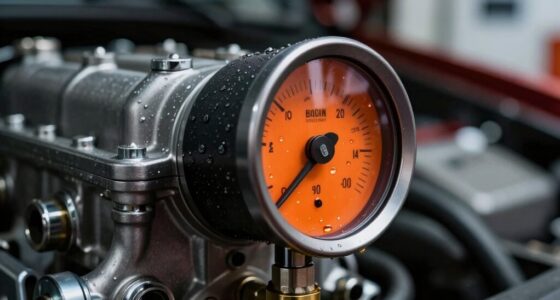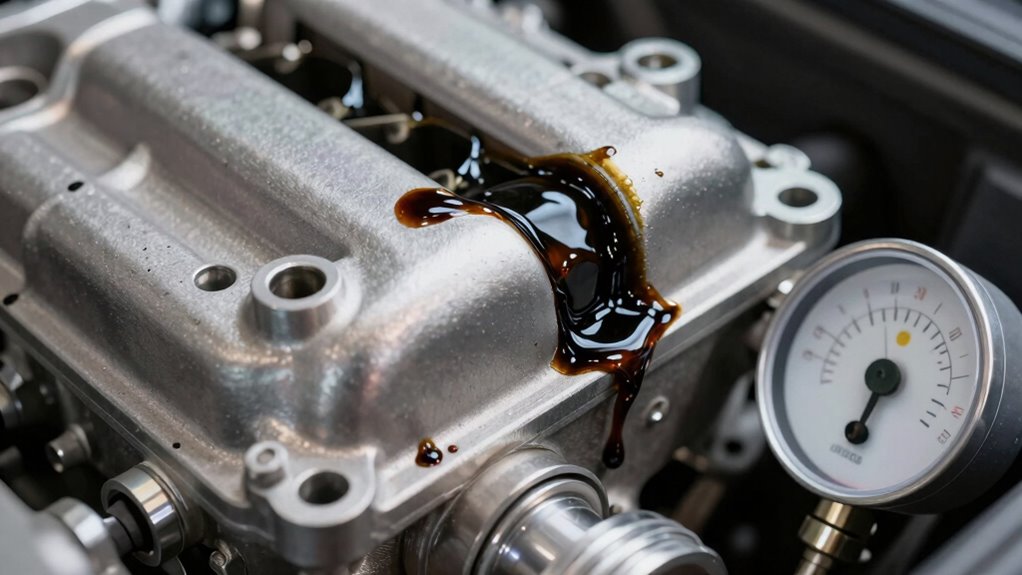

To quickly tell if your vehicle has an oil leak or is consuming oil internally, check for visible spots or drips under the car, which indicate leaks. If no leaks appear but the oil level drops gradually, your engine might be burning oil internally due to worn seals or piston rings, often causing blue smoke. Understanding these differences can save you money, and exploring further will help you pinpoint the exact cause.
Key Takeaways
- Check for visible oil spots or pooling under the vehicle to identify leaks.
- Monitor oil level decline over time without visible leaks to suggest consumption.
- Look for blue smoke from the exhaust as a sign of internal oil burning.
- Inspect seals, gaskets, and filters for damage or looseness to locate leaks.
- Note if oil levels drop gradually with no external signs, indicating internal consumption.
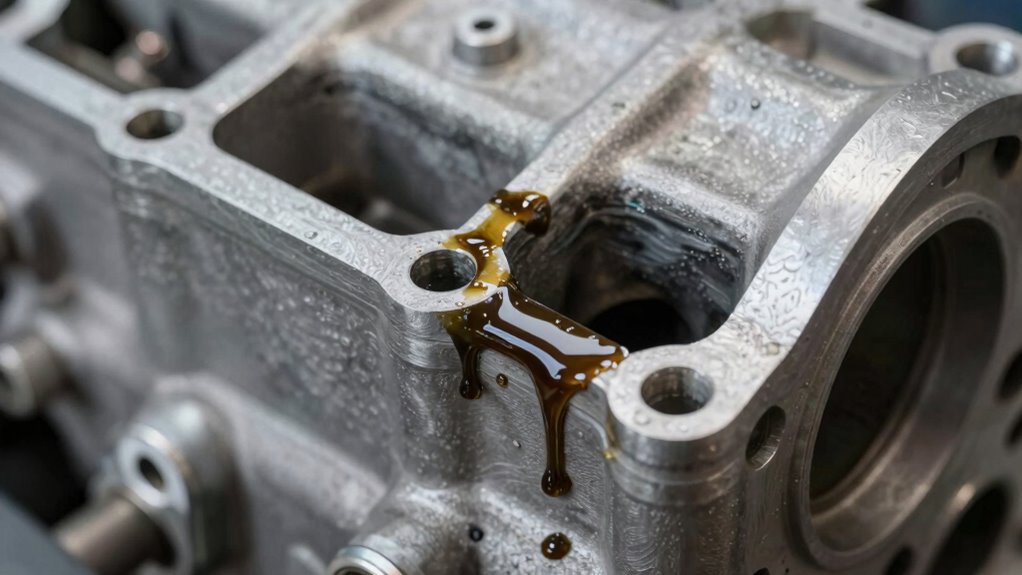
Oil leaks and oil consumption are common concerns for vehicle owners, but they stem from different issues that require distinct solutions. Recognizing the difference can save you time and money, and help you keep your vehicle running smoothly. When your car leaks oil, you’ll typically notice visible spots under your vehicle or oil pooling around certain areas. This often indicates a problem with seals, gaskets, or the oil filter itself. An oil filter plays a vital role in trapping debris and contaminants, but if it’s damaged or improperly installed, it can cause leaks. Replacing a faulty oil filter or tightening loose connections usually resolves the leak. On the other hand, oil consumption refers to the oil your engine burns during normal operation, which doesn’t necessarily leave visible drips. It’s more subtle—your dipstick reading drops over time, or you notice blue smoke from the exhaust. In this case, the issue might be worn piston rings, valve seals, or other internal engine components that allow oil to enter the combustion chamber. To address oil consumption, you might consider using oil additives designed to improve seal condition and reduce burning. These additives can help restore some of the lost compression and seal integrity, but they aren’t a cure-all for severe internal wear. Regularly checking your oil level with the dipstick is essential; if you find yourself topping off frequently, it’s time to investigate further. Sometimes, using a high-quality oil filter can also help reduce oil consumption by ensuring clean oil circulates through the engine, minimizing wear. It’s important to differentiate between a leak and consumption because their solutions differ: leaks often require fixing physical damage, replacing seals, or tightening fittings, while consumption might be alleviated by internal repairs or additives. If you notice oil spots on your driveway, it’s probably a leak—you’ll want to locate the source and address it promptly to prevent engine damage. Conversely, if your oil level drops gradually without visible leaks, it suggests consumption, which could mean internal engine issues or the need for specific oil additives. Additionally, understanding the role of oil filters can help you select the best option for your vehicle’s needs. Remember, neglecting either issue can lead to severe engine damage; leaks can cause low oil levels quickly, and high consumption can lead to engine overheating or failure. Maintaining a regular oil change schedule, using the right oil filter, and considering oil additives when appropriate are good steps toward keeping your engine healthy. Knowing the difference empowers you to take appropriate action, ensuring your vehicle remains reliable and runs efficiently for miles to come.

BOSCH 3323 Premium Oil Filter With FILTECH Filtration Technology – Compatible With Select Acura MDX, RDX, RSX, TL; Chrysler; Dodge; Ford; Honda Accord, Civic, CR-V, Pilot; Infiniti; Nissan + More
Exclusive FILTECH media technology screens out and holds on to up to 14 grams of dirt and particles,…
As an affiliate, we earn on qualifying purchases.
As an affiliate, we earn on qualifying purchases.
Frequently Asked Questions
Can Oil Leaks Cause Engine Damage Over Time?
Yes, oil leaks can cause engine damage over time. If the leak severity is high, it diminishes oil levels, leading to inadequate lubrication. This can increase engine wear and heat, ultimately harming engine longevity. Regularly check for leaks and address them promptly to prevent long-term damage. Maintaining proper oil levels and fixing leaks early ensures your engine stays healthy and lasts longer.
How Can I Prevent Oil Leaks in My Vehicle?
Think of your vehicle like a fortress; guards must be vigilant. To prevent oil leaks, perform regular preventive maintenance and check for worn seals. Replace any seals showing signs of damage promptly, as neglected seals can turn small leaks into costly repairs. Staying proactive keeps your engine sealed tight, ensuring smooth operation and longevity. Don’t wait for a leak to reveal itself—inspect and maintain to defend your engine’s health.
Are There Specific Signs Indicating Oil Consumption Issues?
If you’re concerned about oil consumption issues, watch for signs like a persistent oil smell inside your vehicle or oil discoloration on the dipstick or under the hood. These signs indicate your engine might be burning or losing oil faster than normal. Regularly check your oil levels, and if you notice these symptoms, get your vehicle inspected promptly to prevent potential engine damage.
What Are the Cost Differences Between Fixing Leaks and Addressing Consumption?
Cost comparison shows that fixing leaks often costs less than addressing consumption issues. Leak repairs typically involve simple seal or gasket replacements, which are quicker and cheaper. Conversely, tackling consumption problems may require extensive engine work or component replacements, leading to higher repair expenses. You’ll find that leak fixes are straightforward savings, while consumption corrections demand more costly, complex, and time-consuming treatments. Always weigh repair expenses against the severity of the issue.
How Often Should I Check My Oil Levels for Leaks or Consumption?
You should check your oil levels at least once a month and before long trips to catch leaks or consumption issues early. During oil level monitoring, keep an eye on your oil change intervals, as frequent drops may indicate a leak or high consumption. Regularly inspecting your oil helps prevent engine damage and keeps your vehicle running smoothly, saving you money in the long run.

A/C Pro Certified Auto Pro Oil and Fuel System UV Dye Leak Detection for Cars & Trucks & More, 1 Oz, 374CS, Universal
One application of oil and fuel system UV leak detection dye
As an affiliate, we earn on qualifying purchases.
As an affiliate, we earn on qualifying purchases.
Conclusion
Now that you can tell the difference between oil leaks and oil consumption, don’t worry if it feels overwhelming at first. Imagine checking your engine and catching a tiny drip—it’s a leak. Or noticing your oil level drops gradually over months—that’s consumption. Recognizing these signs early helps you avoid costly repairs. Keep an eye on your oil, stay proactive, and your engine will thank you for it. You’ve got this!

Bar's Leaks OS-1 Oil Seal Engine Oil Burning and Leak Repair, 16.9 oz.
REPAIRS LEAKING MAIN SEALS AND GASKETS: We have designed this product to work in all gasoline and diesel…
As an affiliate, we earn on qualifying purchases.
As an affiliate, we earn on qualifying purchases.

Automatic Transmission Dipstick for Chrysler Jeep Dodge – Level Tool with Directions Check auto Trans Fluid Oil Level -Dealer #s : 8863B, 9336, 9336A, 42RLE, NAG1, 62TE 2.7 3.5 3.6 3.7 5.7 6.1 6.4
EASY TO READ :Clear marks on the metal tip promise easy-to-read oil levels.
As an affiliate, we earn on qualifying purchases.
As an affiliate, we earn on qualifying purchases.