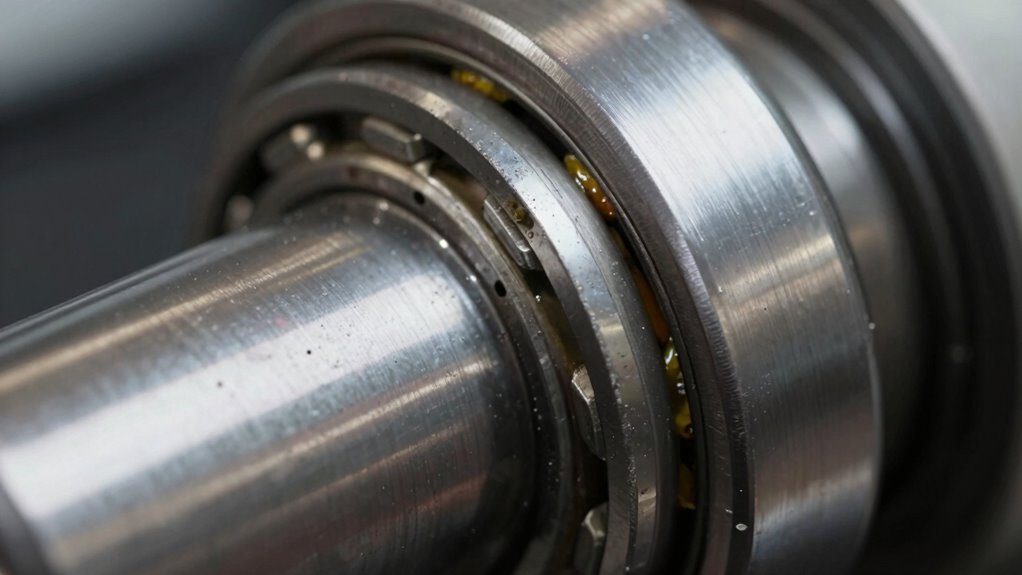

If you notice a subtle lag before your turbo hits full boost, it could be an early sign of lubrication issues in the bearings. Poor oil flow or uneven distribution causes the lubrication film to weaken, leading to increased friction and heat. This initial lag indicates the oil isn’t reaching the bearing effectively and could signal impending damage. Staying alert to this pattern allows you to catch potential problems early—there’s more to uncover about what causes this warning.
Key Takeaways
- Early turbo lag often indicates inadequate oil reaching bearing surfaces, compromising lubrication.
- Insufficient or uneven oil flow causes increased heat and friction, leading to lag as a warning sign.
- Poor bearing design or tolerances can result in oil pooling, uneven distribution, and initial lag symptoms.
- Persistent lag signals ongoing lubrication failure, risking bearing damage, overheating, and turbo failure.
- Regular maintenance and monitoring of oil flow can prevent lubrication breakdown and early lag detection.
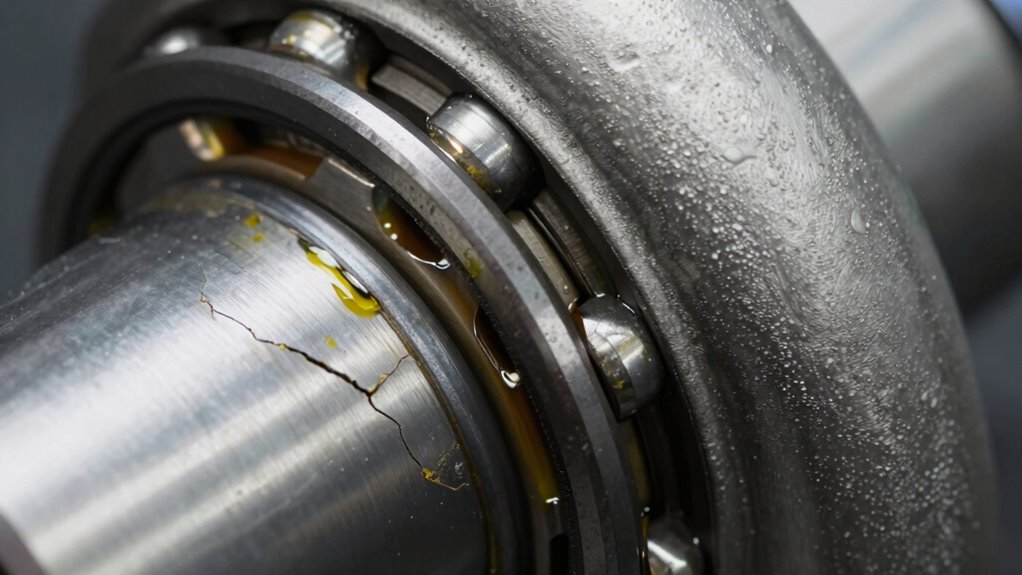
Turbo bearings are essential components that support the high-speed rotation of turbochargers, enabling engines to perform more efficiently. Without proper lubrication and design, these bearings can quickly become vulnerable to failure, often showing early signs like lag before more serious issues develop. Understanding how oil flow and bearing design influence this pattern can help you diagnose problems early and prevent costly damage.
Oil flow is critical for turbo bearing health. When oil reaches the bearing surfaces smoothly and consistently, it creates a thin film that reduces friction and dissipates heat effectively. However, if oil flow becomes restricted or uneven, the bearing’s lubrication diminishes. This can cause increased friction and heat buildup, which leads to uneven wear. You might notice a slight lag in turbo response as the bearing struggles to maintain proper rotation. This lag isn’t just an annoyance—it’s a sign that the oil isn’t reaching the bearing effectively, and the lubrication film is breaking down. As oil flow deteriorates further, the bearing can overheat, warp, or seize, causing catastrophic turbo failure.
Bearing design plays an equally vital role. High-quality bearings are engineered to handle extreme speeds, heat, and loads. They often feature specialized clearances, materials, and geometries that optimize oil distribution. If the bearing design isn’t suited for the application, or if manufacturing tolerances are off, oil may not distribute evenly across the bearing surface. This uneven distribution creates zones of low lubrication, which, over time, cause localized wear and lag in turbo response. Additionally, poor bearing design can result in oil pooling or channelling, preventing a consistent oil film from forming. When that happens, the bearing’s ability to support rapid rotation diminishes, and you’ll notice a delay or sluggishness before the turbo kicks in.
When oil flow or bearing design issues persist, the initial lag becomes more pronounced, signaling deeper problems. You might experience increased exhaust smoke, noise, or a loss of boost pressure. If you ignore these signs, the bearing can suffer severe damage, leading to bearing failure and potentially destroying the entire turbocharger. Regular maintenance, paying attention to oil quality, and using components with proven bearing design can help you avoid these issues altogether. Furthermore, proper oil maintenance ensures the lubrication system functions optimally, reducing the risk of early failure.
In essence, the pattern of lubrication failure starting as lag is a warning sign rooted directly in oil flow and bearing design. Recognizing this early can save you from costly repairs, prolong the life of your turbo, and ensure your engine runs smoothly and efficiently.

SONIC Turbo Wash, Complete Skate Bearing Cleaning Kit Includes 8 oz Citrus Cleaner, Inline Skates, Roller Skates, Skateboards, Patented, Made in USA
COMPACT BUT MIGHTY: Washes up to 16 bearings in one load – no need to install bearings on…
As an affiliate, we earn on qualifying purchases.
As an affiliate, we earn on qualifying purchases.
Frequently Asked Questions
How Can Early Signs of Lubrication Failure Be Detected?
You can detect early signs of lubrication failure by monitoring for oil contamination and improper alignment. Look for increased vibration, unusual noise, or temperature spikes, which often indicate lubrication issues. Regularly check oil condition and cleanliness, as contaminated oil can cause bearing lag. Additionally, verify proper alignment of components to prevent uneven load and premature wear, helping you catch lubrication problems before they lead to major damage.
What Are the Most Common Causes of Lubrication Lag?
You often experience lubrication lag caused by oil contamination or improper alignment. Oil contamination, like dirt or water, hampers proper lubrication and leads to delays. Similarly, if the turbo bearing isn’t properly aligned, uneven oil flow occurs, which causes lag. Regularly inspecting and maintaining clean oil and precise alignment can help prevent these issues, ensuring your turbo runs smoothly and avoiding costly damage.
How Does Temperature Affect Turbo Bearing Lubrication?
Think of temperature as the maestro conducting your turbo bearing’s performance. As temperature rises, thermal expansion occurs, potentially loosening bearing clearances. Higher temperatures also decrease oil viscosity, making lubrication less effective and increasing the risk of lag. Conversely, cold temps thicken oil, causing sluggish movement. You need to monitor operating temperatures closely to maintain ideal lubrication, preventing failure and ensuring smooth turbo operation.
What Maintenance Practices Prevent Lubrication Failure?
You should follow a strict lubrication schedule to prevent failure and regularly check oil levels and quality. Implement contamination control measures by using filters and sealing systems to keep debris out of the lubricant. Keep an eye on operating temperatures and vibrations, and perform routine inspections. Proper maintenance guarantees reliable turbo bearing performance, reducing the risk of lag caused by lubrication issues, and extends the lifespan of your equipment.
Are There Advanced Monitoring Tools for Turbo Bearing Health?
Yes, advanced monitoring tools like lubrication diagnostics and bearing sensors are available for turbo bearing health. These tools actively track lubrication levels, temperature, and vibration signals, helping you detect early signs of failure. By integrating these sensors into your maintenance routine, you can proactively identify issues before lag occurs, ensuring peak performance and reducing costly downtime. Staying ahead with modern diagnostics keeps your turbo bearings running smoothly and efficiently.

A-Premium Turbocharger Turbo Oil Feed Line Pipe Tube Compatible with Buick, Chevrolet Vehicles – 1.4L – Encore 2013-2021, Cruze 2011-2016, Sonic 2012-2020, Trax 2013-2021
[Vehicle Fitment]: Compatible with Buick Encore 2013-2015 L4 1.4L, Encore 2016-2021 L4 1.4L(VIN: B); Compatible with Chevrolet Cruze…
As an affiliate, we earn on qualifying purchases.
As an affiliate, we earn on qualifying purchases.
Conclusion
If you ignore the early signs of lubrication failure, you’re playing with fire. Like a silent thief, the ‘lag’ pattern quietly erodes your turbo’s performance, leading to costly damage. Stay vigilant, monitor your bearings, and catch the warning signals early. Remember, prevention beats repair—don’t let neglect turn a small hiccup into a catastrophic failure. Keep your turbo humming smoothly, and don’t let the silent thief steal your engine’s health.

Easybikeparts Replacement Headset Bearings for Specialized Turbo Levo/Turbo Levo SL Alloy, Carbon, Pro, Comp, Expert, and S-Works Models (All Years), Silver
Comprehensive Compatibility: Designed for Specialized Turbo Levo models, including Alloy, Carbon, Pro Carbon, Comp Alloy, Expert, SL Comp…
As an affiliate, we earn on qualifying purchases.
As an affiliate, we earn on qualifying purchases.
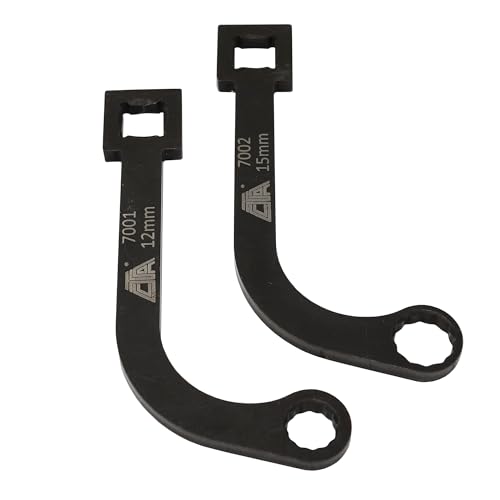
CTA Tools 7005 Turbo Wrench Set, 2pc -12mm & 15mm, Compatible with Cummins Tools, Fits 12mm & 15mm Turbocharger Bolts on ISB 5.9L and 6.7L Engines, Replacement for factory tool 9866B, 9866A, and 9866
Fits both older 15mm and newer 12mm turbocharger bolts compatible with Cummins ISB 5.9L and 6.7L Turbo Diesel…
As an affiliate, we earn on qualifying purchases.
As an affiliate, we earn on qualifying purchases.