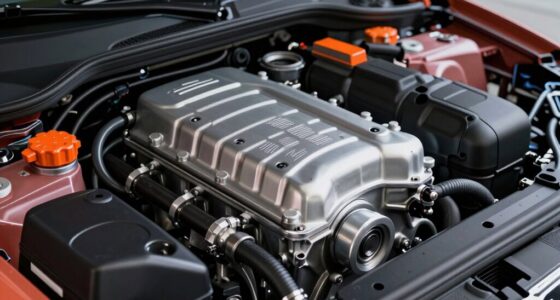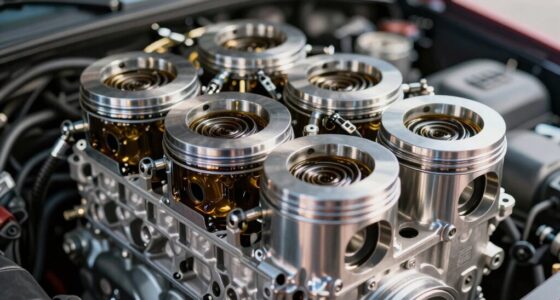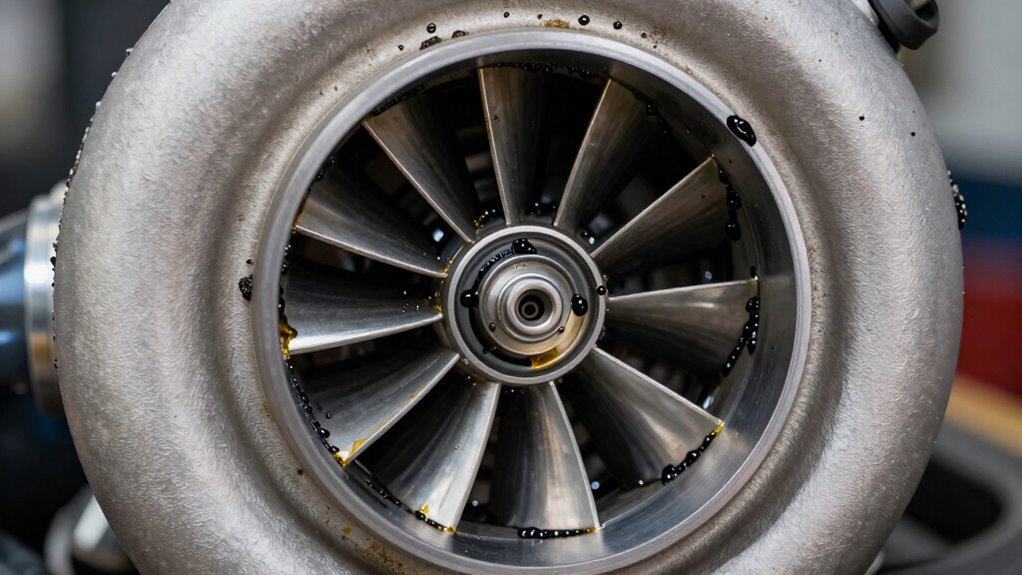

High temperatures in turbo engines cause oil to break down through chemical reactions, oxidation, and polymerization, forming deposits. Elevated heat speeds up oil coking by creating heavier compounds and insulating parts, leading to carbon build-up. Poor engine design and operating conditions, like hotspots and frequent startups, worsen the problem. Wearing oils and inadequate cooling make it worse. If you want to understand how to prevent these deposits effectively, keep exploring the details ahead.
Key Takeaways
- High operating temperatures degrade oil, causing chemical reactions that lead to coke and polymer deposits.
- Dissolved oxygen reacts with oil at elevated temperatures, forming hydroperoxides and heavy carbonaceous residues.
- Temperatures above 200°C accelerate thermal cracking, breaking molecules into lighter compounds and leaving behind viscous residues.
- Hotspots and uneven heat distribution increase localized coking, especially during frequent startups and load changes.
- Using thermally stable oils and effective cooling systems minimizes oil breakdown and deposit formation in turbo engines.

Frantz Filter Universal Bypass Oil Filter Kit by Hot Shot's Secret
The Frantz Universal Oil Bypass Kit is a highly efficiency bypass filter; that can help increase engine life...
As an affiliate, we earn on qualifying purchases.
Why Do Oil Deposits Form in Turbo Engines?
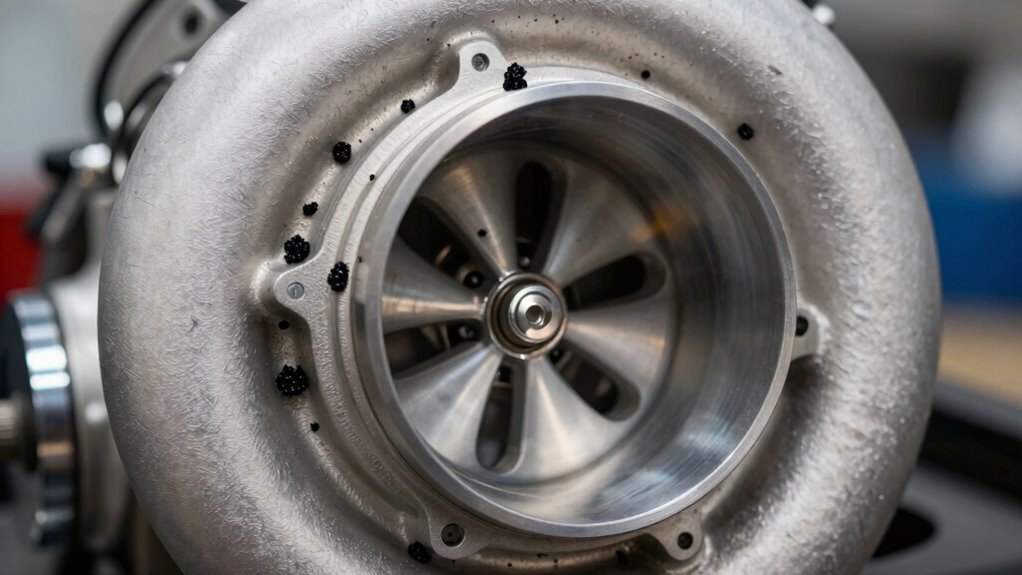
Oil deposits form in turbo engines primarily because high operating temperatures cause the lubricating oil to degrade. When the engine runs hot, chemical reactions accelerate, breaking down oil components and creating larger, more complex molecules. Dissolved oxygen further reacts with the oil, forming hydroperoxides and oxygen-containing coke deposits. As temperatures surpass 200°C, the oil’s viscosity changes markedly, leading to increased density and thickening. Over time, acids develop, and volatile compounds polymerize, resulting in heavier deposits. These deposits often accumulate in critical areas like bearing chambers, oil feed pipes, and vents. The heat causes lighter compounds to evaporate, leaving behind carbonaceous coke that insulates engine parts and worsens thermal stress, ultimately contributing to deposit formation and engine inefficiency. Additionally, Free Floating substances in the oil can contribute to the buildup of deposits by providing nuclei for the formation of solid residues.

Frantz Bypass Filter Kit for 6.7 Liter Powerstroke Diesel Pickup Trucks by Hot Shot's Secret
6.7-liter Power Stroke bypass oil filter system increases engine life
As an affiliate, we earn on qualifying purchases.
How Does High Temperature Speed Up Oil Coking?

How does high temperature accelerate oil coking? When temperatures rise above 200°C, the chemical reactions within the oil intensify. Dissolved oxygen reacts with oil components, forming hydroperoxides and oxygen-containing coke deposits. Thermal cracking occurs more rapidly on metal surfaces, breaking down complex molecules into smaller fragments that can polymerize into solid coke. Elevated heat causes lighter compounds to evaporate, leaving behind heavier, more viscous residues that promote deposit formation. As temperature exceeds 550°C, the rate of these reactions skyrockets, producing black, carbonaceous deposits that insulate engine parts. This insulation traps heat, further accelerating coking. The combination of thermal cracking, oxidation, and polymerization at high temperatures creates a vicious cycle, dramatically speeding up the buildup of coke deposits in engine components. Regular monitoring of coke formation can help prevent severe engine damage caused by these deposits.

Frantz Filter 5.9L & 6.7L Ram Diesel Truck Bypass Oil Filter Kit by Hot Shot's Secret
Increased Engine Life
As an affiliate, we earn on qualifying purchases.
How Do Engine Design and Operating Conditions Affect Oil Coking?
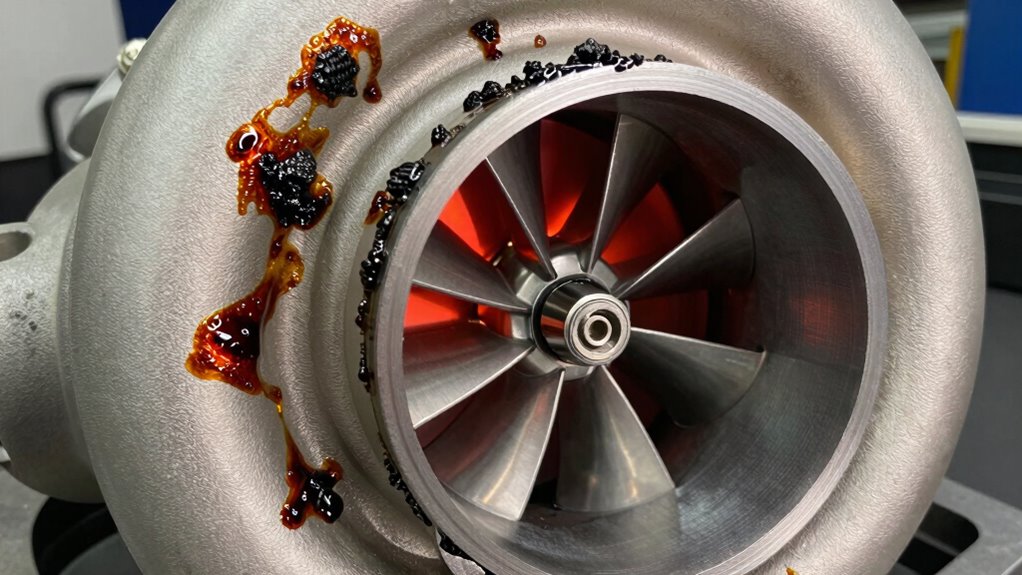
Engine design and operating conditions play a crucial role in influencing oil coking tendencies by dictating heat distribution, component exposure, and maintenance practices. If your engine operates at higher temperatures or has uneven heat zones, you’re more likely to see increased coke deposits. Factors like startup frequency, load cycles, and operating duration directly impact oil degradation. Poor heat dissipation can cause localized hotspots, accelerating coking. Regular maintenance, such as timely oil changes, helps minimize deposit buildup. Using high thermal stability oils reduces coking risk. Here are key influences:
- High operating temperatures amplify thermal cracking
- Uneven heat distribution creates hotspots
- Frequent startups increase thermal stress
- Inadequate cooling elevates component temperatures
- Extended operation without oil changes promotes deposit formation
- Thermal stability of oils is essential for reducing coking potential.

Frantz Bypass Filter Kit for 7.3 Liter Powerstroke Diesel Trucks by Hot Shot's Secret
7.3 liter Power Stroke bypass oil filter system increases engine life
As an affiliate, we earn on qualifying purchases.
How Does Oil Degradation Contribute to Deposit Buildup in Turbines?
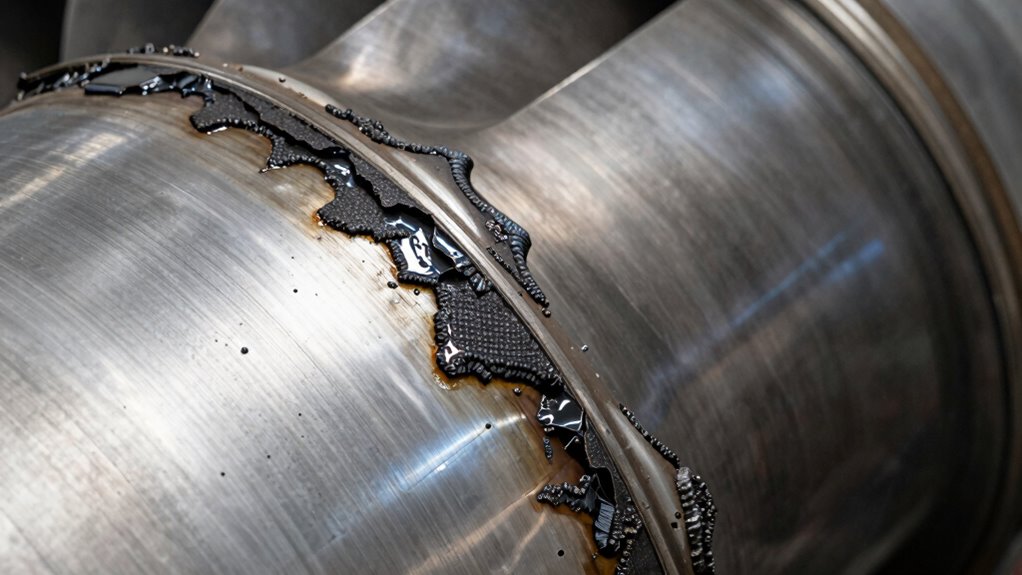
Degradation of lubricating oil accelerates deposit buildup in turbines by creating solid residues that adhere to internal surfaces. As oil deteriorates, it forms coke and polymerized compounds that stick to blades, bearings, and pipes. Elevated temperatures cause thermal cracking and oxidation, producing heavier, viscous molecules that settle out of the oil. These deposits act as insulators, trapping heat and increasing component stress. Additionally, acids and resin-like residues develop, further contributing to deposit formation. Volatile components evaporate, leaving behind solid carbonaceous material that accumulates over time. Oil degradation also leads to water release, which reacts with hot surfaces to form more deposits. The cumulative effect is a coating of hard, black deposits that impair heat transfer, reduce efficiency, and elevate maintenance needs. Microplastics in dust can also contaminate the oil, accelerating degradation and deposit formation over time.
What Are the Best Strategies to Prevent Oil Coking in Turbines?
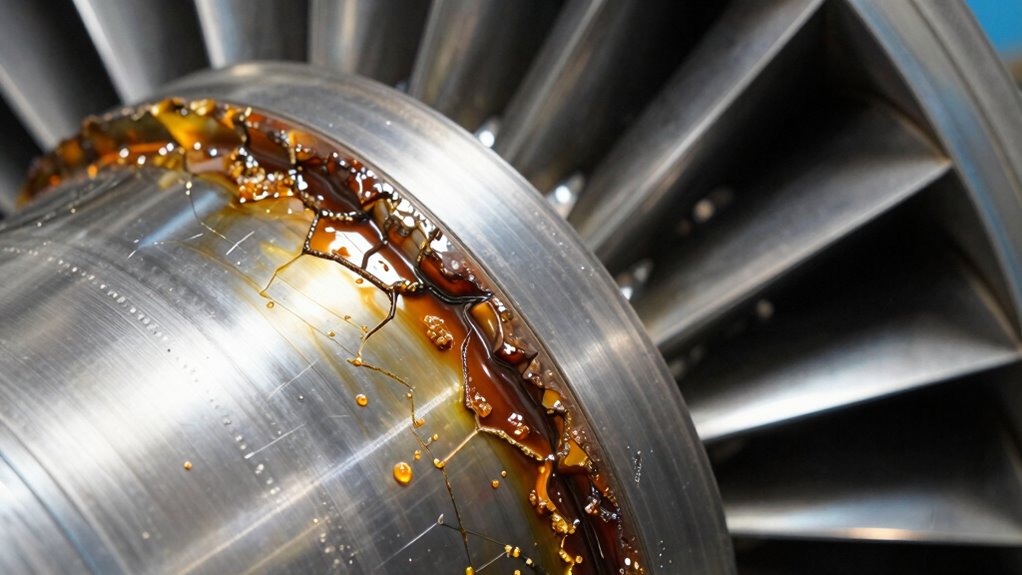
To effectively prevent oil coking in turbines, implementing proactive thermal management and selecting high-stability lubricants are essential. You should focus on maintaining optimal operating temperatures, minimizing hotspots, and controlling heat transfer within components. Regularly monitoring temperature profiles helps detect early signs of overheating. Using advanced, thermally stable oils like AeroShell Turbine Oil 560 reduces coking risk. Additionally, consider these strategies:
- Enhance cooling systems to lower component temperatures
- Schedule regular oil changes to prevent long-term degradation
- Use oils with high oxidation and thermal stability
- Limit start-up and shutdown frequencies to reduce thermal cycling
- Employ coatings like TCA-2 to inhibit coke formation
- Implement temperature control techniques to maintain consistent thermal conditions and prevent localized overheating. These measures help reduce deposit buildup, extend component life, and improve engine reliability.
Frequently Asked Questions
What Chemical Changes Occur in Oil During Coking?
When oil cokes, its chemical composition changes as lighter compounds evaporate, leaving behind heavier, more carbon-rich materials. You’ll notice acids form, and polymers develop through polymerization processes. These reactions increase viscosity and density, creating solid coke deposits. Oxygen reacts with oil components, producing hydroperoxides and oxidized compounds, which further contribute to deposit buildup. Fundamentally, high temperatures cause chemical breakdown, leading to a buildup of carbonaceous, resin-like residues that harden into coke.
How Does Residual Heat After Shutdown Influence Deposit Formation?
Residual heat after shutdown causes the temperature in engine components and oil to rise further, even without active circulation. This trapped heat promotes chemical reactions like polymerization and oxidation, accelerating deposit formation. As temperatures stay high, deposits harden and grow, increasing the risk of coke buildup. To prevent this, you need effective cooling measures and timely oil cooling, reducing residual heat and minimizing deposit formation after shutdown.
What Role Do Catalytic Reactions Play in Oil Coking?
Catalytic reactions accelerate oil coking by promoting the breakdown of complex hydrocarbons into larger, carbon-rich deposits. When you operate engines at high temperatures, metal surfaces and catalysts facilitate dehydrogenation and polymerization, leading to solid coke formation. These reactions lower the oil’s stability and increase deposit buildup, which insulates heat and causes further degradation. Understanding catalytic effects helps you choose better oils and design systems that minimize coking risks.
How Does Oil Composition Affect Its Coking Tendency?
Think of your oil like a recipe—ingredients matter. If it’s rich in light, volatile compounds, it’s more likely to evaporate and leave behind sticky residues, increasing coking risk. Heavier, stable molecules resist breakdown, reducing deposits. Additives can act as shields, slowing degradation. So, choosing oils with high thermal stability and proper formulation helps prevent coking, keeping your engine cleaner and running smoothly longer.
Can Coatings or Additives Reduce High-Temperature Coke Buildup?
Yes, coatings and additives can reduce high-temperature coke buildup. Coatings like TCA-2 inhibit oil coking considerably, while certain additives improve thermal stability and oxidation resistance. These solutions create a barrier or enhance the oil’s properties, preventing deposit formation on engine surfaces. By choosing the right coatings and additives, you can extend oil life, reduce maintenance, and improve engine reliability under demanding high-temperature conditions.
Conclusion
Think of your turbine as a busy kitchen stove—when heat gets too high, oils start to break down and stick around, just like burnt food leaves a stubborn residue. If you keep the temperature under control and choose the right oils, you can prevent deposits from forming. Remember, a well-maintained system runs smoother and lasts longer—like a finely tuned engine that keeps your operation humming without the clutter.