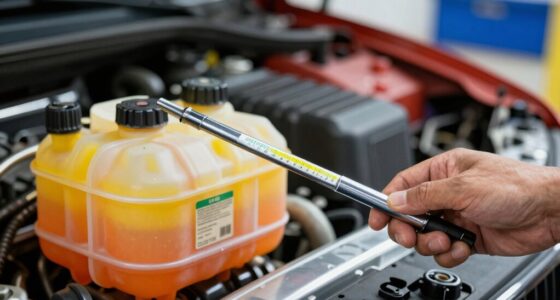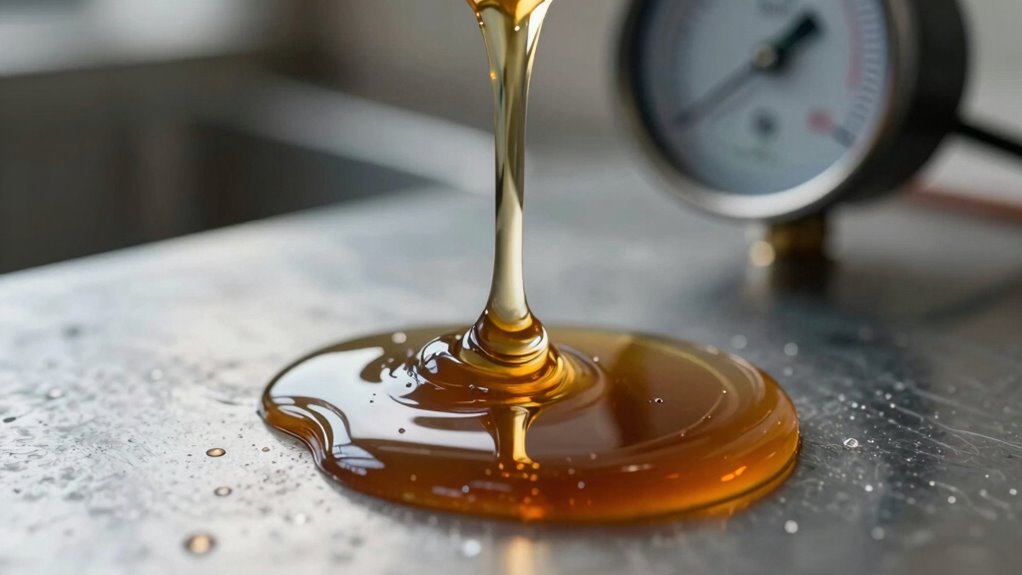

Understanding how viscosity, load, and temperature interact forms the core of the Viscosity Triangle, which predicts fluid failure. When temperature rises, liquids thin, while gases become thicker; high loads and shear stress can cause fluids to change viscosity unexpectedly. Managing viscous heating and monitoring the Brinkman Number help prevent failures. Keeping these factors balanced guarantees reliable performance. To learn how to optimize this interaction and prevent issues, explore more about the Viscosity Triangle and its applications.
Key Takeaways
- The Viscosity Triangle illustrates the interplay between temperature, load, and fluid properties affecting lubricant performance and failure risk.
- Monitoring the triangle helps predict viscosity shifts that can lead to inadequate lubrication or increased wear.
- Viscous heating from high shear loads raises temperature, potentially thinning fluids and causing system failure if unmanaged.
- A high Viscosity Index indicates better stability within the triangle, reducing failure chances during temperature fluctuations.
- Managing load, temperature, and fluid properties proactively maintains optimal viscosity, preventing failure and enhancing system reliability.

LUMAX LX-1152 Black Heavy Duty Deluxe Pistol Grease Gun with 18" Flex Hose, Handy 3-Way Loading - Fill with Standard Cartridge, Suction or Bulk Fill. Convenient One-Hand Operation for Easy Greasing.
HARD-TO-REACH: Comes with 18" flex hose extension for hard-to-reach fittings. Convenience of one-hand operation for easy greasing. Fit...
As an affiliate, we earn on qualifying purchases.
Why Understanding Viscosity Matters for Fluid Performance
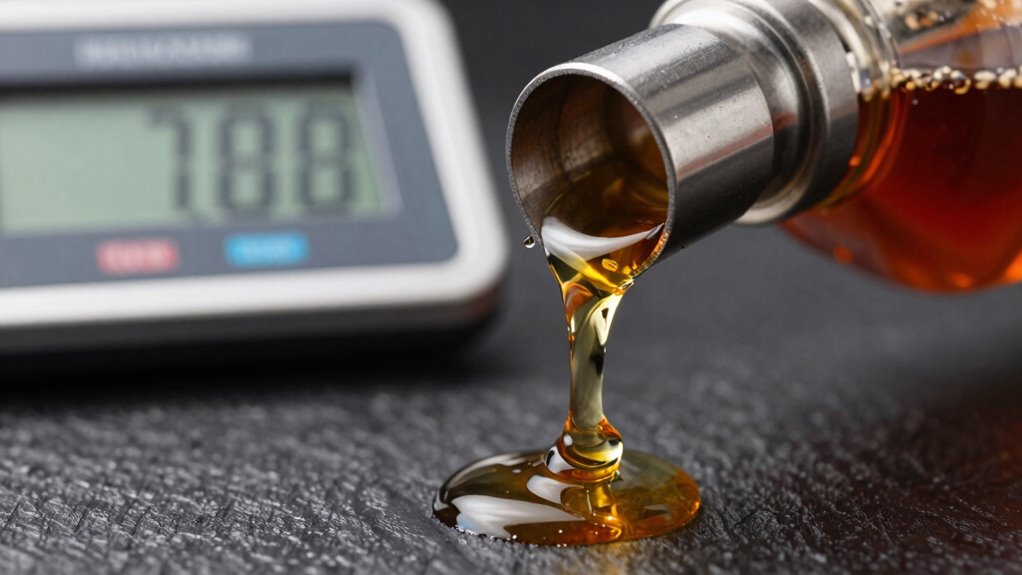
Understanding viscosity is essential because it directly influences how fluids flow and perform under different conditions. When you grasp viscosity, you can predict how a fluid reacts to changes in temperature and load. For instance, a lubricant’s ability to reduce friction depends on its viscosity; too thick, and it wastes energy, too thin, and it won’t protect surfaces. Recognizing viscosity behavior helps you select the right fluid for specific applications, ensuring ideal performance and longevity. It also aids in diagnosing issues like excessive wear or inefficiency. By understanding how viscosity varies with temperature and load, you can prevent failures and improve system reliability. Additionally, fluid behavior is a key factor in designing systems that operate efficiently across diverse environments. Ultimately, knowing viscosity empowers you to make informed decisions that enhance machine efficiency and reduce maintenance costs.

LockNLube Grease Gun Coupler locks onto Zerk fittings. Grease goes in, not on the machine. World's best-selling original locking grease coupler. Rated 10,000 PSI. Long-lasting rebuildable tool.
LOCKS ON, STAYS ON, WON'T LEAK—LIKE HAVING AN EXTRA HAND! No need to hold the coupler in place...
As an affiliate, we earn on qualifying purchases.
What Is Viscosity and How Does It Affect Fluids?

Viscosity measures a fluid’s resistance to flow caused by internal friction between its molecules. When you pour or move a fluid, high viscosity means it resists that movement more, making it feel thicker or more sluggish. Low viscosity indicates it flows easily, like water. This property directly affects how fluids perform in different systems. For example, in lubricants, higher viscosity helps form a protective film between surfaces, reducing wear. In hydraulic systems, the right viscosity ensures efficient power transfer. If viscosity is too high, it increases energy consumption and causes stress on components. Too low, and the fluid may fail to maintain a proper film, leading to metal contact and damage. Understanding viscosity helps you select and maintain fluids for ideal performance and longevity. Proper viscosity is essential for optimizing system efficiency and preventing equipment failure.

KRETLAW Mini Grease Gun (3000PSI) with Double 3oz Cartridge Grease and 12'' Flex Hose, Reinforced Coupler for Automotive,Marine
UPDATED GREASE GUN SET: KRETLAW grease gun set is equipped with more practical tool, one small grease Gun...
As an affiliate, we earn on qualifying purchases.
How Temperature Changes Influence Viscosity in Liquids and Gases
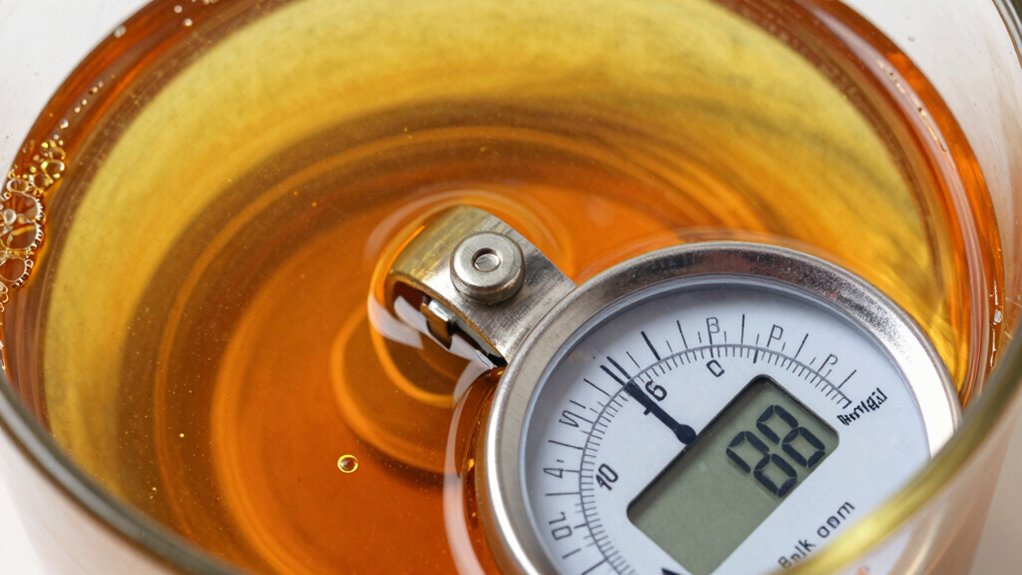
Temperature profoundly impacts the viscosity of both liquids and gases, but in opposite ways. In liquids, higher temperatures weaken molecular bonds, reducing viscosity and making fluids flow more easily. Conversely, gases experience increased viscosity with temperature because faster-moving molecules collide more often, creating greater internal friction. Additionally, the material type determines how significantly viscosity changes with temperature, influencing fluid performance in various applications.
| Liquids | Gases |
|---|---|
| Thinner as temperature rises | Thicker as temperature rises |
| Bonds weaken, flow easier | Molecular collisions intensify |
| Viscosity drops rapidly | Viscosity increases gradually |

GEVEELIFE Electric Grease Gun -2025 Upgraded 2-in-1 Design with 2×4000mAh Batteries, Fast Charger & 90° Swivel Coupler, 12,000 PSI - Works with Bulk & Cartridge Grease for Farm, Truck, Construction
🚀 Cordless Freedom & Dual-Mode Operation:Experience hassle-free greasing with our cordless electric design that eliminates manual pumping. Switch...
As an affiliate, we earn on qualifying purchases.
How Load and Shear Stress Alter Fluid Viscosity
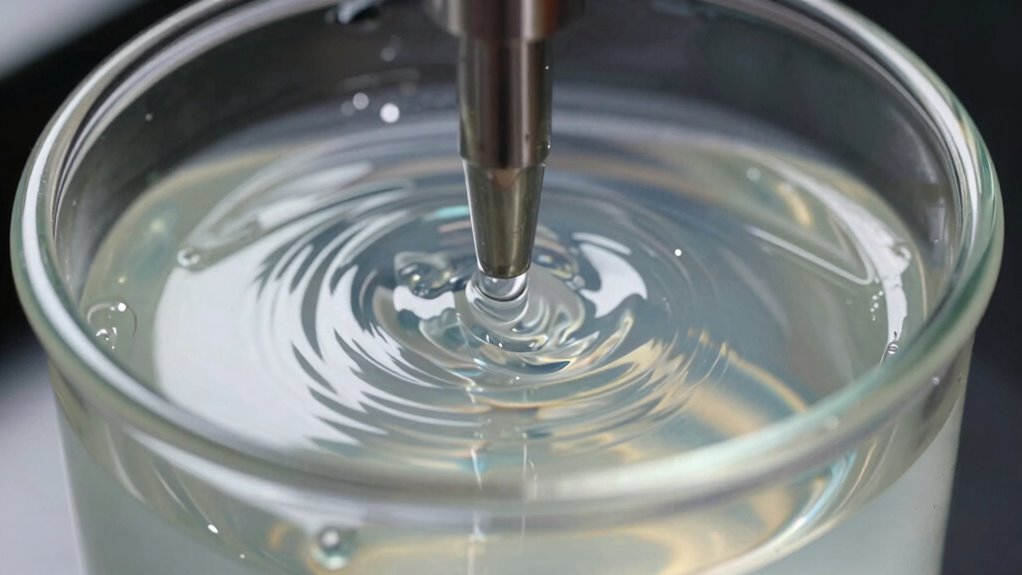
When you apply load or shear stress to a fluid, its viscosity can change considerably. These forces cause non-Newtonian behavior, making viscosity dependent on the amount of shear or load present. Understanding this relationship helps you predict fluid performance under different operating conditions. For example, vetted fluids floating on water demonstrate how surface tension and load influence flow characteristics.
Shear-Induced Viscosity Changes
Load and shear stress directly influence a fluid’s viscosity by altering its internal structure under operating conditions. When shear stress increases, it can cause molecules to realign or break bonds, leading to a change in viscosity. In some cases, your fluid may thin out, becoming less resistant to flow (shear thinning). In others, it may thicken (shear thickening), resisting flow more strongly. These changes occur rapidly as the fluid responds to load conditions, often deviating from Newtonian behavior. As shear stress fluctuates, the internal network of molecules adjusts dynamically, impacting performance. Recognizing these shear-induced viscosity shifts helps you predict how your fluid will behave under various loads, ensuring your system maintains best operation and avoids failure due to unexpected viscosity changes. Additionally, understanding the rheological properties of your fluid allows for better control of flow characteristics in complex systems.
Load-Dependent Non-Newtonian Behavior
As shear stress increases in a fluid, it often causes its viscosity to change in ways that deviate from simple Newtonian behavior. Under high load conditions, many fluids become non-Newtonian, meaning their viscosity depends on shear rate and stress rather than remaining constant. You may notice shear thinning, where viscosity decreases as load and stress rise, making flow easier but risking inadequate film formation. Conversely, shear thickening occurs when viscosity increases with load, potentially causing excessive resistance and heat buildup. This load-dependent behavior complicates predictions of fluid performance, especially in hydraulic systems. Understanding how load and shear stress alter viscosity helps you anticipate failures like metal-to-metal contact or excessive energy consumption, enabling better system design and preventative maintenance. Additionally, high-quality fluid selection is critical because it influences the system’s ability to maintain stable viscosity under varying load conditions.
What Is the Viscosity Triangle and Why Does It Matter?
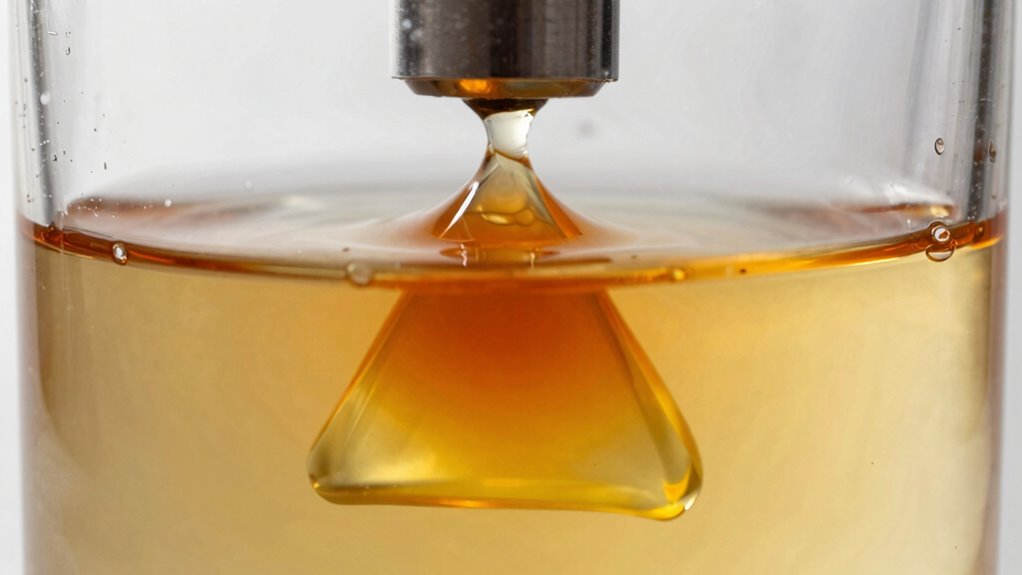
The viscosity triangle helps you understand how temperature, load, and fluid properties interact to affect performance. Recognizing its components allows you to predict potential risks and prevent failures. By mastering this concept, you can improve system reliability and optimize fluid management. Understanding fluid behavior and how it responds to different conditions is essential for effective maintenance and operation.
Understanding the Triangle Components
Understanding the Viscosity Triangle is essential for predicting and preventing fluid failure in hydraulic and lubrication systems. The triangle consists of three key components: viscosity, load, and temperature. Each influences the fluid’s ability to perform under different conditions. Viscosity determines flow resistance, load affects shear stress, and temperature impacts molecular activity. Together, these factors interact complexly, affecting film thickness, friction, and wear. Recognizing how these components relate helps you anticipate issues like metal contact or excessive energy use. The table below summarizes each element:
| Component | Effect on Fluid Behavior | Critical for |
|---|---|---|
| Viscosity | Resistance to flow | Film formation, wear |
| Load | Shear stress, pressure distribution | System stability |
| Temperature | Molecular activity, viscosity change | Reliability, lifespan |
Predicting Fluid Performance Risks
Predicting fluid performance risks involves analyzing how the viscosity triangle influences system behavior under varying conditions. You need to comprehend how temperature and load impact viscosity, because these factors determine whether a fluid can maintain an effective film to prevent metal contact or excessive wear. When viscosity drops too low at high temperatures, surfaces may seize or wear faster. Conversely, excessive viscosity under load increases friction and energy consumption. By evaluating how these variables interact, you can identify potential failure points before they happen. Monitoring the triangle helps you forecast when fluid properties might become unsuitable, enabling proactive adjustments. This approach minimizes downtime, reduces maintenance costs, and enhances overall system reliability. Ultimately, understanding these risks ensures your system operates efficiently within safe viscosity ranges.
Enhancing System Reliability
Enhancing system reliability hinges on grasping the concept of the viscosity triangle, which illustrates how temperature and load interact to influence fluid viscosity. By understanding this, you can predict when fluids will perform *ideal* or fail. Managing temperature prevents excessive thinning or thickening, while controlling load avoids sudden viscosity shifts that cause wear or energy waste. Monitoring these factors allows you to adjust operating conditions proactively, reducing downtime and maintenance costs. Using the viscosity triangle as a guide helps you select appropriate lubricants and design systems that withstand varying loads and temperatures. Recognizing the importance of free floating systems can further optimize performance by minimizing frictional issues. Ultimately, this approach minimizes the risk of catastrophic failures, *guarantees* smoother operation, and extends the lifespan of your equipment. It’s a *crucial* tool for building more reliable, efficient fluid systems.
Using the Viscosity Index to Measure Fluid Stability With Temperature
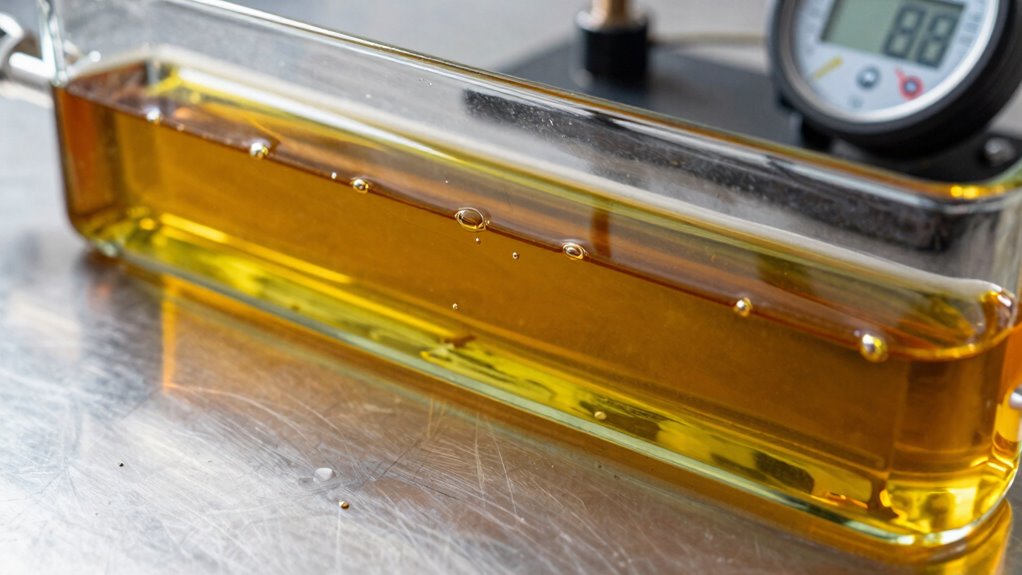
The viscosity index (VI) offers an essential measure of a fluid’s stability across temperature changes, indicating how well a lubricant maintains its viscosity under varying conditions. A higher VI means the fluid resists viscosity changes better as temperatures fluctuate. This helps you predict performance, especially in demanding environments. For example, in colder conditions, a high VI fluid stays thicker, ensuring proper lubrication. Conversely, low VI fluids thin out quickly, risking metal contact. Here’s a simple comparison:
| VI Range | Stability Level | Typical Use |
|---|---|---|
| 0-50 | Low | Heavy-duty industrial oils |
| 50-80 | Moderate | Automotive engines |
| 80-100+ | High | High-performance lubricants |
Knowing the VI helps you select fluids that stay reliable across temperature shifts, reducing system failure risks. Understanding the viscosity index also aids in optimizing maintenance schedules and reducing operational costs.
How Viscous Heating and Brinkman Number Impact Fluid Viscosity
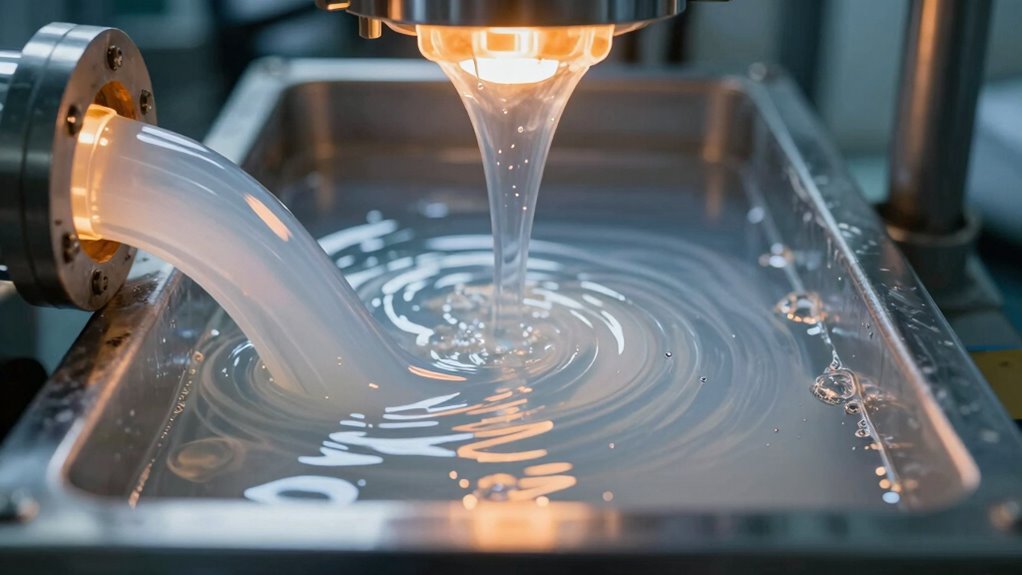
Viscosity stability isn’t just about temperature; it’s also affected by the heat generated within the fluid during operation. When fluid flows under high shear, viscous heating raises local temperature, reducing viscosity further. The Brinkman Number (Br) quantifies this effect by comparing viscous heat production to external heat removal. A higher Br indicates significant internal heating, which can cause the fluid to thin unexpectedly, risking failure. As viscous heating intensifies, the fluid’s viscosity drops, potentially compromising lubrication or flow control. You need to monitor Br closely, especially under heavy loads or high shear conditions. Managing heat dissipation becomes essential to guarantee viscosity remains within safe limits. Recognizing how viscous heating influences viscosity helps you prevent breakdowns and optimize system reliability. Understanding viscosity stability is crucial for designing systems that effectively manage internal heat generation.
Identifying Non-Newtonian Behavior Under High Load Conditions
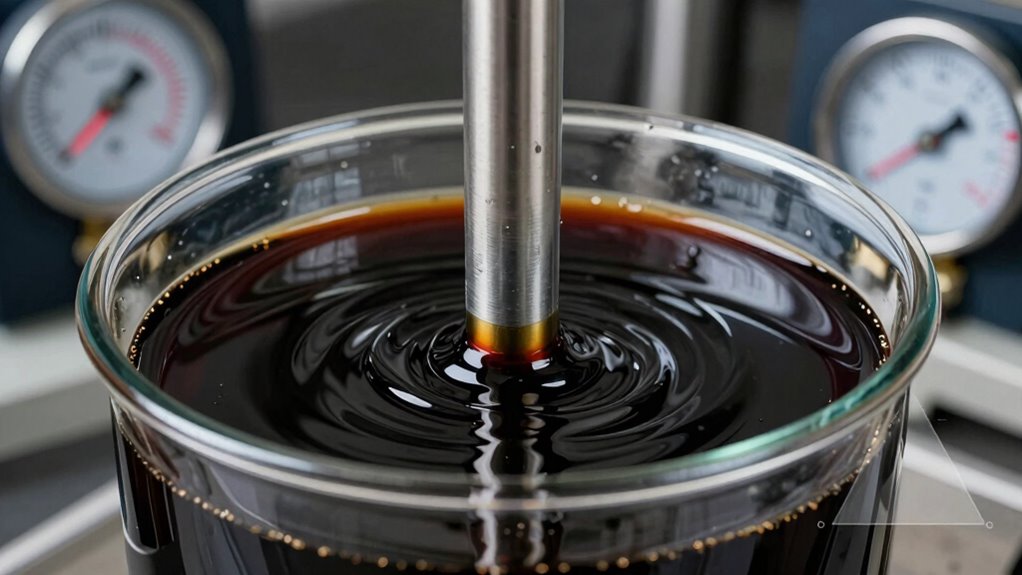
Under high load conditions, fluids often exhibit non-Newtonian behavior, meaning their viscosity no longer remains constant but changes with shear rate. You’ll notice this when fluid resistance varies unpredictably as load increases, causing flow irregularities. Non-Newtonian fluids may thicken (pseudoplastic) or thin (dilatant) under shear stress, unlike Newtonian fluids with fixed viscosity. To identify this behavior, observe flow patterns, pressure drops, and shear responses during operation. Sharp changes in flow resistance or unexpected fluctuations signal non-Newtonian characteristics. You can also perform controlled shear tests, noting viscosity shifts as shear rates escalate. Recognizing these signs helps you anticipate fluid performance issues under high loads, preventing system failures and optimizing lubrication or hydraulic efficiency. Accurate detection guarantees you adapt systems to handle complex load-induced viscosity changes effectively. Additionally, understanding the non-Newtonian nature of fluids allows for better system design and maintenance strategies.
Troubleshooting Viscosity Issues in Hydraulic and Mechanical Systems
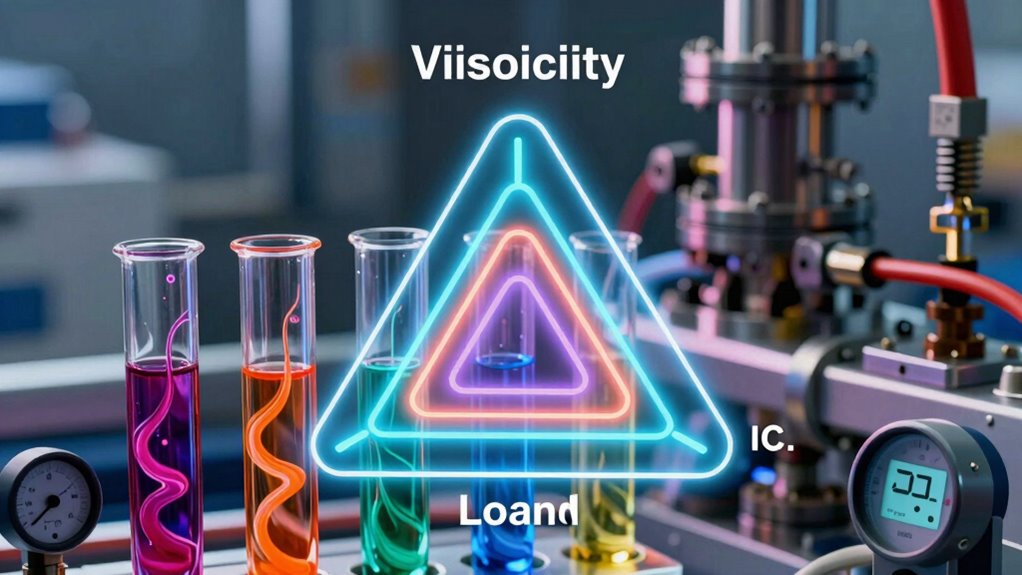
When hydraulic or mechanical systems experience unexpected performance issues, troubleshooting often begins with evaluating viscosity levels. You need to check if the fluid’s viscosity aligns with specifications for the operating conditions. If viscosity is too low, it may lead to insufficient film thickness, increasing metal-to-metal contact and wear. Conversely, high viscosity can cause excessive friction, overheating, and energy loss. Use a viscometer to measure the fluid’s current viscosity and compare it to recommended values. Consider temperature effects, as elevated temperatures thin the fluid, while cold conditions make it thicker. Also, examine load conditions; high loads can alter viscosity behavior unexpectedly. Lubricant specifications provide critical guidance for proper viscosity levels under different operating scenarios. Addressing these factors quickly helps prevent system failures, reduces downtime, and ensures reliable operation. Proper diagnostics are key to effective troubleshooting.
Key Strategies for Monitoring and Managing Viscosity in Variable Conditions
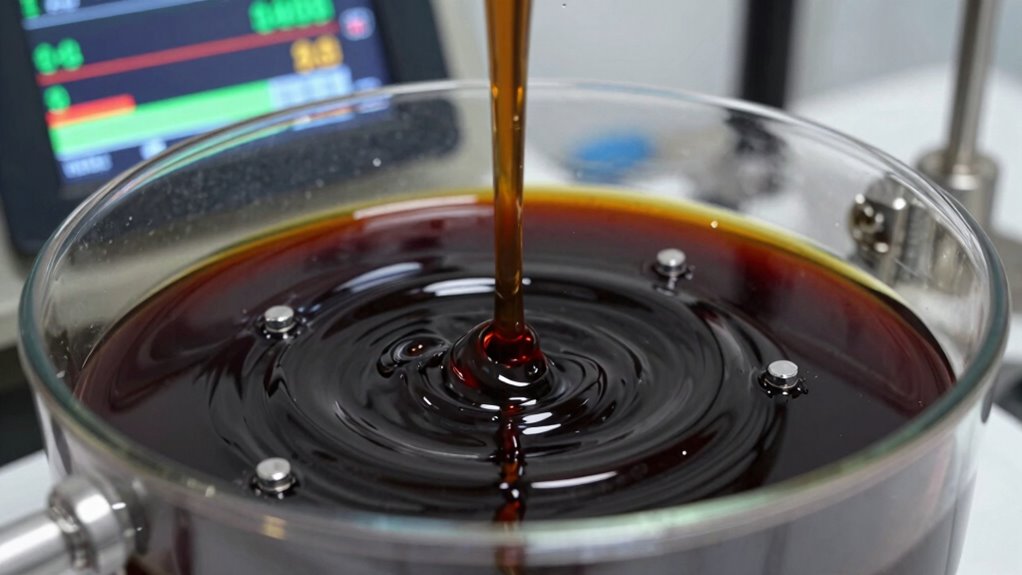
To keep your system running smoothly, you need to monitor viscosity in real-time and adjust controls accordingly. Implementing adaptive strategies allows you to respond quickly to changing conditions, preventing failures. By staying proactive, you can maintain ideal fluid performance across variable temperatures and loads. Utilizing the appropriate fluid testing tools can further enhance accuracy in monitoring viscosity levels.
Real-Time Viscosity Monitoring
Real-time viscosity monitoring is essential for maintaining ideal performance in systems where temperature and load conditions fluctuate. By continuously tracking viscosity, you can detect early signs of fluid degradation or shifts that could lead to failure. Modern sensors and online analyzers provide instant data, allowing you to adjust operating parameters proactively. This immediate feedback helps prevent costly damage from inadequate lubrication or excessive friction. Integrating these monitoring tools into your control systems ensures you respond swiftly to dynamic conditions. You can optimize fluid performance, extend equipment lifespan, and reduce downtime. Consistent, real-time data empowers you to manage the complex interplay of temperature and load, maintaining the right viscosity balance and safeguarding system reliability. Understanding fluid properties is crucial for effective system management.
Adaptive Control Strategies
Effective management of viscosity under fluctuating temperature and load conditions requires adaptive control strategies that respond dynamically to changing system states. You should implement real-time sensors to monitor viscosity, temperature, and load conditions continuously. Automated systems can adjust parameters such as heating, cooling, or additive injection to stabilize viscosity. Using predictive algorithms, you can forecast viscosity changes based on current data, enabling preemptive adjustments. Variable frequency drives (VFDs) and smart valves help modulate flow rates and pressure, maintaining ideal film thickness. Incorporating machine learning models improves accuracy over time, allowing your system to adapt to evolving operational demands. Monitoring accuracy is crucial for timely responses and maintaining system stability. These strategies ensure fluid reliability, reduce wear, and enhance performance, even under unpredictable conditions, ultimately preventing failure and extending system lifespan.
Frequently Asked Questions
How Does Viscosity Influence Energy Consumption in Machinery?
Viscosity directly impacts your machinery’s energy consumption because thicker fluids create more resistance, requiring more power to pump or move. When viscosity is too high, your system works harder, increasing energy use and wear. Conversely, if viscosity drops too low, components may not be properly lubricated, causing friction and inefficiency. Maintaining ideal viscosity ensures your machinery operates smoothly, reducing energy costs and preventing premature failures.
Can Viscosity Changes Predict Equipment Failure?
Think of viscosity shifts like a warning heartbeat in your machinery’s veins. When viscosity drops too low under heat or load, it’s like a crack forming in a dam—failure becomes imminent. You can predict equipment failure by monitoring these changes, much like a seasoned sailor senses a storm brewing. By staying alert to viscosity variations, you catch problems early, preventing costly breakdowns and ensuring smoother, safer operation.
What Role Does Shear Rate Play in Non-Newtonian Fluids?
Shear rate plays a vital role in non-Newtonian fluids because it directly influences their viscosity. As you increase shear rate, the fluid’s internal structure can change, causing the viscosity to either decrease (shear thinning) or increase (shear thickening). You need to monitor shear rate because these behaviors affect flow behavior and system performance, especially under high shear conditions where viscosity may not stay constant.
How Does Contamination Affect Fluid Viscosity Over Time?
Contamination gradually reduces your fluid’s viscosity over time by introducing particles or substances that disrupt molecular bonds. As these contaminants accumulate, they weaken the fluid’s internal friction, making it thinner and less effective at lubricating or creating a protective film. This change can lead to increased wear, overheating, or system failure if not detected early. Regular maintenance and fluid analysis help you identify contamination before it causes significant damage.
Are There Specific Additives to Stabilize Viscosity Under Load?
You can add viscosity stabilizers like viscosity index improvers or polymer additives to keep viscosity consistent under load. These additives form a network that resists shear thinning, maintaining film thickness and reducing wear. By choosing the right stabilizers, you guarantee your system operates smoothly, even under heavy loads. Regularly monitoring fluid condition helps you adjust additives as needed, preventing failures caused by viscosity fluctuations.
Conclusion
By mastering the interplay of viscosity, load, and temperature, you hold the key to preventing catastrophic fluid failures—almost like wielding the power to tame a wild storm. Understanding this triangle helps you predict and mitigate issues before they escalate, ensuring your systems run smoothly and efficiently. Keep a close eye on these factors, and you’ll transform potential chaos into seamless performance—turning fluid dynamics into your greatest strategic advantage.