
Moisture in your air compressor is a common problem that can seriously damage your tools and fluids. It forms naturally from atmospheric humidity and condenses inside the system, leading to rust, corrosion, and degraded lubricants. Left unchecked, moisture causes premature tool failure, system inefficiency, and costly repairs. To prevent this, you need proper drain valves, filters, and dryers. Keep watching to learn effective ways to control moisture and keep your equipment running smoothly.
Key Takeaways
- Moisture in compressed air causes corrosion and rust in tools, reducing their lifespan and effectiveness.
- Water contamination degrades lubricants and fluids, leading to equipment failure and increased maintenance costs.
- Condensation forms due to temperature fluctuations and inadequate moisture control, exacerbating water buildup.
- Regular draining, filtration, and drying are essential to prevent moisture accumulation and system damage.
- Proper moisture management prolongs compressor life, ensures tool performance, and reduces costly repairs.

QWORK Automatic Timed Condensate Drain Valve 1/2" NPT Inlet 1/4" Outlet – Programmable Electric Air Drain for Compressor Tanks, Dryers & Filters
PRECISE TIMER CONTROL: Adjustable ON 0.5–10s and OFF 0.5–45min, easy setup for any drainage cycle
As an affiliate, we earn on qualifying purchases.
As an affiliate, we earn on qualifying purchases.
Why Moisture Gets in Your Air Compressor and How to Spot It
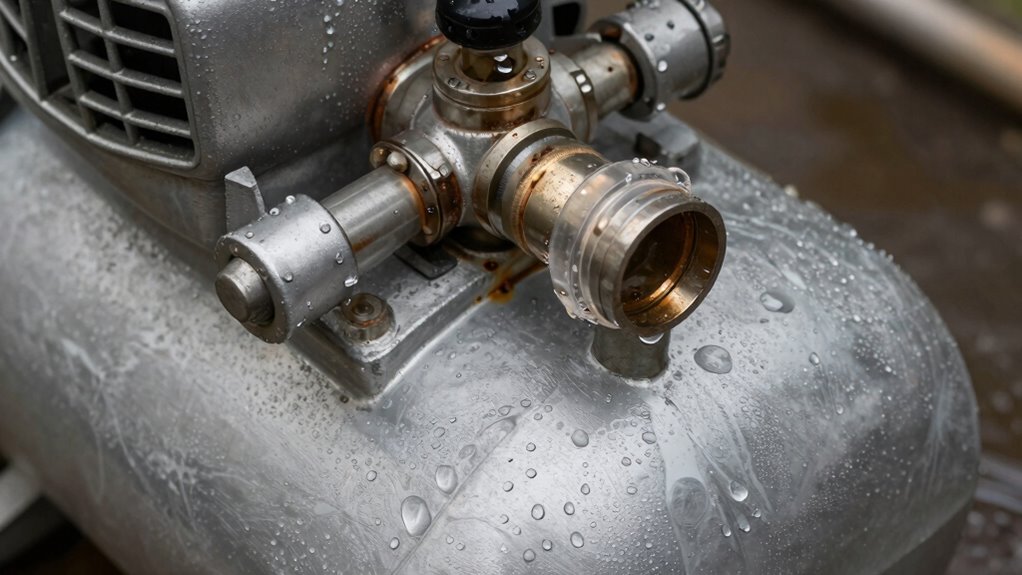
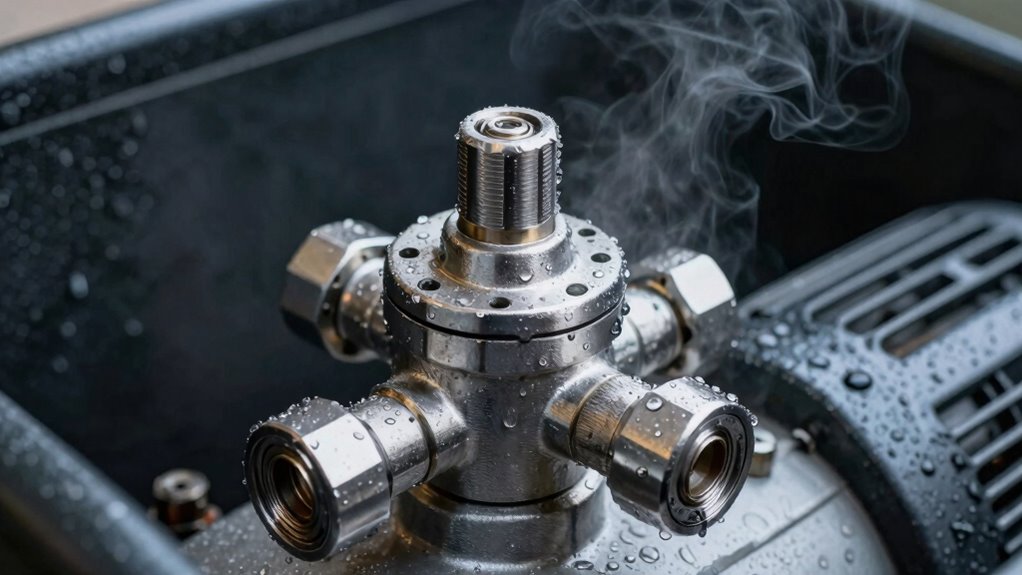
Have you ever wondered why moisture often ends up in your air compressor? It’s mainly due to the way compressed air is generated from atmospheric air, which naturally contains humidity. During compression, this moisture gets trapped inside the system, reducing air quality. Poor compressor maintenance, like neglecting drain valves or filters, allows water to accumulate. You’ll notice signs such as rust on the compressor parts, water in the air lines, or inconsistent tool performance. Regularly inspecting your equipment helps you catch moisture early. Using moisture filters and draining condensate are simple steps to improve air quality and prevent issues. Additionally, understanding the natural process of moisture condensation helps you take proactive measures to control humidity levels. Recognizing the importance of air quality can save you from costly repairs and downtime. Staying vigilant with compressor maintenance guarantees your tools work smoothly and last longer, saving you time and money down the line. Maintaining proper humidity control within your system is essential to prevent long-term problems and ensure optimal performance. Properly managing air moisture is crucial for extending the lifespan of your tools and maintaining consistent operation. To further minimize moisture problems, consider implementing regular maintenance routines that include checking for water buildup.
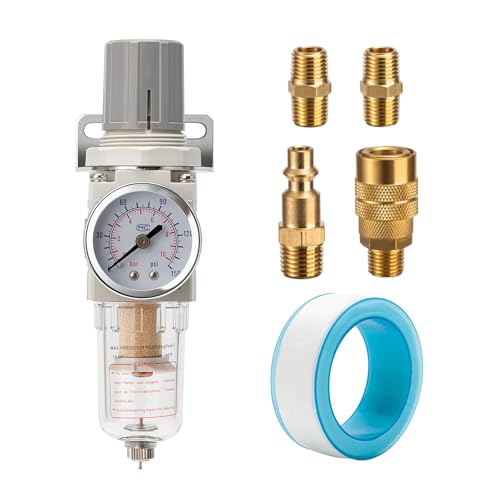
LNCHKA Pneumatic Air Compressor Filter Regulator Combo 1/4" NPT 150 PSI w/Adjustable Gauge-Water Separator,Metal Bracket,Manual Drain,5 Micron Brass Cartridge
CONDITIONS OF USE:Air pressure filter 1/4 NPT should meet the values specified As follows: Maximum pressure:145PSI,recommended pressure adjustment…
As an affiliate, we earn on qualifying purchases.
As an affiliate, we earn on qualifying purchases.
How Moisture Can Damage Your Tools and Corrode Fluids
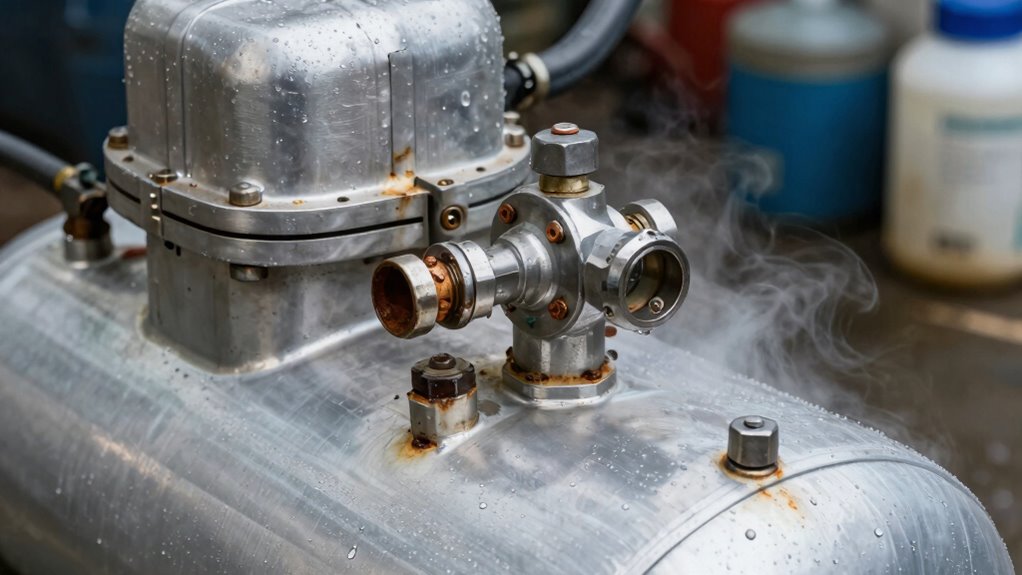
Moisture in compressed air can quickly cause damage to your tools and fluids, leading to costly repairs and downtime. When moisture accumulates, it promotes corrosion, especially on metal parts, reducing tool lifespan and efficiency. Water mixed with lubricants can break down fluids, impairing their ability to protect moving parts. Over time, corrosion can cause pitting, weakening tools and increasing the risk of failure. To prevent this, proper corrosion prevention measures are essential. Using moisture separators and regular draining helps eliminate water before it causes harm. Proper maintenance practices are vital for long-term system reliability and performance. Additionally, implementing moisture control methods can significantly reduce the risk of moisture-related damage. Ensuring your compressed air system stays dry protects your investment, keeps tools working smoothly, and maintains fluid integrity. Addressing moisture accumulation proactively is key to avoiding the costly consequences of corrosion and fluid degradation. Incorporating effective filtration can further help in removing moisture and contaminants from the system.

HPDMC Industrial Heavy Duty Refrigerated Air Dryer 110V 35 CFM, 0.58 KW for 15HP-20HP Rotary Screw Air Compressors – R134a Cooling System – Removes Moisture, Oil, Dust
Designed for 7.5 HP & 10 HP air compressors, this industrial-grade refrigerated air dryer efficiently removes water vapor,…
As an affiliate, we earn on qualifying purchases.
As an affiliate, we earn on qualifying purchases.
How to Detect Moisture in Your Compressed Air System
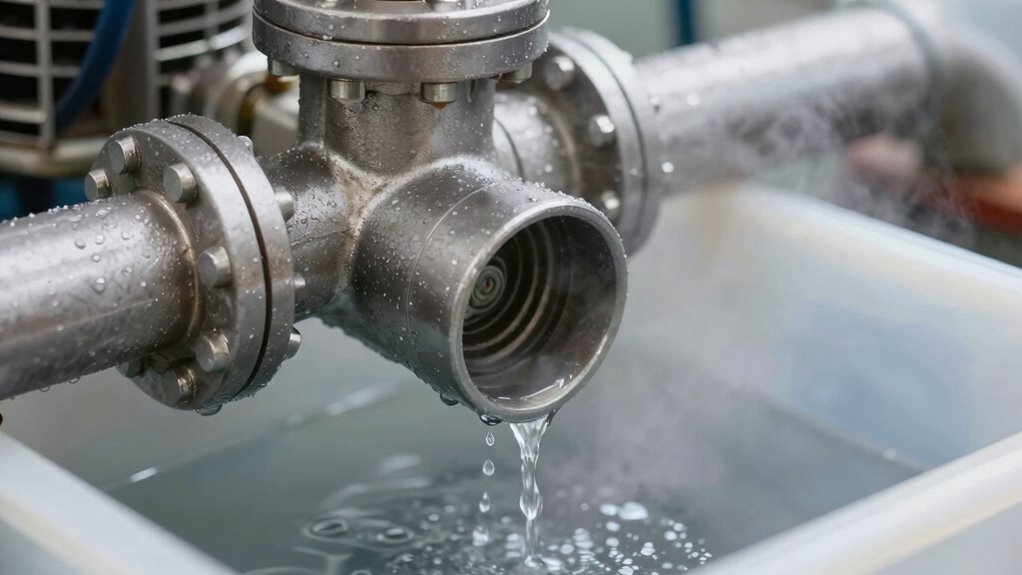
Are you aware of the signs that indicate moisture in your compressed air system? Monitoring humidity levels helps you catch issues early. Look for condensate indicators, such as water buildup in filters or tanks. To visualize, consider this table:
| Moisture Level | Condensate Indicator | Action Needed |
|---|---|---|
| Low | No water visible | Normal operation |
| Moderate | Small water drops | Check filters |
| High | Significant water | Drain system & inspect |
If you notice frequent water in condensate indicators or rising humidity levels, moisture is likely accumulating. Regular checks help you prevent damage, ensuring your tools and fluids stay dry and functional. Proper air quality management is essential for minimizing moisture buildup and maintaining system efficiency. Staying informed about moisture control techniques can help reduce moisture issues in your system. Additionally, implementing desiccant dryers can effectively remove excess moisture from compressed air. Understanding the dew point of your compressed air is crucial for managing moisture levels properly. Developing an awareness of moisture-related corrosion risks can further protect critical components. Stay vigilant, and you’ll maintain a reliable compressed air system.

NEIKO 30252A Water and Oil Separator for Air Line | 1/4" NPT Inlet and Outlet | 90 PSI | Air Compressor and Air Tool Accessory | Protect Lifespan of Pneumatic Tools | Water Moisture Filter Dryer
WATER SEPARATOR: Add this air-tool accessory to your shop or garage to stop moisture, water, oil, and particles…
As an affiliate, we earn on qualifying purchases.
As an affiliate, we earn on qualifying purchases.
How to Prevent Moisture Buildup in Your Compressor
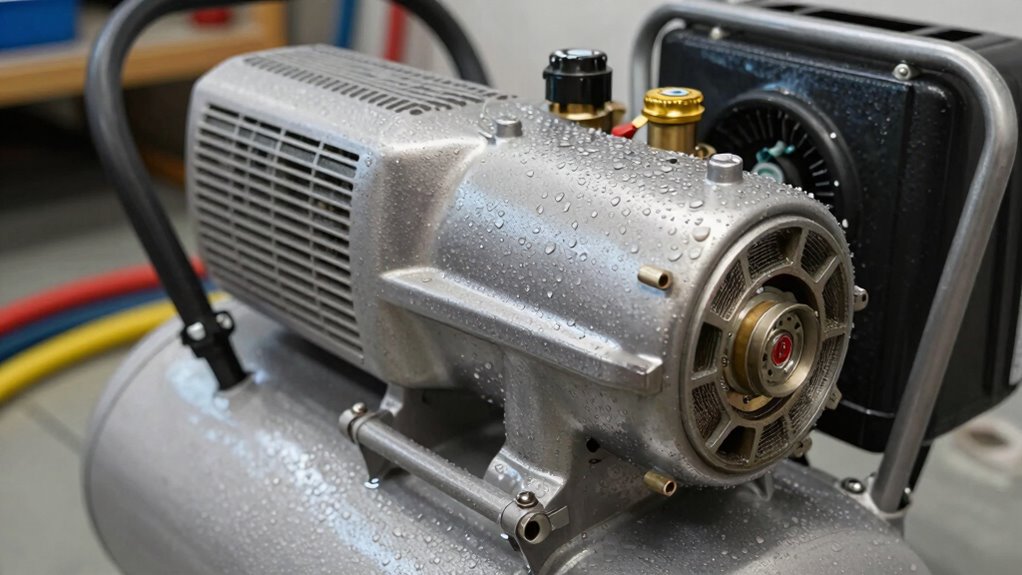
To prevent moisture buildup in your compressor, implementing proper drainage and filtration practices is essential. Regular maintenance tips include draining moisture from tanks daily and inspecting filters for clogs. Using high-quality filters and moisture separators helps trap water before it reaches your tools or fluids. Preventive measures also involve keeping the compressor in a cool, dry environment to reduce condensation. Ensure all drain valves are functioning correctly and open them during and after use. Monitoring humidity levels around your compressor can further minimize moisture issues. Additionally, understanding the importance of air purification systems can help maintain dry, clean air within your compressor setup. Installing moisture control devices can provide an extra layer of protection against humidity-related problems. Maintaining proper air quality is crucial for preventing corrosion and extending the lifespan of your tools and equipment. Employing regular filter replacements ensures optimal performance and reduces the risk of moisture intrusion. Staying aware of humidity levels in your work area can also help you take timely action against moisture buildup. By staying proactive with these preventive measures, you minimize moisture-related problems and protect your air tools and fluids from damage.
Choosing the Best Dryer to Keep Your Air Clean
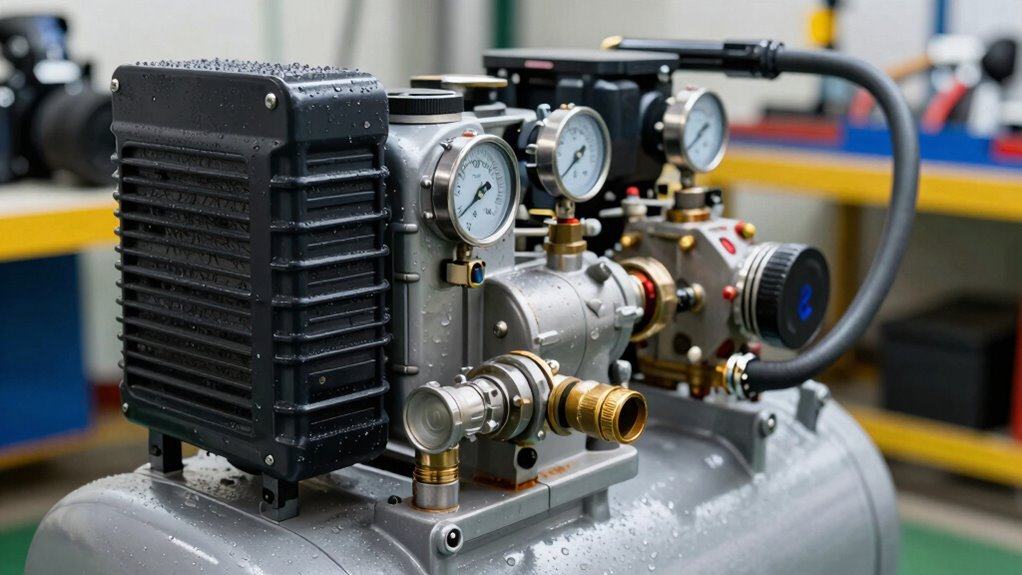
Choosing the right dryer is essential for maintaining clean, dry compressed air and preventing moisture-related issues in your system. The best dryer improves filtration efficiency and minimizes the need for frequent dryer maintenance. When selecting a dryer, consider the air flow rate, dew point requirements, and energy efficiency. Visualize a dryer that:
- Uses advanced filtration to trap tiny water particles
- Operates quietly with minimal energy consumption
- Has easy-access filters for quick maintenance
- Keeps moisture levels consistently low
- Fits seamlessly into your existing setup
These features ensure your air remains free of moisture, protecting tools and fluids. Incorporating proper maintenance practices can further enhance the longevity and performance of your dryer. Selecting a dryer with advanced filtration technology helps ensure your system stays dry and efficient. Proper dryer choices reduce downtime and extend equipment lifespan. Additionally, choosing a dryer with reliable moisture removal capabilities can prevent costly damage and downtime. By prioritizing filtration efficiency and ease of maintenance, you’ll keep your system running smoothly and your compressed air clean. Regularly monitoring moisture levels is also crucial to identify potential issues early and maintain optimal system performance.
Frequently Asked Questions
Can Moisture in the Air Compressor Cause Health Issues?
Yes, moisture in your air compressor can cause health issues. When moisture becomes airborne, it can lead to airborne mold, which you might inhale, causing respiratory irritation. This can worsen allergies or asthma and lead to other breathing problems. To protect yourself, make sure your compressor is well-maintained and moisture is properly drained. Proper ventilation also helps reduce the risk of airborne mold and respiratory irritation.
How Often Should I Check for Moisture in My Compressed Air System?
Did you know that moisture in compressed air can cause 80% of air tool failures? You should check for moisture at least monthly, especially if your system runs frequently. Incorporate moisture testing into your maintenance schedule to catch problems early. Regular checks help prevent rust, corrosion, and damage to your tools, saving you time and money. Staying on top of moisture levels keeps your system running smoothly and efficiently.
Are There Environmental Factors That Influence Moisture Accumulation?
Yes, environmental factors like humidity levels and ambient temperature substantially influence moisture accumulation. When humidity is high or temperatures fluctuate, moisture is more likely to condense in your air system. You should monitor these factors, especially in humid or variable-temperature environments. Using moisture filters and draining your system regularly helps prevent moisture buildup, ensuring your air tools stay dry and perform ideally.
What Are the Signs of Moisture Damage in Air Tools?
Think of moisture damage in your air tools like rust creeping in uninvited. You’ll notice corrosion indicators, such as rust spots or pitting, and a decline in tool performance, like sluggish operation or unusual noises. If tools feel sticky or leak air, moisture is likely the culprit. These signs point to moisture damage, which can severely impact your tools’ longevity and efficiency if ignored. Regular checks help catch problems early.
How Does Humidity Impact the Effectiveness of Air Dryers?
Humidity can reduce your air dryer’s effectiveness because it makes moisture harder to remove. You need to monitor the dew point closely, ensuring it stays below the desired level. Regular desiccant regeneration helps maintain drying capacity by restoring desiccant’s moisture absorption. High humidity can overload the system, so staying vigilant with dew point monitoring and timely desiccant regeneration keeps your air tools dry and functioning properly.
Conclusion
Just like Pandora’s box, moisture in your air compressor can release chaos on your tools and fluids. But with the right checks, maintenance, and a good dryer, you can keep the chaos at bay. Think of it as guarding the treasure of your equipment, ensuring it stays pristine and ready for action. Don’t let moisture be the villain—stay vigilant, and your tools will thank you for it.