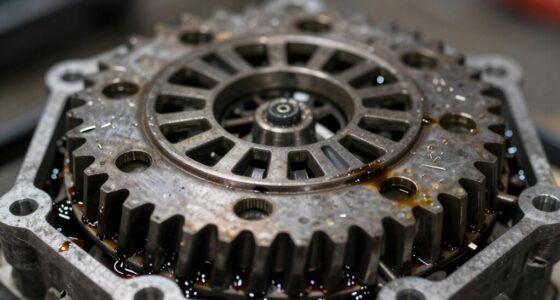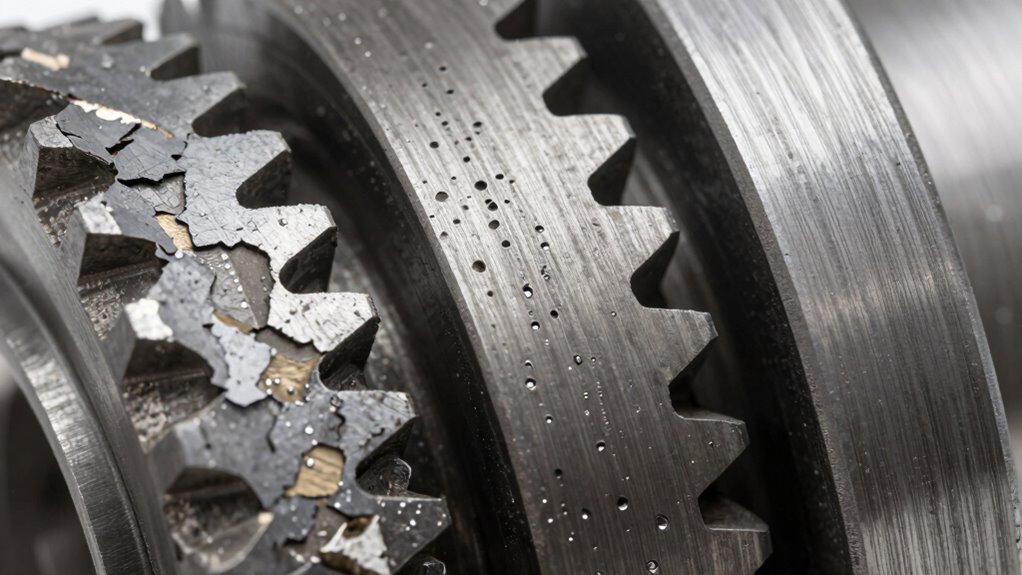
Spalling, pitting, and scuffing are common gear damages that differ in cause and appearance. Spalling occurs when surface layers break loose due to fatigue from cyclic loads, often creating flaky patches. Pitting appears as small craters resulting from corrosion or fatigue, where tiny holes form and enlarge over time. Scuffing is surface damage caused by adhesive wear or overheating, leading to surface smearing. Understanding these differences helps you identify issues early and keep your gear functioning smoothly.
Key Takeaways
- Spalling involves surface material breaking away in flakes due to fatigue, often from cyclic stress and poor lubrication.
- Pitting appears as small, crater-like holes caused by localized stress, corrosion, or fatigue, worsening over time.
- Scuffing results from excessive friction and inadequate lubrication, leading to surface smearing or scoring.
- While spalling and pitting are fatigue-related damages, scuffing is primarily caused by lubrication failure and high friction.
- Proper maintenance, lubrication, and load management are essential to prevent all three types of gear surface damage.
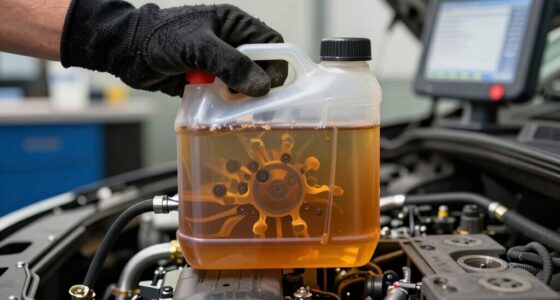
Have you ever wondered what causes surface damage in machinery components? Understanding the root causes can help you prevent costly repairs and downtime. One key factor is lubrication considerations. Proper lubrication reduces friction and wear, but if the lubricant is inadequate, contaminated, or improperly applied, it can lead to surface damage. Insufficient lubrication exposes metal surfaces to direct contact, increasing the risk of material fatigue. Over time, repeated stress causes microscopic cracks to form and expand, weakening the material and setting the stage for damage like spalling or pitting.
Proper lubrication prevents surface damage and extends machinery lifespan.
Material fatigue plays a vital role in surface deterioration. When components undergo cyclic loads, the repeated stress can cause tiny cracks to develop, particularly if lubrication isn’t ideal. These cracks can grow over time, leading to surface flaking or the formation of pits. Fatigue isn’t just about the number of cycles; the quality of lubrication influences how quickly cracks develop. If lubrication fails to maintain a consistent film, metal surfaces experience higher stress concentrations, accelerating fatigue and damage.
Spalling occurs when material fatigue causes chunks of surface material to break loose. You might notice this as flaky or rough patches on gear teeth or bearing surfaces. It often results from prolonged cyclic loading combined with poor lubrication, which amplifies wear and weakens the surface. The process begins with small cracks that propagate beneath the surface, eventually causing a piece of material to flake off. Spalling can lead to significant efficiency loss and may cause catastrophic failure if not addressed promptly.
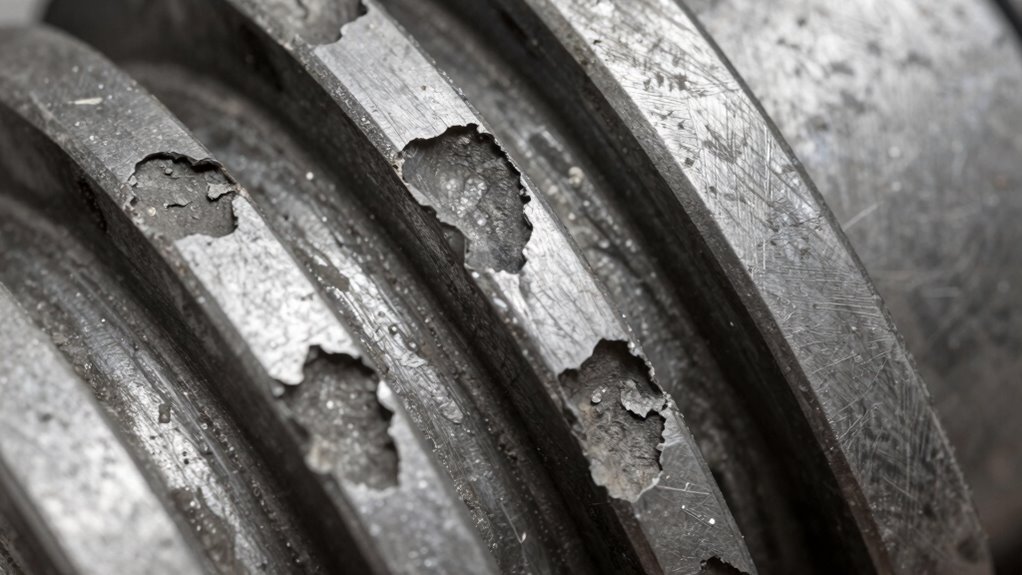
Pitting, on the other hand, manifests as small, crater-like holes on the surface. Unlike spalling, which involves larger chunks breaking away, pitting typically starts as tiny corrosion or fatigue-induced pits. These pits can trap debris and lubricant, worsening the damage. Pitting often results from localized stress concentrations, which are exacerbated by inadequate lubrication or contamination. Over time, these pits can enlarge, weakening the component’s structural integrity and increasing the risk of further surface damage.
Understanding these surface damage mechanisms helps you implement better maintenance and lubrication practices. Regularly inspecting components for early signs of spalling or pitting allows you to intervene before severe damage occurs. Ensuring proper lubrication, choosing suitable materials, and managing operational loads can considerably reduce the risk of surface damage caused by fatigue, spalling, or pitting. By paying close attention to these factors, you can extend the lifespan of your machinery and maintain prime performance. Additionally, staying informed about surface damage mechanisms enables proactive maintenance strategies that can mitigate costly failures.

MetioKulto A Pre-Trip Inspection Tool for Trucker
Product Function:4-in-1 Pre-Trip Inspection Tool — designed to check tire tread depth, brake stroke, brake pad thickness, and…
As an affiliate, we earn on qualifying purchases.
As an affiliate, we earn on qualifying purchases.
Frequently Asked Questions
How Can I Prevent Spalling in High-Load Gear Applications?
To prevent spalling in high-load gear applications, you should apply appropriate gear surface treatments like case hardening or nitriding to enhance durability. Additionally, use load distribution techniques such as proper gear alignment and selecting gears with adequate contact ratios. Regular lubrication also minimizes surface stress, reducing the risk of spalling. Combining these strategies ensures your gears handle high loads effectively, extending their lifespan and maintaining ideal performance.
What Are the Best Lubricants to Avoid Pitting?
To avoid pitting, choose lubricants with the right viscosity for your gear load and operating conditions. Opt for lubricants with high-quality additive selection, such as anti-wear and corrosion inhibitors, to protect gear surfaces. Regularly monitor and maintain proper lubrication levels, ensuring the lubricant can form a durable film that prevents metal-to-metal contact. Proper lubricant choice and maintenance considerably reduce pitting risks and extend gear life.
How Can I Distinguish Scuffing From Other Gear Damages Visually?
A gentle eye during visual inspection reveals scuffing through subtle surface marks, often appearing as fine scratches or smudges on the gear teeth. Unlike pitting or spalling, scuffing usually exhibits a smoother, shiny area without deep pits or flakes. To distinguish it, look for irregular, superficial streaks or discoloration on contact surfaces. Recognizing these signs early helps you address issues before they escalate into more severe damage.
What Maintenance Practices Reduce the Risk of Gear Pitting?
You can reduce gear pitting by maintaining proper lubrication frequency and ensuring effective surface hardening. Regularly check and apply the right lubricant to prevent metal-to-metal contact, which causes pitting. Additionally, invest in surface hardening treatments to strengthen gear surfaces, making them more resistant to pitting under stress. Proper maintenance, combined with these practices, minimizes pitting risks and prolongs your gear’s lifespan.
Are Certain Gear Materials More Resistant to Spalling?
Ever wonder which gear materials withstand spalling better? You’ll find that choosing the right material substantially enhances wear resistance, making gears less prone to spalling. High-quality alloys like hardened steel or surface-treated materials offer better resistance compared to softer options. Material selection directly impacts durability, so opting for tougher, wear-resistant materials ensures your gears last longer and perform reliably under demanding conditions.

Auroland Non-Contact Voltage Tester with 9 Gear Adjustable Sensitivity Voltage Detector AC Circuit Tester Tool LCD Display LED Flashlight Buzzer Alarm Range12V-1000V & Live/Null Wire Judgment AC1
[Non-contact AC Voltage Tester]: This test pen has NCV sensor, you can detect the presence of AC voltage…
As an affiliate, we earn on qualifying purchases.
As an affiliate, we earn on qualifying purchases.
Conclusion
Understanding spalling, pitting, and scuffing is like knowing the different faces of a storm—each one threatening your gear in its own way. By recognizing these damage types early, you can prevent them from spiraling out of control. Think of it as giving your machinery a health check-up before the storm hits, ensuring your equipment stays strong and reliable. Stay vigilant, and you’ll keep your gear running smoothly through any weather.

Quicksilver SAE 90 High Performance Gear Lube and Pump Kit for Mercury Outboards and Mercruiser Sterndrives, 32 Fl. Oz.
Lower unit gear oil formulated to protect against corrosion and excessive wear
As an affiliate, we earn on qualifying purchases.
As an affiliate, we earn on qualifying purchases.

Fluid Analysis for Mobile Equipment: Condition Monitoring and Maintenance
As an affiliate, we earn on qualifying purchases.
As an affiliate, we earn on qualifying purchases.