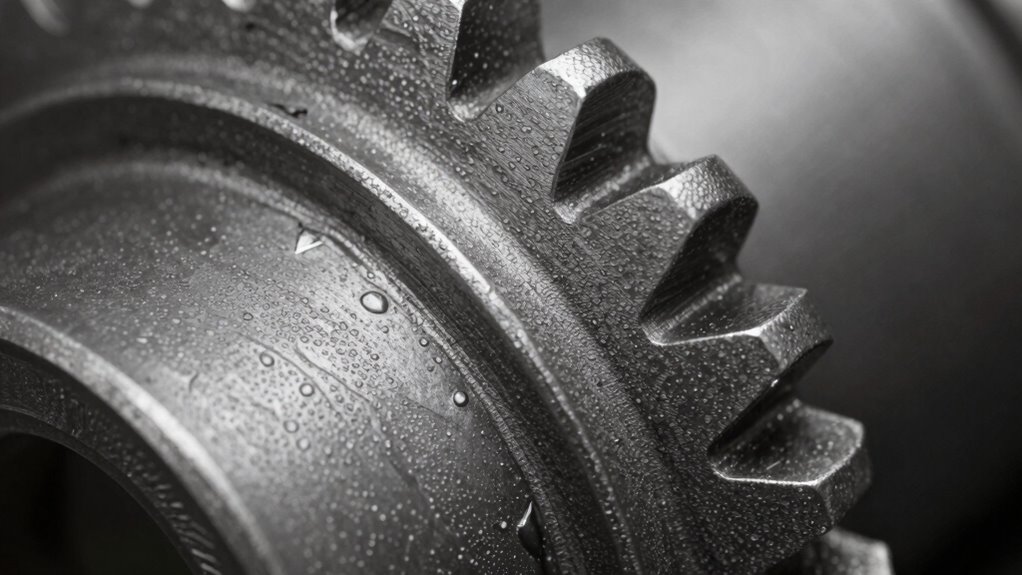

Micropitting is tiny surface fatigue that happens on gear teeth due to repeated contact stresses. It causes micro-craters, which weaken the surface, leading to noise, vibrations, and eventual gear failure if ignored. Poor lubrication, surface roughness, and contamination often trigger this damage. Recognizing early signs and applying proper maintenance or surface treatments can prevent it from escalating. To understand how to protect your gears and keep them running smoothly, keep exploring these causes and solutions in more detail.
Key Takeaways
- Micropitting involves tiny craters on gear teeth caused by surface fatigue from cyclic stresses.
- Early signs include vibrations, noise, and surface roughness, often requiring magnification for detection.
- Poor lubrication, surface finish, and contaminants accelerate micropitting development.
- Prevention includes high-quality lubricants, surface treatments, and proper maintenance practices.
- Surface engineering like shot peening and coatings strengthens gear surfaces, reducing micropitting risk.
GEARWRENCH High-Definition Flexible Inspection Borescope | GWSCOPE
High-definition 1080p camera with adjustable brightness levels delivers sharp, clear visuals, allowing technicians to inspect dark engine bays,…
As an affiliate, we earn on qualifying purchases.
As an affiliate, we earn on qualifying purchases.
What Is Micropitting and Why Should You Care?
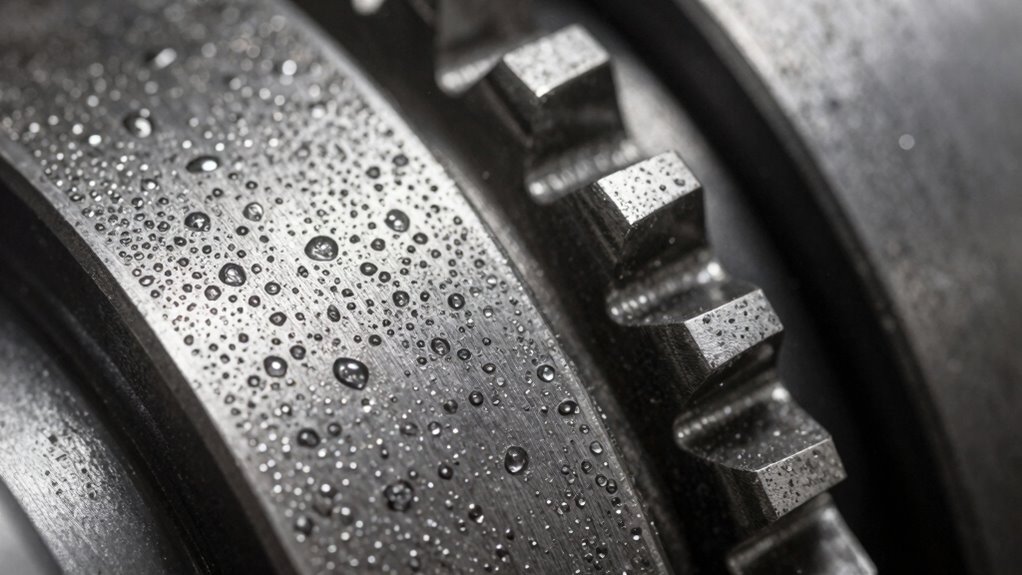
Micropitting is a form of surface fatigue that creates tiny craters on gear tooth flanks, often going unnoticed until it causes significant problems. These micro-scale pits weaken the gear surface, leading to material loss and increased stress concentrations. If ignored, micropitting can progress from minor surface damage to larger cracks and eventual gear failure. It’s especially problematic because it develops gradually and is hard to detect without detailed inspection. You should care because micropitting disrupts gear performance, increases vibrations, noise, and reduces efficiency. It can also lead to costly repairs, downtime, and even catastrophic failure if left untreated. Recognizing and addressing micropitting early helps extend gear life, maintain smooth operation, and avoid unexpected breakdowns. Free Floating features can also contribute to uneven load distribution, exacerbating micropitting issues over time.

Jet Snowblower Spray – A Durable and Strong Polymer Coating for Chut, Equipment Surfaces, Designed for Wet Heavy Conditions, Smooth – Flow Lubricant for Shovels, Plows & Winter Tools 1-Pack (11 oz)
Effortless Cleanup: Keeps blowers and shovels clear of buildup, glaze, or frost. Lowers friction blockages and resistance, allowing…
As an affiliate, we earn on qualifying purchases.
As an affiliate, we earn on qualifying purchases.
How Micropitting Forms on Gear Teeth During Operation

Have you ever wondered how tiny surface flaws develop into micropitting on gear teeth during operation? It starts with cyclic stresses at contact points, especially where surface finish is poor or lubrication is inadequate. These conditions cause ultra-small cracks to form at high spots like ridges or grinding marks. As gears rotate, these cracks propagate at shallow angles, joining together or surfacing again as tiny pits. Repeated loading and unloading cause plastic deformation at asperities, gradually enlarging cracks. Small debris particles, often just 1 mm, act like polishing agents, wearing down the surface further. Over time, these micro-craters weaken the material, disrupt the oil film, and concentrate stresses, setting the stage for progressive micropitting that can lead to more severe damage. Understanding the role of surface finish quality and proper lubrication is essential to prevent early micropitting formation.

Lucas Oil 10043 SAE 80W-90 Heavy Duty Gear Oil – 1 Quart
Contains extraordinary anti-wear and lubricity agents, ensuring exceptional protection against wear and reducing drag
As an affiliate, we earn on qualifying purchases.
As an affiliate, we earn on qualifying purchases.
Common Causes of Micropitting in Gear Systems
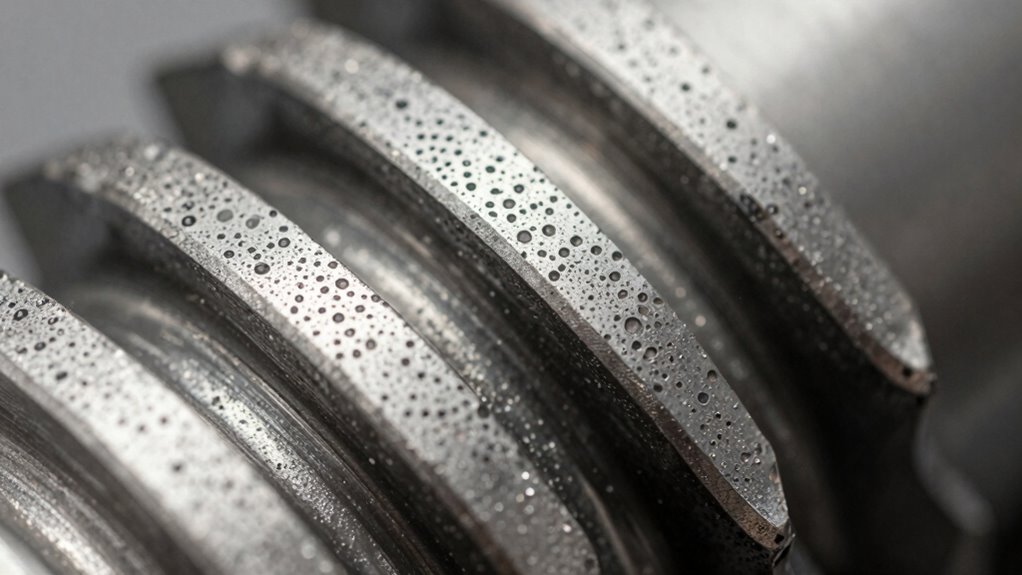
Micropitting often results from issues like inadequate lubrication or poor surface finish quality. When oil films aren’t thick enough, metal-to-metal contact increases, leading to surface fatigue. Similarly, rough surface finishes create stress concentrations that make gears more prone to developing micropitting. Urban pursuits in Harrisburg highlight the importance of proper maintenance and monitoring to prevent such damage.
Lubrication Failures
When lubrication fails to maintain a sufficient oil film thickness, it can lead to direct metal-to-metal contact between gear teeth, substantially increasing the risk of micropitting. Without proper lubrication, surface asperities rub directly, causing local stress concentrations that initiate microcracks. Inadequate or degraded lubricants fail to absorb and distribute cyclic loads, accelerating surface fatigue. Contaminants like dirt or metal particles can break down oil properties, reducing film strength. Low viscosity or improper additives compromise film formation, while inconsistent lubrication schedules leave gear surfaces exposed. Over time, this friction and stress cause tiny cracks to form and propagate, leading to micropitting. Maintaining correct lubrication practices, choosing suitable oils, and ensuring cleanliness are essential to prevent these failures and extend gear life.
Surface Finish Quality
Poor surface finish quality is a significant factor that contributes to micropitting in gear systems. When gear teeth are improperly ground or machined, surface irregularities like ridges, scratches, or roughness create stress concentrations that initiate cracks. These flaws act as focal points for surface fatigue, accelerating micropitting formation. Inadequate finishing processes, such as insufficient grinding or polishing, leave micro-asperities that increase local contact stress. Surface defects like grinding burns or debris dents further weaken the gear’s integrity. High surface roughness prevents smooth load transfer, leading to uneven stress distribution and early initiation of micropitting. Ensuring a high-quality finish reduces asperity peaks, minimizes stress risers, and promotes better distribution of contact stresses, ultimately extending gear life and performance. surface finish quality is crucial because it directly impacts the durability and reliability of gear components.

GOYOJO GSR750 Surface Roughness Tester, High-Precision Digital Profilometer with 5 μm Diamond Stylus Inductive Sensor, Multi-Parameter Surface Finish Measurement for Engineering & Laboratory Use
Precise Multi-Parameter Profiling: GOYOJO GSR750 Surface Roughness Gauge, offers the capability to measure Multiple surface roughness parameters, including…
As an affiliate, we earn on qualifying purchases.
As an affiliate, we earn on qualifying purchases.
Recognizing the Signs of Micropitting on Gear Flanks
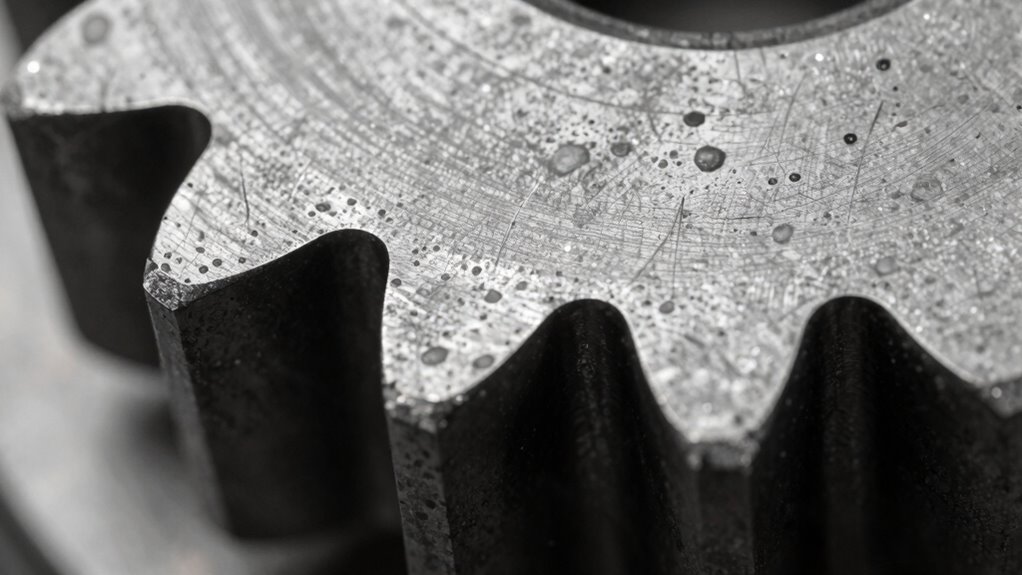
Early detection of micropitting involves closely inspecting gear tooth flanks for subtle surface changes. Look for dull, gray-stained patches that appear etched or slightly rougher than the surrounding areas. These patches often originate at high points like crests or grinding ridges and may be difficult to see without magnification. You might notice a matte finish or tiny craters forming in specific spots. Vibration and noise levels can increase subtly as micropitting develops, so listen for changes during operation. Regular visual inspections, especially after high-stress cycles, are essential. Early signs are often microscopic, but recognizing these gentle surface alterations can help prevent progression to more severe damage. The key is to stay vigilant and catch these tiny imperfections before they escalate. Monitoring surface integrity through advanced detection methods can further aid in early identification and prevention of micropitting progression.
The Impact of Micropitting on Gear Performance and Longevity
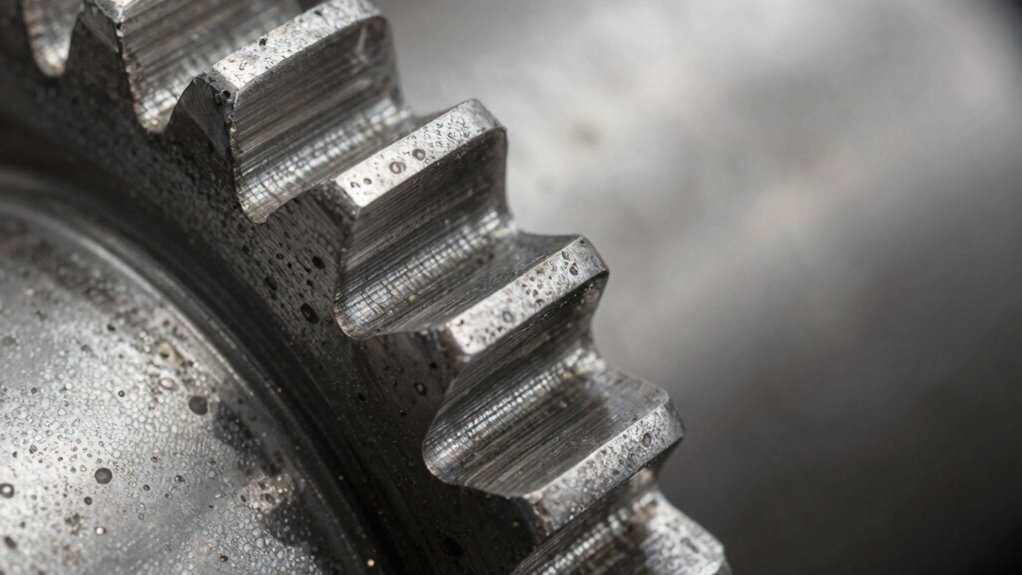
Micropitting considerably compromises gear performance by weakening the surface integrity and altering the contact conditions between gear teeth. This tiny damage reduces load-carrying capacity, increases friction, and accelerates wear. As a result, you may notice decreased efficiency, higher operating temperatures, and increased vibration or noise. Over time, these effects lead to several issues:
Micropitting weakens gear surfaces, reducing efficiency and accelerating wear over time.
- Material loss and altered gear geometry
- Increased local stress concentration
- Reduced gear mesh accuracy and smoothness
- Accelerated progression to more severe damage like macropitting
- Shortened gear and bearing lifespan
Addressing micropitting early is vital to maintaining peak performance and extending your gear’s service life. Recognizing early signs of damage can also help prevent the escalation of wear and preserve the integrity of the gear surface, which is crucial for gear durability and overall drivetrain health.
How Micropitting Progresses to More Severe Damage Like Macropitting
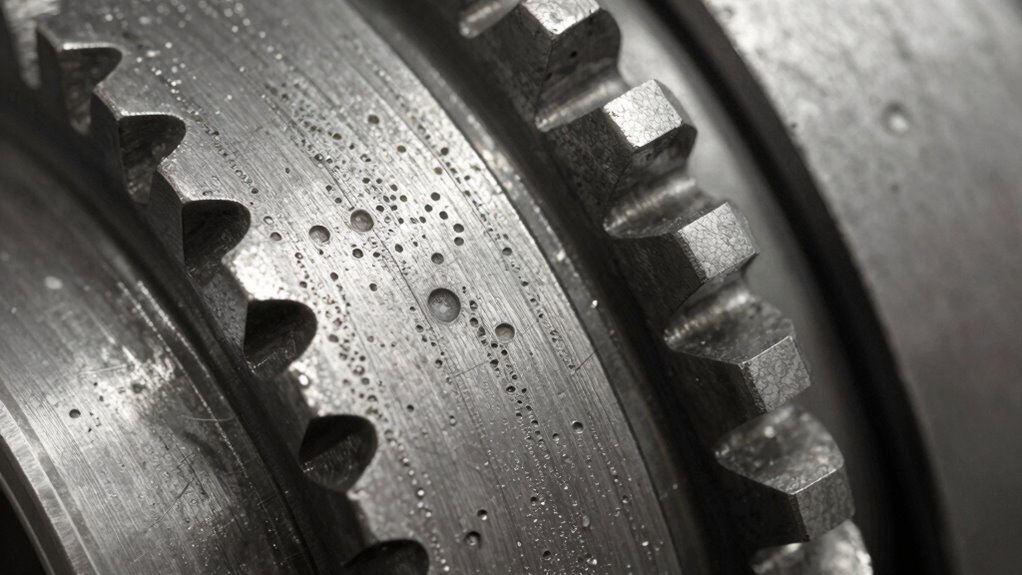
As micropitting gradually weakens the surface of gear teeth, the tiny cracks and pits serve as initiation points for more extensive damage. These micro-cracks spread deeper and wider under cyclic stresses, especially when lubrication fails or surface conditions are poor. Over time, the cracks link up and form larger fractures, causing material to dislodge from the tooth surface. This progression transforms microscopic damage into visible chipping and pitting, known as macropitting. Increased stress concentrations around micropits accelerate crack growth, damaging the gear’s geometry and load distribution. As the damage enlarges, the gear’s ability to transmit torque diminishes, vibrations and noise rise, and the risk of catastrophic failure grows. Without intervention, micropitting inevitably evolves into severe damage that compromises gear integrity and operation. Proper lubrication helps reduce surface stress and delay the progression of micropitting into more severe forms of damage.
Strategies to Prevent Micropitting Through Proper Lubrication and Surface Finish
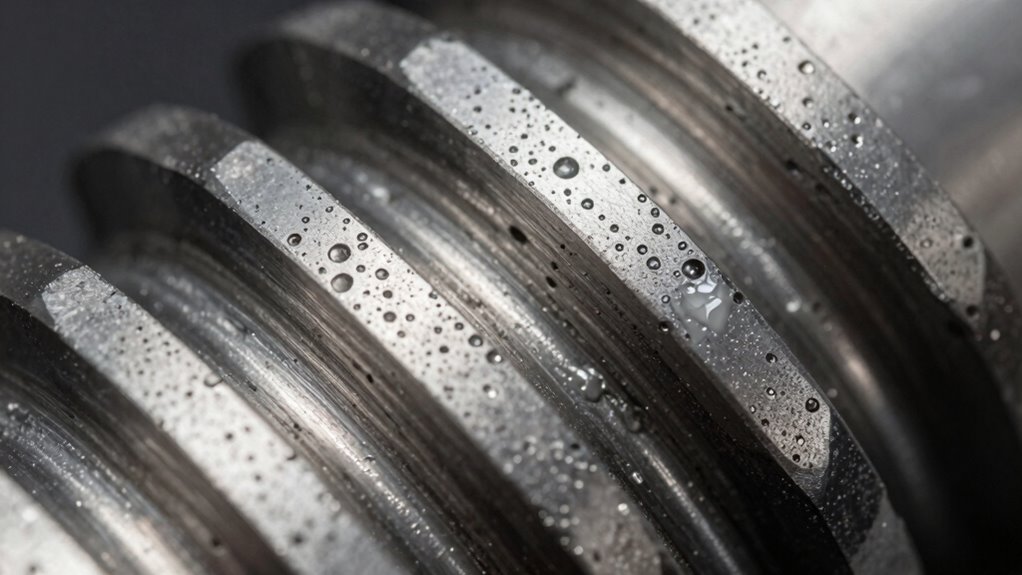
Proper lubrication is essential for preventing micropitting because it guarantees a sufficient oil film thickness that separates gear tooth surfaces under load. Using the right lubricant viscosity, combined with appropriate additives, reduces surface stresses and minimizes asperity contact. Maintaining clean, contaminant-free oil prevents debris dents that initiate surface damage. Surface finish quality plays a critical role; smoother, well-machined gear teeth reduce stress concentrations. Surface treatments like shot peening introduce compressive stresses, strengthening the surface against fatigue. Consistent lubrication schedules ensure ideal film thickness throughout operation, avoiding dry spots. To enhance protection, consider these strategies:
Proper lubrication ensures adequate oil film thickness, reducing surface stresses and preventing micropitting damage.
- Use high-quality, properly rated lubricants with anti-wear additives
- Regularly monitor and adjust lubrication systems
- Ensure precise gear surface finishing during manufacturing
- Apply surface treatments like shot peening or coating
- Maintain clean, debris-free operating environments
- Implement proper maintenance practices to detect early signs of micropitting and address issues proactively
Best Practices for Detecting and Monitoring Micropitting Early
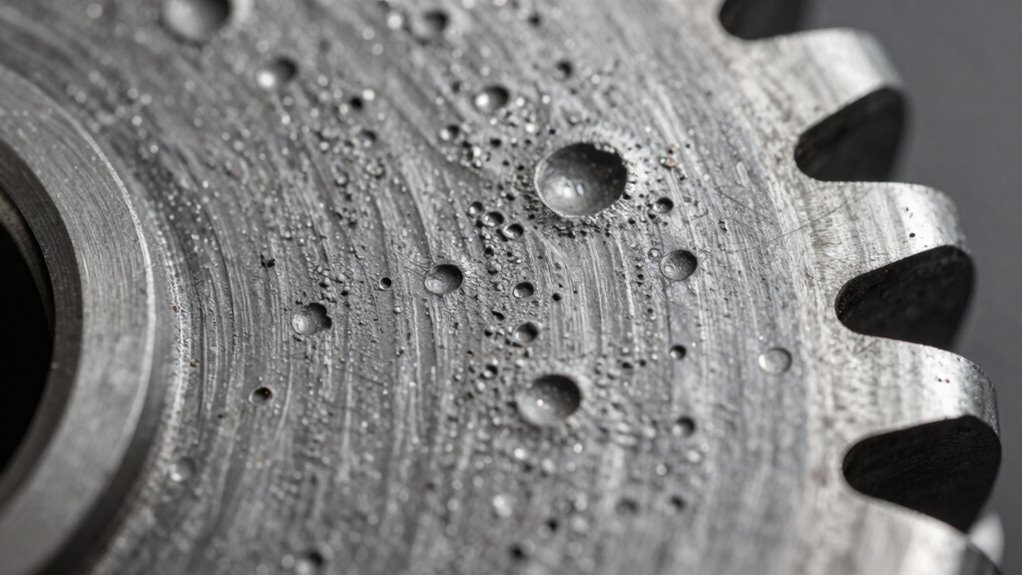
To catch micropitting early, you should regularly perform visual inspections for dull, gray patches or etched areas on gear teeth. Vibration monitoring can help identify unusual noise or amplitude changes that signal surface distress before failure occurs. Additionally, analyzing oil for debris and metal particles provides essential clues about ongoing surface fatigue and micropitting development. Employing decoding slang techniques can also assist maintenance teams in better understanding diagnostic reports and communicating findings effectively.
Visual Inspection Techniques
Early detection of micropitting relies heavily on visual inspection techniques that can identify subtle surface changes before they develop into significant damage. You should look for dull, gray-stained patches or etched areas on gear teeth, which indicate early-stage micropitting. Regularly examine gear flanks with a magnifying glass or borescope to spot fine surface irregularities. Pay close attention to crests and high points where damage initiates. Use proper lighting and magnification to enhance surface detail visibility. Document findings with high-resolution photographs for trend analysis. Remember, early signs can be very subtle, so consistent inspection intervals and trained eyes are essential.
- Dull, gray patches or etching
- Fine surface cracks or craters
- Changes in gear tooth surface texture
- Small debris accumulation
- Discoloration or staining patterns
Vibration Monitoring Methods
Vibration monitoring is a vital method for detecting micropitting before it causes significant gear damage. By analyzing vibration signals, you can identify subtle changes indicating early surface distress. Regular measurements help detect increased vibration amplitudes or shifts in frequency patterns, which often precede visible damage. Use accelerometers mounted on gearboxes or bearings to capture high-frequency vibrations associated with surface fatigue. Pay attention to specific fault frequencies related to gear mesh and bearing defects. Employ spectral analysis tools like Fast Fourier Transform (FFT) to isolate these signatures. Consistent monitoring during operation allows you to track trends over time, catching micro-level issues early. This proactive approach enables timely maintenance or adjustments, minimizing downtime, extending gear life, and preventing costly repairs caused by micropitting progression. Incorporating vibration analysis into your maintenance routine enhances early detection and reliability.
Oil Analysis Indicators
Monitoring oil for specific indicators provides a proactive way to detect micropitting before it causes extensive damage. Regular oil analysis reveals early signs of surface distress, allowing you to intervene promptly. Key indicators include:
- Elevated levels of wear metals like iron, chrome, or nickel
- Increased particle counts, especially fine debris
- Changes in oil viscosity, indicating additive depletion or contamination
- Presence of metallic or abrasive particles in the oil
- Elevated levels of contaminants such as water or dirt
- Proper maintenance of oil analysis procedures enhances early detection accuracy.
Treatments and Surface Engineering to Minimize Micropitting Risks
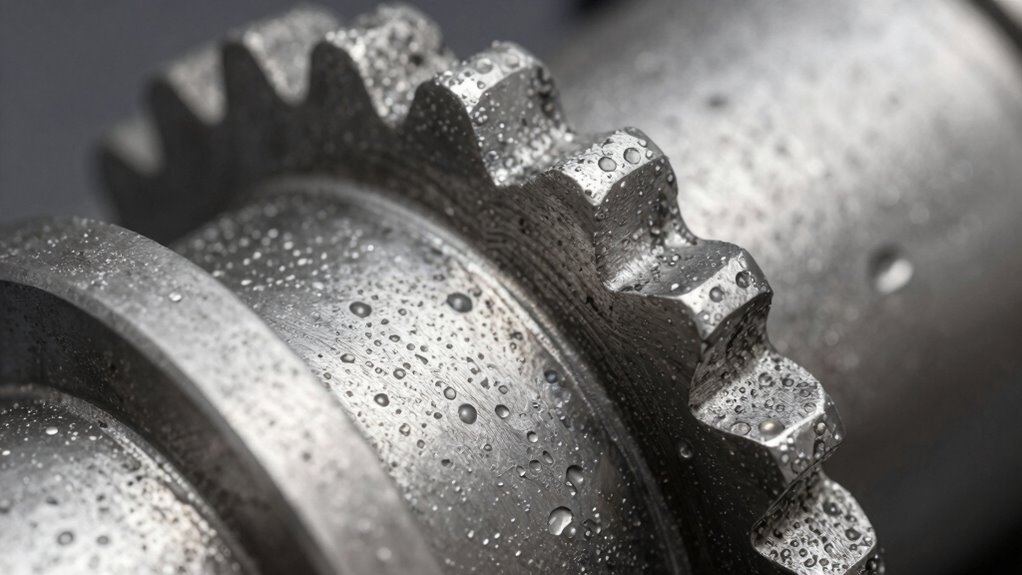
Surface treatments and engineering techniques play a crucial role in reducing micropitting risk by enhancing gear surface durability and minimizing surface stress concentrations. Hardening methods like case carburizing, nitriding, or induction hardening improve surface strength, resisting crack initiation. Shot peening introduces compressive residual stresses, reducing tensile stresses that promote micropitting. Applying low-friction coatings, such as DLC or TiN, decreases asperity shear and sliding, lowering surface distress. Optimizing surface finish through precision grinding or honing creates a smoother, more uniform surface, reducing stress risers. Additionally, surface texturing can help distribute loads more evenly. Incorporating surface roughness control techniques ensures a more consistent finish, further reducing stress concentrations. Combining these treatments with proper lubrication and controlled operating conditions further minimizes surface fatigue. Implementing targeted surface engineering enhances gear life, reduces microcrack formation, and prevents early micropitting onset.
What Gear Designers and Operators Can Do to Reduce Tiny Crater Formation
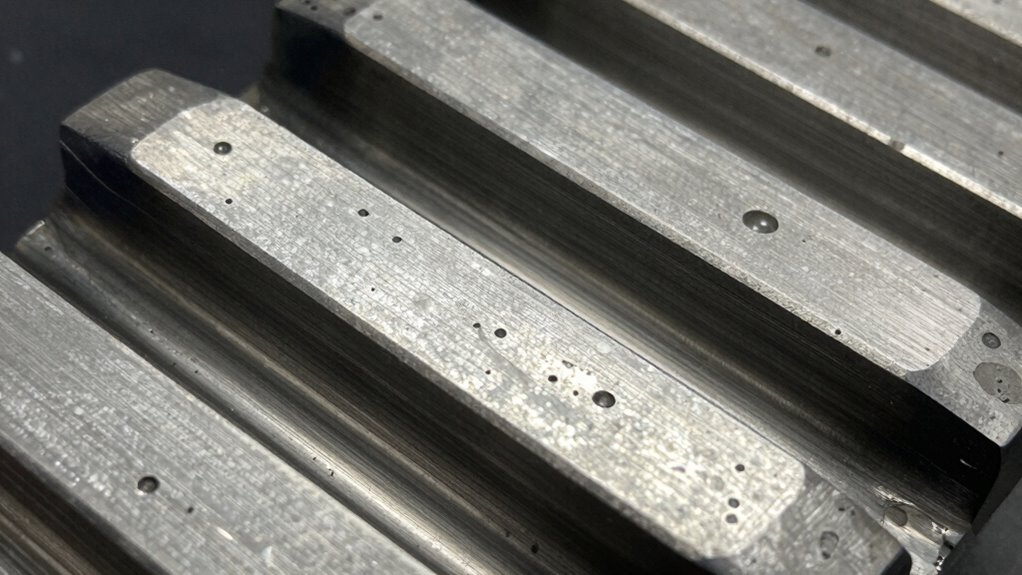
To minimize tiny crater formation, gear designers and operators should focus on optimizing surface quality and operating conditions. Ensuring a smooth surface finish reduces stress concentrations and asperity peaks that initiate micropitting. Proper lubrication with correct viscosity and additives maintains a robust oil film, preventing metal-to-metal contact. Managing load distribution and avoiding excessive contact stresses decrease the likelihood of crack initiation. Additionally, implementing surface treatments like shot peening enhances resistance to surface fatigue. Regular inspections help identify early signs of damage, enabling proactive interventions. Consider these strategies:
- Achieve high-quality surface finishes during manufacturing
- Use advanced lubrication techniques tailored to operating conditions
- Optimize gear tooth geometry for even load distribution
- Apply surface strengthening processes such as shot peening
- Monitor gear performance closely with predictive maintenance tools
- Surface integrity is crucial in preventing micropitting and prolonging gear life.
Frequently Asked Questions
Can Micropitting Be Completely Prevented With Current Lubrication Technology?
No, micropitting can’t be completely prevented with current lubrication technology. While advanced lubricants, proper surface finishes, and maintenance practices markedly reduce its occurrence, some risk remains due to factors like surface defects, high contact stresses, and operational conditions. You should focus on regular inspections, ideal lubrication, and surface treatments like shot peening to minimize micropitting, but absolute prevention isn’t achievable with today’s technology.
How Does Surface Finish Quality Influence Micropitting Susceptibility?
You can reduce micropitting risk by ensuring your gear surfaces have a high-quality finish. A smoother surface minimizes surface defects and stress concentrations, making it less likely for cracks and microcraters to form. Proper finishing processes like grinding and polishing create a more uniform asperity profile, allowing the lubricant to form an effective oil film. This reduces metal-to-metal contact, ultimately lowering micropitting susceptibility and extending gear lifespan.
Are There Specific Gear Materials More Resistant to Micropitting?
Did you know that case-hardened steels are generally more resistant to micropitting? You’ll find that materials like carburized gear steels and certain alloy steels, such as 20CrMnTi, perform better because their surface treatments improve hardness and surface integrity. These materials withstand cyclic stresses and surface fatigue more effectively. Choosing the right gear material, combined with proper surface finishing, can markedly reduce micropitting risks and extend gear life.
What Role Does Operating Load and Speed Play in Micropitting Development?
You should know that higher operating loads and speeds increase the likelihood of micropitting. Heavy loads intensify contact stresses on gear surfaces, promoting crack formation, while high speeds accelerate surface fatigue due to rapid cyclic stresses. Together, these factors compromise lubrication and surface integrity, making micropitting more probable. To prevent this, you need to optimize load capacity, control operating speeds, and guarantee proper lubrication to minimize stress concentrations.
How Effective Are Surface Treatments Like Shot Peening Against Micropitting?
Surface treatments like shot peening are highly effective against micropitting. They introduce compressive residual stresses on gear surfaces, which help prevent crack initiation and slow crack propagation. By improving surface durability, shot peening reduces surface fatigue and wear, lowering micropitting risk. Regular application of this treatment, along with proper maintenance, markedly extends gear life and maintains smooth operation, making it a valuable protective measure against tiny yet damaging surface flaws.
Conclusion
To prevent micropitting, stay vigilant with regular inspections and guarantee proper lubrication. For example, a wind turbine operator noticed a faint whine developing and caught micropitting early, preventing costly failures. By maintaining ideal surface finishes and monitoring gear health, you can extend gear life and avoid unexpected downtime. Don’t overlook tiny cracks—they can grow into major issues. Stay proactive, and your gear systems will run smoother and last longer.