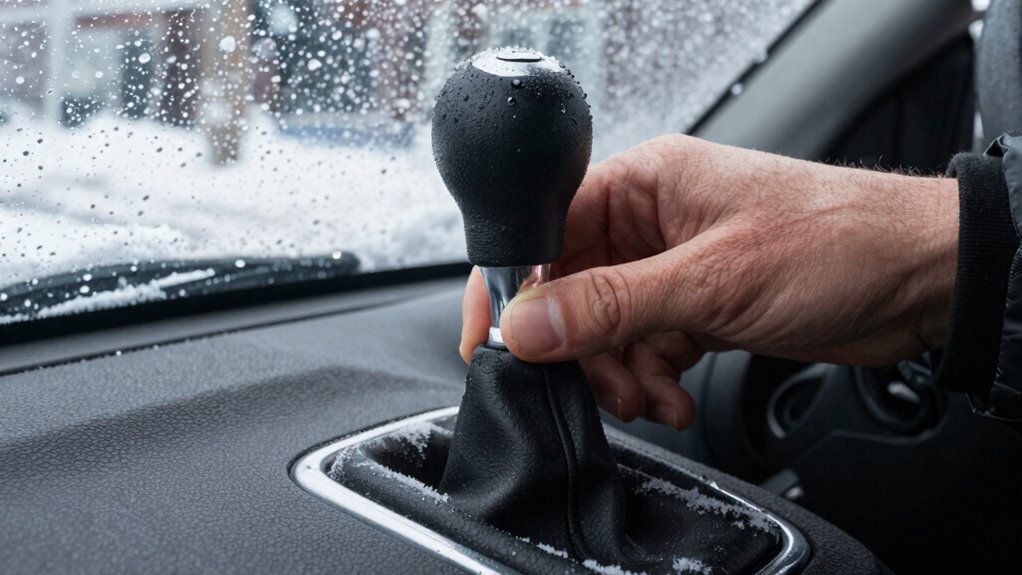

When cold weather hits, your gear oil thickens, making your manual transmission feel stiff and harder to shift. This increased viscosity resists flow, requiring more effort and causing sluggish shifts. Using the wrong oil or neglecting to warm up the vehicle worsens the problem. To fix this, switching to winter-grade gear oil and warming up your car helps the oil reach ideal thickness. Keep going to discover how to prevent these issues from backfiring this winter.
Key Takeaways
- Thicker gear oil in winter increases resistance, making shifts feel stiff or gritty.
- Using high-viscosity oils like 80W-90 worsens cold shifting issues compared to winter-grade oils.
- Cold temperatures cause synthetic or factory oils to thicken, impacting smooth gear engagement.
- Warming up the vehicle helps reduce oil viscosity, easing shift feel in cold conditions.
- Regularly switching to appropriate winter-grade gear oil prevents backfire effects of viscosity changes.
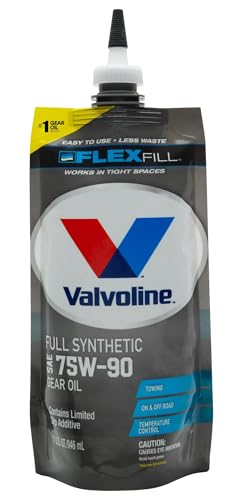
Valvoline FlexFill Advanced Full Synthetic Full Synthetic 75W-90 Gear Oil 1 QT FlexFill
FlexFill squeezable pouch releases 2X more fluid with less effort for 3X faster filling vs. traditional bottle packaging
As an affiliate, we earn on qualifying purchases.
As an affiliate, we earn on qualifying purchases.
Why Does Cold Weather Make Gear Oil Thicker and Hard to Shift?
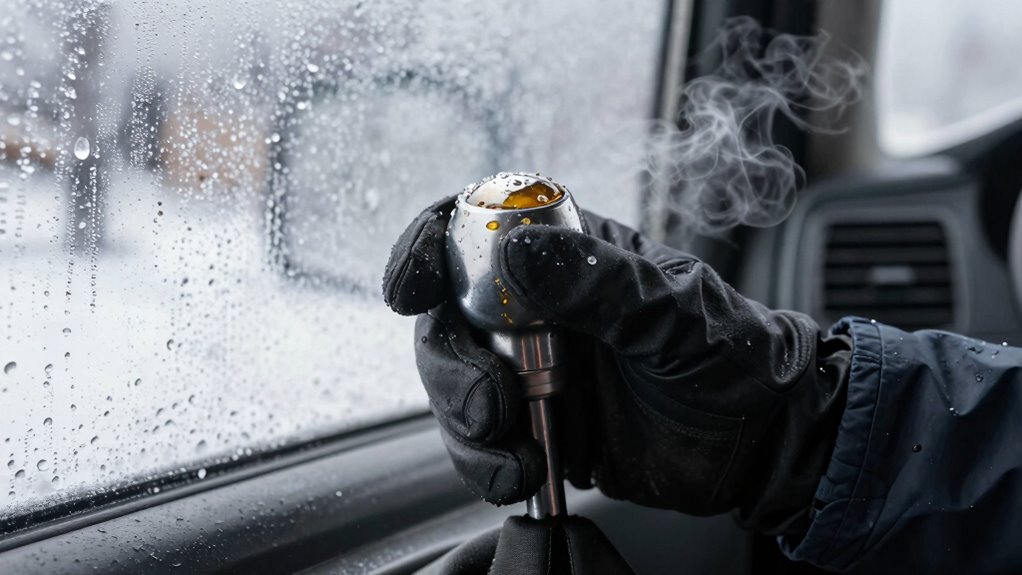
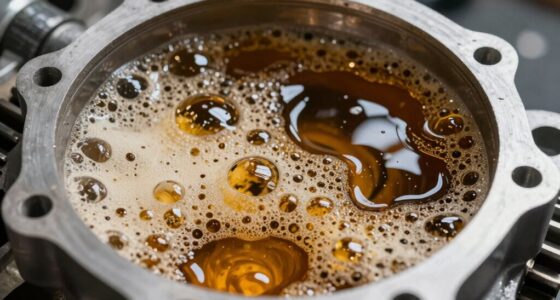
Cold weather causes gear oil to thicken because low temperatures reduce its viscosity, making it more resistant to flow. When it’s cold outside, your gear oil becomes much thicker, similar to peanut butter or molasses. This increased thickness makes shifting gears harder because the oil doesn’t flow smoothly through the transmission. You’ll notice more resistance when moving the shifter, often requiring extra force. The oil’s viscosity increases sharply as temperatures drop, especially if you’re using high-viscosity oils not designed for winter. This effect can make your shifts feel stiff and sluggish until the transmission warms up. It’s a natural response of the oil to cold conditions, but it can notably impact shifting performance in winter. Using the right oil viscosity for cold weather helps reduce this problem, and understanding oil viscosity can help you choose the appropriate gear oil for winter conditions.

Valvoline Synchromesh Manual Transmission Fluid 1 Quart
Meets the demands of manual synchro transmissions and manual transaxles
As an affiliate, we earn on qualifying purchases.
As an affiliate, we earn on qualifying purchases.
How Cold Weather Affects Your Transmission Shifting and What to Do About It
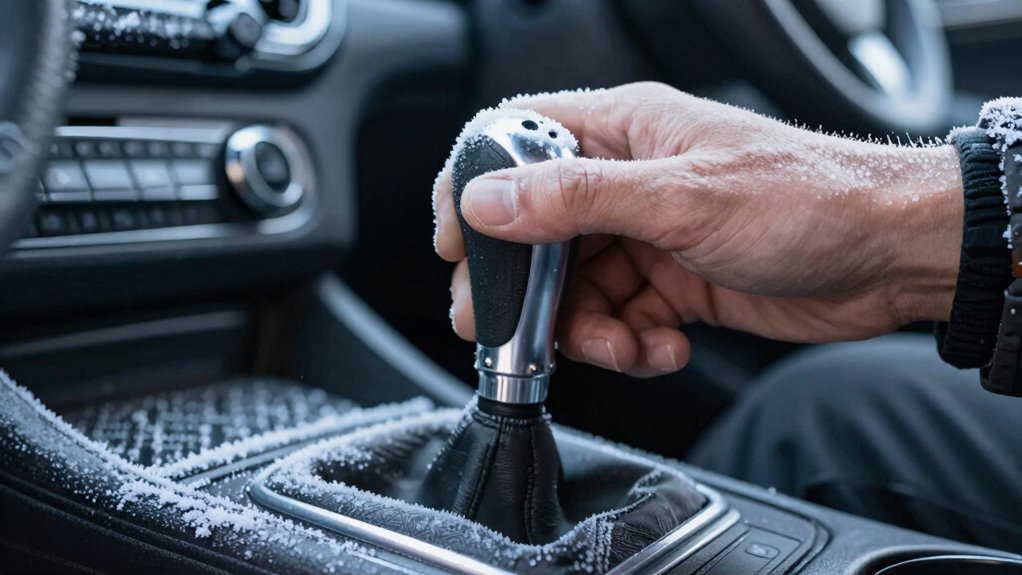
When temperatures drop, your transmission’s shifting can become noticeably tougher because the gear oil thickens, increasing resistance and making gear changes more difficult. Cold weather causes the high-viscosity gear oil to solidify slightly, which hampers smooth engagement. To combat this, consider these steps:
- Use the right oil—switch to a winter-grade or lower-viscosity gear oil like 75W-90 that flows better in cold conditions.
- Warm up your vehicle—drive gently for a few minutes before shifting aggressively to help the oil reach ideal temperature.
- Regular maintenance—change your gear oil regularly, especially before winter, to ensure proper lubrication and reduce resistance.
- Check your transmission fluid level and condition periodically to prevent issues caused by cold-induced viscosity changes.
Taking these actions keeps shifting smoother despite the cold.
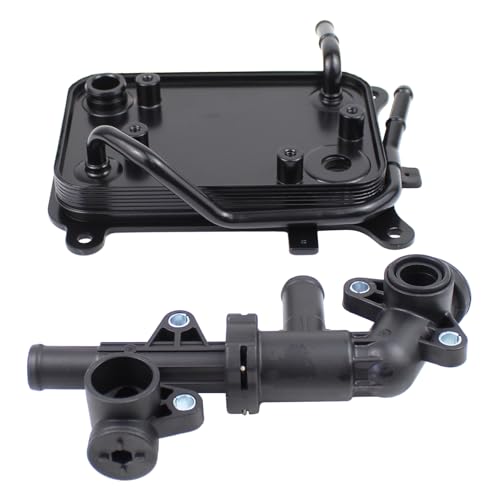
DriveFix ATF Transmission Oil Cooler Warmer and Water Valve for Hyundai Palisade 2020-25, Santa Fe 2.4 3.3 2015-20, Santa Fe Sport 2.4 2015-18, Santa Fe XL 2015-19, Kia Telluride 2020-24
Compatible with Hyundai Palisade 2020-2025, Santa Fe 2.4 3.3 2015-2020, Santa Fe Sport 2.4 2015-2018, Santa Fe XL…
As an affiliate, we earn on qualifying purchases.
As an affiliate, we earn on qualifying purchases.
Top Gear Oil Problems That Cause Stiff Shifting in Winter (And How to Fix Them)
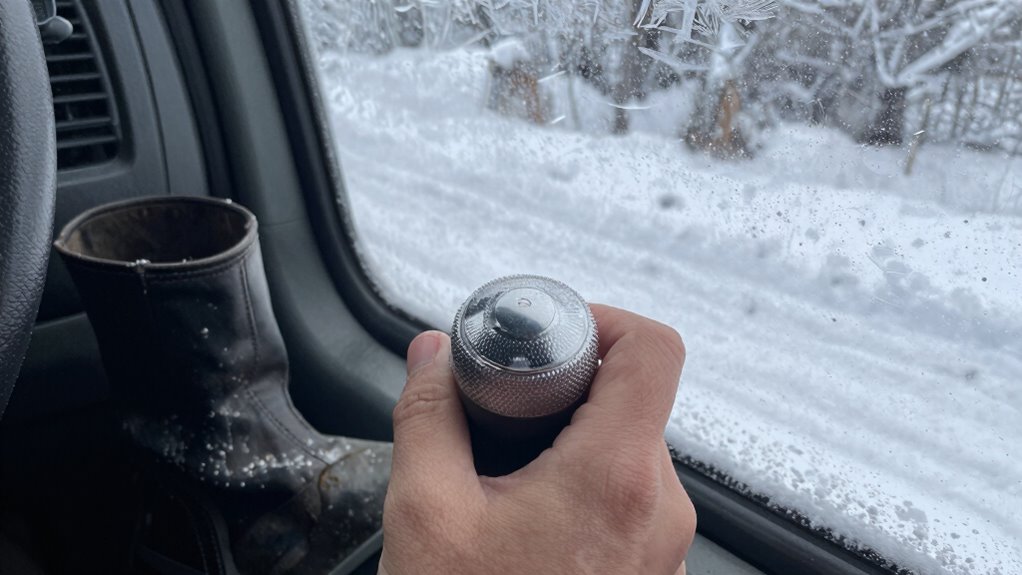
During winter, stiff shifting often stems from gear oil problems that worsen in low temperatures. When the oil thickens too much, it resists flow, making gear engagement harder. High-viscosity oils like the factory fill or synthetic 80W-90 can become overly thick, especially if they aren’t rated for cold weather. This increased resistance mimics the feel of shifting through peanut butter, requiring more force to move the shifter. To fix this, switch to a lower viscosity oil rated for winter conditions, such as a 75W-90 or lighter. Regularly changing the gear oil with a product that meets your vehicle’s specifications helps maintain proper lubrication and reduces cold-related stiffness. Proper oil maintenance ensures smoother shifts, even in freezing temperatures. Additionally, understanding viscosity ratings can help you choose the most suitable oil for winter driving conditions.
Valvoline FlexFill Advanced Full Synthetic Full Synthetic 75W-90 Gear Oil 1 QT FlexFill
FlexFill squeezable pouch releases 2X more fluid with less effort for 3X faster filling vs. traditional bottle packaging
As an affiliate, we earn on qualifying purchases.
As an affiliate, we earn on qualifying purchases.
Simple Tips to Improve Shifting in Cold Weather
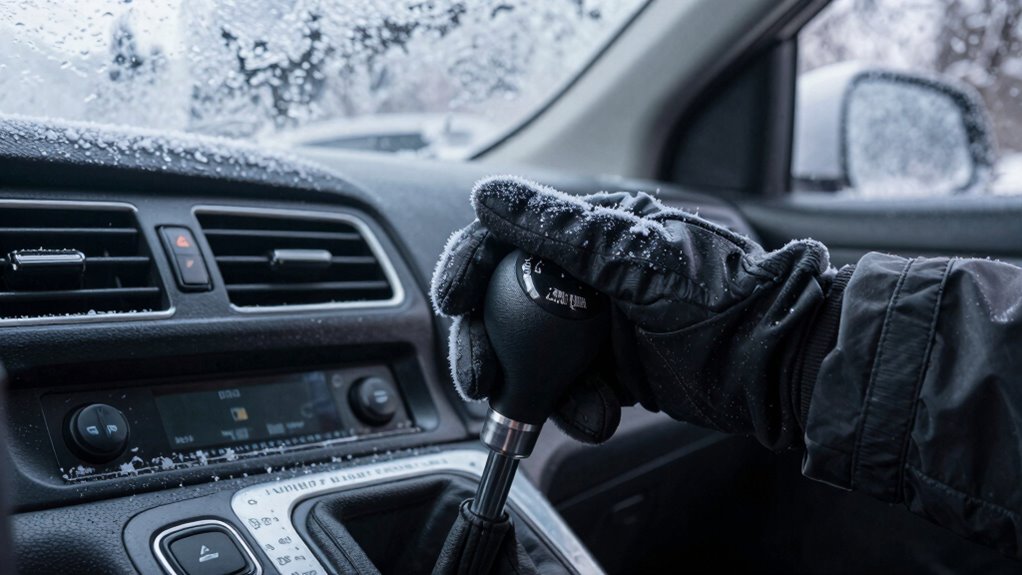
To improve shifting in cold weather, start by ensuring you use the right gear oil for low temperatures. Using oil with proper viscosity helps prevent it from thickening excessively, making shifts smoother. Additionally, air quality considerations can influence engine performance, so maintaining clean filters and proper ventilation can support smoother operation. Here are three tips:
- Change to a winter-grade gear oil—look for 75W-90 or similar that flows well in cold temps.
- Warm up your vehicle before shifting aggressively—drive gently for a few minutes to bring the transmission up to temperature.
- Shift smoothly and gradually—avoid forcing gears; gentle movements reduce stress on synchros and gears.
Applying these tips can considerably improve your shifting experience and reduce the wear caused by cold viscosity issues, helping your transmission perform more reliably during winter months.
Diagnosing and Fixing Synchro and Hydraulic Issues in Cold Conditions
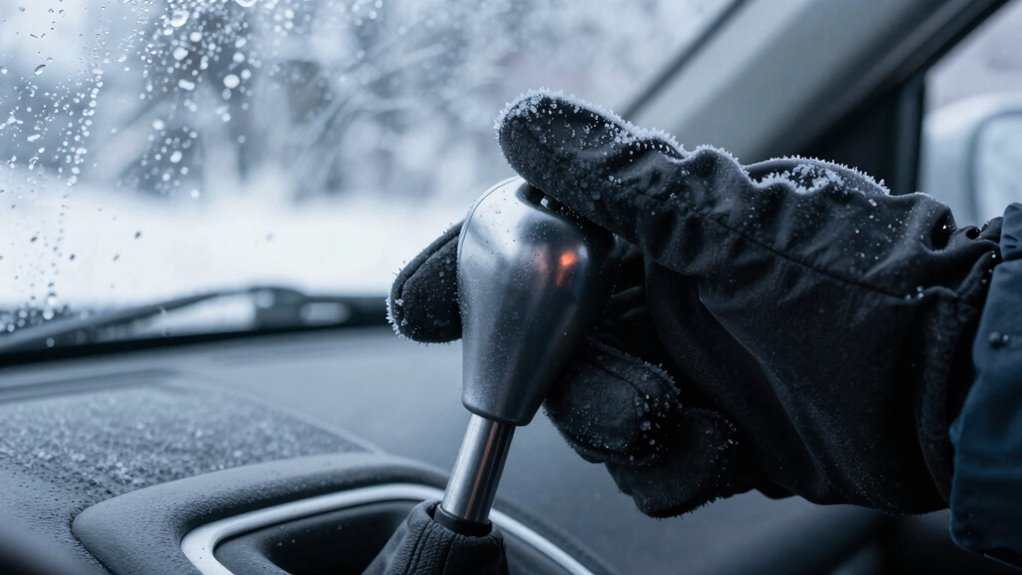
Cold temperatures can cause synchro and hydraulic issues that make shifting difficult, but diagnosing these problems quickly can save you time and prevent further damage. Start by checking for delayed or stiff shifts, especially when cold. If you notice grinding or difficulty engaging gears, inspect the synchro rings for wear or damage. Worn synchros lose their ability to match gear speeds, causing crunching. For hydraulic issues, examine the clutch fluid level and condition—low or old fluid hampers hydraulic pressure, leading to stiff shifts. Bleed the hydraulic system if you suspect air bubbles or leaks. Also, verify linkage alignment and cable tension; misadjustments can mimic hydraulic or synchro problems. Being aware of transmission diagnostics can help you identify issues early. Addressing these issues promptly keeps your transmission operating smoothly and prevents costly repairs later.
How to Prevent Winter Shift Backfire and Keep Your Transmission Smooth
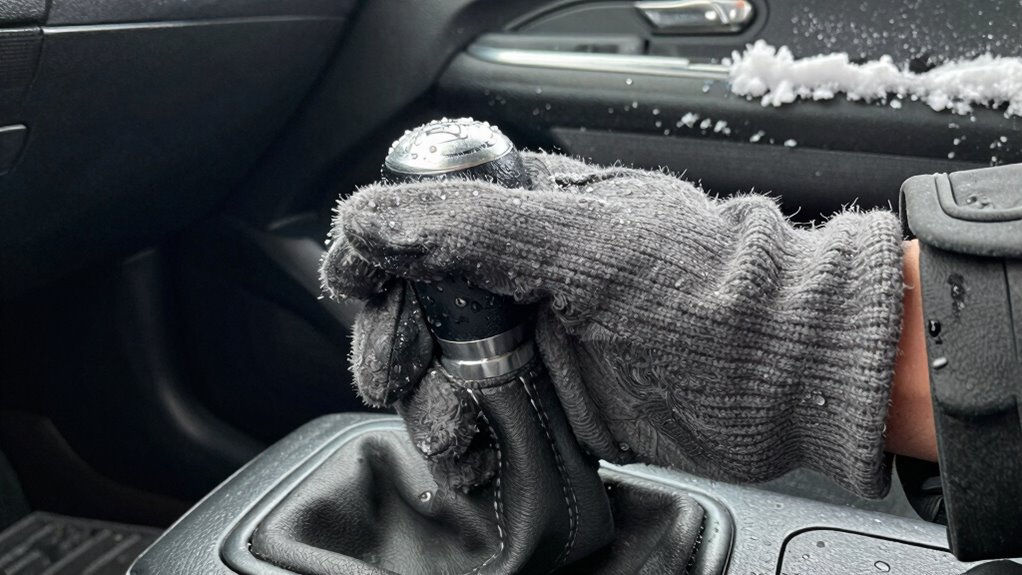
Winter shift backfire often occurs when thickened gear oil resists flow, making your transmission feel stiff and difficult to shift. To prevent this, start by switching to a lower-viscosity gear oil like 75W-90 or 75W-85 before winter hits. Regularly check and top off your transmission fluid to maintain proper lubrication. Ultimately, avoid neglecting maintenance—timely oil changes and inspecting for leaks can prevent viscosity issues.
Here are three key steps:
- Use seasonal-grade gear oil suited for cold temperatures.
- Keep your transmission fluid fresh and at the correct level.
- Address leaks or worn synchros promptly to minimize resistance.
Proper gear oil viscosity is essential for consistent shifting performance in cold weather. Following these tips keeps your transmission smooth, ensuring reliable shifts regardless of the weather.
Frequently Asked Questions
Can Using the Wrong Gear Oil Viscosity Cause Winter Shifting Issues?
Using the wrong gear oil viscosity can definitely cause winter shifting issues. If the oil is too thick, especially in cold temperatures, it resists flow and makes shifting stiff or gritty. Low-viscosity oils might not provide enough lubrication, leading to increased wear. To avoid these problems, always use the manufacturer-recommended oil viscosity, especially in winter, and change it regularly for smooth, easy gear engagement.
How Does Moisture in the Transmission Fluid Affect Cold Weather Shifting?
Moisture in your transmission fluid can freeze or create uneven lubrication, making shifts stiff and gritty in cold weather. It can also cause corrosion on internal parts, accelerating wear and damaging synchros and gears. When moisture accumulates, it hampers smooth gear engagement, so you might notice increased resistance and grinding. To prevent this, guarantee your transmission fluid is clean, dry, and changed regularly, especially before winter.
Are Synthetic Oils Better Than Conventional for Winter Transmission Performance?
Like a knight choosing armor, you want synthetic oils for winter. They flow more easily in cold temps, reducing that thick, peanut butter feel. Unlike conventional oils, synthetics resist thickening, ensuring smoother shifts and less resistance. You’ll notice quicker gear engagement and less effort, especially in freezing conditions. So, switching to synthetic isn’t just a choice; it’s your shield against tough winter shifts and mechanical wear.
What Role Does Transmission Fluid Temperature Play in Shifting Ease?
Transmission fluid temperature directly impacts your shifting ease. When the fluid is cold, it thickens, increasing resistance and making gear changes feel stiff or sluggish. As it warms up, viscosity decreases, smoothing shifts. In cold weather, you might notice tougher shifts until the fluid reaches ideal operating temperature. To keep shifting effortless, guarantee your fluid warms properly by driving gently until the transmission warms up fully.
Can Clutch or Linkage Problems Mimic Cold Weather Gear Oil Issues?
Yes, clutch or linkage problems can mimic cold weather gear oil issues. Think of a slipping clutch as a worn-out dance partner, causing stiff, awkward shifts that feel like trying to wade through molasses. Similarly, misaligned linkage acts like a tangled thread, resisting smooth gear changes. Both issues make shifting feel labored and gritty, resembling the thickened oil’s resistance in winter. Regular maintenance can clear these mechanical cobwebs.
Conclusion
As temperatures drop, nearly 80% of drivers notice stiffer shifts due to thicker gear oil. To keep your transmission smooth, regularly check and change your oil, especially before winter hits. Simple adjustments like warming the oil or using winter-grade lubricants can make a big difference. Don’t let cold weather catch you off guard—staying proactive guarantees your shifts stay effortless, no matter how chilly it gets outside. Keep your transmission happy this winter!