

When choosing grease, the viscosity of the base oil is more vital than the NLGI grade because it directly affects lubrication performance, stability, and how well the grease flows at different temperatures. A proper viscosity guarantees the grease maintains films at high heat and flows easily in cold conditions, reducing failures. Focusing on viscosity helps you select a base oil suited to your operating environment, and understanding this can lead to better equipment protection and performance over time.
Key Takeaways
- Viscosity determines the oil’s flow behavior at different temperatures, directly impacting grease performance and stability.
- The viscosity index indicates how well the oil maintains consistent viscosity across temperature ranges, influencing reliability.
- Proper viscosity ensures effective film formation and adherence, essential for preventing equipment wear and failure.
- NLGI grade reflects consistency, but viscosity specifications provide a clearer picture of flow characteristics and operational suitability.
- Focusing on viscosity and viscosity index helps select base oils that deliver optimal performance and reduce maintenance issues.

Understanding the viscosity of grease base oil is essential because it directly influences the lubrication performance and stability of grease. When selecting a base oil, you need to pay close attention to its viscosity, which determines how well the grease can flow at different temperatures. Viscosity isn’t just about how thick or thin the oil appears; it’s about how it behaves under various operating conditions. A key factor here is the viscosity index, a number that indicates how much the oil’s viscosity changes with temperature. A high viscosity index means the oil maintains consistent lubrication properties across a broad temperature range, reducing the risk of breakdown or inadequate lubrication during extreme conditions.
Your choice of base oil depends heavily on its viscosity index because it impacts the overall performance of the grease. For instance, if the base oil has a low viscosity index, the grease may become too thin at high temperatures, leading to insufficient lubrication and potential equipment wear. Conversely, if the oil is too viscous at lower temperatures, it could cause difficulty in startup or increase energy consumption. Thus, understanding the viscosity index helps you select a base oil that provides stable lubrication whether your machinery operates in cold or hot environments.
The viscosity of the base oil also affects how the grease adheres to surfaces and how easily it can be pumped or applied. If the viscosity is too high, spreading the grease becomes challenging, potentially leading to uneven coverage. If it’s too low, the grease might not stay in place under load, causing early failure. This is why a balanced viscosity profile, informed by the viscosity index, is vital. It ensures the grease will perform reliably in your specific application, maintaining a protective film on moving parts and resisting breakdown over time.
Additionally, paying attention to the viscosity index can help predict how the grease will behave under different operating environments, ensuring consistent performance and reducing maintenance costs.
In essence, understanding the viscosity of grease base oil and its viscosity index gives you the tools to predict how your grease will behave across different temperatures and loads. It guides you in selecting the right base oil that offers ideal flow characteristics and stability. This knowledge ultimately translates into better equipment protection, longer service life, and fewer maintenance issues. By focusing on viscosity rather than just NLGI grades, you’re making a smarter choice that aligns with your operational demands, guaranteeing your machinery runs smoothly and efficiently in all conditions.

Lucas Oil 10005 Red 'N' Tacky Grease – 14 Ounce
Fit type: Universal.Fit Type: Universal
As an affiliate, we earn on qualifying purchases.
As an affiliate, we earn on qualifying purchases.
Frequently Asked Questions
How Does Temperature Affect Grease Base Oil Viscosity?
You’ll notice that as temperature rises, the viscosity of grease base oil decreases, affecting its lubrication ability. That’s why temperature stability and viscosity index are essential—they indicate how well the oil maintains its viscosity across temperature changes. With a high viscosity index, your grease stays effective in different conditions, ensuring reliable performance and reducing the risk of breakdown or wear during temperature fluctuations.
Can Viscosity Influence Grease Lifespan and Performance?
Sure, viscosity can be your grease’s best or worst friend. It influences lubrication stability, making certain your machinery runs smoothly, and can even extend its lifespan. Low viscosity might cause leaks and environmental impact concerns, while high viscosity ensures better protection but risks environmental harm if it degrades. So, yes, selecting the right viscosity is vital to optimize performance and minimize environmental impact, keeping everything running like clockwork.
What Are the Differences Between Viscosity and NLGI Grade?
Viscosity measures how thick or fluid the grease is, affecting how it flows under different conditions. NLGI grade, on the other hand, indicates the grease’s consistency or hardness. Your choice depends on factors like base oil quality and viscosity stability, which impact performance and lifespan. While NLGI grades are useful for applications, understanding viscosity helps you select the right grease for peak lubrication and durability.
How Is Grease Viscosity Measured in the Lab?
In lab testing, you measure grease viscosity using a viscometer or rheometer, which determines how the grease flows under specific conditions. You typically perform viscosity measurement at a set temperature, often 40°C, to guarantee consistency. During the process, the device records the resistance to flow, giving you precise data on the grease’s viscosity. This information helps you select the right grease for your application’s performance requirements.
Are There Industry Standards for Acceptable Viscosity Ranges?
You’ll find that industry standards specify acceptable viscosity ranges for greases, ensuring essential performance. These standards, like ASTM and ISO, set guidelines to maintain consistency and reliability across applications. While NLGI grades describe consistency, viscosity ranges focus on flow characteristics vital for lubrication. By adhering to these industry standards, you can select greases that perform well under your specific conditions, avoiding issues caused by too thick or too thin lubricants.

MOLUCKFU Engine Oil Comparator Tool and Transmission Oil Viscosity Tester Acrylic Stand for Accurate Car Maintenance and Quality Testing
Versatile functionality: not only compares engine oil but also tests the viscosity of transmission oil, providing comprehensive oil…
As an affiliate, we earn on qualifying purchases.
As an affiliate, we earn on qualifying purchases.
Conclusion
Remember, focusing on the viscosity of grease base oil is more vital than just the NLGI grade. Did you know that even a small change in viscosity can impact lubrication efficiency by up to 30%? By prioritizing viscosity specs, you guarantee better performance and longer-lasting equipment. Don’t overlook this key factor—making informed choices now can save you time, money, and headaches down the line. Trust the specs that truly matter for peak results.

Multi Vehicle High Temparature Grease 2 Pack Special | Automotive, Industrial, Marine| High Temperature Stability | Pack of Two
✅ Heavy-Duty Lubrication for Superior Protection – This premium lithium-based grease provides outstanding protection against friction, wear, and…
As an affiliate, we earn on qualifying purchases.
As an affiliate, we earn on qualifying purchases.
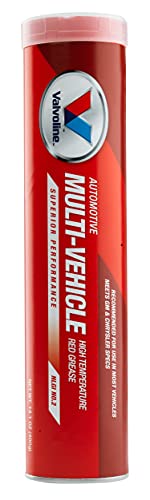
Valvoline Multi-Vehicle High Temperature Red Grease 14.1 OZ Cartridge
Formulated to provide extreme pressure and high temperature protection
As an affiliate, we earn on qualifying purchases.
As an affiliate, we earn on qualifying purchases.