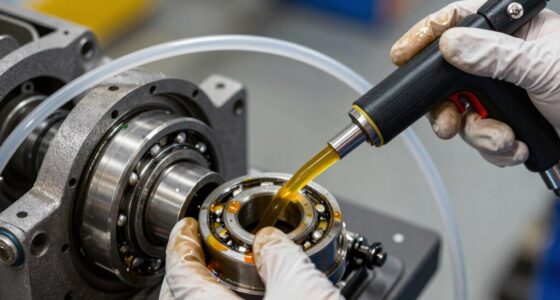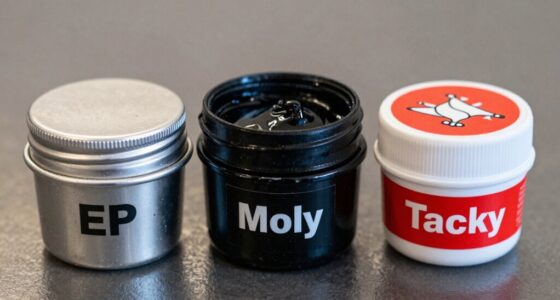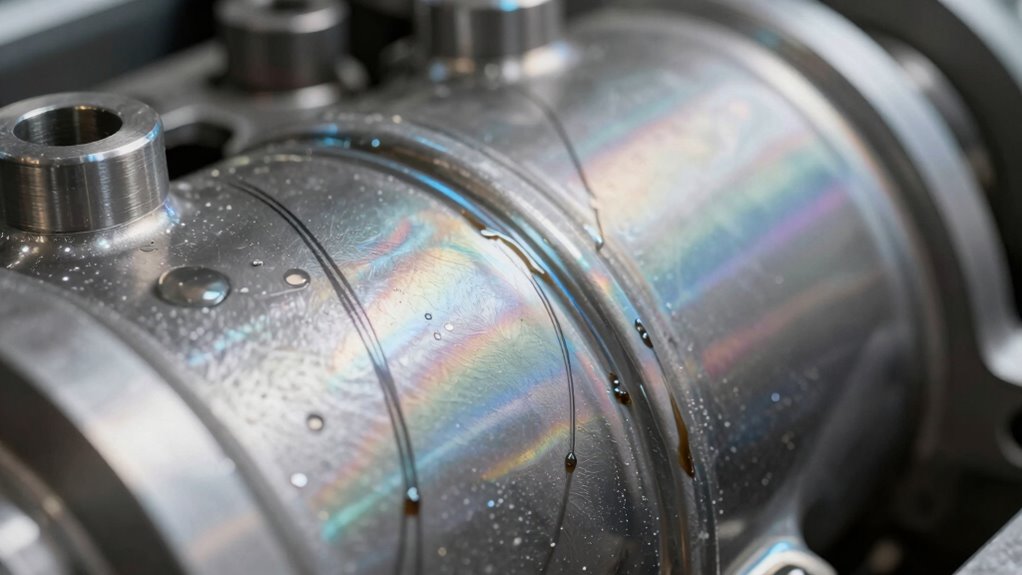

Grease bleed happens when oil separates from grease or lubricants, creating a greasy film or odor that looks like a leak. It’s often caused by over-lubrication, incompatible oils, or high operating temperatures. This issue can mislead you into thinking there’s a leak, but it’s actually just oil separation. Proper lubrication, using the right grease, and regular maintenance can prevent it. Keep going to discover how to distinguish grease bleed from actual leaks and keep your equipment clean.

Get business pricing on garage and car supplies
- Business-only prices and quantity discounts
- Tax-exempt purchasing
- Multiple users, one account, clear invoices
Key Takeaways
- Grease bleed is the separation of oil from grease, creating a greasy film or odor, not a leak from the equipment.
- It occurs due to over-lubrication, incompatible lubricants, or operating conditions, leading to oil separating from grease.
- Grease bleed can mimic leaks, but it is oil separation, not a failure or crack in seals or components.
- Proper lubrication, correct grease selection, and regular inspection help prevent and distinguish grease bleed from actual leaks.
- Monitoring lubricant condition and maintaining proper application reduce grease bleed and improve machinery cleanliness and performance.
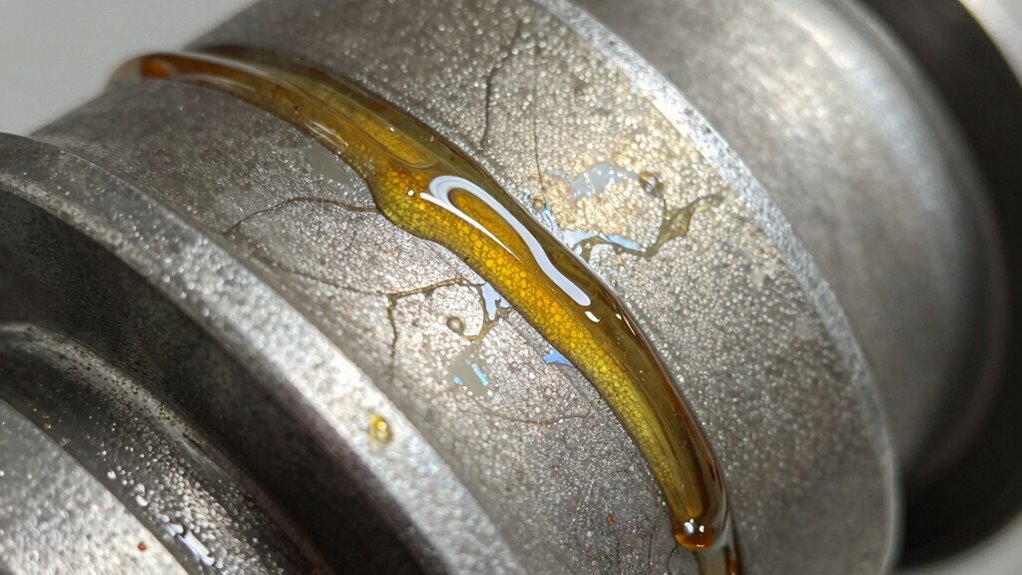
Have you ever noticed a greasy film or odor lingering after working on your engine or machinery? That sticky residue might seem like a leak at first, but it’s often something called grease bleed. This phenomenon occurs when oil separates from grease or lubrication fluids and seeps out, giving the appearance of a leak. It’s a common issue that can cause confusion and concern, especially if you’re worried about engine cleanliness and proper maintenance. Understanding what grease bleed is and what causes it can help you better diagnose and address it, ensuring your equipment runs smoothly and stays clean.
Grease bleed causes oil separation, leading to greasy films and false leak appearances.
Lubrication issues are at the core of grease bleed. When components are over-lubricated or when grease isn’t compatible with the operating temperatures or conditions, it can lead to oil separation. This separation results in a greasy film that oozes out of seals, joints, or vents. For you, this means that even if there’s no actual leak, the appearance of oil on surfaces can be misleading. It’s not necessarily a sign of a failing seal or a broken component but rather a natural part of how some greases behave over time. Nevertheless, it can compromise engine cleanliness if left unaddressed, attracting dirt and debris that can accelerate wear and tear.
Proper lubrication is also essential to prevent oil separation and maintain the integrity of your machinery. Maintaining ideal lubrication involves selecting the right grease for your specific machinery and operating environment. Using incompatible or low-quality lubricants increases the likelihood of oil separation and grease bleed. Proper application is also essential; over-lubricating can cause excess grease to squeeze out, especially if seals or fittings aren’t designed to handle the volume. Regular inspection plays a vital role here. If you notice a greasy film forming around seals, joints, or vents, check whether the grease is still effective or if it’s been contaminated or broken down. Cleaning the affected areas and reapplying the correct lubricant can often resolve the issue before it leads to more serious lubrication problems.
While grease bleed might not directly harm your engine, it can diminish engine cleanliness and give the false impression of a leak. This can lead to unnecessary repairs or replaced parts if misdiagnosed. It’s important to differentiate between actual leaks and oil separation phenomena. Keep an eye on the condition of your lubricants and how they behave over time. When you see grease bleed, consider whether your lubrication strategy needs adjusting—perhaps switching to a more suitable grease or refining your application technique. Addressing these lubrication issues early helps keep your machinery clean, running efficiently, and free of false leak alarms.
high temperature grease for machinery
As an affiliate, we earn on qualifying purchases.
As an affiliate, we earn on qualifying purchases.
Frequently Asked Questions
Can Grease Bleed Occur in All Types of Engines?
Grease bleed can happen in all types of engines, whether they use conventional or synthetic oils. It occurs when oil separates and appears near engine seals, often due to temperature fluctuations or seal deterioration. You should regularly check your engine seals and maintain proper oil levels. Synthetic oils are less likely to cause bleed issues, but proper sealing and maintenance are essential to prevent this problem across various engine types.
How Can I Differentiate Grease Bleed From Actual Oil Leaks?
Detecting differences between grease bleed and actual oil leaks can be tricky. You can quickly spot grease bleed by its sticky, greasy feel and distinct, often cloudy, oil residue. Visual cues like a thin, consistent film near engine parts suggest grease bleed, whereas drips or pooling point to leaks. Keep an eye out for oily, slick surfaces, and remember, grease bleed usually stays localized, making it easier to identify.
Does Grease Bleed Affect Engine Performance or Longevity?
Grease bleed can affect your engine’s performance and longevity by causing lubrication issues, which lead to increased wear and potential overheating. It also compromises engine cleanliness, making it harder to identify actual leaks and increasing the risk of corrosion. Regular maintenance and prompt cleaning help prevent these issues, ensuring your engine stays well-lubricated and operates smoothly, ultimately extending its lifespan and maintaining peak performance.
What Are the Best Maintenance Practices to Prevent Grease Bleed?
Think of your machinery like a well-orchestrated symphony—you need proper lubrication and contamination control to keep it running smoothly. To prevent grease bleed, regularly check and apply the correct amount of grease, avoid over-lubrication, and keep seals intact. Maintain cleanliness, replace worn seals promptly, and make certain proper storage of lubricants. These practices help prevent grease bleed, extend equipment life, and keep your operations humming along flawlessly.
Is Grease Bleed More Common in Certain Vehicle Models or Brands?
You’ll notice grease bleed more often in certain vehicle brands and specific models, mainly due to model-specific issues. Some brands have design or manufacturing quirks that make them prone to oil separation, leading to grease bleed. To avoid surprises, research your vehicle’s brand prevalence and known model-specific issues. Regular maintenance and inspections can catch early signs, helping you prevent or manage grease bleed effectively.
As an affiliate, we earn on qualifying purchases.
Conclusion
Just like a hidden leak beneath the surface, grease bleed reminds you that even unseen issues can threaten your peace. It’s a symbol of the quiet disturbances that, if ignored, might turn into bigger problems. Stay vigilant and trust your instincts—address small signs before they become leaks. By catching these whispers early, you’re nurturing a well-oiled machine, keeping your world running smoothly. Remember, sometimes the smallest spill reveals the greatest need for attention.
machine grease with anti-separation properties
As an affiliate, we earn on qualifying purchases.
As an affiliate, we earn on qualifying purchases.
As an affiliate, we earn on qualifying purchases.
Evergreen bestsellers Picks
bestsellers
As an affiliate, we earn on qualifying purchases.