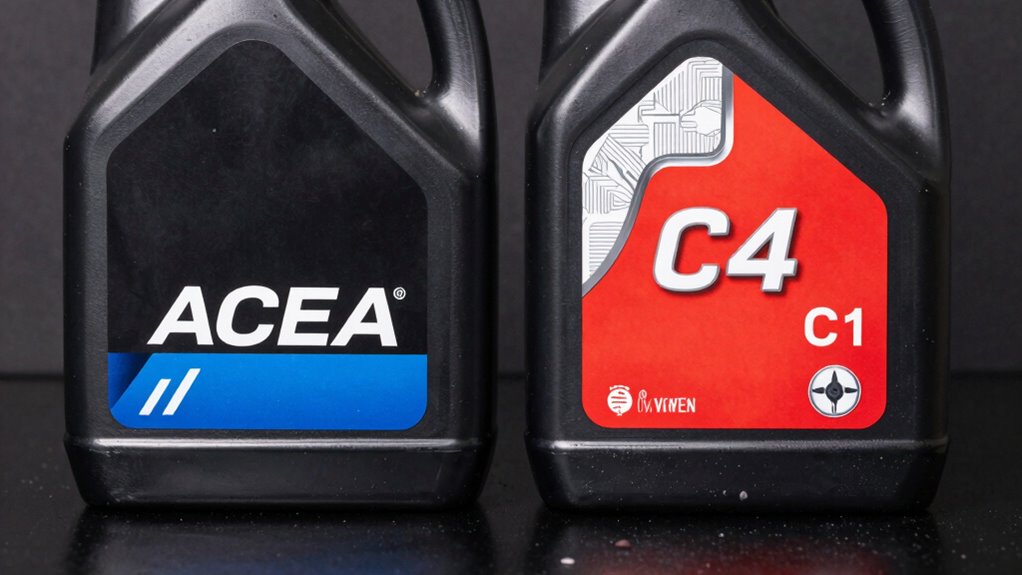

ACEA C1 and C4 are low-SAPS specs that look similar but serve different engine needs. C1 focuses on fuel efficiency and emission system compatibility, making it ideal for modern, eco-friendly engines. C4 offers extra protection for high-stress or severe driving conditions, especially in diesel engines. Using the wrong oil can harm your engine or emissions system, so understanding these differences is key. Keep exploring to find out which one suits your vehicle best.
Key Takeaways
- C1 oils prioritize fuel efficiency and emission system compatibility, suitable for modern engines with low-SAPS requirements.
- C4 oils provide enhanced protection under severe conditions, with higher additive levels for wear and deposit control.
- Using C1 oils in C4-recommended engines can compromise protection during demanding driving; vice versa may cause unnecessary costs.
- Mismatching ACEA specifications can lead to engine wear, emission system failures, or reduced performance.
- Properly identifying and selecting the correct low-SAPS oil ensures engine protection, emissions compliance, and cost efficiency.
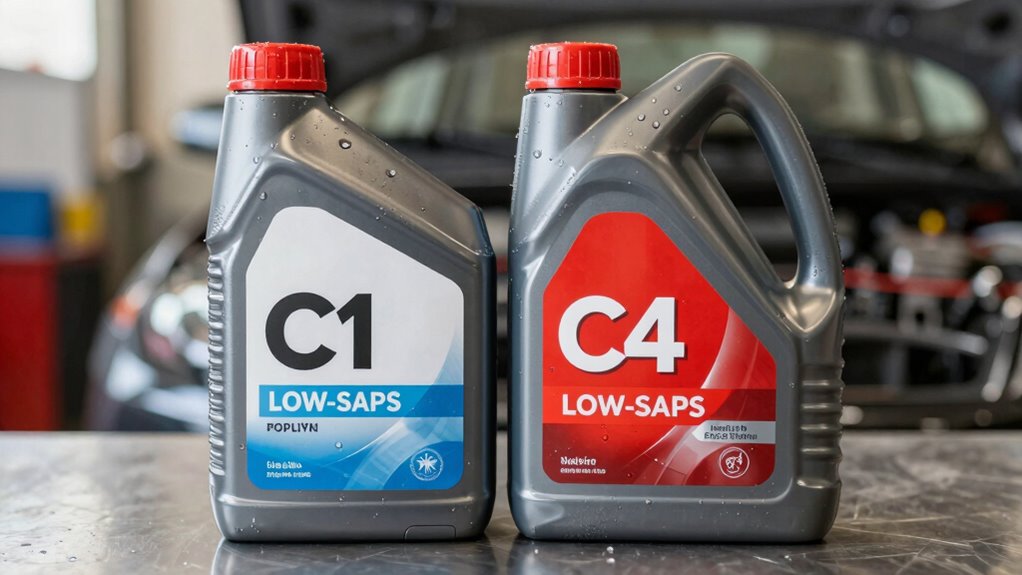
ACEA C1 is formulated as a low-friction, fuel-efficient oil suitable for vehicles requiring low emissions and enhanced fuel economy. These oils are often compatible with a wide range of modern engines, including those with advanced emission control devices like particulate filters and catalytic converters. They’re designed to minimize the impact on emission standards by reducing ash and other additives that can clog or damage emission systems. When you choose C1, you’re prioritizing oil compatibility with newer engine technologies that demand low-SAPS oils to meet strict environmental regulations. This makes C1 ideal for vehicles that emphasize fuel economy and reduced emissions without sacrificing engine protection. Additionally, C1 oils typically feature low-SAPS formulations, ensuring they meet stringent emission standards without compromising engine durability.
ACEA C1 oils are low-friction, fuel-efficient, compatible with modern emission control devices, and designed to reduce ash and protect engines.
On the other hand, ACEA C4 oils are also low-SAPS but are formulated for more demanding engine conditions, especially in diesel engines equipped with advanced emission control systems. C4 oils tend to have a higher level of additive protection, providing better wear protection and deposit control under severe driving conditions. If your vehicle requires a C4-rated oil, ignoring this could impair oil compatibility with your engine’s emission system, potentially leading to increased wear or even system failures. C4 oils are tailored for engines that operate under higher loads or longer intervals between oil changes, ensuring they meet rigorous emission standards while maintaining engine health.
Knowing the differences between C1 and C4 helps prevent misapplication that could compromise your vehicle’s performance or emissions compliance. For example, using a C1 oil in an engine that calls for C4 might lead to inadequate protection under severe conditions, impacting oil compatibility and potentially causing issues with emission standards over time. Conversely, employing a C4 oil where a C1 is specified might result in unnecessary costs or performance that exceeds what your engine needs, though it usually won’t cause harm if the oil meets the basic compatibility requirements.
ACEA C1 low-SAPS engine oil
As an affiliate, we earn on qualifying purchases.
As an affiliate, we earn on qualifying purchases.
Frequently Asked Questions
Can ACEA C1 Oils Be Used in Diesel Engines?
Yes, ACEA C1 oils can be used in diesel engines, but only if they meet the specific diesel compatibility requirements of your vehicle. You should check your engine’s oil formulation recommendations to guarantee compatibility. ACEA C1 oils are designed for fuel efficiency and low-SAPS, but not all diesel engines may benefit from or require this type of oil. Always verify with your manufacturer’s guidelines before switching.
Are C4 Oils Compatible With Older Vehicle Models?
You might wonder if C4 oils are compatible with older vehicle models. The truth is, compatibility concerns can arise if manufacturer specifications aren’t followed carefully. Some older engines may not handle the high-performance additives in C4 oils, risking damage or reduced efficiency. Always check your vehicle’s manual and stick to the recommended specifications. Ignoring these details could lead to costly repairs or compromised engine health—so proceed with caution.
How Often Should I Change C1 Versus C4 Oils?
You should change C1 oils every 10,000 to 15,000 miles or as recommended by your vehicle’s maintenance schedule, since they’re designed for fuel efficiency and engine protection. C4 oils typically require more frequent changes, around every 7,500 to 10,000 miles, due to their higher performance specs. Always follow your car manufacturer’s guidelines for oil change intervals to keep your engine running smoothly and avoid unnecessary wear.
Do C1 and C4 Oils Require Different Maintenance Routines?
You might think C1 and C4 oils need completely different maintenance routines, but that’s not necessarily true. Their oil change intervals are often similar, depending on your vehicle and driving habits. The main maintenance difference lies in their compatibility with specific engines and emission systems. Always follow your manufacturer’s recommendations, but generally, both require regular oil checks and timely changes to keep your engine running smoothly.
Are There Any Vehicle Brands That Specifically Recommend C1 or C4 Oils?
Some vehicle brands, like Peugeot and Citroën, specifically recommend C1 oils based on manufacturer preferences. Others, such as Mercedes-Benz and BMW, may favor C4 oils for their advanced low-SAPS formulations. Always check your vehicle’s brand recommendations to guarantee you’re using the right oil. Ignoring these preferences can lead to suboptimal performance or even warranty issues, so always follow the manufacturer’s guidance when selecting oils.

Delo 400 XLE Heavy Duty Synblend Diesel Engine Oil 15W-40, 1 Gallon, Pack of 1
A premium synthetic blend, long drain mixed-fleet engine oil specifically formulated for on- highway applications, including 2017 greenhouse…
As an affiliate, we earn on qualifying purchases.
As an affiliate, we earn on qualifying purchases.
Conclusion
So, as you weigh the ACEA C1 against the C4, remember that these low-SAPS specifications aren’t just labels—they’re keys to ideal engine performance. But beware: applying the wrong one could quietly undermine your engine’s longevity. The choice isn’t always straightforward, and the stakes are higher than you think. Stay vigilant, stay informed, and don’t let a simple misapplication hold your vehicle back. The right decision could make all the difference—are you prepared to choose wisely?

Lucas Oil 10003 Fuel Treatment – 1 Quart
The world’s #1 fuel additive for both gasoline and diesel engines
As an affiliate, we earn on qualifying purchases.
As an affiliate, we earn on qualifying purchases.
Delo 400 XLE Heavy Duty Synblend Diesel Engine Oil 15W-40, 1 Gallon, Pack of 1
A premium synthetic blend, long drain mixed-fleet engine oil specifically formulated for on- highway applications, including 2017 greenhouse…
As an affiliate, we earn on qualifying purchases.
As an affiliate, we earn on qualifying purchases.