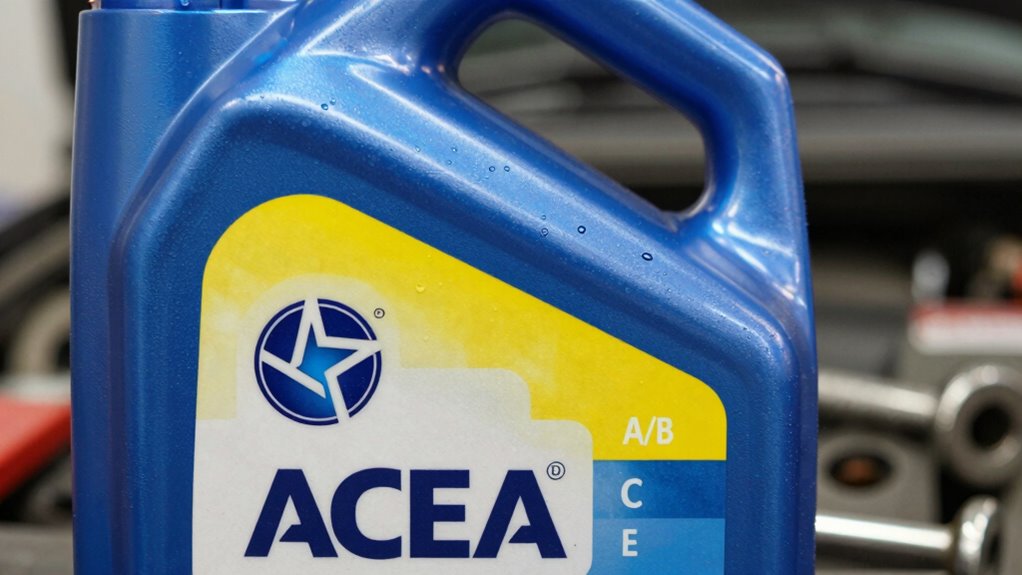

ACEA oil sequences decode engine oils into categories like A/B, C, and E classes. A/B handles gasoline and light-duty diesel engines, with numbers showing performance levels. C class covers catalyst-compatible, low-SAPS oils for emission systems. E class is for heavy-duty diesel engines focused on durability. Understanding these codes helps you choose the right oil for your vehicle’s needs. Keep going to discover more about properly matching oil types to your engine.
Key Takeaways
- ACEA oil sequences use a letter (A/B, C, E) to indicate engine type and a number (3, 4, 5) for performance level.
- A/B codes are for gasoline and light-duty diesel engines; C codes denote catalyst-compatible oils; E codes are for heavy-duty diesel engines.
- The second number reflects oil performance and application, with higher numbers indicating extended drain intervals or higher standards.
- ACEA E class sequences specify SAPS content and are designed for heavy-duty diesel engines, with subcategories like E4, E7, E8, E11.
- The sequence helps identify suitable oils based on engine type, emission systems, and performance requirements, aligning with vehicle manufacturer standards.
ACEA oil classification guide
As an affiliate, we earn on qualifying purchases.
As an affiliate, we earn on qualifying purchases.
Understanding the ACEA Oil Classification System
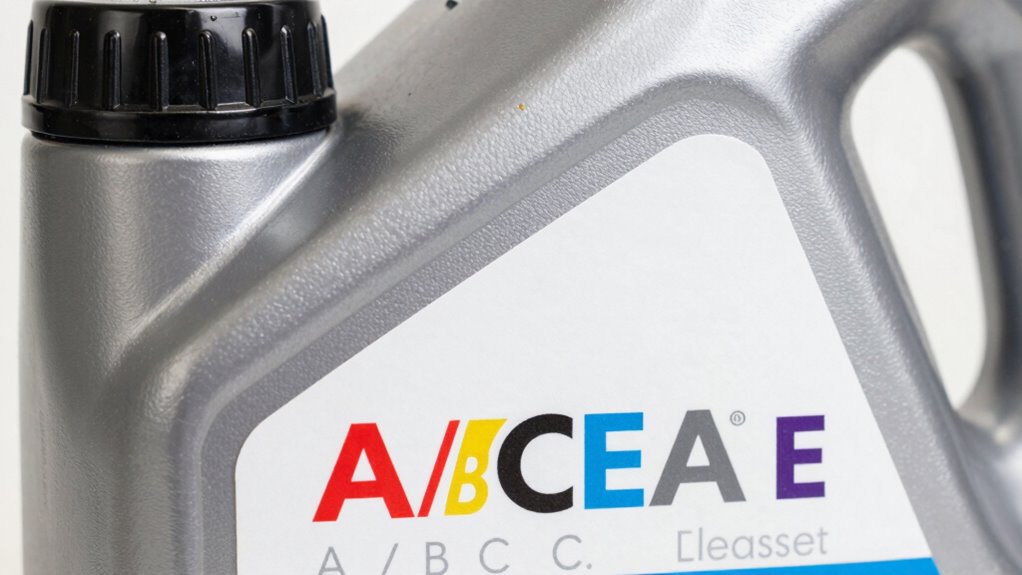
Have you ever wondered how engine oils are classified and what those codes really mean? The ACEA classification system uses a two-part code: a letter indicating the engine type (A, B, C, or E) and a number showing the category’s purpose and performance level. For example, A/B classes cover high-SAPS oils for gasoline and diesel engines in passenger vehicles, with designations like A3/B4 or A5/B5. The C class includes catalyst-compatible, low-to-mid-SAPS oils for vehicles with advanced emission systems. E class oils are heavy-duty diesel oils designed for commercial and industrial applications. These codes help you understand the oil’s intended use, compatibility with engine technology, and emission standards. The system is regularly updated, reflecting new engine technologies and environmental requirements.

Castrol Edge Euro 0W-40 A3/B4 Advanced Full Synthetic Motor Oil, 5 Quarts
Recommended by world-leading car manufacturers
As an affiliate, we earn on qualifying purchases.
As an affiliate, we earn on qualifying purchases.
How to Read the ACEA A/B and C Class Sequences
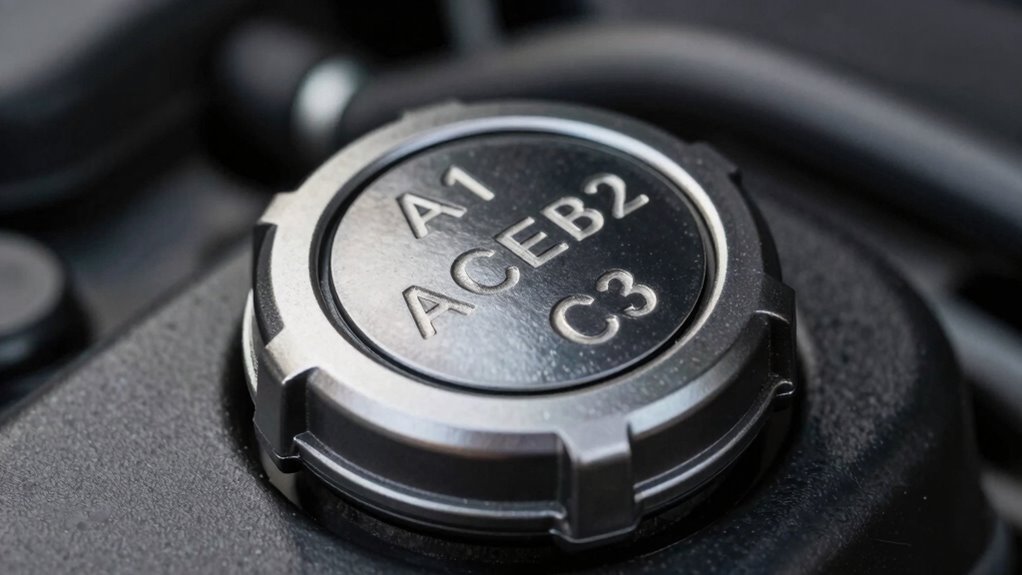
To understand how to read the ACEA A/B and C class sequences, start by examining the two-part code on the oil label. The first letter indicates the class: A for gasoline engines, B for light-duty diesel engines, and C for catalyst-compatible oils. The second part is a number, such as 3, 4, or 5, which specifies the category within that class based on performance level and application. For example, A3/B4 signals oils suitable for high-performance gasoline and diesel engines with extended drain intervals, while C2 or C3 oils are designed for low to mid-SAPS emissions systems. Sometimes, you’ll see a suffix like “-21,” indicating the year the specifications were updated. This coding system helps you quickly identify the oil’s intended use and compatibility with your engine. Additionally, understanding the content formats used in these codes can assist you in making more informed choices for your vehicle’s maintenance.

Valvoline European Vehicle Full Synthetic 5W-30 XL-III Motor Oil 5 Quart
Advanced protection for European gasoline and diesel engines against the four main causes of engine breakdown: wear, friction,…
As an affiliate, we earn on qualifying purchases.
As an affiliate, we earn on qualifying purchases.
Exploring the ACEA E Class: Heavy-Duty Diesel Oils Explained

The ACEA E class is specifically tailored for heavy-duty diesel engines that demand extended protection and durability. These oils are designed for commercial vehicles and industrial applications, where long drain intervals and high engine stress are common. The subcategories, like E4, E7, E8, and E11, differ mainly in SAPS content and drain interval capabilities. For example, E8 and E11 oils have limited SAPS for compatibility with Euro VI emissions standards. Here’s a quick comparison:
| Subcategory | SAPS Level | Drain Interval | Suitable Engines |
|---|---|---|---|
| E4 | High | Extended | Heavy-duty, extended use |
| E7 | Moderate | Medium | Medium-duty, modern engines |
| E8 | Low | Extended | Euro VI, advanced systems |
| E11 | Very Low | Medium | Ultra-modern heavy-duty engines |

Delo 400 XLE Heavy Duty Synblend Diesel Engine Oil 15W-40, 1 Gallon, Pack of 1
A premium synthetic blend, long drain mixed-fleet engine oil specifically formulated for on- highway applications, including 2017 greenhouse…
As an affiliate, we earn on qualifying purchases.
As an affiliate, we earn on qualifying purchases.
Using ACEA Standards to Choose the Right Engine Oil
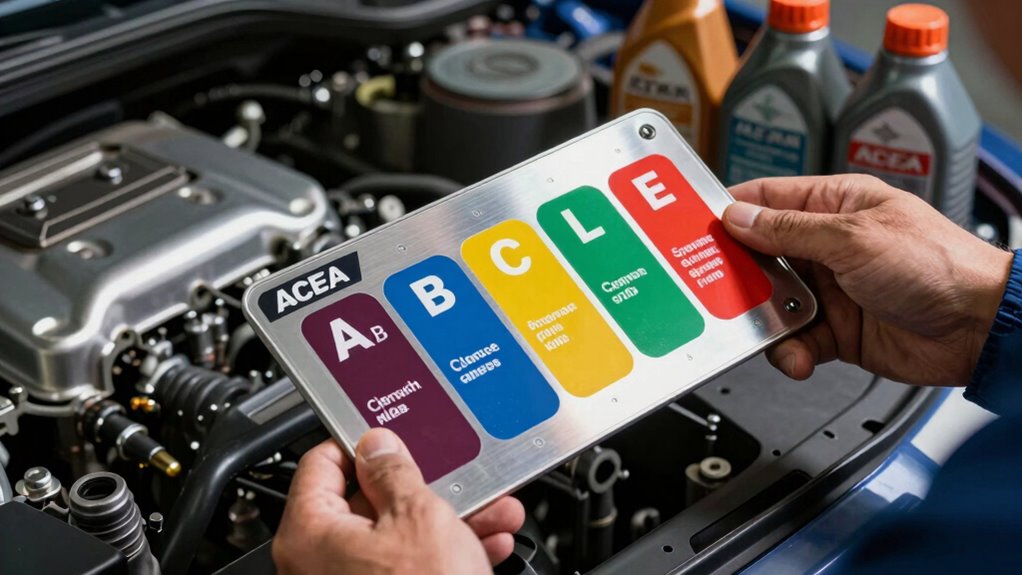
To select the appropriate engine oil, you need to understand ACEA classifications and how they match your engine’s specific needs. Always check your vehicle manufacturer’s specifications to guarantee compatibility with the recommended oil category. This way, you can choose an oil that provides ideal performance and protection for your engine. Understanding balance in maintenance is also crucial to ensuring your vehicle’s longevity and optimal functioning.
Understand ACEA Classifications
Are you unsure how to navigate the complex world of engine oil classifications? Understanding ACEA classifications helps you pick the right oil for your vehicle. The letters indicate the oil’s purpose: A/B for gasoline and light-duty diesel engines, C for catalyst-compatible oils, and E for heavy-duty diesel applications. The numbers specify the performance level and specifications, with newer numbers reflecting updated standards. For example, A3/B4 is for high-performance, extended drain intervals, while C4 is designed for vehicles with advanced exhaust systems. Recognizing these codes allows you to match oil to your engine’s needs and emission systems. Always check your manufacturer’s recommendations to ensure compatibility, especially when considering new or alternative ACEA categories. Additionally, measurement tools can help verify oil quality and performance standards, ensuring optimal engine health. This understanding helps you make informed decisions and optimize engine performance.
Match Oil to Engine Needs
Choosing the right engine oil depends on your vehicle’s specific needs and the guidelines set by the manufacturer. First, check the owner’s manual for recommended viscosity (like 5W-30) and ACEA standards. If your car has advanced emissions systems, opt for low to mid-SAPS oils, such as ACEA C2 or C4, to protect catalysts and filters. For older engines or vehicles with high-mileage, A/B class oils with higher SAPS content, like A3/B4, offer extended protection, especially if you’re using longer drain intervals. Heavy-duty diesel engines require E-class oils, with specific categories tailored for demanding conditions. Matching oil type to engine design, emissions systems, and expected operating conditions ensures ideal performance, longevity, and compliance with manufacturer and environmental standards. Understanding ACEA oil classifications can help you make more informed choices for your engine.
Check Manufacturer Specifications
Consult your vehicle’s owner’s manual first to identify the recommended viscosity and ACEA standards. This guarantees you select an oil compatible with your engine’s design and requirements. Manufacturers specify specific ACEA classifications based on engine type, emission systems, and performance needs. For example, if your vehicle has a diesel particulate filter, look for oils labeled C4 or C5, which are low to mid-SAPS and designed for catalyst compatibility. Gasoline engines may require A/B class oils like A5/B5 for fuel economy or A3/B4 for extended drain intervals. Always verify that the oil meets or exceeds the manufacturer’s recommended ACEA category, as using the wrong specification can impact engine performance, emissions compliance, and warranty coverage. When in doubt, consult both the manual and the oil’s technical data sheet.
Key Differences Between ACEA and API Oil Standards
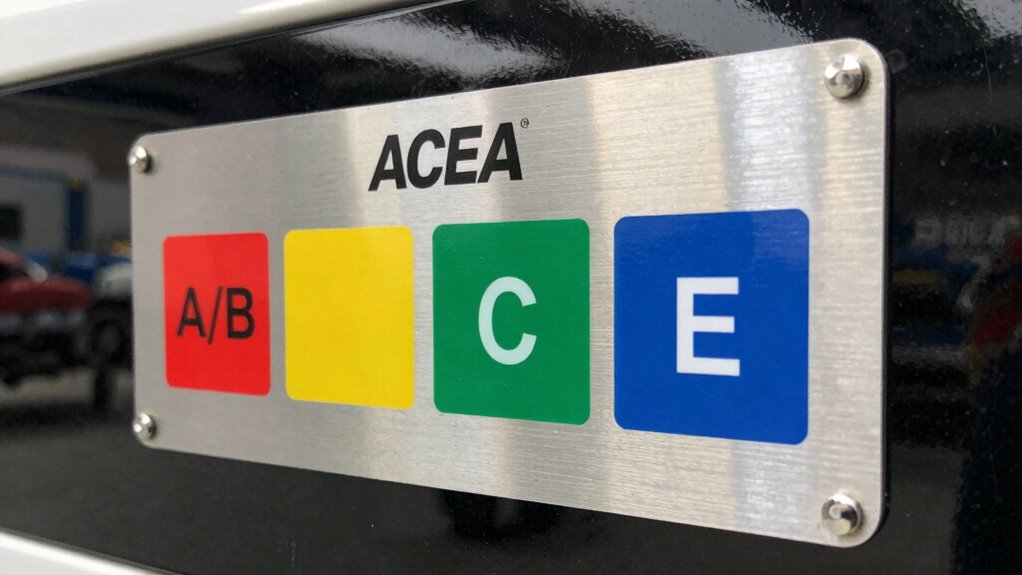
You’ll notice that ACEA standards are more detailed and tailored to specific engine types and emissions requirements compared to API standards. While ACEA emphasizes environmental testing and fuel economy, API focuses mainly on deposit control and wear protection. Additionally, ACEA updates more frequently to keep pace with European engine innovations, whereas API standards evolve more gradually. Color accuracy is also a key consideration in engine oil selection, especially for modern engines equipped with sensors and diagnostics.
Specification Detail Level
Have you ever wondered how ACEA and API oil standards differ in their level of detail and focus? ACEA standards are more thorough and specific, covering multiple engine types, SAPS levels, and technology needs. They include detailed classifications for passenger, light-duty, and heavy-duty engines, emphasizing environmental impact, fuel economy, and compatibility with exhaust after-treatment systems. In contrast, API standards are simpler, mainly addressing deposit control and engine wear for gasoline and diesel engines without extensive focus on emissions or fuel efficiency. ACEA updates more frequently to keep pace with European engine innovations, while API updates are less frequent. This detailed approach in ACEA helps ensure oils meet precise European engine requirements, whereas API offers broad, generalized guidelines suitable for a wider range of engines.
Environmental Testing Focus
ACEA and API standards differ markedly in their approach to environmental testing. ACEA emphasizes environmental impact, requiring oils to meet strict emissions reduction and fuel economy criteria. These tests evaluate how oils influence catalytic converter durability, particulate filter performance, and emissions control systems, ensuring oils support European engine technologies’ environmental goals. In contrast, API standards mainly focus on deposit control, wear protection, and oxidation stability, with less emphasis on emissions consequences. ACEA updates its testing protocols more frequently to adapt to evolving European engine designs and emission standards. This proactive approach ensures oils maintain compatibility with advanced after-treatment systems and contribute to reduced pollutant emissions, addressing broader environmental concerns. Your choice of oil should align with these environmental performance requirements for optimal engine and ecosystem protection.
Update Frequency and Scope
While both ACEA and API standards set essential benchmarks for engine oil performance, they differ substantially in how often they update their specifications and the scope of those updates. ACEA updates occur more frequently, reflecting European engine technology advances and environmental concerns. These updates incorporate new tests, emission standards, and fuel economy requirements, ensuring oils stay compatible with evolving engines. In contrast, API updates are less frequent, mainly focusing on deposit control, wear protection, and durability. Their scope tends to be narrower, emphasizing performance over environmental factors. Additionally, regulatory compliance plays a significant role in shaping the update cycles and content of these standards.
Which ACEA Oil Is Best for Your Vehicle?

Choosing the right ACEA oil for your vehicle depends on your engine type, manufacturer recommendations, and driving conditions. To determine the best option:
Selecting the correct ACEA oil depends on engine type, manufacturer specs, and driving conditions.
- Check your vehicle’s manual for the recommended ACEA category and viscosity.
- Consider your engine’s emission system—if it has DPF or catalysts, opt for low to mid-SAPS oils like C2 or C4.
- Match your driving style; for extended drain intervals or fuel efficiency, A5/B5 oils may be suitable.
- Understanding your engine’s performance requirements can help select an oil that supports optimal operation and longevity.
For gasoline engines, A/B class oils are generally best, especially if high SAPS levels aren’t an issue. Diesel engines with advanced emission controls require C class oils. Heavy-duty diesel engines benefit from E-class oils designed for durability and longer intervals.
Frequently Asked Questions
How Often Should ACEA Oil Specifications Be Updated or Revised?
You should expect ACEA oil specifications to be updated regularly, typically every few years. Updates occur when new engine technologies, emission standards, or environmental concerns emerge. Manufacturers and industry standards bodies revise these specifications to guarantee oils meet evolving performance, durability, and environmental requirements. Staying informed about the latest revisions helps you choose oils that comply with current regulations, optimize engine performance, and maintain warranty coverage.
Are ACEA Classifications Recognized Globally or Mainly in Europe?
Think of ACEA classifications as a map mainly used in Europe, guiding engine oil choices. You should know that outside Europe, other standards like API and ILSAC are more common, but ACEA remains influential in European markets and for vehicles made there. If you’re importing or servicing European cars, understanding ACEA helps guarantee compatibility. While recognized globally, its prominence is strongest across Europe and regions with European vehicles.
Can ACEA Oils Be Used With Non-European Engine Standards?
Yes, you can use ACEA oils with non-European engine standards, but you should check compatibility first. ACEA oils are designed mainly for European engines, focusing on emissions and fuel economy. If your engine meets international or North American standards, verify that the ACEA oil’s specifications match your engine’s requirements. Always follow your manufacturer’s recommendations to guarantee peak performance and avoid potential damage.
What Factors Influence the Addition of New Categories in ACEA Sequences?
Did you know that ACEA updates its categories roughly every three years? These new categories are added based on engine technology advancements, emissions regulations, and industry feedback. You influence this process by demanding better performance, fuel economy, and environmental standards. Manufacturers and regulators also play a role, ensuring oils meet evolving European engine designs. The goal is to keep up with innovations while maintaining compatibility and meeting stricter emission and efficiency standards.
How Do ACEA Standards Compare to Other International Engine Oil Classifications?
You’ll find ACEA standards are more detailed and specific than other international classifications like API. They focus on European engine types, environmental impact, and emission requirements, updating frequently to keep pace with new technology. Unlike API, which emphasizes deposit control and wear protection, ACEA prioritizes environmental concerns and fuel economy, making it more exhaustive for European vehicles and modern engine designs.
Conclusion
Think of the ACEA oil sequences as a secret code that unlocks the perfect match for your engine. Just like a locksmith decoding a master key, understanding these standards guarantees you pick the right oil for maximum performance and longevity. When I switched to ACEA-compliant oil, my engine ran smoother and lasted longer—proof that decoding this system is your ticket to a healthier, happier vehicle. Master the code, and drive with confidence.