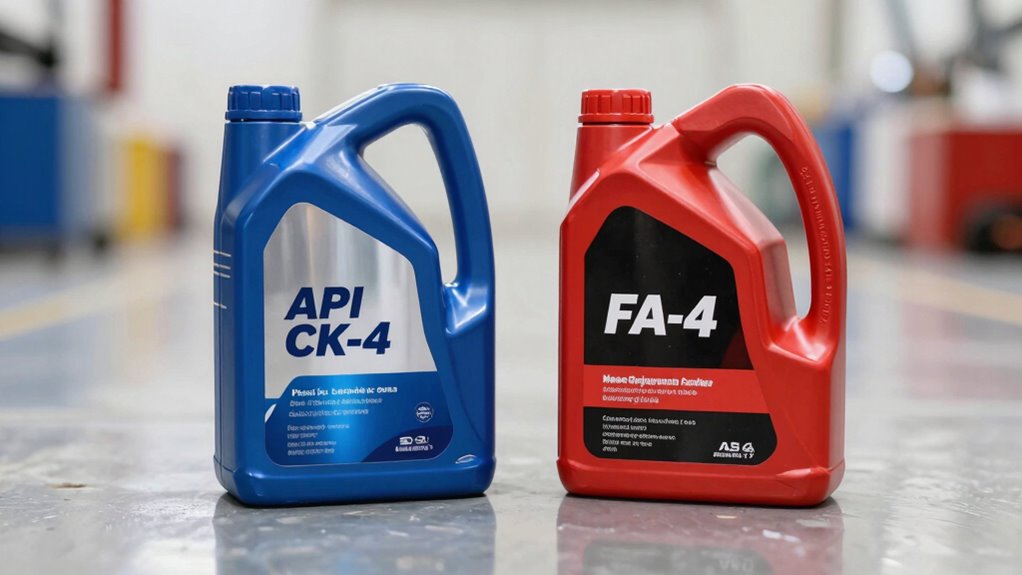

API CK-4 and FA-4 oils are designed for different diesel engines, causing confusion. CK-4 is proven for older or traditional engines, offering broad protection. FA-4 is newer, thinner oil that improves fuel economy in advanced engines but isn’t compatible with all models. Choosing the wrong type can lead to engine issues. To avoid mistakes, understanding your engine’s needs is key—stay with us to get the full details.
Key Takeaways
- CK-4 is designed for older and traditional diesel engines, offering broad compatibility and proven protection.
- FA-4 is a newer, thinner oil aimed at fuel economy and emission reduction in advanced diesel engines.
- Using FA-4 in incompatible engines can cause lubrication issues and increased wear.
- CK-4 supports engine longevity and can be used with older engine models and standards.
- Proper engine matching and manufacturer approval are essential when choosing between CK-4 and FA-4 oils.
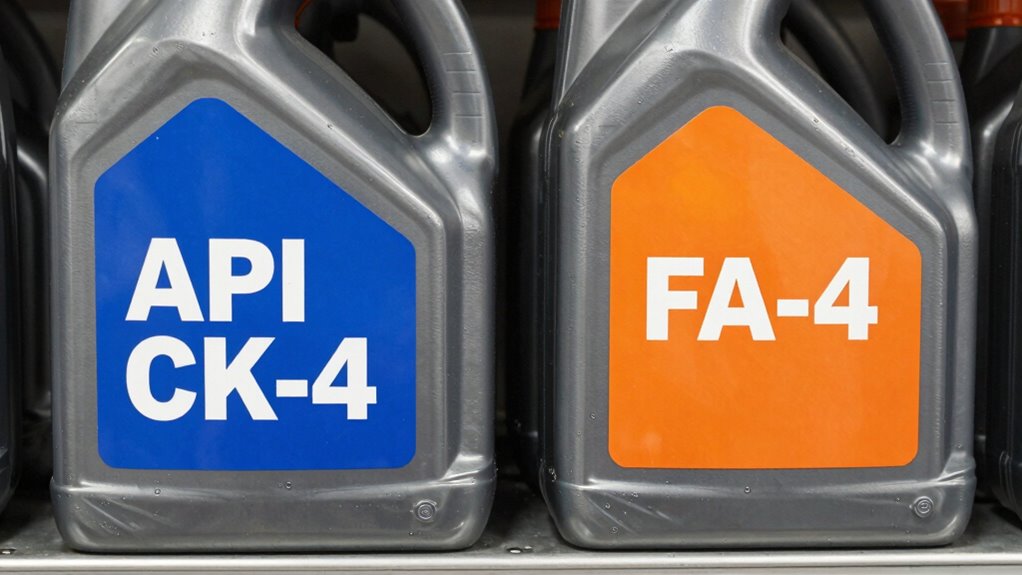
Are you trying to decide between API CK-4 and FA-4 engine oils? If so, you’re not alone—many vehicle owners and fleet managers face this choice and wonder how these oils will impact engine performance and oil compatibility. Both oils are designed for high-performance diesel engines, but they serve slightly different purposes and meet different needs. Understanding their differences can help you make an informed decision that keeps your engine running smoothly and efficiently.
API CK-4 oils are formulated to provide excellent protection against wear, soot, and oxidation, making them a reliable choice for older or more traditional diesel engines. They support engine performance by maintaining proper lubrication under heavy-duty conditions, preventing deposits, and reducing sludge buildup. When considering oil compatibility, CK-4 oils are backward compatible with previous API CJ-4, CI-4, and SL oils, so they generally work well with existing engine parts and systems. This broad compatibility guarantees you don’t have to worry about potential issues when switching from older oils, as long as your vehicle’s manufacturer recommends API CK-4.
API CK-4 oils offer proven protection and broad compatibility with older diesel engines and previous API oil standards.
On the other hand, FA-4 oils are a newer formulation designed for fuel economy and emission reduction, specifically targeting newer and more advanced diesel engines. These oils are thinner, which helps improve engine efficiency but can also influence engine performance in different ways. Because they are lower in viscosity, FA-4 oils can enhance fuel economy by reducing internal engine friction, but you need to confirm that your engine is compatible with this oil type. Not all engines, especially older models, are suitable for FA-4 oils, as their oil compatibility is limited to newer engines built to accommodate thinner lubricants. Using FA-4 in an engine not designed for it could lead to inadequate lubrication, increased wear, or other performance issues. Additionally, the shift toward natural filtration systems and sustainable practices emphasizes the importance of selecting oils that support eco-friendly maintenance.
Ultimately, your choice depends on your engine’s specifications and your primary goals. If you prioritize proven reliability, robust engine performance, and maximum oil compatibility with older systems, CK-4 is likely your best option. However, if you own a newer diesel engine and aim to improve fuel economy while reducing emissions, FA-4 might be the better fit—just confirm that your engine manufacturer approves its use. Both oils are engineered to meet demanding industry standards, but choosing the right one guarantees your engine receives the proper protection and efficiency it needs to operate at its best.
Top picks for "diesel split confus"
As an affiliate, we earn on qualifying purchases.
Frequently Asked Questions
Can FA-4 Oils Be Used in Older Diesel Engines?
You can’t generally use FA-4 oils in older diesel engines because of engine compatibility issues. FA-4 oils are designed for newer engines with specific oil viscosity and performance standards, and they may not provide adequate protection for older engines. Always check your vehicle’s owner’s manual to match the right oil viscosity and API service category, ensuring your engine stays properly lubricated and protected.
What Are the Environmental Impacts of CK-4 Versus FA-4?
You’ll find that CK-4 oils generally contribute to better emission reductions and pollution control than FA-4 oils. CK-4 formulations are designed to meet stricter standards, reducing harmful exhaust emissions and improving air quality. FA-4 oils focus more on fuel economy and engine protection but may not deliver the same level of environmental benefits. Choosing CK-4 helps you support cleaner emissions and a healthier environment.
Are There Cost Differences Between CK-4 and FA-4 Oils?
You’ll notice that FA-4 oils tend to be more expensive, with cost differences ranging up to 15-20%. This mainly stems from formulation differences, as FA-4 oils incorporate advanced additives to meet newer engine standards. While CK-4 oils are typically less costly and more versatile, FA-4’s specialized formulation justifies the price hike for enhanced performance and durability in newer diesel engines.
How Do CK-4 and FA-4 Oils Affect Fuel Efficiency?
You’ll notice that both CK-4 and FA-4 oils can improve fuel economy and engine performance, but FA-4 often provides better efficiency at higher engine loads due to its lower viscosity. CK-4 oils are versatile and work well across various engines, maintaining performance and saving fuel. Choose based on your engine’s specifications and operating conditions to optimize fuel economy and guarantee smooth engine performance.
Do Vehicle Warranties Specify Oil Type Requirements?
Think of vehicle warranties as a treasure map—warranty stipulations guide you on the right path, ensuring your engine’s safety. Yes, they often specify oil compatibility, including whether CK-4 or FA-4 oils are acceptable. Ignoring these requirements is like sailing off course; it risks voiding your warranty. Always check your vehicle’s warranty stipulations to confirm the correct oil type, protecting your engine and your investment.
Conclusion
So, now that you understand the key differences between API CK-4 and FA-4, you’re better equipped to choose the right diesel oil for your needs. It might seem confusing at first, but isn’t making an informed choice worth the effort? By knowing their applications and specifications, you can guarantee your engine runs smoothly and efficiently. After all, isn’t selecting the right oil the first step toward maximizing your vehicle’s performance and longevity?