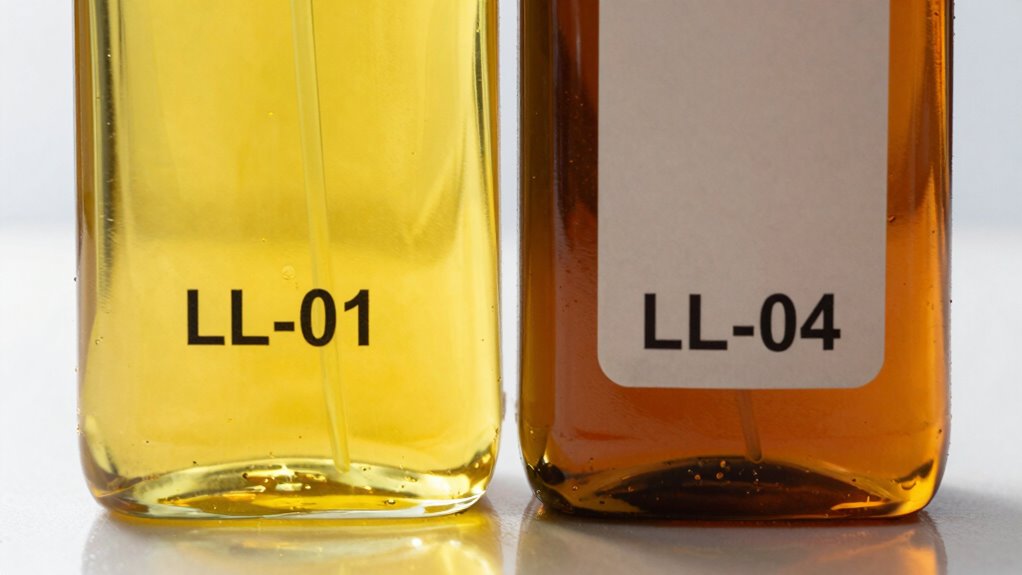

BMW LL-01 and LL-04 oils differ mainly in composition and intended engine types. LL-01 is designed for gasoline engines, supporting extended intervals with higher sulfate ash levels, while LL-04 suits diesel engines with particulate filters, using lower ash, high-quality synthetic bases, and low SAPS additives. These differences affect engine protection, emissions, and filter longevity. To fully understand which oil best fits your vehicle and driving style, keep exploring the details.
Key Takeaways
- LL-01 is designed mainly for gasoline engines with longer oil change intervals, while LL-04 targets diesel engines with particulate filters.
- LL-04 uses higher-quality synthetic base stocks and features lower sulfate ash (SAPS) for emission system protection.
- LL-04 offers a wider range of viscosities, including 0W30, optimized for turbocharged and modern diesel engines.
- LL-01 generally has higher sulfate ash content, which may lead to more particulate filter fouling over time compared to LL-04.
- The key difference lies in additive formulation and ash content, affecting engine protection, emissions compliance, and maintenance needs.
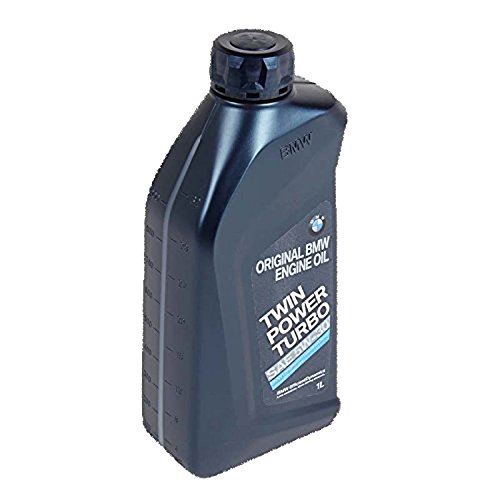
BMW SAE 5W-30 Full Synthetic Motor Oil, 1 Quart, 16. Fluid_Ounces
For best performance, follow the manufacturer's recommendations in your vehicle owner’s manual.
As an affiliate, we earn on qualifying purchases.
As an affiliate, we earn on qualifying purchases.
What Are BMW LL-01 and LL-04 Oil Standards?
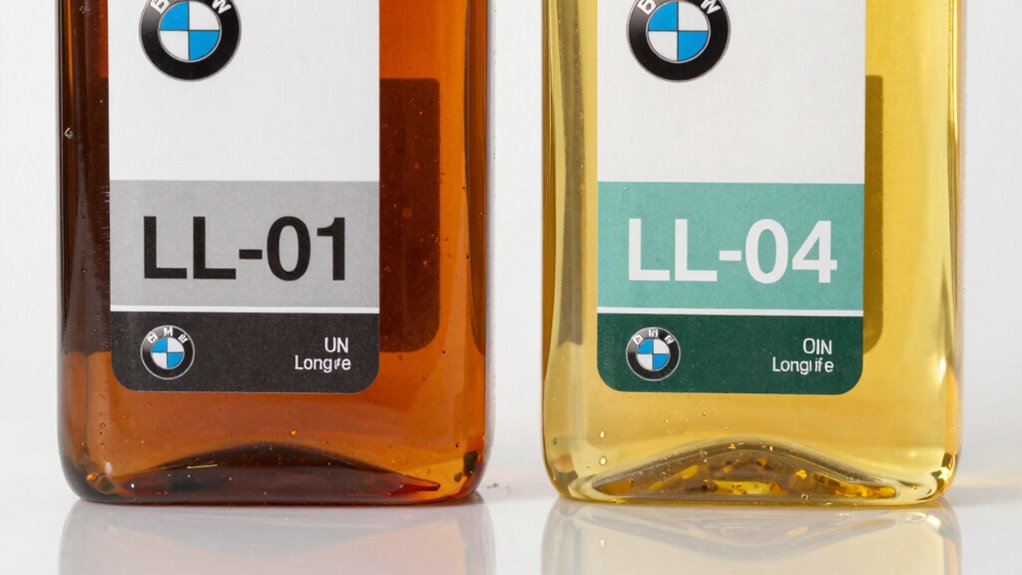
BMW LL-01 and LL-04 are specific engine oil standards designed to meet the manufacturer’s performance and emission requirements. LL-01 was introduced in 2001 for gasoline engines with long oil change intervals, requiring a minimum HTHS viscosity of 3.5 cP and meeting ACEA A3/B3 and API SJ/SL standards. It’s suitable for engines like N52 and N20, compatible with viscosities such as 5W30, 5W40, and 10W60. LL-04 debuted in 2004 for diesel engines with particle filters, featuring lower SAPS and TBN to protect emission systems. It shares the same HTHS viscosity minimum but is optimized for low sulfur fuels, with a focus on diesel engines and turbocharged gasoline engines. Both oils support extended drain intervals and meet strict emission regulations.
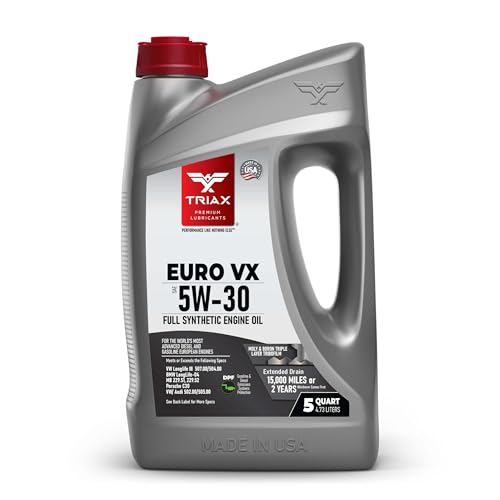
TRIAX Euro VX 5W-30 Full Synthetic Ester, Compatible with VW 507.00/504.00, VW Audi 502.00, 505.01, BMW LL-04, Porsche C30, ACEA C3, Mercedes 229.51, 229.5, 229.31 (5 Quart)
PAO / Ester full synthetic engine oil especially designed for European diesel and gasoline engines, including those fitted…
As an affiliate, we earn on qualifying purchases.
As an affiliate, we earn on qualifying purchases.
How Do LL-01 and LL-04 Differ in Composition and Performance?
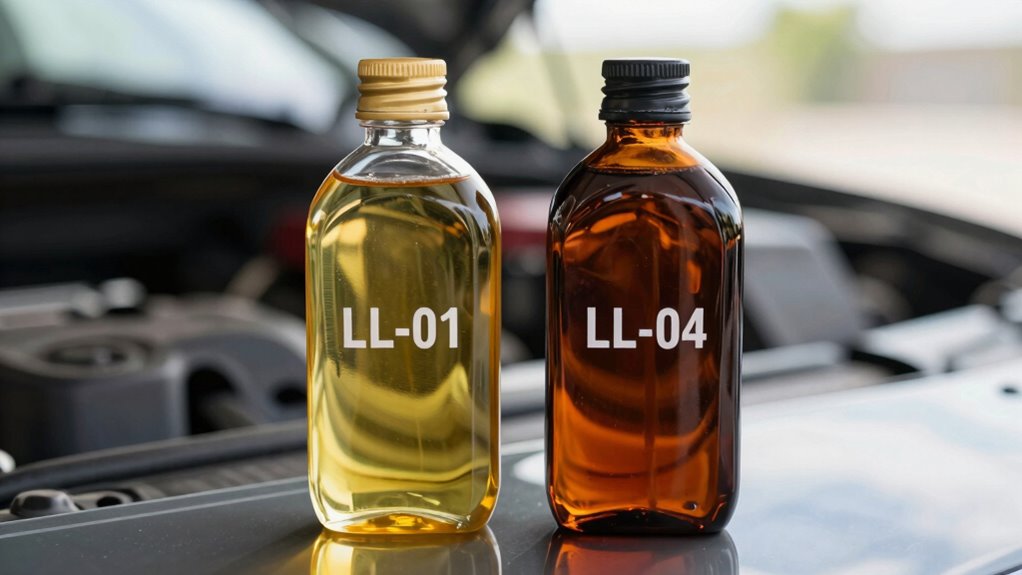
LL-01 and LL-04 oils differ mainly in their base stock quality and additive levels, impacting their performance and longevity. LL-04 uses higher-quality base stocks and lower sulfate ash content to better protect emissions systems, especially in diesel engines. Understanding these differences helps you choose the right oil for your engine’s specific needs and fuel type. Additionally, the color accuracy of the oils can influence their effectiveness in reducing deposits and maintaining engine cleanliness over time.
Base Stock Quality Differences
When comparing the base stock quality of LL-01 and LL-04 oils, it’s clear that they differ markedly in their composition and performance characteristics. LL-04 typically uses higher-quality base stocks, often synthetic or heavily refined oils, providing better stability, oxidation resistance, and cleaner operation. This results in lower deposit formation and improved fuel efficiency. LL-01, on the other hand, historically relied more on conventional base stocks, though recent formulations incorporate advanced synthetics. This makes LL-01 slightly less refined than LL-04 but still capable of supporting long drain intervals. Overall, LL-04’s superior base stock quality enhances durability, especially under high-stress conditions or turbocharged engines, offering better protection, cleaner operation, and extended service life compared to LL-01. Additionally, the base stock quality plays a crucial role in the overall performance and longevity of the oil.
Additive and Sulfate Ash Levels
Because additive formulation and sulfate ash levels directly impact engine protection and emissions, understanding their differences between LL-01 and LL-04 oils is essential. LL-01 oils contain higher sulfate ash levels, which help protect engine components and maintain TBN during extended drain intervals, but can contribute to ash buildup and emissions issues. In contrast, LL-04 oils feature reduced sulfate ash—known as low SAPS—to minimize particulate filter fouling and emissions, especially in diesel engines with DPFs. This lower ash content also helps preserve catalyst life and reduces emissions-related deposits. The additives in LL-04 are carefully balanced to support emission systems while still providing adequate engine protection. Consequently, your choice influences not only engine longevity but also the efficiency of emissions control devices. Additionally, free floating design elements in modern engines can further influence how these oils perform, emphasizing the importance of selecting the appropriate formulation for your vehicle.
BMW SAE 5W-30 Full Synthetic Motor Oil, 1 Quart, 16. Fluid_Ounces
For best performance, follow the manufacturer's recommendations in your vehicle owner’s manual.
As an affiliate, we earn on qualifying purchases.
As an affiliate, we earn on qualifying purchases.
Which BMW Engines Should Use LL-01 or LL-04 Oil?
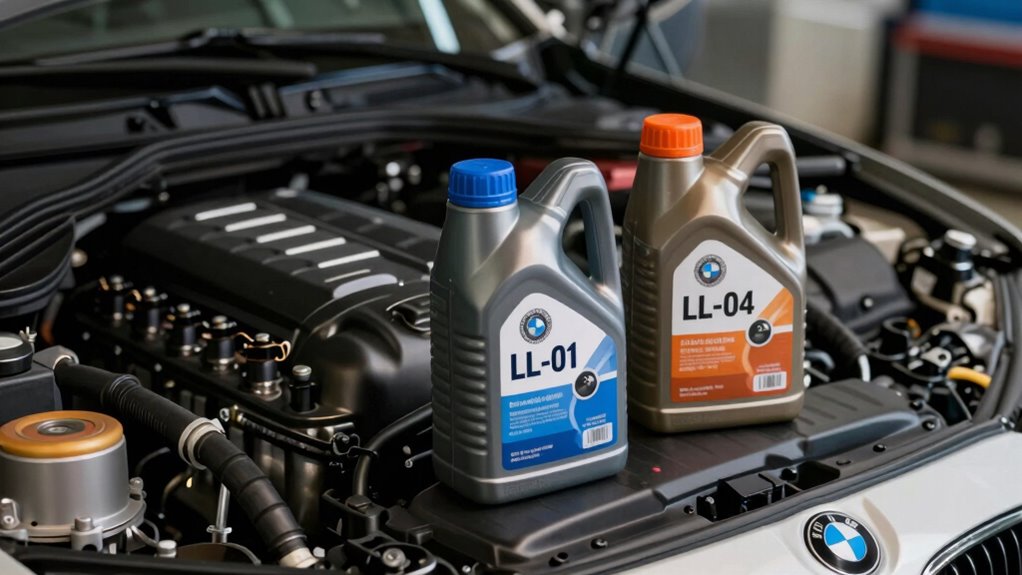
If you drive a gasoline BMW engine like the N52 or N20, LL-01 oil is typically recommended, especially for high-mileage or extended intervals. For diesel engines, particularly those with particle filters, LL-04 offers better protection and emissions compliance. Knowing your engine type helps determine whether LL-01 or LL-04 is the right choice for peak performance.
Gasoline Engine Compatibility
BMW gasoline engines typically require Longlife-01 (LL-01) oil for ideal performance, especially in models like the N52, N20, N63, and N74. These engines are designed to work with oils that meet the LL-01 specifications, ensuring maximum lubrication and extended drain intervals. LL-01 oils are suitable for high-performance turbocharged and naturally aspirated gasoline engines, providing excellent wear protection and fuel efficiency. The oil’s viscosity options, such as 5W30 and 0W30, support cold starts and smooth operation across temperature ranges. While LL-04 is approved for some gasoline engines, LL-01 remains the preferred choice for most BMW gasoline models due to its higher TBN and proven compatibility with extended service intervals. Always confirm the oil specifications in your owner’s manual for the best results.
Diesel Engine Requirements
When selecting the right oil for your BMW diesel engine, it’s important to contemplate the engine’s specific requirements and the fuel type used. LL04 is generally recommended for all BMW diesel engines, especially those with particulate filters, as it’s designed to protect emissions systems with lower SAPS levels. It’s approved for both older and newer diesel models, including those with turbochargers. LL04’s formulation helps prevent catalyst poisoning and DPF clogging, making it ideal for vehicles operating on low sulfur fuels common in Europe. While LL01 can sometimes be used for certain diesel engines, LL04 offers better protection for modern diesel engines, particularly with emission control equipment. Always check your engine’s specifications and follow BMW’s oil specifications for optimal performance and longevity.

OEM 5W-30 High Performance 7 Liter Oil Change Kit For BMW Longlife 01
As an affiliate, we earn on qualifying purchases.
As an affiliate, we earn on qualifying purchases.
What Are the Viscosity Options for LL-01 and LL-04 Oils?
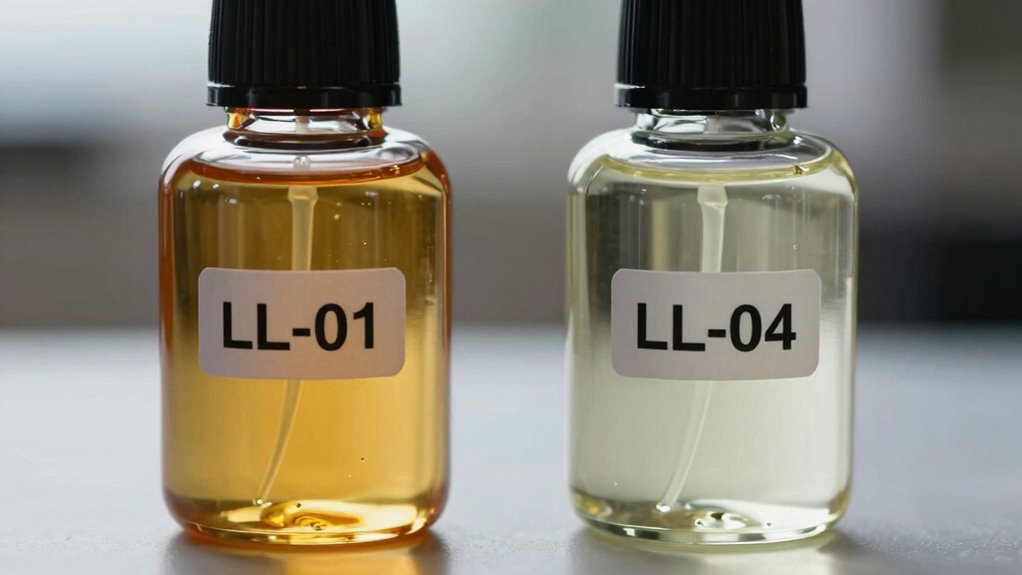
Both LL-01 and LL-04 oils offer a range of viscosity options to meet different driving conditions and engine requirements. LL-01 primarily covers 5W30, 5W40, and 10W60 grades, providing flexibility for various climates and performance needs. Its 0W30 variant, part of the FE (Fuel Economy) lineup, enhances cold starts and stop-and-go driving. LL-04 also includes these viscosities but expands further, including 0W30 and other low-viscosity options optimized for turbocharged and modern engines. This broader selection helps improve fuel efficiency and cold-weather performance. While both oils share similar viscosity grades, LL-04’s options are tailored to diesel engines and turbocharged setups, offering better protection for emission equipment and fuel economy under different conditions. Achieving balance in oil formulation is essential for optimizing engine performance and longevity.
How Do LL-01 and LL-04 Impact Emissions and Fuel Economy?
LL-01 and LL-04 oils help reduce emissions by protecting your engine’s filters and catalytic converters. They also improve fuel economy by minimizing friction and optimizing combustion. Choosing the right oil can make a noticeable difference in your vehicle’s environmental performance. Additionally, using these oils can contribute to the overall engine health and longevity of your vehicle.
Emission Filter Protection
Choosing the right Longlife oil can substantially influence your vehicle’s emissions and fuel economy by protecting emission control systems like particulate filters and catalysts. LL-04 oils, with their lower SAPS content, are specifically formulated to minimize ash buildup, helping diesel particulate filters (DPF) stay clean and functional longer. This reduces the risk of filter clogging and maintains ideal emissions performance. LL-01 oils, while also supporting emissions systems, contain higher levels of sulphate ash, which can accelerate filter fouling over time. Using LL-04 in diesel engines with DPFs ensures better protection against ash deposits and helps keep emissions within regulatory limits. Proper oil choice directly maintains your emission system’s efficiency, prevents costly repairs, and ensures your vehicle remains compliant with emission standards.
Fuel Economy Benefits
Using the right Longlife oil can considerably improve your vehicle’s fuel economy and reduce emissions. LL01 oils, with their higher viscosity options like 5W30 and 5W40, optimize engine efficiency at normal operating temperatures, helping you conserve fuel over long distances. LL04 oils, often formulated with lower SAPS content, enhance fuel economy in modern diesel engines, especially those equipped with particulate filters, by reducing engine drag and improving combustion. Both oils support extended drain intervals, which means fewer oil changes and less waste—benefiting the environment and your wallet. In cold starts, low-viscosity options like 0W30 in LL01 variants ensure quicker lubrication, further improving fuel efficiency. Choosing the right oil tailored to your engine and driving conditions maximizes performance and minimizes fuel consumption. Additionally, understanding the oil types and their specific benefits helps in maintaining optimal engine health and efficiency.
How Long Do BMW Longlife Oils Last, and How Do They Hold Up?
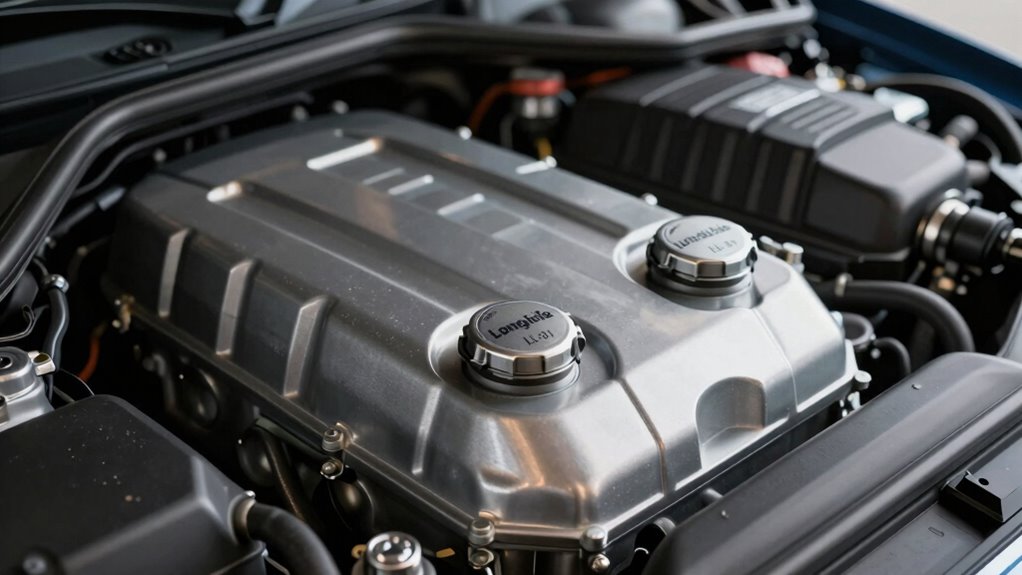
BMW Longlife oils are engineered for durability, capable of maintaining their protective qualities and performance over extended periods. How long they last depends on the specific type, driving conditions, and maintenance practices. Typically, LL01 and LL04 oils are designed for long intervals, often up to 15,000 miles or 24 months, if conditions are ideal. However, harsh driving, frequent short trips, or extreme temperatures can shorten their lifespan. Regular oil analysis helps monitor their condition, revealing contamination or additive depletion. Over time, oils can break down, lose viscosity, or become contaminated with fuel, dirt, and moisture. To guarantee maximum engine protection, follow BMW’s recommended oil change intervals and pay attention to warning signs like increased oil consumption or engine performance issues. Additionally, vetted oils are tested for safety and effectiveness, ensuring optimal engine health over extended use.
What Are the Key Additives: Sulphate Ash, TBN, and ZDDP?

Understanding the key additives in Longlife oils is essential because they directly influence engine protection, efficiency, and emissions. Sulphate ash, TBN (Total Base Number), and ZDDP (zinc dialkyldithiophosphate) each play vital roles. Sulphate ash acts as a wear buffer but can harm diesel particulate filters if excessive, which is why LL04 has reduced ash content. TBN measures the oil’s capacity to neutralize acids generated during combustion, helping prevent corrosion and extending oil life—LL01 typically has a higher TBN for longer intervals. ZDDP provides anti-wear and anti-corrosion protection, especially important for turbocharged engines. Both additives work together to keep your engine clean, protect vital components, and assure maximum performance while complying with emissions standards.
How to Choose the Right Oil for Your BMW?
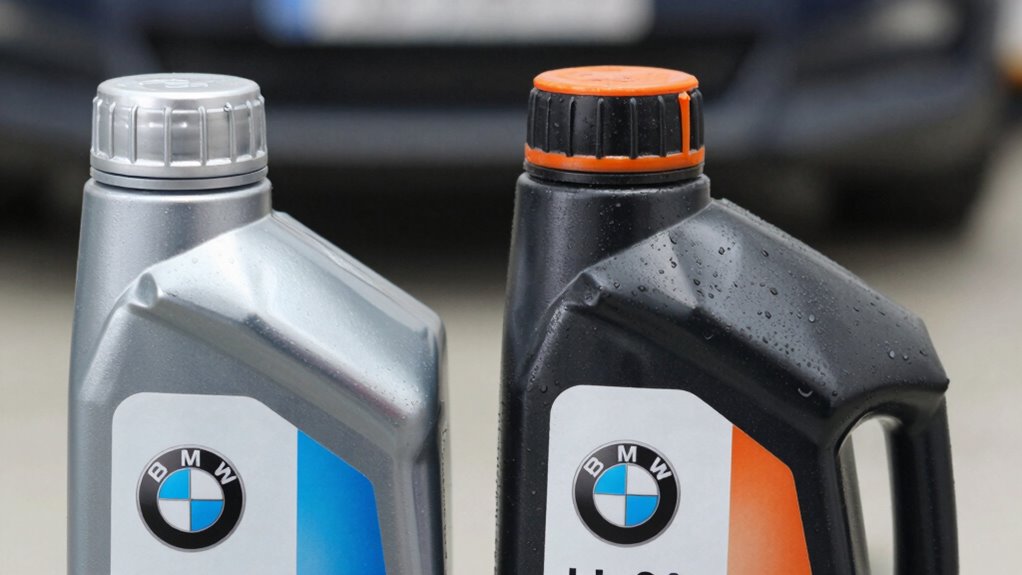
Choosing the right oil for your BMW depends on matching the oil’s specifications to your vehicle’s engine type and driving conditions. First, identify your engine—gasoline or diesel—and check its compatibility with LL01 or LL04. LL01 is designed for gasoline engines and high-mileage intervals, while LL04 suits diesel engines with particle filters and low sulfur fuels. Consider your driving habits: if you frequently drive short distances or in cold weather, a thinner oil like 0W30 might be better for cold starts. For turbocharged engines, LL04’s higher ZDDP content offers extra protection. Always consult your owner’s manual to confirm the recommended oil grade and specifications. Using the correct oil helps guarantee engine performance, longevity, and compliance with BMW’s maintenance standards. Understanding consumer/lifestyle topics can also help you make more informed choices about vehicle maintenance and oil selection.
Why Do BMW Turbo and Diesel Engines Prefer LL-04 Oil?
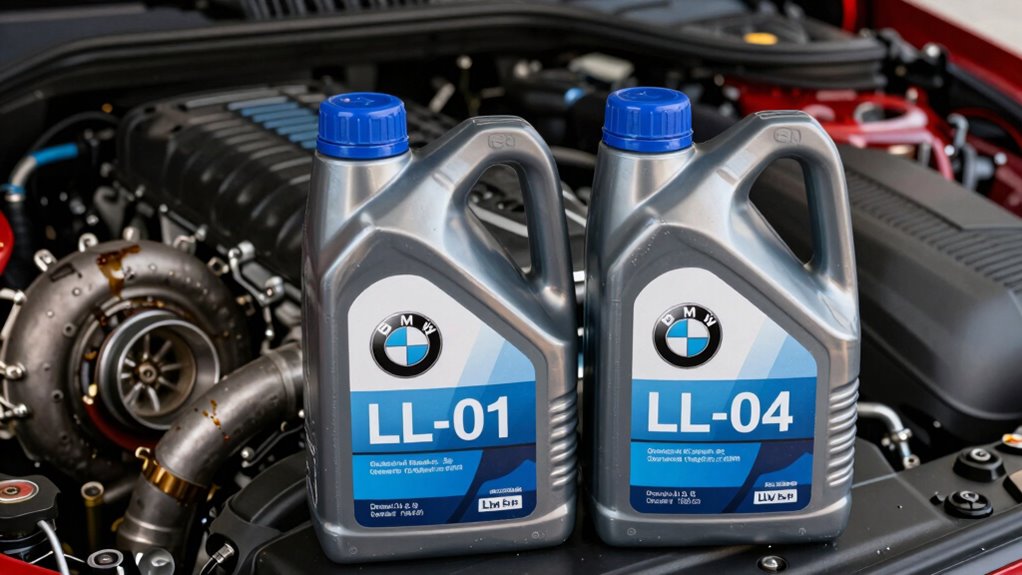
Because turbocharged and diesel engines operate under higher thermal and mechanical stresses, they require oils that provide enhanced protection and support emission control systems. LL-04 oil is designed specifically for these needs, with reduced sulphate ash and TBN levels to protect particulate filters and catalysts. Its formulation minimizes soot and deposit formation, extending component life. The higher ZDDP content enhances wear protection in turbo engines. Additionally, engine protection is further improved by its formulation tailored for high-performance diesel and turbocharged engines.
Which BMW Longlife Oil Is Best for Your Driving Style and Needs?
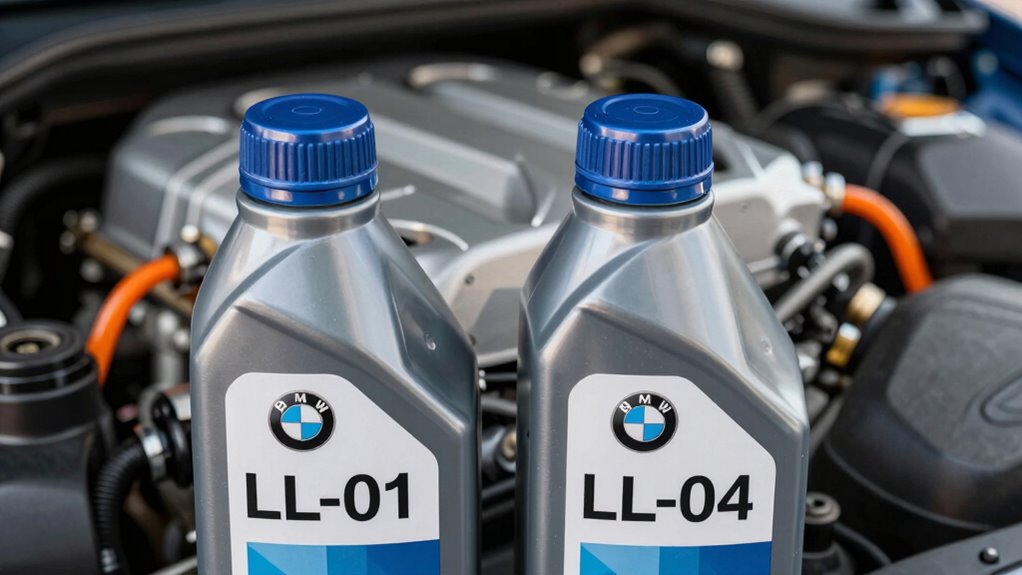
Selecting the right BMW Longlife oil depends on your driving style and vehicle needs. If you mostly have short trips or drive in stop-and-go traffic, a lower viscosity oil like 0W30 or 0W20 can improve cold starts and fuel efficiency. For high-performance driving or turbocharged engines, LL04 is preferable because it offers better protection for emission systems and turbo components. Long-distance, steady driving with extended intervals benefits from LL01, especially if you have gasoline engines that require higher TBN for longer drain intervals. Consider your fuel type—if you use low-sulfur fuel, LL04’s low SAPS benefits your diesel or turbo engines. Ultimately, match the oil to your driving habits and engine specifications for ideal performance and longevity. Choosing the right oil can also influence engine cleanliness and overall durability over time.
Frequently Asked Questions
Can I Mix LL-01 and LL-04 Oils Safely?
You can generally mix LL-01 and LL-04 oils safely, but it’s not ideal for peak engine performance. Both oils share similar HTHS viscosity and are compatible with BMW engines, but LL-04 has lower SAPS and TBN for emissions and turbo protection. For best results, stick to one type or consult your owner’s manual or a mechanic to avoid potential issues with oil compatibility or engine longevity.
Are LL-04 Oils Suitable for Non-Turbo Gasoline Engines?
Yes, LL-04 oils can be suitable for non-turbo gasoline engines, but you should check your vehicle’s manual first. LL-04 is designed mainly for diesel engines with particle filters, but it meets standards compatible with some gasoline engines. If your car’s manufacturer approves it, using LL-04 can offer benefits like better emission system protection and compatibility with low sulfur fuels. Always confirm before switching oils to guarantee ideal engine performance.
How Often Should I Change BMW Longlife Oils?
You should change BMW Longlife oils typically every 15,000 miles or once a year, whichever comes first, if you follow manufacturer recommendations. However, if you frequently drive under severe conditions like extreme temperatures, short trips, or heavy loads, consider more frequent changes around 7,500 to 10,000 miles. Regular oil analysis can help determine the best interval for your specific driving habits, ensuring peak engine protection.
Does LL-04 Improve Engine Longevity Over LL-01?
Yes, LL-04 can improve engine longevity over LL-01, especially for diesel engines with particle filters. It’s designed with lower sulphate ash and better base stocks, reducing wear and protecting emissions equipment. If you drive a turbocharged or diesel BMW, LL-04’s enhanced formulations help maintain engine health longer by minimizing harmful deposits and supporting cleaner combustion. However, always choose the oil recommended for your specific engine model for ideal longevity.
Are There Specific Viscosity Recommendations for My BMW Model?
You should follow your BMW’s recommended viscosity, typically found in your owner’s manual. For most models, 5W30 or 0W30 are common choices, especially for colder climates and fuel efficiency. If your vehicle is turbocharged or uses diesel with DPF, 5W40 or LL04 oils might be recommended. Always verify your specific model’s specs, as using the correct viscosity guarantees ideal engine performance and longevity.
Conclusion
Choosing the right BMW Longlife oil isn’t just about specifications—it’s about trusting your engine’s health. Whether you go for LL-01 or LL-04, understanding their differences helps you make an informed decision. Remember, a stitch in time saves nine; selecting the proper oil now can prevent costly repairs later. Keep your BMW running smoothly, and enjoy the ride with confidence knowing you’ve got the right oil in your corner.