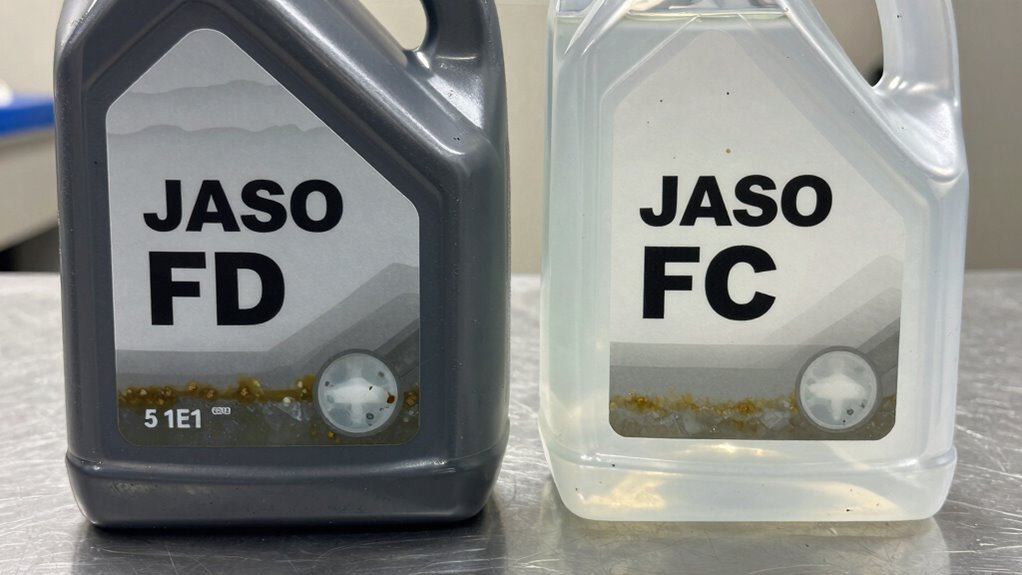

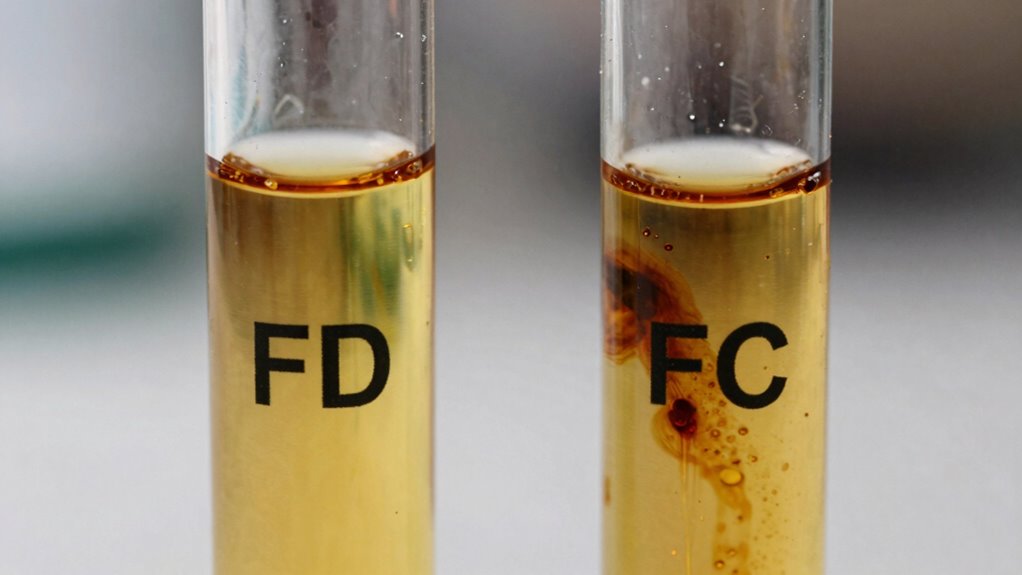
JASO FD oils are designed for cleaner combustion and produce fewer deposits than FC standards, which allow more buildup. This is mainly due to their advanced additive formulations that minimize port and piston gum formation, helping keep your engine cleaner and running smoothly longer. Choosing FD can improve performance, reduce maintenance, and extend engine life. If you’re curious about how these standards truly compare and impact your engine, there’s more to discover below.
Key Takeaways
- JASO FD oils have stricter additive formulations that reduce deposits and emissions compared to FC oils.
- FD standards emphasize superior detergent and dispersant properties, leading to cleaner engine components.
- FC oils allow more deposit formation, potentially causing buildup in ports, pistons, and exhaust over time.
- Using FD oils helps prevent sticking piston rings and maintains optimal engine performance longer.
- The choice between FD and FC impacts engine cleanliness, efficiency, and long-term durability, especially in high-performance engines.
When choosing motorcycle engine oils, understanding the differences between JASO FD and FC standards is essential. These standards are designed to specify the quality and performance of oils used in two-stroke engines, which rely heavily on proper lubrication for ideal operation. The key distinction lies in how each standard influences the oil formulation and, ultimately, your engine’s performance. JASO FD is the more recent and stricter standard, emphasizing cleaner burning and reduced deposits, while FC is an older standard that permits a different balance of additives and combustion characteristics.
The oil formulation under JASO FD is engineered to produce fewer deposits and emissions, which means less buildup inside your engine. This standard typically requires oils to have superior detergent and dispersant properties, helping keep ports, exhaust systems, and pistons cleaner over time. When you choose JASO FD oil, you’re opting for a formulation that minimizes deposit formation, reducing the risk of sticking piston rings and clogged exhaust ports. This directly affects engine performance, as cleaner components allow for smoother operation, better compression, and more reliable power delivery. The reduction of deposits also means your engine runs more efficiently, consuming less fuel and producing fewer emissions.
In contrast, JASO FC oils are formulated with a different balance of additives, which might not prioritize deposit control as heavily. These oils can still perform well, but they tend to allow more deposits to accumulate over time, especially in high-performance or heavily used engines. If your motorcycle is older or runs under less demanding conditions, FC oils could suffice, but they might not deliver the same level of cleanliness and efficiency as FD oils. Over time, this can lead to degraded engine performance, increased maintenance needs, and potential long-term damage caused by buildup in critical areas.
Choosing between JASO FD and FC ultimately depends on your riding style, engine age, and maintenance goals. For newer bikes or those subjected to frequent, intense riding, the advanced oil formulation of JASO FD is advantageous. It offers better deposit control, which translates to improved engine performance and longevity. Conversely, if you’re running an older engine that isn’t as sensitive to deposit issues, an FC oil may still provide adequate lubrication, but at the expense of potentially more deposits and less efficient operation over time. Additionally, long-term engine health can be significantly impacted by the choice of oil standard. In either case, selecting the right standard ensures your engine stays cleaner, runs smoother, and maintains peak performance longer.

Genuine 2T Motor Oil (Full Synthetic JASO FD); 1 Quart
Genuine 2T Motor Oil (Full Synthetic JASO FD); 1 Quart
As an affiliate, we earn on qualifying purchases.
As an affiliate, we earn on qualifying purchases.
Frequently Asked Questions
How Does JASO FD Oil Impact Engine Longevity?
Using JASO FD oil can enhance your engine’s longevity because its ideal oil viscosity guarantees smooth lubrication, reducing wear and tear. It also promotes better combustion efficiency, which minimizes deposits that could harm engine parts over time. By choosing JASO FD, you help maintain cleaner, more efficient operation, ultimately extending your engine’s lifespan and preventing costly repairs.
Can I Mix JASO FD With FC Oil?
Sure, you can mix JASO FD with FC oil, but don’t expect a perfectly harmonious blend. Oil compatibility issues might creep in, causing mixing concerns like deposits or performance hiccups. It’s like trying to blend oil and water—they’re different formulas with distinct specs. While it’s not ideal, if you must, do so cautiously, knowing that the mixture could impact engine longevity or lead to unwanted deposits over time.
Are There Specific Engines That Prefer FD Over FC?
If you’re wondering whether some engines prefer JASO FD over FC, yes, certain engines benefit from FD’s higher performance standards. These engines often require better engine compatibility and optimized performance, especially in high-revving or racing applications. Using the right oil guarantees reduced deposits and smoother operation. Always check your engine’s specifications to choose the oil type that best supports performance and longevity.
How Often Should I Change 2-Stroke Oil With FD or FC?
You should change 2-stroke oil with FD or FC every 25 to 50 hours of operation, depending on your engine’s oil consumption rates and riding conditions. If you notice increased oil use or deposits, consider more frequent changes. Regularly checking your oil level and inspecting engine parts helps you determine the right interval, ensuring peak performance and preventing deposits that can cause damage.
What Are the Environmental Effects of FD Vs FC Oils?
Think of FD and FC oils as different eco-friendly vehicles; FD oils often produce fewer emissions and burn cleaner, aligning better with emission standards. They generate less ash, making recycling considerations easier and reducing environmental impact. Using FC oils might lead to more deposits and emissions, potentially harming ecosystems. You’ll want to choose oils that support environmental health, helping you reduce your carbon footprint and stay within eco-friendly regulations.

Valvoline 4-Stroke Motorcycle Full Synthetic 10W-40 Motor Oil 1 Quart
Up to 10X better friction protection vs. JASO T903:2016 friction std. and up to 5X better wear protection…
As an affiliate, we earn on qualifying purchases.
As an affiliate, we earn on qualifying purchases.
Conclusion
So, when choosing between JASO FD and FC oils, remember the FD’s superior deposit control can keep your engine cleaner, especially if you run long hours or heavy loads. You might think, “Isn’t FC still good enough?” But the FD’s advanced specs actually help prevent deposits better, saving you maintenance time down the line. Don’t settle for less—opt for the oil that keeps your 2-stroke running smoother and longer.

Husqvarna XP+ 2 Stroke Oil 2.6 oz. Bottle 6-Pack
Genuine Husqvarna replacement part.
As an affiliate, we earn on qualifying purchases.
As an affiliate, we earn on qualifying purchases.
Genuine 2T Motor Oil (Full Synthetic JASO FD); 1 Quart
Genuine 2T Motor Oil (Full Synthetic JASO FD); 1 Quart
As an affiliate, we earn on qualifying purchases.
As an affiliate, we earn on qualifying purchases.