
SAE J300 is the industry standard that explains what the viscosity ratings like 0W-20 mean for your engine’s performance across temperature ranges. It shows how the oil flows at cold temperatures (0W) and at regular operating temperatures (20). This helps guarantee your engine starts smoothly in winter and stays protected at high temperatures. Understanding these ratings helps you pick the right oil for your vehicle’s needs, and there’s more to uncover about how it benefits your engine.
Key Takeaways
- SAE J300 is a standard that defines viscosity grades like 0W-20 for engine oils.
- 0W-20 indicates excellent cold-start flow (0W) and moderate high-temperature viscosity (20).
- The standard ensures oils meet specific flow and protection requirements across temperature ranges.
- 0W-20 oils are suitable for cold climates and modern engines, providing fuel efficiency and engine protection.
- Not all oils labeled 0W-20 are identical; adherence to SAE J300 guarantees minimum performance standards.

Mobil 1 Advanced Fuel Economy Full Synthetic Motor Oil 0W-20, 5 Quart
Mobil 1 Advanced Fuel Economy full-synthetic motor oil 0W-20 is low-viscosity to help improve fuel economy.*
As an affiliate, we earn on qualifying purchases.
As an affiliate, we earn on qualifying purchases.
Understanding SAE J300 and What 0W-20 Means for Your Engine
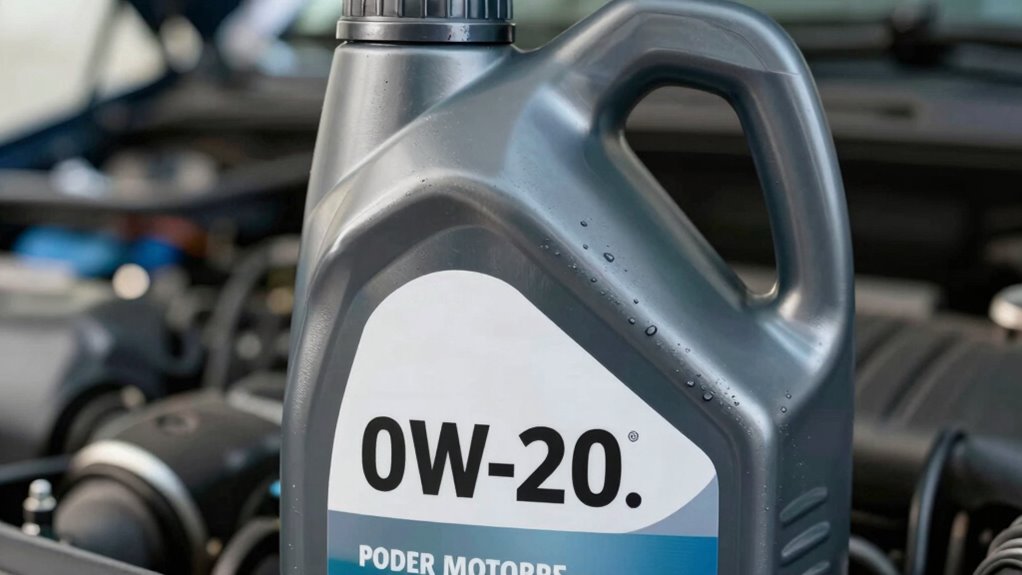
Have you ever wondered what the numbers on your engine oil label mean? These numbers follow the SAE J300 standard, which measures the oil’s viscosity — how thick or thin it is at different temperatures. For example, 0W-20 indicates a low-temperature rating of 0W, meaning it flows easily in cold weather, helping with cold starts. The 20 shows its viscosity at engine operating temperatures, meaning it’s relatively thin, promoting fuel efficiency and modern engine protection. SAE J300 sets specific tests for cold flow and high-temperature flow, ensuring your oil performs reliably across temperature ranges. Additionally, understanding viscosity index modifiers helps you choose the right oil for your climate and driving style, ensuring your engine runs smoothly and efficiently.

VISCOSITY UNITEK MG GASOLINE AND DIESEL ENGINE OIL SAE 30 – Compatible With Tractors, Construction, Industrial, and Off-Highway Equipment – 1 Quart – 74633DX6US
Formulated with high quality base oils and lower ash for older gasoline and diesel engines
As an affiliate, we earn on qualifying purchases.
As an affiliate, we earn on qualifying purchases.
How 0W-20 Viscosity and Standards Affect Cold Starts and Fuel Economy
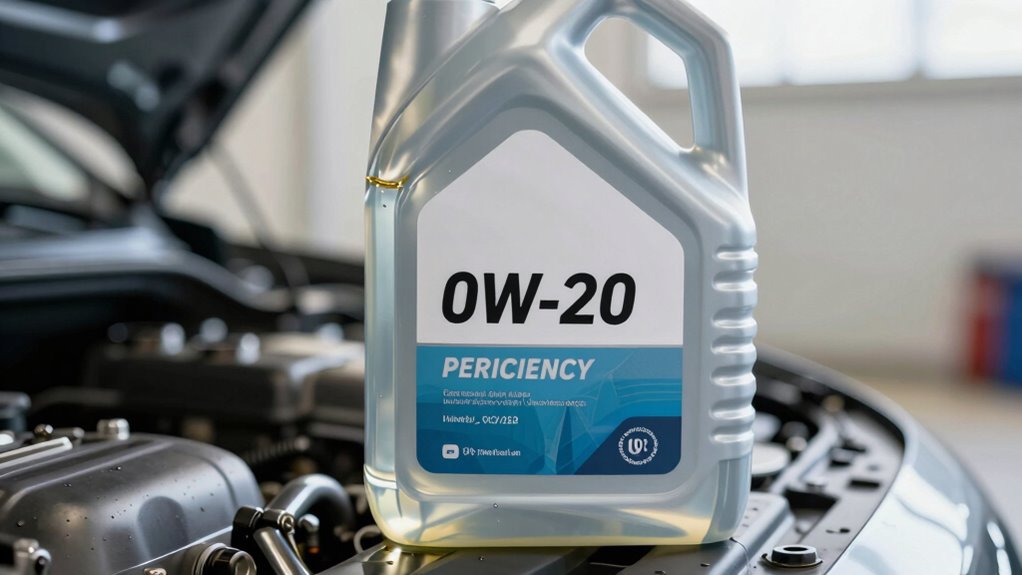
The low-temperature viscosity of 0W-20 oil plays a crucial role in guaranteeing your engine starts quickly and smoothly in cold weather. Because it meets the SAE J300 standards, it flows easily at -35°C, reducing engine strain during cold starts. This improved flow means less wear and quicker lubrication, saving fuel and extending engine life. The standards also guarantee consistent performance across different brands and conditions. Use the table below to understand how viscosity ratings impact cold start and fuel economy: color accuracy and consistent performance are essential for optimal engine operation.

STP Premium Small Engine 4 Cycle Oil Formula, SAE10W-30 Small Engine Oil Engine Care Formula Reduces Wear for Lawnmower, Push Mower, Tractor, 32 Oz, STP
SAE 10W-30 MOTOR OIL FOR SMALL ENGINES: One 32 fl oz bottle of STP Premium Synthetic Blend 4…
As an affiliate, we earn on qualifying purchases.
As an affiliate, we earn on qualifying purchases.
Common Myths About 0W-20 and Engine Protection Debunked
Many myths about 0W-20 oil suggest it offers less engine protection than thicker grades, but these beliefs often overlook how modern formulations are designed to deliver reliable performance. Today’s 0W-20 oils contain advanced viscosity index improvers and additives that maintain film strength and protect engine parts under various conditions. They meet or exceed industry standards like SAE J300, ensuring sufficient flow at cold starts and stability at high temperatures. Concerns about thin oils causing engine wear are outdated; modern engines are built to operate efficiently with low-viscosity oils. In fact, 0W-20 provides excellent protection by reducing friction, improving fuel economy, and maintaining consistent viscosity over time. Viscosity index plays a crucial role in how well the oil performs across temperature ranges, further supporting the reliability of 0W-20. Trust in the technology and standards behind 0W-20, and don’t let myths compromise your engine’s health.
Mobil 1 Advanced Fuel Economy Full Synthetic Motor Oil 0W-20, 5 Quart
Mobil 1 Advanced Fuel Economy full-synthetic motor oil 0W-20 is low-viscosity to help improve fuel economy.*
As an affiliate, we earn on qualifying purchases.
As an affiliate, we earn on qualifying purchases.
Choosing the Right Oil: How SAE J300 Guides Your Decision
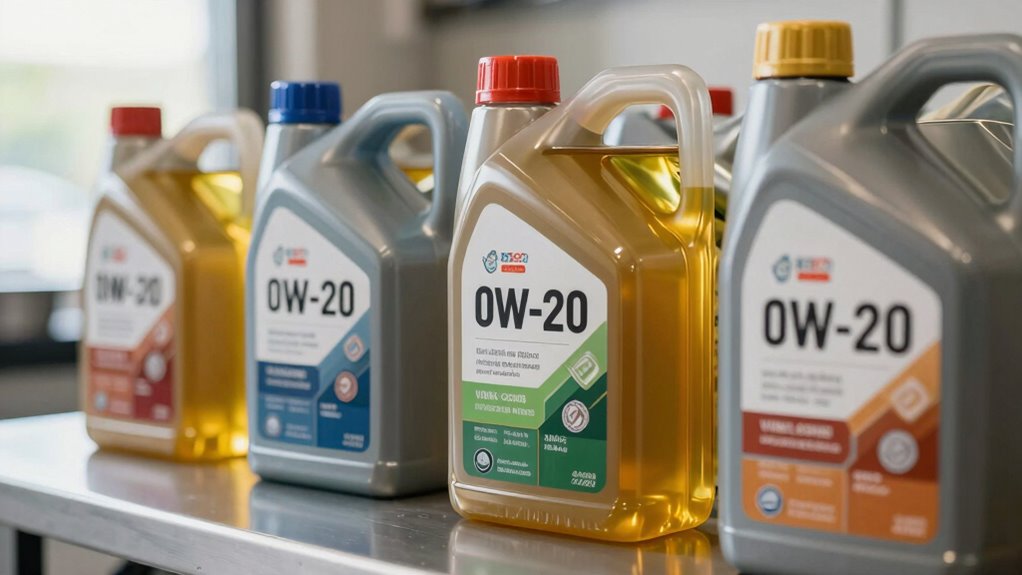
Understanding SAE J300 is essential when choosing the right engine oil because it provides clear guidelines on viscosity grades and performance standards. This standard helps you match your vehicle’s needs with the correct oil type, guaranteeing ideal performance and protection. By knowing the difference between winter grades like 0W and higher viscosity non-winter grades, you can select oils suited for cold climates or high-temperature environments. SAE J300 also considers factors like flow at low temperatures and film strength at high temperatures, guiding you to a suitable choice based on your driving conditions.
SAE J300 guides selecting engine oils based on viscosity and temperature performance standards.
- It guarantees compatibility between oil viscosity and engine design.
- It helps you understand how cold weather impacts oil flow.
- It emphasizes the importance of viscosity stability for engine longevity.
Is 0W-20 Suitable for Your Vehicle? Factors to Consider
Deciding if 0W-20 is right for your vehicle depends on several key factors, including your climate, driving habits, and your engine’s specifications. If you live in colder regions, 0W-20’s excellent cold-start performance helps your engine start quickly and reduces wear. For warmer climates, this oil’s low viscosity offers fuel efficiency benefits, but you need to verify your engine is designed for such thin oil. Check your owner’s manual for manufacturer recommendations; using the wrong oil can impact engine longevity and warranty. Also, consider your driving style—stop-and-go city driving or frequent short trips may require different oil grades. Ultimately, choosing the right oil involves matching SAE J300 specifications with your specific vehicle’s needs and operating conditions.
Frequently Asked Questions
How Does SAE J300 Classify Different Engine Oil Viscosities?
SAE J300 classifies engine oil viscosities based on their flow characteristics at specific temperatures. You’ll find winter grades marked with a “W,” like 0W, indicating cold-start performance, and non-winter grades numbered from 8 to 60, reflecting viscosity at 100°C. Lower numbers mean thinner oil, ideal for cold starts, while higher numbers indicate thicker oil suited for high-temperature protection. This standardized system helps you choose the right oil for your engine’s needs.
Why Are Winter Grades Like 0W-20 Important for Cold Climates?
Imagine your engine waking up on a frigid winter morning, battling ice-cold air and frozen roads. Winter grades like 0W-20 are crucial because they flow easily at extremely low temperatures, ensuring your engine starts smoothly and quickly. They protect essential components from cold-related wear, reduce strain, and help you avoid costly damage. By choosing these oils, you’re giving your engine the warm welcome it needs, even in the harshest winter conditions.
What Tests Determine the Viscosity of 0W-20 Oil?
You determine the viscosity of 0W-20 oil through several key tests. The Cold Cranking Simulator (CCS, ASTM D5293) measures low-temperature flow, guaranteeing easy cold starts. The Mini-Rotary Viscometer (MRV, ASTM D4684) assesses pumping viscosity at low temps. Additionally, the kinematic viscosity at 100°C (ASTM D445 or D7042) checks how the oil flows under normal operating conditions. These tests guarantee the oil meets the viscosity standards for ideal performance.
Can I Switch Between Different SAE J300 Grades Safely?
Switching between SAE J300 grades is like changing gears on a smooth ride—it’s generally safe if your vehicle’s manufacturer approves it. Stick to recommended grades, especially during temperature extremes, to keep your engine humming. Jumping to a much thicker or thinner oil without guidance can cause engine strain or wear. Always check your owner’s manual or consult an expert before making the switch to guarantee your engine stays in perfect harmony.
Does 0W-20 Meet All Manufacturer Engine Requirements?
Yes, 0W-20 generally meets all manufacturer engine requirements if specified in your owner’s manual. It provides excellent cold-start performance and maintains proper viscosity at operating temperatures. However, always double-check your vehicle’s recommended oil grade before switching. Using the right oil guarantees ideal engine protection, fuel efficiency, and performance. If in doubt, consult your manufacturer or a trusted mechanic to confirm that 0W-20 is suitable for your engine.
Conclusion
Understanding SAE J300 and 0W-20 helps you make smarter oil choices for your engine. If you’re worried about cold starts or fuel economy, know that 0W-20 is designed to perform well in those areas. Think of it as a reliable partner that protects your engine without unnecessary fuss. So, don’t let myths hold you back—trust the standards to guide you, and enjoy smoother, more efficient rides every time.