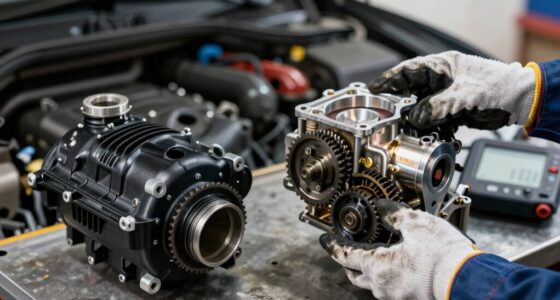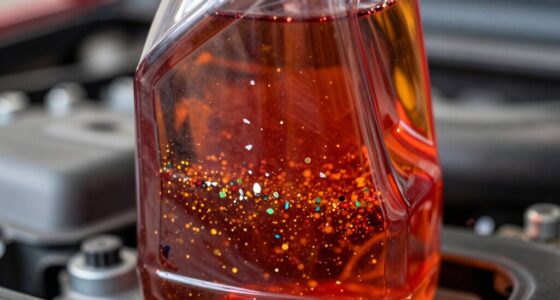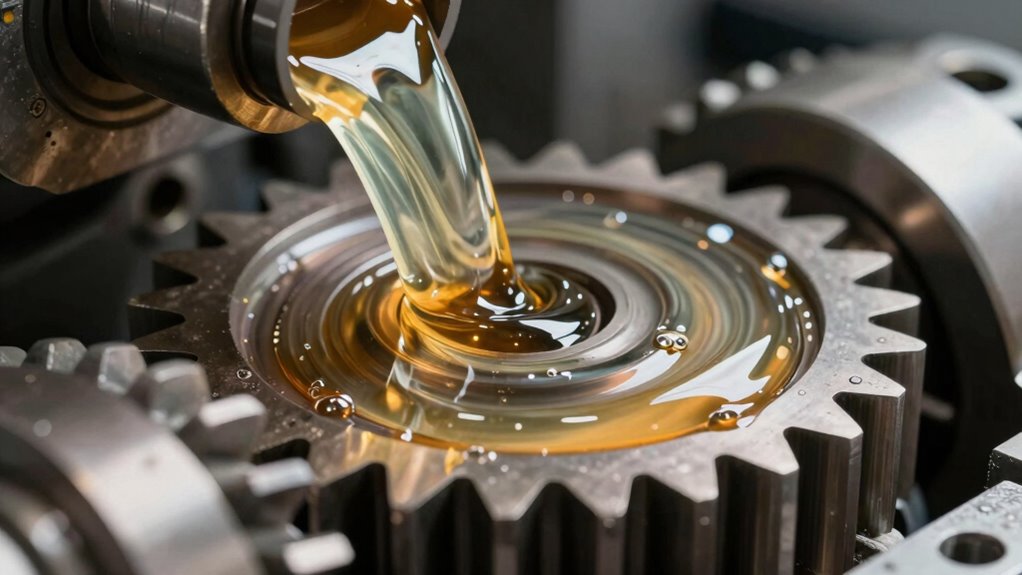

ATF acts as a precise friction fluid, controlling the resistance needed for smooth engagement and disengagement of clutch and brake components in your transmission. Its additives, like friction modifiers, optimize this resistance, ensuring consistent shifting and protecting against wear. Understanding how static and dynamic friction work helps maintain smooth operation and longevity. When friction properties stay stable across temperature and pressure changes, your transmission performs reliably. If you’re curious, exploring how all these parts come together will give you full insight.

Get business pricing on garage and car supplies
- Business-only prices and quantity discounts
- Tax-exempt purchasing
- Multiple users, one account, clear invoices
Key Takeaways
- ATF creates controlled resistance, acting as a friction fluid to enable smooth clutch and brake engagement.
- Friction modifiers in ATF adjust its friction properties for consistent shifting performance.
- Static and dynamic friction levels in ATF influence clutch slip, engagement, and overall transmission smoothness.
- Proper ATF formulation balances viscosity, surface interactions, and additives to optimize torque transfer.
- Maintaining stable friction characteristics in ATF ensures transmission longevity and reliable gear shifts.
automatic transmission fluid with friction modifiers
As an affiliate, we earn on qualifying purchases.
As an affiliate, we earn on qualifying purchases.
How Does ATF Work as a Friction Fluid in Your Transmission?
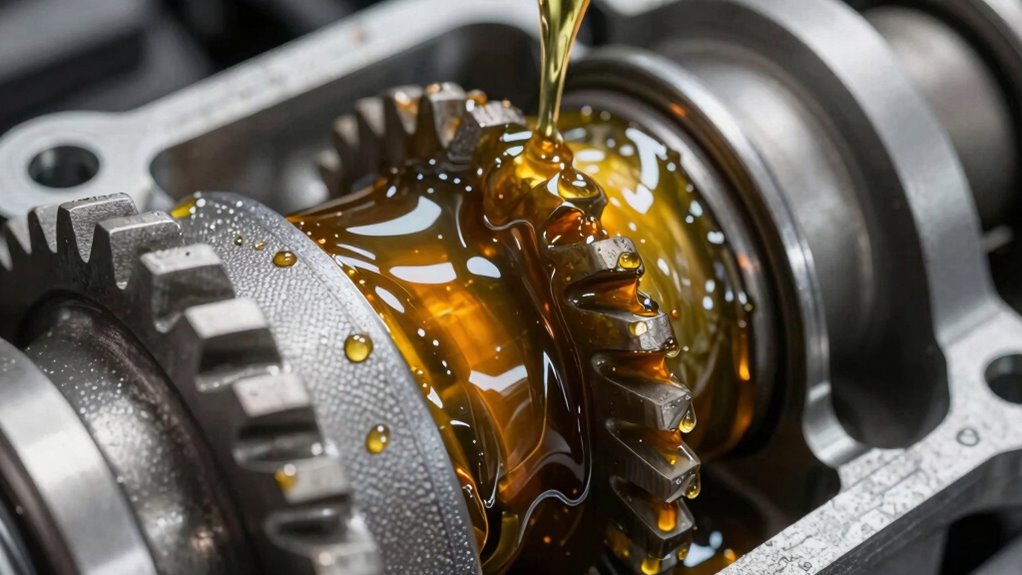
Automatic Transmission Fluid (ATF) works as a friction fluid by creating controlled resistance between moving clutch and brake components, enabling smooth engagement and disengagement. When you shift gears, the ATF forms a thin, lubricating film that separates these parts, allowing them to grip or slip as needed. Its friction properties are carefully balanced to guarantee smooth shifts without slipping or grabbing too hard. The fluid’s additives, like friction modifiers, help maintain consistent resistance, preventing abrupt transitions. As pressure and temperature change during operation, the ATF adjusts its friction characteristics, ensuring reliable performance. This precise control helps your transmission operate smoothly, reducing wear and improving efficiency. Essentially, ATF acts as the medium that manages friction to make your shifting experience seamless. Friction properties are carefully engineered to balance grip and slip, ensuring optimal transmission function.
high performance ATF for smooth shifting
As an affiliate, we earn on qualifying purchases.
As an affiliate, we earn on qualifying purchases.
What Role Do Friction Modifiers and Additives Play in Clutch Performance?
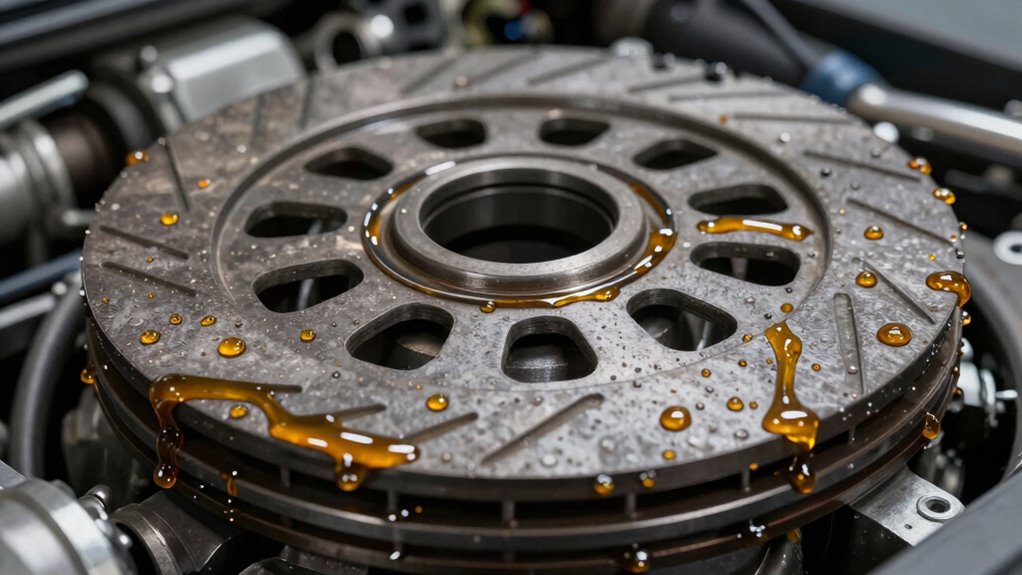
Friction modifiers and additives directly influence how well your clutch performs by adjusting the frictional characteristics of the ATF. They help maintain a consistent coefficient of friction during engagement, ensuring smooth shifts and reliable operation. Friction modifiers reduce internal wear by controlling the amount of friction generated, preventing slipping or grabbing. Additives like antiwear agents and oxidation inhibitors protect the transmission components from premature damage and degradation over time. Viscosity index modifiers keep the fluid’s flow properties stable across temperature extremes, supporting steady clutch engagement. Together, these chemicals fine-tune the balance between static and dynamic friction, improving shift quality, reducing noise, and extending transmission life. Essentially, additives optimize the friction environment where your clutch operates best.
transmission fluid additive for clutch performance
As an affiliate, we earn on qualifying purchases.
As an affiliate, we earn on qualifying purchases.
Understanding Static and Dynamic Friction in Wet Clutches
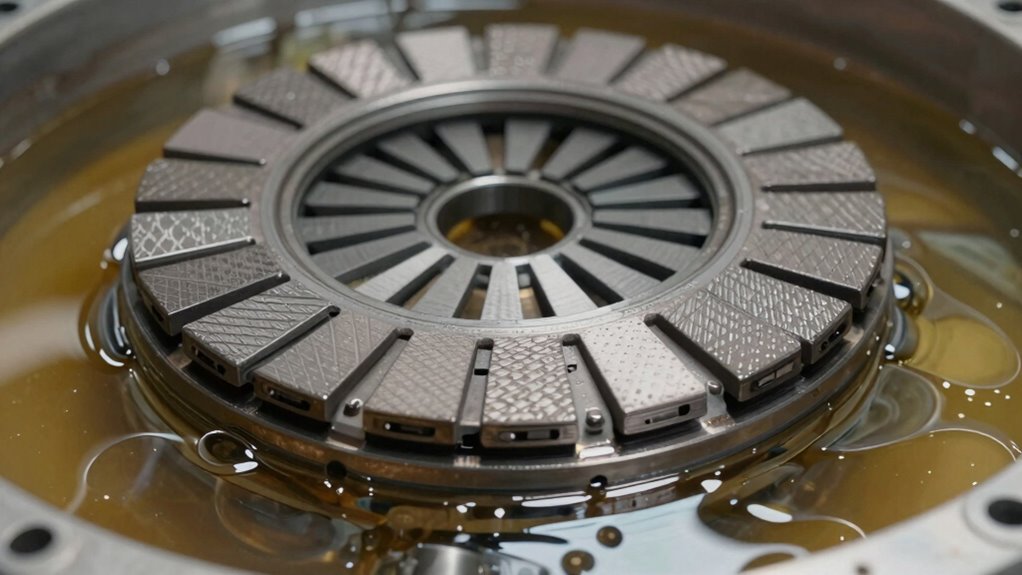
Understanding static and dynamic friction in wet clutches is essential because these forces directly influence how smoothly your transmission engages and disengages. Static friction keeps the clutch discs stationary relative to each other when engaged, providing the holding force necessary for power transfer. Dynamic friction occurs when the clutch slips or moves, creating resistance that controls the rate of engagement or disengagement. Typically, static friction is higher than dynamic friction, which can cause sudden jumps or slip if not properly managed. During clutch operation, factors like temperature, pressure, and fluid properties affect these friction levels. Maintaining the right balance ensures smoother shifts, reduces wear, and prevents harsh engagement or slip. Proper understanding of these forces helps optimize transmission performance and longevity. Additionally, oil properties can significantly influence both static and dynamic friction levels, impacting overall clutch operation.
best ATF for transmission longevity
As an affiliate, we earn on qualifying purchases.
As an affiliate, we earn on qualifying purchases.
Key Design Factors That Influence Friction and Torque Transmission
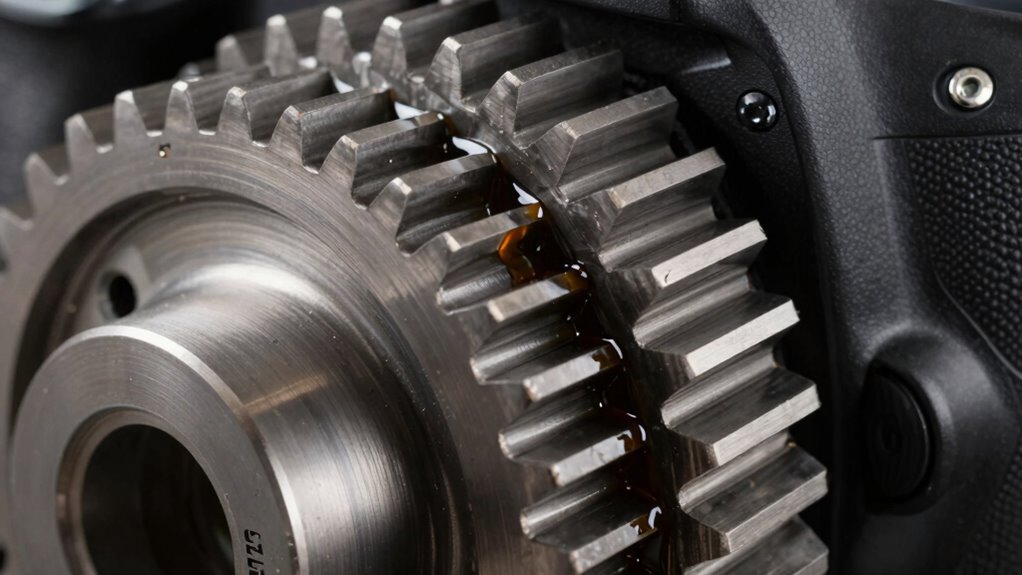
Several key design factors directly impact how effectively friction and torque are transmitted in wet clutch systems. First, the surface texture and grooves on friction materials influence contact area and friction stability, helping control slip behavior. Second, the permeability and elastic modulus of materials determine how well the clutch can handle pressure and load sharing, affecting torque transfer. Third, the viscosity of the ATF plays a vital role in maintaining an ideal fluid film, impacting both hydrodynamic and asperity friction. Additionally, surface roughness can alter the frictional interaction between components, further influencing performance. These factors work together to guarantee consistent engagement and smooth shifting. By optimizing surface design, material properties, and fluid characteristics, you can enhance friction stability, reduce wear, and improve overall transmission performance.
Why Consistent Friction Properties Are Essential for Smooth Shifting and Longevity

Maintaining consistent friction properties in your transmission is essential for achieving smooth shifts and extending component life. When these properties fluctuate, shifts can become jerky or delayed, causing unnecessary wear and tear. Stable friction ensures that clutch packs engage and disengage predictably, reducing stress on transmission parts. Variations in friction can lead to increased heat, premature wear, and even failure. Friction modifiers in ATF help maintain this consistency across different temperatures and operating conditions. Without stable friction, your transmission struggles to operate smoothly, and its lifespan shortens. Friction stability is crucial for optimal transmission performance in various driving scenarios. Consistent friction properties enable precise control during shifting, ensuring longevity and reliable performance. In short, stable friction is the foundation for smooth, efficient, and durable transmission operation.
Frequently Asked Questions
How Does Temperature Variation Affect Atf’s Friction Characteristics?
Temperature variation impacts ATF’s friction characteristics substantially. As temperature increases, the fluid’s viscosity decreases, leading to thinner fluid films that reduce friction. Conversely, lower temperatures make the ATF thicker, increasing friction and potentially causing sluggish shifts. You should monitor temperature changes during operation because they influence clutch engagement smoothness, wear, and overall transmission performance. Proper formulation with viscosity index modifiers helps maintain more consistent friction behavior across temperature ranges.
Can Atf’s Friction Properties Change Over Its Service Life?
Think of your ATF as a finely tuned orchestra that evolves over time. As it ages, its friction properties can change, becoming less stable and affecting shift quality. Additives may break down, viscosity shifts, and contamination can alter its performance. This dynamic process is like a river changing course—your ATF’s friction characteristics can weaken or fluctuate, so regular monitoring and timely fluid changes are essential to maintain smooth, reliable operation.
What Impact Do Different Friction Modifiers Have on Shift Feel?
Different friction modifiers directly influence your shift feel by altering the coefficient of friction during clutch engagement. If they increase friction, shifts become smoother and more predictable, reducing slipping. Conversely, if they decrease friction, shifts might feel softer or less responsive, potentially causing slippage. Adjusting these additives helps tune the transmission’s feel, ensuring smoother, more consistent gear changes tailored to your driving style and transmission design.
How Do Material Compatibility Issues Influence Friction Performance?
If your transmission’s materials aren’t compatible with the ATF, you might notice increased wear or slipping. For example, using an incompatible additive could cause rubber seals to swell or degrade, leading to leaks and poor friction performance. You need to verify the fluid’s chemistry matches the materials in your clutch and seals. Proper compatibility maintains consistent friction, reduces damage, and ensures smooth shifting and long-term transmission health.
Is There an Optimal Viscosity Level for Maximizing Friction Stability?
You should aim for an ideal viscosity level that balances fluid film thickness and friction stability. If the viscosity is too low, the fluid may not maintain a consistent film, leading to slipping. Too high, and it can cause excessive drag and wear. Generally, a viscosity index that remains stable across temperature changes ensures reliable friction performance, providing smooth shifts and reducing wear in your transmission system.
Conclusion
Understanding how ATF works as a friction fluid helps you appreciate its vital role in your transmission’s performance. Did you know that proper friction management can improve shifting smoothness and extend transmission life by up to 50%? By choosing the right fluid with effective friction modifiers, you guarantee consistent performance and reduce wear. Staying informed about these concepts keeps your vehicle running smoothly and saves you money on repairs over time.
Halloween Picks
halloween
As an affiliate, we earn on qualifying purchases.