
Using a ‘universal’ CVT fluid might seem convenient, but it’s a risky move. These fluids often lack the specific chemistry needed for your transmission’s unique design, which can cause slipping, excessive heat, and component wear over time. Not all CVTs are the same, so choosing the right fluid matters. Stick around to discover why OEM-recommended fluids are your safest bet for long-term transmission health.
Key Takeaways
- Universal CVT fluids lack the precise formulations needed for specific transmission designs, risking slip and component wear.
- Using ‘universal’ fluids can cause incompatibility issues, leading to overheating and early transmission failure.
- OEM-recommended fluids are tailored for specific friction, anti-wear, and shear stability requirements, unlike generic options.
- Low-quality or incorrect fluids accelerate internal damage, varnish buildup, and reduce transmission lifespan.
- Relying on ‘universal’ fluids ignores manufacturer specs, increasing long-term repair costs and risking transmission failure.

Fuel Injector Cleaner Machine 4-Cylinder Ultrasonic Injector Cleaner Tester Machine 110V, Heated Cleaning Car/Motorcycle Injectors Tester with 4 Test Functions & 9 Test Modes, 1600ml Cleaning Tank
【Powerful Cleaning & Heated Fluid】This fuel injector tester utilizes ultrasonic technology to generate powerful vibrations that effectively remove...
As an affiliate, we earn on qualifying purchases.
Are ‘Universal’ CVT Fluids Safe or Just a Myth?
Are ‘universal’ CVT fluids truly safe to use across different transmission types, or is this just a myth? You might think that one fluid can work for all CVTs, but that’s risky. These fluids are designed with specific formulations tailored to unique transmission mechanisms. CVTs rely on belt or chain-driven systems that need specialized friction properties, anti-wear additives, and shear-stable viscosity. Using a generic multi-vehicle fluid can cause slip, increased wear, and even premature failure. For example, some universal fluids may appear compatible but lack the precise chemistry required for Japanese or hybrid CVTs. Always check your vehicle’s manufacturer specs before choosing a fluid. Relying on a “universal” product can compromise your transmission’s health and longevity. Understanding transmission compatibility is crucial to ensure your vehicle’s optimal performance and durability.

MR CARTOOL V308 Injector Cleaner Machine 4-Cylinder, 110V Injector Cleaner Tester Machine Heated Ultrasonic Fuel System Injection Cleaning Kit for Diesel Gasoline Car Motorcycle
[ULTRASONIC INJECTOR CLEANER AND TESTER ] V308 can be used for cleaning and testing four injectors at the...
As an affiliate, we earn on qualifying purchases.
How Do CVT Transmission Systems Differ From Standard Automatic Transmissions?
Unlike traditional automatic transmissions that use a fixed set of gear ratios and planetary gear sets, CVT systems operate on a different principle altogether. Instead of shifting gears, CVTs use a belt or chain driving pulleys to vary the gear ratio seamlessly. This allows for smoother acceleration and better fuel economy. The key difference lies in how power is transferred: CVTs rely on pulley systems and variable diameters, whereas automatic transmissions use multiple gears and planetary gear sets. Here’s a quick comparison:
| Feature | CVT System | Standard Automatic Transmission |
|---|---|---|
| Gear Ratios | Infinite variability | Fixed set of gears |
| Power Transfer | Belt/chain-driven pulleys | Planetary gear sets |
| Shift Feel | Seamless, no shift points | Discrete, gear shifts |

AUTOOL Fuel Injector Cleaner and Tester Machine, Ultrasonic Fuel Injection Cleaner for All 6 Cylinder Petrol Vehicles, GDI, EFI, FSI Fuel Injection Systems Cleaner Kit 12V/70V/220V
【Ultrasonic Injector Cleaning】The fuel injector cleaner machine can be used to clean single or multiple injectors simultaneously with...
As an affiliate, we earn on qualifying purchases.
Can Using the Wrong CVT Fluid Damage Your Transmission?
Using the wrong CVT fluid can cause compatibility issues that damage your transmission. Poor fluid choices may lead to premature wear, friction problems, and even long-term failure. Selecting the right fluid is essential to protect your transmission’s health and ensure reliable performance. Additionally, choosing a fluid that matches your vehicle’s specifications helps maintain optimal transmission efficiency and prevents costly repairs.
Fluid Compatibility Risks
Ever wonder if the wrong CVT fluid can cause serious damage to your transmission? Using incompatible fluids risks damaging critical components. For example, universal or multi-vehicle fluids often lack the specific friction modifiers and anti-wear additives your transmission needs. They may drift friction stability, leading to belt slippage or sluggish engagement. Thin or oxidized fluids can cause overheating and varnish buildup, reducing efficiency and increasing wear. Some fluids aren’t designed for the unique mechanisms of CVTs, especially eCVTs and chain-driven types, risking premature failure. Even slight mismatches in viscosity or additive formulations can lead to increased friction, heat, and component stress. Always verify that your fluid meets your vehicle’s OEM specifications to guarantee proper protection and long-lasting performance.
Premature Wear and Damage
Choosing the wrong CVT fluid can lead to serious transmission issues over time. Using an incompatible fluid, like a universal or low-quality option, can cause increased friction, inadequate lubrication, and premature wear of essential components. When friction modifiers aren’t calibrated for your specific transmission, clutch packs and belts can experience excessive heat and degradation. Over time, this accelerates part wear and risks costly failures. Shear instability from inferior fluids reduces viscosity, leading to metal-on-metal contact and increased stress on internal parts. Even short-term use of improper fluids can compromise your transmission’s integrity, diminishing its lifespan. To prevent premature wear, always use a fluid that meets your vehicle manufacturer’s specifications and avoid generic alternatives that lack specialized additives designed for your CVT system.
Long-term Transmission Failure
Incorrect CVT fluid can cause long-term damage by accelerating wear and degrading critical components. Over time, using the wrong fluid leads to insufficient lubrication, increased friction, and premature belt or chain failure. Cheap or incompatible fluids lack proper shear stability and thermal resistance, causing varnish buildup and varnish deposits that impair operation. This deterioration can result in slipping, overheating, and eventual transmission failure. Extended use of subpar fluids compounds damage, making repairs costly or impossible. Additionally, calibration plays a vital role in maintaining optimal transmission performance and longevity. Regularly changing the correct fluid at recommended intervals prevents buildup and maintains proper friction and heat management. Ensuring you use OEM-approved or high-quality synthetic CVT fluid tailored for your vehicle’s transmission system is essential for long-term durability and avoiding catastrophic failure.

BELEY Injector Cleaner Machine V308 Heated Ultrasonic Fuel Injection Systems Cleaners 4-Cylinder 110V for Gasoline Diesel,Motorcycle
[ULTRASONIC CLEANING WITH HEATING FUNCTION]Unlike other products on the market, both the V308 and CT160 come equipped with...
As an affiliate, we earn on qualifying purchases.
Why Is It Better to Use OEM-Recommended CVT Fluids?
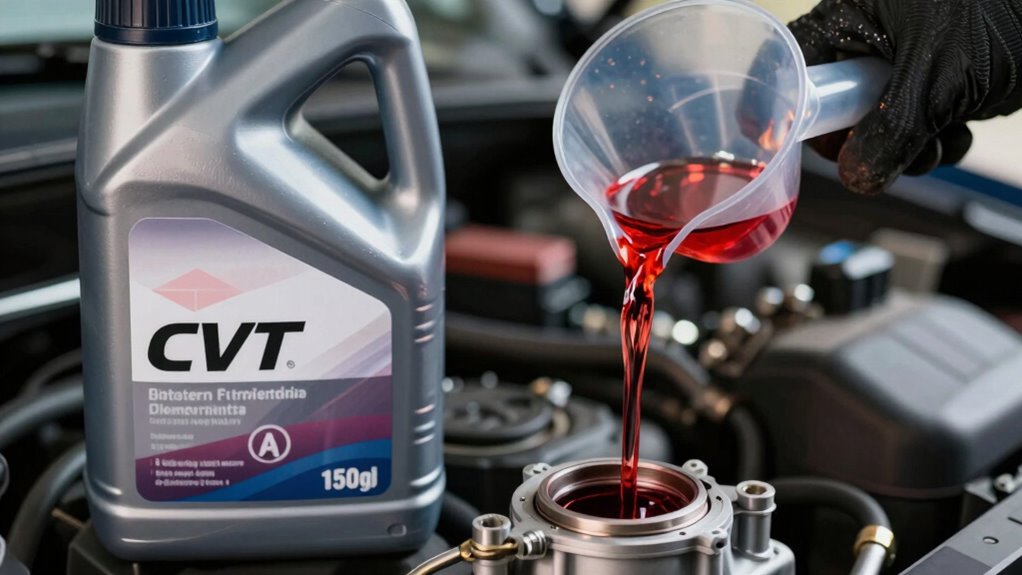
Using OEM-recommended CVT fluids guarantees your transmission operates as designed, maintaining peak performance and longevity. These fluids are formulated specifically for your vehicle’s transmission system, ensuring proper lubrication, friction stability, and heat resistance. Using the right fluid prevents slipping, reduces wear, and minimizes the risk of costly repairs. Proper product compatibility with your transmission’s belt and chain systems is essential for optimal operation. Choosing OEM fluids provides peace of mind, knowing your transmission’s unique needs are met, and helps avoid issues caused by generic or mismatched alternatives. Always follow your vehicle manufacturer’s recommendations for the best results.
How Do You Know Which CVT Fluid Is Right for Your Vehicle?
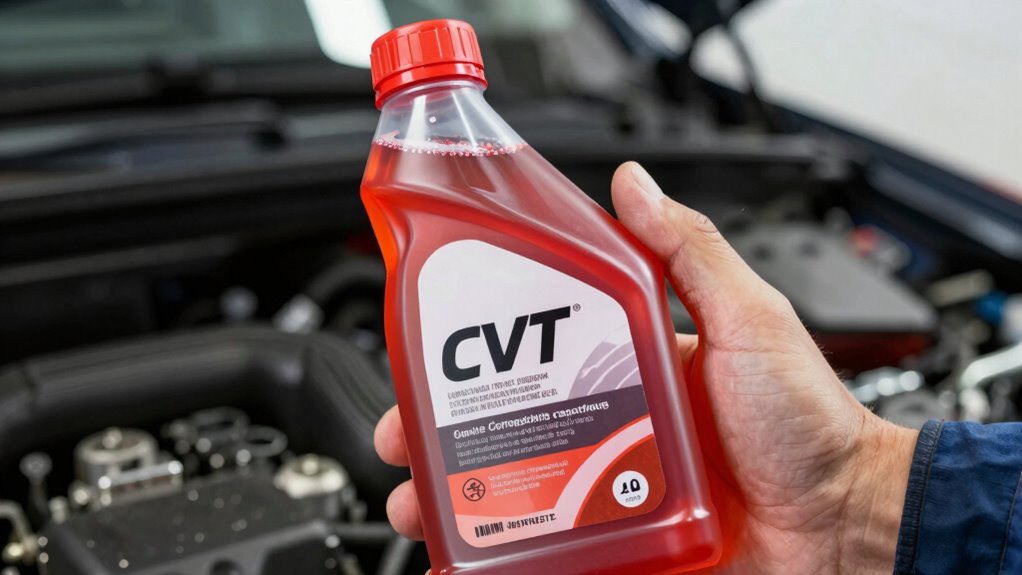
Finding the right CVT fluid for your vehicle starts with understanding its specific requirements. Check your owner’s manual for OEM specifications, as different models need tailored fluids. Avoid universal or multi-vehicle fluids, which often lack the stability and protection your transmission needs. Instead, select fluids tested for high-performance, heat resistance, and compatibility with your transmission type.
Using an incorrect fluid can compromise your smart lock system or other security gear, highlighting the importance of proper selection.
What Are the Long-Term Risks of Using Inappropriate CVT Fluids?
Using the wrong CVT fluid can cause increased component wear over time, leading to premature failures. This not only shortens your transmission’s lifespan but also results in higher repair costs down the line. Choosing the proper fluid is essential to protect your vehicle’s long-term health. Additionally, understanding the importance of Free Floating and its impact on transmission systems can help prevent costly mistakes.
Increased Component Wear
Inappropriate CVT fluids can accelerate component wear, leading to costly repairs and reduced transmission lifespan. When the fluid isn’t formulated for your specific system, friction modifiers and anti-wear additives may break down faster, causing metal-on-metal contact. This increases heat and friction, damaging belts, pulleys, and chains. Using a universal or low-quality fluid risks instability under thermal stress, which further wears parts prematurely. Over time, your transmission’s internal components become damaged, decreasing efficiency and risking complete failure.
- Premature belt and chain wear
- Increased friction causing heat buildup
- Faster breakdown of friction modifiers
- Damage to pulleys and rollers
- Higher risk of internal component corrosion
Reduced Transmission Lifespan
When your CVT fluid isn’t formulated for your specific transmission system, it can substantially shorten its lifespan. Inappropriate fluids may lack the right shear stability, friction modifiers, or anti-wear additives your transmission needs. Over time, this leads to increased wear on belts, chains, and internal components, accelerating deterioration. Poor-quality or mismatched fluids can cause overheating, varnish buildup, and friction drift, all of which compromise the transmission’s health. As a result, you’ll likely experience reduced reliability and a higher risk of early failure. The long-term consequence is a shortened transmission lifespan, forcing costly repairs or replacements much sooner than expected. Using the right OEM-specified CVT fluid is essential to preserve your transmission’s longevity and maintain optimal performance over time.
Higher Repair Costs
Choosing the wrong CVT fluid can lead to significant long-term repair costs because it accelerates internal wear and causes component failure. When incompatible fluids are used, they can damage the delicate belt and pulley system, leading to costly repairs or replacements. Poor fluid performance increases friction, generates excessive heat, and degrades internal parts faster. Over time, this results in transmission slipping, shuddering, and complete failure, forcing you to replace major components.
- Premature belt or chain failure
- Increased friction causing overheating
- Damage to wet clutches and valves
- Accelerated wear on pulleys and rollers
- Higher likelihood of complete transmission overhaul
Frequently Asked Questions
Can a CVT Fluid Be Used in Traditional Automatic Transmissions Safely?
No, you shouldn’t use CVT fluid in traditional automatic transmissions because they require different formulations. CVT fluids are designed specifically for belt or chain-driven systems with unique friction and shear characteristics. Using CVT fluid in a standard automatic can cause slipping, poor shifting, or damage. Always follow your vehicle manufacturer’s recommendations and select the correct transmission fluid for your transmission type to guarantee the best performance and longevity.
How Often Should CVT Fluid Be Changed for Optimal Transmission Health?
You should change your CVT fluid every 30,000 to 40,000 miles if you want it to last longer than a fruit fly’s lifespan. Surprising, isn’t it? Even with OEM recommendations stretching to 60,000 or more, harsher conditions like heat and dust demand more frequent changes. Regular maintenance maintains the transmission smooth, prevents costly repairs, and ensures your vehicle keeps shifting effortlessly—because ignoring it is the real risk.
Are Synthetic CVT Fluids More Effective Than Conventional Ones?
Synthetic CVT fluids are more effective than conventional ones because they offer better thermal stability, shear resistance, and longevity. You’ll notice improved torque transfer, reduced friction, and less wear on your transmission components. They perform better under high temperatures and demanding driving conditions, meaning your CVT lasts longer and maintains peak performance. Investing in synthetic fluid helps prevent breakdowns, extends service intervals, and keeps your transmission healthier over time.
What Signs Indicate CVT Fluid Degradation or Failure?
You’ll notice slipping, rough or delayed shifting, and overheating signs that indicate CVT fluid degradation. If the transmission becomes noisy or jerky, or if you see a burning smell, these are warning signs. Dark, burnt-smelling fluid or metal shavings on the dipstick also suggest the fluid’s lost its lubricating and protective qualities. Regularly check fluid condition and replace it at recommended intervals to prevent failure.
Is It Possible to Upgrade CVT Fluid for Better Performance?
Yes, you can upgrade your CVT fluid for better performance, but only if you choose a compatible, high-quality synthetic fluid designed for your specific transmission. Avoid generic or universal options, as they may not meet OEM standards and could cause damage. Always check your vehicle’s manual or consult a professional to guarantee the fluid you select offers improved lubrication, heat resistance, and longevity without risking system failure.
Conclusion
Choosing the right CVT fluid isn’t just about following labels; it’s about protecting your transmission’s future. While “universal” fluids might seem convenient, they often overlook the unique needs of your vehicle. Skimping on proper fluid can lead to costly repairs, just like ignoring regular maintenance. Remember, investing in OEM-recommended fluids may seem like an extra step, but it’s your best safeguard against long-term damage—because your car deserves the best, not just what’s “good enough.”