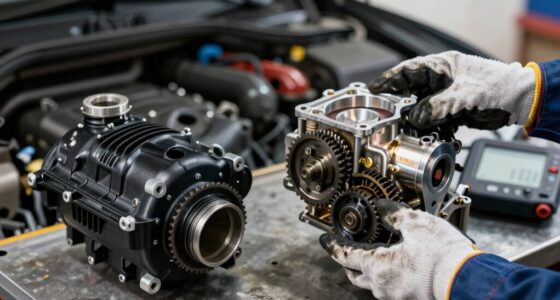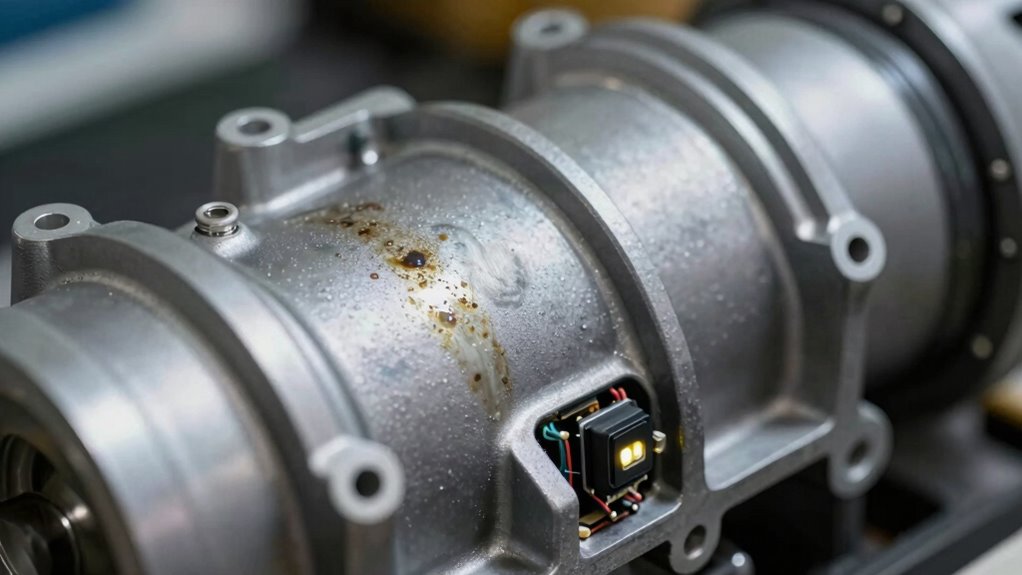

The key sensor that predicts CVT overheating early is the transmission fluid temperature sensor. When this sensor detects temperatures above the recommended threshold, it signals potential cooling system issues or fluid breakdown, which can lead to slipping, delay in acceleration, or even component damage. Monitoring this sensor regularly helps you catch overheating before it causes costly repairs. Keep reading to discover how to interpret these signals and protect your CVT from imminent failure.

Get business pricing on garage and car supplies
- Business-only prices and quantity discounts
- Tax-exempt purchasing
- Multiple users, one account, clear invoices
Key Takeaways
- Transmission temperature sensors monitor real-time heat levels, alerting to potential overheating before damage occurs.
- Elevated sensor readings above manufacturer-specific thresholds indicate increased risk of CVT failure.
- Consistently high temperature data can reveal cooling system issues or fluid degradation early.
- Accurate sensor readings enable preemptive maintenance, preventing costly CVT repairs or replacements.
- Regularly checking transmission temperature sensor data helps identify problems before symptoms like slipping or burning smells appear.
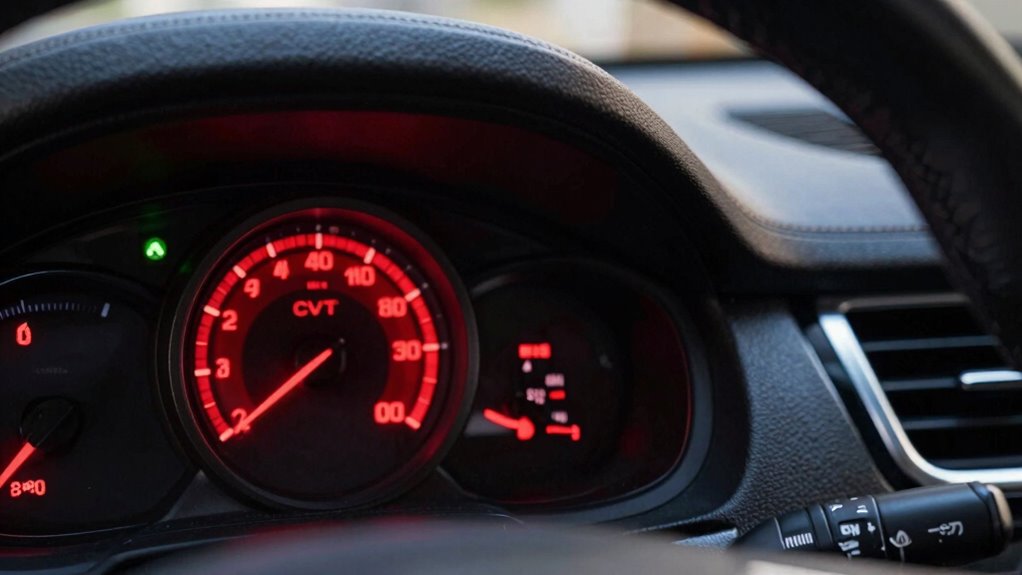
If your CVT begins to overheat, you’ll notice it can cause slipping, delayed acceleration, or even a burning smell. These are clear signs that your transmission is under stress, and ignoring them could lead to costly repairs. One of the key factors in preventing overheating is understanding the role of transmission fluid and the cooling system. Transmission fluid acts as both a lubricant and a coolant, helping to dissipate heat generated during operation. When the fluid becomes old, contaminated, or low, it loses its ability to transfer heat effectively, increasing the risk of overheating. Regularly checking your transmission fluid level and quality is essential. If you notice the fluid is dark, burnt smelling, or has debris, it’s time for a fluid change. Maintaining proper fluid levels ensures your cooling system can do its job, preventing excess heat buildup.
Your cooling system is designed to regulate the temperature of your CVT, but it can fail or become less efficient over time. This system includes a radiator, cooling fan, and sometimes a transmission fluid cooler. If any component malfunctions, your transmission will be more prone to overheating. For instance, a faulty cooling fan won’t circulate air effectively, allowing heat to build up. Blockages or leaks in the radiator can also impair heat dissipation, leading to higher transmission temperatures. Regular inspections and maintenance are crucial—especially if you notice your vehicle’s temperature gauge rising or if your transmission feels abnormally hot after driving. Additionally, monitoring a specific sensor reading can help you catch overheating issues early. Many modern vehicles are equipped with temperature sensors that provide real-time data on transmission temperature. If this sensor reports temperatures above the recommended threshold, it’s a clear warning sign that your cooling system isn’t functioning properly or that your transmission fluid needs attention. Ignoring these signals can result in severe damage, such as belt or chain failure within the CVT, which can be expensive to repair or replace. Understanding the importance of transmission sensor readings can significantly improve your vehicle’s maintenance routine and help prevent costly repairs.
transmission fluid temperature sensor
As an affiliate, we earn on qualifying purchases.
As an affiliate, we earn on qualifying purchases.
Frequently Asked Questions
Can a Faulty Sensor Cause False Overheating Alerts?
Yes, a faulty sensor can cause false overheating alerts. When the sensor’s calibration is off, it may send incorrect signals to the warning system, making it think the CVT is overheating even when it’s not. Regularly checking and calibrating your sensor guarantees accurate readings, reducing false alarms. If you get a suspicious alert, have the sensor inspected quickly to prevent unnecessary repairs or overlooked real issues.
How Often Should I Check the Sensor Readings?
You should check your sensor readings regularly, ideally every few months, to catch issues early. Use diagnostic tools to monitor sensor performance and identify anomalies. Regular sensor maintenance helps guarantee accurate readings, preventing false alarms or overlooked problems. If you notice inconsistent data, it’s time for a thorough inspection or sensor replacement. Staying proactive with these checks boosts your vehicle’s reliability and prevents costly repairs down the line.
Are There Specific Driving Conditions That Increase CVT Overheating Risk?
Ever wonder if your driving habits can turn up the heat on your CVT? Heavy stop-and-go traffic, aggressive acceleration, and towing in hot weather all increase overheating risk. When you push your transmission to its limits, especially in extreme weather conditions, you’re more likely to stress the cooling system. To avoid trouble, drive smoothly, maintain your vehicle, and be mindful of weather conditions that can elevate temperatures.
What Is the Typical Lifespan of the CVT Sensor?
The typical lifespan of the CVT sensor is around 60,000 to 100,000 miles, but it varies based on driving conditions. You might need sensor replacement sooner if you frequently drive in harsh environments or under heavy loads. Regular maintenance and monitoring sensor performance help you estimate its lifespan and catch issues early. Keep an eye on warning signs, so you can replace the sensor before costly failures occur.
Can Software Updates Improve Sensor Accuracy and Prevent Failures?
Think of software updates as a tune-up for your sensor’s accuracy—like sharpening a blade. Yes, they can enhance sensor calibration through software enhancements, making readings more precise. Regular updates act as a safeguard, catching potential failures early and keeping your CVT running smoothly. By staying current, you make certain that your vehicle’s brain stays sharp, helping prevent overheating and costly repairs down the road.
As an affiliate, we earn on qualifying purchases.
Conclusion
Remember, that single sensor reading acts like a heartbeat signaling your transmission’s health. Ignoring it is like silencing a warning bell that could save your journey. When you heed its message early, you’re steering clear of the storm before it hits. Keep an eye on those signals—they’re the compass guiding you safely through potential overheating. Trust in this silent sentinel; it’s the steady rhythm that keeps your transmission alive and your drive smooth.
As an affiliate, we earn on qualifying purchases.
vehicle cooling system maintenance kit
As an affiliate, we earn on qualifying purchases.
As an affiliate, we earn on qualifying purchases.
Fall Picks
fall essentials
As an affiliate, we earn on qualifying purchases.