
For most buyers, I’d start with the GUTA GT80: its 10 flow-through sensors are suited to multi-tire RV setups, and the design lets you check pressure without removing each sensor. The Tymate TM8 is a simpler four-sensor option, while the GUTA GT60 suits drivers who want a larger display and coverage for more tires. The main tradeoffs are sensor count, ease of checking or adjusting tire pressure, display complexity, and whether the system fits your vehicle and wheel setup. A compact four-sensor kit may be plenty for a passenger vehicle, while an RV or trailer can need more sensors and broader coverage. Read on for the full breakdown of all 11 automotive tire pressure monitoring systems and how I’d match them to different needs.

Get business pricing on garage and car supplies
- Business-only prices and quantity discounts
- Tax-exempt purchasing
- Multiple users, one account, clear invoices
Complete the kit


Key Takeaways
- Multi-tire RVs favor the GUTA GT80 and GT20: Both use 10 flow-through sensors, which can cover larger setups and simplify pressure checks compared with ordinary cap-style sensors.
- The GUTA GT60 is the standout for display-focused buyers: Its 12 sensors and 7-inch color LCD prioritize broad coverage and a larger viewing area, but that setup may be more than a four-tire vehicle needs.
- Four-sensor kits are the practical starting point for simpler vehicles: The Tymate TM8, TM2, TM7, Masoll M13, and VAOYAO TY001 avoid the extra sensor count of the RV-oriented systems.
- Power and display choices shape everyday convenience: Solar charging appears in the AOVSTOXIC and VAOYAO systems, while the GT60’s large screen favors visibility over a compact installation.
- Sensor count alone does not determine fit: Buyers should match the kit to the number of monitored tires, wheel access, sensor type, and vehicle layout before choosing between these models.
| AOVSTOXIC Tire Pressure Monitoring System with 6 Sensors and Solar Charging |  | Best for Six-Wheel Vehicles | Sensor count: 6 external sensors | Pressure range: 0–99 PSI | Pressure accuracy: ±1.5 PSI | VIEW LATEST PRICE | See Our Full Breakdown |
| Bluetooth Tire Pressure Monitoring System with 4 External Sensors |  | Best Smartphone-Based Pick | Brand: Hyphoon | Part number: M04 | Sensors: 4 external screw-on sensors | VIEW LATEST PRICE | See Our Full Breakdown |
| Tymate TM8 RV Tire Pressure Monitoring System with 4 Sensors |  | Best for Compact RV Setups | Sensors included: 4 | Tire capacity: Up to 4 tires | Pressure range: 0–87 PSI | VIEW LATEST PRICE | See Our Full Breakdown |
| Tymate TM2 RV Tire Pressure Monitoring System with 4 Sensors |  | Best Expandable System for Growing RV Setups | Model: TM2 | Included sensors: 4 external sensors | Maximum tires monitored: 10 | VIEW LATEST PRICE | See Our Full Breakdown |
| GUTA GT80 RV Tire Pressure Monitoring System with 10 Flow-Through Sensors | 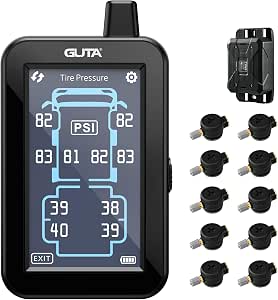 | Best for High-Capacity RV Monitoring | Model: GT80 | Sensors included: 10 flow-through sensors | Maximum monitored tires: 22 | VIEW LATEST PRICE | See Our Full Breakdown |
| GUTA GT20 RV Tire Pressure Monitoring System with 10 Flow-Through Sensors |  | Best for Frequent Tire Inflation | Sensors included: 10 flow-through sensors | Maximum tires monitored: 24 | Pressure range: 0–188 PSI | VIEW LATEST PRICE | See Our Full Breakdown |
| Tirpresmos TY09 Wireless Tire Pressure Monitoring System | 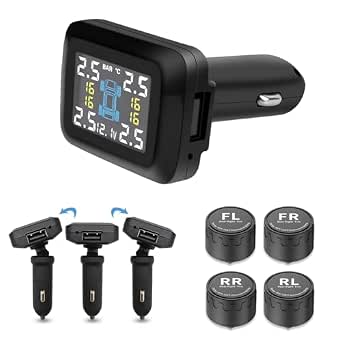 | Best for Everyday Cars | Pressure measuring range: 7–87 PSI | Advertised pressure range: 0–98 PSI | Sensing distance: 19.7 feet | VIEW LATEST PRICE | See Our Full Breakdown |
| Masoll M13 Tire Pressure Monitoring System with 4 Sensors |  | Best Solar-Powered Four-Tire Pick | Sensors: 4 | Pressure detection range: 0–87 PSI | Pressure accuracy: 1.5 PSI | VIEW LATEST PRICE | See Our Full Breakdown |
| GUTA GT60 RV Tire Pressure Monitoring System with 12 Sensors and 7-Inch Color LCD |  | Best Large-Display RV System | Sensors included: 12 | Maximum tires monitored: 16, including 2 spares | Pressure range: 0–188 PSI | VIEW LATEST PRICE | See Our Full Breakdown |
| Tymate TM7 RV Tire Pressure Monitoring System with 4 Sensors |  | Best for Quick, Simple Setup | Sensors: 4 | Pressure range: 0–144 PSI | Pressure accuracy: ±1.5 PSI | VIEW LATEST PRICE | See Our Full Breakdown |
| VAOYAO TY001 Solar Tire Pressure Monitoring System with 4 External Sensors |  | Best for Socket-Free Charging | Brand and model: VAOYAO TY001 | Sensors: 4 external cap sensors | Display: Backlit LCD | VIEW LATEST PRICE | See Our Full Breakdown |
| automotive tire pressure monitoring system | Pressure range | Display | Charging |
|---|---|---|---|
| AOVSTOXIC Tire Pressure Monito | 0–99 PSI | — | Solar and USB |
| Bluetooth Tire Pressure Monito | — | — | — |
| Tymate TM8 RV Tire Pressure Mo | 0–87 PSI | — | Solar, USB, or cigarette lighter; adapter not included |
| Tymate TM2 RV Tire Pressure Mo | 0–87 PSI | Color LCD with automatic backlight adjustment | Solar, USB, or cigarette-lighter socket |
| GUTA GT80 RV Tire Pressure Mon | 0–188 PSI | Color touchscreen | — |
| GUTA GT20 RV Tire Pressure Mon | 0–188 PSI | Color LCD | — |
| Tirpresmos TY09 Wireless Tire | — | — | — |
| Masoll M13 Tire Pressure Monit | — | Color LCD with automatic backlight | Solar |
| GUTA GT60 RV Tire Pressure Mon | 0–188 PSI | 7-inch full-color LCD | Solar panel and USB-C |
| Tymate TM7 RV Tire Pressure Mo | 0–144 PSI | Color LCD with adjustable backlight | — |
| VAOYAO TY001 Solar Tire Pressu | — | Backlit LCD | Solar or USB |
More Details on Our Top Picks
AOVSTOXIC Tire Pressure Monitoring System with 6 Sensors and Solar Charging
The AOVSTOXIC stands apart from the four-sensor Tymate TM8 by covering six tires out of the box, which better suits vehicles with a dual-rear-wheel setup. Its monitor tracks pressure and temperature and provides six types of alerts, including warnings for fast air loss, so drivers can respond to a developing problem rather than relying on occasional manual checks. Solar and USB-C charging give the display more than one way to stay powered, while the IPX7-rated external sensors are designed for water exposure. The tradeoff is fit: the stated 7-meter effective range is described for most four-wheel vehicles, so buyers should verify signal suitability for longer or more complex setups. Its temperature range also stops at 158°F.
Pros:- Six external sensors cover six tires from the included set.
- Provides real-time pressure and temperature monitoring with six alarm types.
- Solar and USB-C charging offer two ways to power the display.
- IPX7-rated sensors are designed to withstand water exposure.
Cons:- The stated 7-meter effective range is described for most four-wheel vehicles, which may not suit longer setups.
- The temperature range is limited to -4°F to 158°F.
Best for: Drivers of compatible six-wheel vehicles who want tire pressure and temperature alerts without adding separate sensors.
Not ideal for: Owners of long vehicles or configurations where sensor-to-display distance may exceed the stated 7-meter range, and drivers who need temperature monitoring above 158°F.
- Sensor count:6 external sensors
- Pressure range:0–99 PSI
- Pressure accuracy:±1.5 PSI
- Temperature range:-4°F to 158°F
- Effective range:7 meters
- Charging:Solar and USB
- Included display:LCD
- Sensor batteries:CR1632
Our verdict“Choose the AOVSTOXIC if your compatible vehicle needs six sensors and you want solar-assisted monitoring, but check the signal range against your layout.”
Bluetooth Tire Pressure Monitoring System with 4 External Sensors
For drivers who prefer phone alerts to a dedicated dashboard display, the Hyphoon M04 offers a four-sensor Bluetooth setup for sedans, SUVs, and light trucks. It monitors pressure and temperature across all four tires, with alerts for abnormal readings, rapid leaks, and high temperatures. Compared with the display-based Tymate TM8, the M04 keeps the system centered on a smartphone connection; that may suit a driver who wants to check readings on a familiar screen, but it makes phone compatibility and app use part of the ownership equation. The replaceable CR1632 batteries avoid treating a depleted sensor battery as a sealed-unit replacement, and the screw-on sensors are described as waterproof. The available product details do not specify a pressure range, display, or connection range, so buyers wanting those figures should look elsewhere.
Pros:- Monitors pressure and temperature across all four tires.
- Bluetooth Low Energy connects the sensors to a smartphone.
- Replaceable CR1632 sensor batteries can be changed rather than replacing the sensors.
- Waterproof screw-on sensors are designed for straightforward installation.
Cons:- Requires a smartphone connection instead of including a dedicated display.
- Product details do not specify the pressure range or Bluetooth operating distance.
- Four sensors limit the system to a standard four-tire setup without additional sensors.
Best for: Sedan, SUV, and light-truck drivers who want four-tire monitoring and alerts through a smartphone rather than a separate display.
Not ideal for: Drivers who want a dedicated in-car screen, need published pressure or connection-range specifications, or monitor more than four tires.
- Brand:Hyphoon
- Part number:M04
- Sensors:4 external screw-on sensors
- Compatibility:Sedans, SUVs, and light trucks
- Connectivity:Bluetooth Low Energy (BLE)
- Sensor batteries:4 replaceable CR1632 batteries
- Included tools:4 nuts and 1 wrench
Our verdict“Pick the Hyphoon M04 if you want smartphone-linked monitoring for a four-tire vehicle and are comfortable relying on Bluetooth rather than a dedicated screen.”
Tymate TM8 RV Tire Pressure Monitoring System with 4 Sensors
The Tymate TM8 is aimed at a narrower use case than the TM2: it is recommended for vehicles under 20 feet and monitors up to four tires. Its color LCD mounts on the windshield, making readings easier to check without opening a phone app, while solar and USB charging reduce dependence on a vehicle power socket. Six alarm modes cover issues such as high or low pressure, rapid air loss, and high temperature. Compared with the TM2, the TM8 does not offer stated expansion to ten tires, so it is a more focused choice for smaller RVs rather than buyers planning a larger trailer setup. There is also a specification conflict: pressure accuracy is listed as both ±1.5 PSI and ±3 PSI. The cigarette-lighter adapter is not included.
Pros:- Color LCD mounts on the windshield for at-a-glance readings.
- Six alarm modes cover several pressure and temperature conditions.
- Solar and USB charging are included options.
- A stated 36-foot sensing distance suits the product’s compact-vehicle use case.
Cons:- Recommended for vehicles under 20 feet and supports only four tires.
- Pressure accuracy is inconsistently listed as ±1.5 PSI and ±3 PSI.
- Cigarette-lighter adapter is not included.
Best for: Owners of RVs under 20 feet who want a windshield-mounted display and monitoring for up to four tires.
Not ideal for: Owners of longer RVs, drivers who need a system expandable beyond four tires, or buyers who require one unambiguous pressure-accuracy figure.
- Sensors included:4
- Tire capacity:Up to 4 tires
- Pressure range:0–87 PSI
- Pressure accuracy:Listed as ±1.5 PSI in the description and ±3 PSI in product information
- Temperature accuracy:±3°F
- Sensing distance:36 feet
- Display and mounting:Color LCD; windshield surface mount
- Charging:Solar, USB, or cigarette lighter; adapter not included
- Recommended vehicle length:Less than 20 feet
Our verdict“Choose the TM8 for a shorter RV and a dedicated color screen, but favor the TM2 if you need capacity beyond four tires.”
Tymate TM2 RV Tire Pressure Monitoring System with 4 Sensors
The TM2’s key advantage over the four-tire Tymate TM8 is capacity to monitor up to 10 tires, giving RV owners room to add sensors as their setup changes. It arrives with four external sensors that are pre-labeled and paired, which can simplify assigning readings to the right wheels. The color LCD adjusts its backlight automatically, and the display can draw power from solar, USB, or a cigarette-lighter socket. That makes it more flexible than a phone-only system such as the Hyphoon M04, though the TM2 still needs a display mounted in the vehicle. Its 0–87 PSI range and approximately ±3 PSI reading accuracy may not fit every tire or accuracy preference. For longer trailers, a repeater is recommended at 36 feet or more, and metal valve stems are recommended for sensor stability.
Pros:- Supports expansion to monitor up to 10 tires.
- Four included sensors arrive pre-labeled and paired with the monitor.
- Color LCD adjusts its backlight automatically.
- Solar, USB, and cigarette-lighter charging options support different vehicle setups.
Cons:- Pressure range tops out at 87 PSI, with reading accuracy listed at approximately ±3 PSI.
- Cigarette-lighter adapter is not included.
- A repeater is recommended for trailers at least 36 feet long, and metal valve stems are recommended.
Best for: RV owners who want to start with four sensors and may expand monitoring to as many as ten tires.
Not ideal for: Drivers whose tires exceed the 87 PSI range, buyers who need tighter stated accuracy, or owners of long trailers unwilling to add a recommended repeater.
- Model:TM2
- Included sensors:4 external sensors
- Maximum tires monitored:10
- Pressure range:0–87 PSI
- Reading accuracy:Approximately ±3 PSI
- Sensor battery life:Up to 6 months per CR1632 battery
- Sensor water resistance:IP67
- Display:Color LCD with automatic backlight adjustment
- Charging:Solar, USB, or cigarette-lighter socket
Our verdict“The TM2 is the stronger Tymate choice for RV owners who may need more than four tire readings, provided its pressure range fits their tires.”
GUTA GT80 RV Tire Pressure Monitoring System with 10 Flow-Through Sensors
For a large RV, trailer, or multi-axle setup, the GUTA GT80 offers a much wider monitoring envelope than the Tymate TM2: it supports up to 22 tires, includes ten flow-through sensors, and covers pressures up to 188 PSI. The flow-through design lets drivers inflate tires without removing each sensor, a practical advantage when checking or topping up many wheels. A color touchscreen, six alarm modes, and an included signal booster add useful coverage and alert options. That high capacity comes with more setup and maintenance than a four-sensor system such as the Tymate TM8. The sensors are specified for metal valve stems, and their user-replaceable CR2032 batteries will need periodic changes. Buyers with a small vehicle and only four tires may be better served by a simpler system.
Pros:- Supports monitoring for up to 22 tires with ten sensors included.
- Flow-through sensors allow tire inflation without sensor removal.
- 188 PSI upper range suits higher-pressure tire setups than the Tymate TM2’s 87 PSI range.
- Includes a signal booster and a color touchscreen with visual and audio alerts.
Cons:- Flow-through sensors are specified for metal valve stems.
- User-replaceable CR2032 sensor batteries require periodic maintenance.
- The ten-sensor, high-capacity setup is more than many four-tire vehicle owners need.
Best for: Owners of large RVs, trailers, or multi-axle vehicles who need to monitor many tires and inflate them without removing sensors.
Not ideal for: Drivers of standard four-tire vehicles who do not need high sensor capacity, or owners whose valve stems are not compatible with the flow-through sensors.
- Model:GT80
- Sensors included:10 flow-through sensors
- Maximum monitored tires:22
- Pressure range:0–188 PSI
- Display:Color touchscreen
- Vehicle configurations:5
- Alarm modes:6
- Signal booster:Included
- Sensor battery:User-replaceable CR2032
Our verdict“Choose the GT80 when a large vehicle needs broad tire coverage and in-place inflation; skip its added hardware if you only monitor four tires.”
GUTA GT20 RV Tire Pressure Monitoring System with 10 Flow-Through Sensors
The GT20’s defining advantage is its 10 flow-through sensors: you can add air without removing each sensor, a practical benefit for RV owners who check or adjust tires often. It monitors up to 24 tires, giving it a broader setup range than the four-sensor Masoll M13, while its pressure ceiling of 188 PSI suits applications beyond typical passenger-car needs. The color LCD and alerts for pressure, temperature, battery, and signal issues put several kinds of problems on the driver’s radar. The tradeoff is installation sensitivity: GUTA recommends metal valve stems, and the booster may need careful placement around large metal panels. Its monitor runs for up to 15 hours per charge, less than the GT60’s stated 100 hours, so extended trips may call for recharging.
Pros:- Flow-through sensors allow inflation without removing the sensors.
- Can monitor up to 24 tires, more than the four-tire Masoll M13.
- Alerts cover pressure, temperature, battery, and signal issues.
- Rechargeable monitor offers up to 15 hours of use.
Cons:- Metal valve stems are recommended, which may require a valve-stem change.
- Booster placement can require care around large metal panels.
- The stated monitor battery life is shorter than the GT60’s up-to-100-hour claim.
Best for: RV and trailer owners who regularly adjust tire pressure and want flow-through sensors across a multi-axle setup.
Not ideal for: Drivers with rubber valve stems or those who want a monitor that can go for many days between charges; the GT20 recommends metal stems and lists up to 15 hours of monitor battery life.
- Sensors included:10 flow-through sensors
- Maximum tires monitored:24
- Pressure range:0–188 PSI
- Transmission distance:Up to 100 feet
- Monitor battery life:Up to 15 hours
- Sensor battery:User-replaceable CR2032
- Display:Color LCD
- Selectable units:PSI or BAR; °C or °F
Our verdict“Choose the GT20 if easy inflation and monitoring many RV tires matter more than long monitor runtime or a simpler setup.”
Tirpresmos TY09 Wireless Tire Pressure Monitoring System
For a car, SUV, or MPV owner who wants a straightforward cabin display, the TY09 pairs pre-paired IP67-rated sensors with real-time pressure and temperature monitoring. Its plug-in monitor also shows vehicle voltage, adding a useful glanceable check without a separate gauge. Compared with the trailer-focused GUTA GT20, the TY09 is aimed at a smaller vehicle setup: its sensing distance is 19.7 feet, and the product specifically warns against use on trailers or medium to large vehicles. That makes it a more natural fit for passenger vehicles than for a long RV combination. The adjustable screen angle helps with dashboard placement, but the monitor has no built-in battery, so it needs a powered outlet. Buyers who want an untethered display should look at the rechargeable GT20 instead.
Pros:- Pre-paired sensors reduce setup work.
- IP67-rated sensors are designed for exposure to water and dust.
- Audible and visual alerts cover abnormal readings and sensor issues.
- Display shows vehicle voltage and can be angled toward the driver.
Cons:- The monitor requires a car power outlet and has no built-in battery.
- The product is not recommended for trailers or medium-to-large vehicles.
- Its 19.7-foot sensing distance is less suited to long vehicle combinations than the GT20’s stated 100-foot transmission distance.
Best for: Car, SUV, and MPV drivers who want pre-paired sensors, visible alerts, and a display powered from the vehicle outlet.
Not ideal for: Owners of trailers or medium-to-large vehicles, and drivers who need a display that works away from a powered outlet.
- Pressure measuring range:7–87 PSI
- Advertised pressure range:0–98 PSI
- Sensing distance:19.7 feet
- Power source:Car power outlet
- Sensor protection:IP67
- Compatible vehicles:Cars, MPVs, SUVs, and RVs
- Pressure units:PSI or BAR
- Temperature units:°F or °C
Our verdict“The TY09 suits passenger-vehicle drivers who prefer a plug-in monitor and pre-paired sensors over a trailer-capable system.”
Masoll M13 Tire Pressure Monitoring System with 4 Sensors
The Masoll M13 keeps the setup focused on four-tire vehicles and avoids routine monitor charging with solar power and automatic wake-and-sleep operation. Its color LCD adjusts backlighting, while automatic reference-pressure calibration gives the alarm system a vehicle-specific starting point instead of requiring a manual threshold choice. Compared with the Tymate TM7, which offers six alarm modes and a 144 PSI ceiling, the M13 is a simpler fit for cars, pickups, and travel trailers under 38 feet, with a pressure range up to 87 PSI. That narrower scope is a real limit for higher-pressure or larger multi-axle setups. Masoll recommends a signal booster for trailers longer than 38 feet, and the sensor warranty is six months, shorter than the monitor’s one-year coverage.
Pros:- Solar charging and automatic wake-and-sleep reduce routine power management.
- Automatically calibrates reference pressure.
- Color LCD adjusts its backlight for changing light conditions.
- Designed for several four-tire vehicle types, including pickups and travel trailers under 38 feet.
Cons:- A signal booster is recommended for trailers longer than 38 feet.
- The 0–87 PSI range is lower than the Tymate TM7’s 0–144 PSI range.
- Sensors have a six-month warranty, compared with one year for the monitor.
Best for: Owners of cars, SUVs, pickups, or travel trailers under 38 feet who want a four-sensor system with solar charging.
Not ideal for: Owners of long trailers or vehicles needing monitoring above 87 PSI; a booster is recommended beyond 38 feet, and the stated pressure range is lower than the TM7’s.
- Sensors:4
- Pressure detection range:0–87 PSI
- Pressure accuracy:1.5 PSI
- Alarm thresholds:25% above or 15% below reference pressure
- Display:Color LCD with automatic backlight
- Charging:Solar
- Recommended trailer length:Under 38 feet
- Warranty:1 year for monitor; 6 months for sensors
Our verdict“Pick the M13 for a four-tire vehicle under 38 feet if solar operation matters more than a higher pressure ceiling or extended sensor coverage.”
GUTA GT60 RV Tire Pressure Monitoring System with 12 Sensors and 7-Inch Color LCD
The GT60 is the clearest choice here for drivers who want to read a large amount of tire data at a glance. Its 7-inch color LCD shows readings for up to 16 tires, including two spares, and automatic brightness adjustment helps the screen stay readable as cabin light changes. The included repeater and stated wireless range of 295–328 feet make it a more expansive RV setup than the four-sensor Tymate TM7, which is aimed at a simpler four-tire configuration. The GT60 also combines solar and USB-C charging, with a claimed runtime of up to 100 hours per charge. The tradeoff is bulk: its 2.35-pound monitor takes more space than the TM7’s compact display. Complex vehicle layouts may still need careful repeater placement, and solar power may not be enough to avoid USB-C charging.
Pros:- Monitors up to 16 tires, including two spares.
- Large 7-inch color display has automatic brightness adjustment.
- Solar and USB-C charging support up to 100 hours of stated battery life.
- Includes a repeater and six alarm modes for pressure, temperature, battery, and signal issues.
Cons:- The 2.35-pound monitor is substantially larger than the compact Tymate TM7 display.
- Complex vehicle layouts may require careful repeater placement.
- USB-C charging may be needed when solar power is insufficient.
Best for: RV owners monitoring several axles and spares who want a large display, long stated battery life, and an included repeater.
Not ideal for: Drivers seeking a small, simple four-sensor setup or a monitor that never needs charging; the GT60 is larger, and solar may not always meet its power needs.
- Sensors included:12
- Maximum tires monitored:16, including 2 spares
- Pressure range:0–188 PSI
- Display:7-inch full-color LCD
- Wireless transmission range:90–100 m (295–328 ft)
- Charging:Solar panel and USB-C
- Battery life:Up to 100 hours per full charge
- Alarm modes:6
Our verdict“Choose the GT60 if you need a readable, multi-tire RV display and can accommodate its larger monitor and occasional charging.”
Tymate TM7 RV Tire Pressure Monitoring System with 4 Sensors
The TM7 is built around a quick four-sensor installation: its setup is described as taking about five minutes, and the monitor plugs into the cigarette lighter rather than needing complex wiring. That makes it a more accessible starting point than the multi-axle GUTA GT60, which is designed to show readings for as many as 16 tires on a much larger screen. The TM7 still covers useful RV needs with six alarm modes for pressure, leaks, and temperature, plus a pressure range up to 144 PSI. Two USB outlets add a practical benefit in the cab. The compromises are tied to its compact, plug-in design: it monitors four tires, relies on vehicle power, and a repeater is recommended for trailers at least 36 feet long. Metal valve stems are also recommended for sensor stability and safety.
Pros:- Setup is described as taking about five minutes.
- Six alarm modes address pressure, leaks, high temperature, and other conditions.
- Pressure range extends to 144 PSI, higher than the Masoll M13’s 87 PSI ceiling.
- Two USB charging outlets are built into the monitor.
Cons:- Includes four sensors, so it is less suited to multi-axle monitoring than the GUTA GT60.
- A repeater is recommended for trailers at least 36 feet long.
- The monitor depends on a cigarette-lighter socket, and metal valve stems are recommended.
Best for: RV owners with a four-tire setup who want a quick installation, a plug-in display, and USB outlets in the cab.
Not ideal for: Owners monitoring more than four tires or towing trailers at least 36 feet without room for a repeater; drivers with non-metal valve stems should also check fit before buying.
- Sensors:4
- Pressure range:0–144 PSI
- Pressure accuracy:±1.5 PSI
- Temperature accuracy:±3°F
- Alarm modes:6
- Power:Cigarette lighter socket
- Display:Color LCD with adjustable backlight
- USB outlets:2
Our verdict“The TM7 makes sense for RV owners who want a fast four-sensor setup with a higher pressure range and do not need a large multi-tire display.”
VAOYAO TY001 Solar Tire Pressure Monitoring System with 4 External Sensors
The VAOYAO TY001 is a straightforward choice for drivers who want four-tire pressure and temperature monitoring without using the vehicle’s cigarette lighter socket. Its solar or USB charging gives it a practical advantage over powered-display systems such as the Tymate TM8, while the visual and audio alerts cover pressure, temperature, leaks, sensor faults, and low sensor battery. The backlit LCD and selectable Bar/PSI and °C/°F units keep the readout adaptable to different preferences.
The main limitation is its 0–3.5 bar range, which rules it out for tires that require higher pressure; several RV-focused alternatives in this roundup are aimed at broader or heavier-duty setups. Its four external cap sensors suit cars, SUVs, vans, and similar vehicles, but the supplied information notes that a sensor may need reinstalling if it fails to work after setup. I’d choose it for a compatible everyday vehicle, not a high-pressure RV application.
Pros:- Monitors pressure and temperature across four tires.
- Solar and USB charging avoid dependence on the cigarette lighter socket.
- Audio and visual alerts cover several pressure, temperature, and sensor conditions.
- Supports Bar or PSI and °C or °F readouts.
Cons:- Limited to tire pressures below 3.5 bar, restricting compatibility with higher-pressure tires.
- External sensors may need to be reinstalled if they do not work after initial setup.
Best for: Drivers of cars, SUVs, MPVs, or vans with tire pressure below 3.5 bar who want four-tire monitoring and a display that can charge without occupying the 12-volt socket.
Not ideal for: Owners of vehicles whose tires require more than 3.5 bar, or buyers who want an RV-focused system with sensors designed for a higher-pressure setup.
- Brand and model:VAOYAO TY001
- Sensors:4 external cap sensors
- Display:Backlit LCD
- Pressure range and units:0–3.5 bar / 0–50 PSI; Bar or PSI
- Temperature units:°C or °F
- Charging:Solar or USB
- Vehicle compatibility:Cars, SUVs, MPVs, vans, and coaches with tire pressure below 3.5 bar
- Dimensions and weight:3.35 × 3.74 × 0.59 inches; 6.7 ounces
- Warranty:12 months
Our verdict“Choose the TY001 for a compatible four-tire vehicle if solar or USB charging matters more than the higher-pressure coverage offered by RV-oriented options such as the Tymate TM8.”
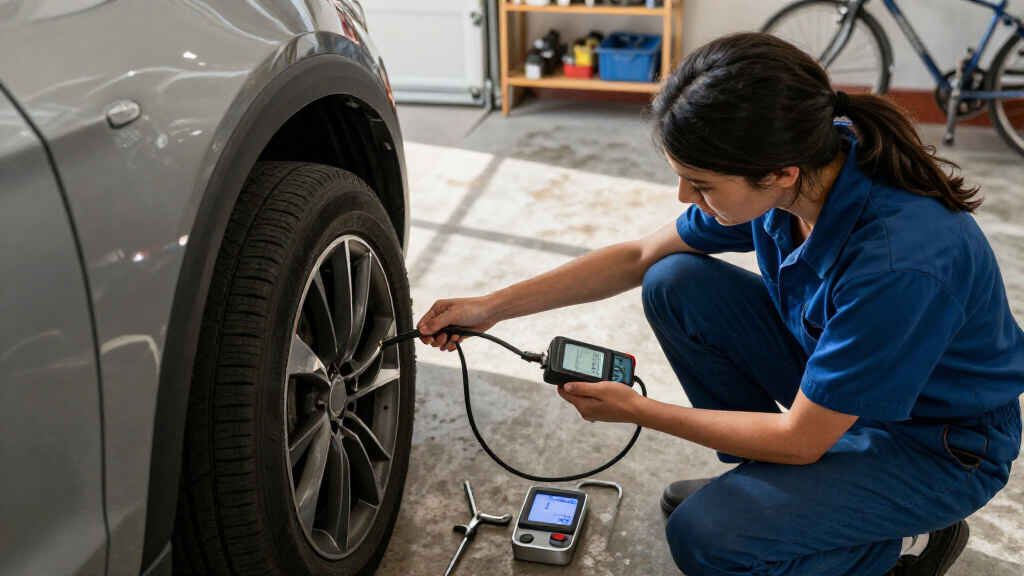
How We Picked
I ranked these systems by how well their stated design serves a clear vehicle and monitoring need, rather than treating a higher sensor count or larger display as automatically better. I compared sensor coverage, sensor style, display format, power approach, and the likely effort involved in checking or adjusting tire pressure. A four-sensor kit can rank ahead of a larger RV setup for a driver who needs simple coverage; the larger systems earn their place when their added sensors and display match a multi-tire vehicle.
I also weighed fit and day-to-day usability against complexity. The GUTA systems stand out for higher sensor counts and flow-through designs, while the Tymate models offer more restrained four-sensor configurations. Solar-supported options may reduce reliance on a charging routine, but that feature does not replace checking compatibility or understanding the display and alert setup. Product details supplied for this roundup do not establish comparative alarm accuracy or long-term durability, so I avoid ranking on claims that cannot be confirmed here.
| automotive tire pressure monitoring system | Charging |
|---|---|
| AOVSTOXIC Tire Pressure Monito | Solar and USB |
| Bluetooth Tire Pressure Monito | — |
| Tymate TM8 RV Tire Pressure Mo | Solar, USB, or cigarette lighter; adapter not included |
| Tymate TM2 RV Tire Pressure Mo | Solar, USB, or cigarette-lighter socket |
| GUTA GT80 RV Tire Pressure Mon | — |
| GUTA GT20 RV Tire Pressure Mon | — |
| Tirpresmos TY09 Wireless Tire | — |
| Masoll M13 Tire Pressure Monit | Solar |
| GUTA GT60 RV Tire Pressure Mon | Solar panel and USB-C |
| Tymate TM7 RV Tire Pressure Mo | — |
| VAOYAO TY001 Solar Tire Pressu | Solar or USB |
Factors to Consider When Choosing Automotive Tire Pressure Monitoring Systems
Before choosing among these automotive tire pressure monitoring systems, I’d start with the vehicle and the way you use it—not the longest feature list. A workable match depends on tire count, sensor access, how much information you want in view, and how you’ll power and maintain the display. These broader checks can prevent buying a system that covers too few tires or adds complexity you will not use.
Match Sensor Count to Every Tire You Need to Monitor
Count the tires you want monitored, including trailer tires and any spare you plan to include, before choosing a kit. A four-sensor system is a natural fit for many passenger vehicles, but it may leave tires on an RV or trailer uncovered. More sensors can support a larger setup, yet unused sensors add cost and installation work without improving coverage on a smaller vehicle. Check whether the listed sensor count includes a spare, and whether the system can display all monitored tires clearly. Do not assume that a kit described for an RV will automatically suit your specific wheel arrangement. I’d choose the smallest system that fully covers the tires you actually need to watch.
Choose Sensor Style Around Wheel Access and Maintenance
External sensors are fitted at the valve stem, making them easier to reach than internal sensors, but they can affect how you access the valve for routine inflation. Flow-through designs are intended to let air pass through without removing the sensor, which can be handy when frequent pressure checks are part of your routine. Their shape and clearance may not suit every wheel, valve stem, or wheel cover, so inspect the fit before buying. Ask whether the system’s sensor style works with your valve stems and whether a lock or other anti-theft measure is included if that matters for where you park. A sensor that is convenient in principle can become a nuisance if it interferes with a gauge, compressor, or wheel hardware. Fit and service access deserve as much attention as the sensor count.
Prioritize the Right Display for Your Driving Setup
A large display can make tire readings easier to distinguish, especially when monitoring several axles, but it takes up more dashboard space. A smaller screen may be a better match for a car interior or a driver who wants basic readings without a prominent console-mounted unit. Think about where the monitor will sit, whether it can be seen without drawing your eyes far from the road, and how its layout separates each tire. Multi-tire setups benefit from an easy-to-read tire map because a list of numbers can be hard to match to individual wheels. Consider night visibility and button access as well as screen size. The right display is the one you can interpret quickly from your normal driving position.
Understand Power Needs Before Settling on Solar
Solar charging can reduce how often a monitor needs a separate charge, but its usefulness depends on where the unit is mounted and how much light reaches it. A shaded windshield or a vehicle stored indoors may limit the benefit, so check whether the system also supports another charging method. For any powered display, find out how it behaves when the vehicle is parked for long periods and whether it retains its settings. Do not treat a solar panel as a reason to ignore battery status or charging instructions. Compare the convenience of solar with the simplicity of a setup whose power routine you already understand. The best choice is one that remains ready under your actual parking and driving conditions.
Check Vehicle Compatibility and Pressure Settings
TPMS kits can differ in their supported pressure range, sensor specifications, and setup options, so confirm that the system fits your tires before ordering. RVs and trailers can run different pressures from passenger cars, and a mismatch can make a system unsuitable even if it has enough sensors. Confirm that the display lets you set alert thresholds appropriate to the vehicle and tire maker’s guidance. Also check whether the sensors fit the valve stem type and any wheel accessories on your vehicle. Do not copy another vehicle’s pressure settings simply because it uses the same monitoring system. A compatible kit still needs correct settings to make its warnings useful.
Decide How Much Coverage and Complexity You’ll Actually Use
More sensors, extra display space, and additional setup options can serve a large RV, but they also create more components to install, label, and maintain. For a basic car, a straightforward four-sensor monitor may be easier to live with than an RV-focused system built for many tires. Before choosing a high-coverage unit, consider whether you’ll monitor multiple axles, a trailer, or a spare on a regular basis. Check how the system signals low pressure or temperature and whether alerts are understandable in ordinary driving conditions. A feature that is hard to configure or interpret may be less useful than a simpler monitor that clearly covers the tires you care about. Buy for the monitoring tasks you will perform, not for unused capacity.
Frequently Asked Questions
Do I need a four-sensor TPMS or a system with more sensors?
Choose based on the tires you want to monitor, not the vehicle label alone. A four-sensor kit can suit a standard four-wheel vehicle, while an RV towing a trailer may need enough sensors for both the RV and trailer tires. Decide whether you want to include a spare, since not every system’s sensor count will cover one automatically. More sensors bring broader coverage but also require more installation and setup. I’d map every tire to a sensor before selecting a kit.
Are flow-through sensors worth choosing for an RV?
They can be useful if you check or adjust pressure often, since a flow-through design is intended to let you add air without taking the sensor off the valve stem. That convenience matters more on vehicles with many tires, where repeated removal can become tedious. However, flow-through sensors are not automatically compatible with every valve stem or wheel setup, so verify fit and clearance first. If you rarely adjust pressure or prefer a compact sensor, a standard external design may be enough. Treat the feature as a maintenance convenience, not a substitute for checking compatibility.
Will a solar-powered monitor work if my vehicle is parked indoors?
Solar charging may be less helpful when the monitor spends most of its time away from direct light. Before buying, check whether the unit has another charging method and how its power status is shown. A vehicle stored in a garage may need a more deliberate charging routine than one parked outdoors. Solar support can still be useful during regular daylight driving, but it should not be the only part of your power plan. Choose a system whose charging needs fit where you park and how often you drive.
Can I use an RV TPMS on a car or trailer?
Some RV-oriented systems may have enough sensors for a smaller setup, but sensor count alone does not confirm compatibility. Check the supported pressure range, valve-stem fit, display configuration, and whether the monitor can show the tires you plan to use. A larger display or multi-tire layout may also be awkward in a passenger car. For a trailer, confirm that the system can accommodate the required sensors and that readings remain useful from the towing vehicle. Match the specifications to each vehicle rather than relying on the RV label.
Should I choose the biggest sensor count or the largest display?
Neither feature is a universal advantage. Sensor count matters when you need to cover extra axles, a trailer, or a spare; a large display matters when you want readings for many tires to be easier to distinguish. On a four-tire vehicle, extra sensors may go unused, while a large screen can take up space without adding useful information. If you monitor a large RV setup, both may help, but confirm the layout and mounting position first. Choose the feature that solves your specific coverage or visibility problem.
Conclusion
For an RV owner who needs broad coverage and easier pressure checks, I’d choose the GUTA GT80 as the best overall; the GUTA GT20 is the value-oriented alternative for a similar 10-sensor, flow-through approach. The GUTA GT60 is my premium pick for buyers who want 12 sensors and a large color display, while the Tymate TM8 is a more approachable starting point for a four-tire setup. For a solar-supported four-sensor option, look at the VAOYAO TY001; the AOVSTOXIC is the alternative when six sensors better match your needs. I’d favor the Bluetooth four-external-sensor system or Masoll M13 only after confirming their setup and display details suit your vehicle. Before choosing any model, verify tire count, pressure range, valve fit, and charging needs—those checks matter more than extra capacity you will not use.