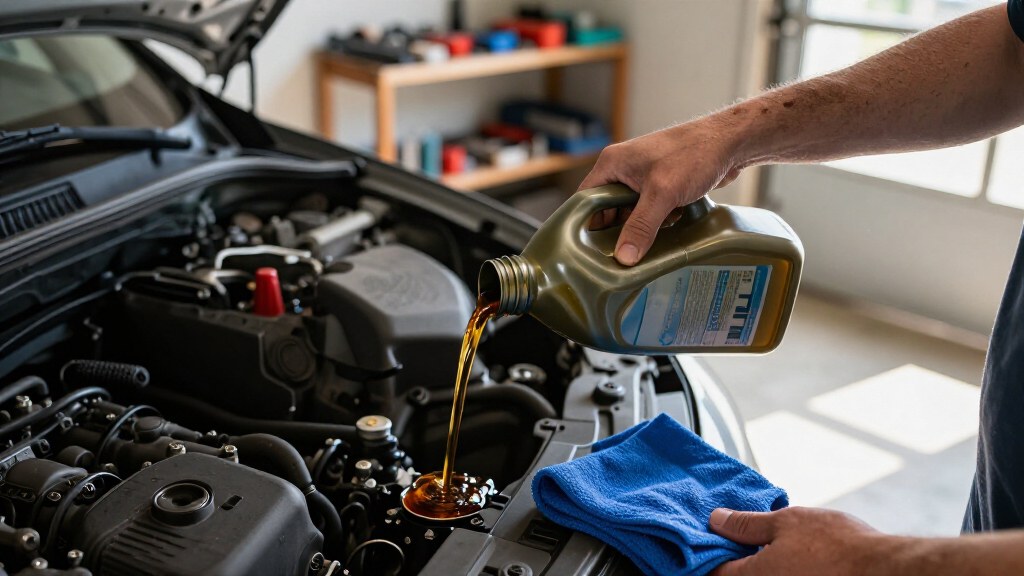

The best motor oils for cars match your owner’s manual while giving you the protection and formulation your engine needs. I rank Castrol GTX Full Synthetic 5W-30 as the best overall for its broad everyday fit, with Valvoline Advanced Full Synthetic 5W-30 a strong alternative for drivers who want a full synthetic and Valvoline MaxLife High Mileage 5W-30 suited to older, higher-mileage engines. The main tradeoffs are viscosity compatibility, full synthetic versus synthetic blend, and whether high-mileage additives fit your engine. A more advanced oil cannot compensate for choosing the wrong viscosity or specification. Read on for the full comparison and guidance by vehicle need.

Get garage and car supplies delivered free — and shop member deals
- Fast, free delivery on millions of items
- Access to Prime Big Deal Days deals on October 6–7
- Prime Video, Amazon Music and more included
Complete the kit


Key Takeaways
- Castrol GTX Full Synthetic 5W-30 leads as a versatile everyday pick, but only for vehicles whose manuals specify a compatible 5W-30 oil.
- Valvoline MaxLife High Mileage 5W-30 and Castrol EDGE High Mileage 5W-30 target aging engines; the former is a synthetic blend, while EDGE is full synthetic.
- The lineup includes many 5W-30 options, but buyers should choose by the vehicle maker’s viscosity and certification requirements, not by the number of similar products.
- 0W-20 and 5W-20 oils suit engines designed for those grades; they are not interchangeable with 5W-30 just because they share a brand family.
- Castrol GTX Synthetic Blend options offer a different formulation tier from the full synthetic picks, while Mobil 1 and Castrol EDGE provide premium full synthetic alternatives.
| Castrol GTX Full Synthetic 5W-30 Motor Oil, 5 Quarts |  | Best Overall for 5W-30 Vehicles | Oil type: Full synthetic | Viscosity grade: 5W-30 | Quantity: 5 quarts | VIEW LATEST PRICE | See Our Full Breakdown |
| Castrol GTX 5W-30 Synthetic Blend Motor Oil, 5 Quarts |  | Best Synthetic Blend | Brand: Castrol | Oil type: Synthetic blend | Viscosity grade: 5W-30 | VIEW LATEST PRICE | See Our Full Breakdown |
| Castrol GTX Full Synthetic 5W-20 Motor Oil, 5 Quarts |  | Best for 5W-20 Ford Applications | Brand: Castrol | Oil type: Full synthetic | Viscosity grade: 5W-20 | VIEW LATEST PRICE | See Our Full Breakdown |
| Valvoline Advanced Full Synthetic 5W-30 Motor Oil, 5 QT |  | Best for Cold-Start Protection | Brand: Valvoline | Oil type: Full synthetic | Viscosity grade: SAE 5W-30 | VIEW LATEST PRICE | See Our Full Breakdown |
| Castrol GTX Full Synthetic 0W-20 Motor Oil, 5 Quarts |  | Best for 0W-20 Cars | Oil type: Full synthetic | Viscosity grade: 0W-20 | Quantity: 5 quarts | VIEW LATEST PRICE | See Our Full Breakdown |
| Castrol GTX High Mileage 20W-50 Synthetic Blend Motor Oil, 5 Quarts |  | Best for Older Engines Requiring 20W-50 | Viscosity: 20W-50 | Oil type: Synthetic blend motor oil | Volume: 5 quarts (160 fluid ounces) | VIEW LATEST PRICE | See Our Full Breakdown |
| Castrol EDGE High Mileage 5W-30 Full Synthetic Motor Oil, 5 Quarts |  | Best High-Mileage Pick for 5W-30 Engines | Viscosity: 5W-30 | Oil type: Full synthetic | Quantity: 5 quarts | VIEW LATEST PRICE | See Our Full Breakdown |
| Castrol EDGE High Mileage 5W-20 Advanced Full Synthetic Motor Oil, 5 Quarts |  | Best High-Mileage Pick for 5W-20 Engines | Viscosity: 5W-20 | Oil type: Advanced full synthetic | Volume: 5 quarts (160 fluid ounces) | VIEW LATEST PRICE | See Our Full Breakdown |
| Mobil 1 High Mileage Full Synthetic Motor Oil, 10W-30, 5 Quart |  | Best for High-Mileage 10W-30 Cars | Viscosity: 10W-30 | Oil type: Full synthetic | Container size: 5 quarts (160 fluid ounces) | VIEW LATEST PRICE | See Our Full Breakdown |
| Castrol EDGE 5W-30 Advanced Full Synthetic Motor Oil, 5 Quarts |  | Best for Extended-Interval 5W-30 Maintenance | Viscosity: 5W-30 | Oil type: Full synthetic | Volume: 5 quarts (160 fluid ounces) | VIEW LATEST PRICE | See Our Full Breakdown |
| Castrol GTX High Mileage 5W-30 Synthetic Blend Motor Oil, 5 Quarts |  | Best for High-Mileage Sludge Control | Viscosity: 5W-30 | Oil type: Synthetic blend | Size: 5 quarts (160 fluid ounces) | VIEW LATEST PRICE | See Our Full Breakdown |
| Valvoline MaxLife High Mileage 5W-30 Synthetic Blend Motor Oil, 5 qt |  | Best High-Mileage Blend for Seal Care | Viscosity: 5W-30 | Oil type: Synthetic blend motor oil | Volume: 5 qt (160 fluid ounces) | VIEW LATEST PRICE | See Our Full Breakdown |
| Castrol EDGE 0W-20 Advanced Full Synthetic Motor Oil, 5 Quarts |  | Best for 0W-20 Full-Synthetic Intervals | Viscosity: 0W-20 | Oil type: Full synthetic motor oil | Quantity: 5 quarts | VIEW LATEST PRICE | See Our Full Breakdown |
| Mobil 1 Advanced Full Synthetic Motor Oil 5W-20, 5 Quart |  | Best 5W-20 Full-Synthetic Pick | Viscosity: 5W-20 | Oil type: Full synthetic motor oil | Size: 5 quarts (160 fluid ounces) | VIEW LATEST PRICE | See Our Full Breakdown |
| Mobil 1 Advanced Full Synthetic Motor Oil, 5W-30, 5 Quart |  | Best 5W-30 Full-Synthetic Interval Pick | Viscosity: 5W-30 | Oil type: Full synthetic motor oil | Container size: 5 quarts (160 fluid ounces) | VIEW LATEST PRICE | See Our Full Breakdown |
| motor oils for car | Oil type | Viscosity | ILSAC specification | API specifications |
|---|---|---|---|---|
| Castrol GTX Full Synthetic 5W- | Full synthetic | — | GF-7 | SQ, SP, SN PLUS, SN |
| Castrol GTX 5W-30 Synthetic Bl | Synthetic blend | — | GF-7 | SQ, SP, SN PLUS, SN |
| Castrol GTX Full Synthetic 5W- | Full synthetic | — | GF-6 | SP, SN PLUS, SN |
| Valvoline Advanced Full Synthe | Full synthetic | — | GF-7A | SQ, SP, SN with SN PLUS |
| Castrol GTX Full Synthetic 0W- | Full synthetic | — | GF-6 | SP, SN PLUS, SN |
| Castrol GTX High Mileage 20W-5 | Synthetic blend motor oil | 20W-50 | — | — |
| Castrol EDGE High Mileage 5W-3 | Full synthetic | 5W-30 | GF-6 | — |
| Castrol EDGE High Mileage 5W-2 | Advanced full synthetic | 5W-20 | — | — |
| Mobil 1 High Mileage Full Synt | Full synthetic | 10W-30 | — | — |
| Castrol EDGE 5W-30 Advanced Fu | Full synthetic | 5W-30 | GF-7 | API SQ/SP/SN PLUS/SN |
| Castrol GTX High Mileage 5W-30 | Synthetic blend | 5W-30 | GF-6 | API SP, SN PLUS, SN, SM |
| Valvoline MaxLife High Mileage | Synthetic blend motor oil | 5W-30 | — | — |
| Castrol EDGE 0W-20 Advanced Fu | Full synthetic motor oil | 0W-20 | GF-7 | API SQ, SP, SN PLUS, SN |
| Mobil 1 Advanced Full Syntheti | Full synthetic motor oil | 5W-20 | — | — |
| Mobil 1 Advanced Full Syntheti | Full synthetic motor oil | 5W-30 | — | — |
More Details on Our Top Picks
Castrol GTX Full Synthetic 5W-30 Motor Oil, 5 Quarts
Castrol GTX Full Synthetic 5W-30 is my broadest pick for drivers whose owner’s manual calls for this viscosity and a matching specification. Its full synthetic formula is designed to resist wear, sludge, and viscosity breakdown, while the stated protection interval of up to 10,000 miles can suit vehicles with longer manufacturer-approved service intervals. Compared with the Castrol GTX 5W-30 Synthetic Blend, this option is fully synthetic and lists additional GM dexos1 Gen 3 approval, but both cover common 5W-30 applications. That broader spec list does not make it right for every car: the required viscosity and approvals still need to match the manual. I’d skip it for engines requiring 0W-20 or 5W-20, and I wouldn’t treat the stated interval as permission to exceed the vehicle maker’s schedule.
Pros:- Full synthetic formulation designed to protect against wear
- Helps prevent sludge and resist viscosity breakdown
- Lists API, ILSAC, GM dexos1 Gen 3, and Ford specifications
- Designed for up to 10,000 miles between oil changes when the vehicle schedule allows
Cons:- 5W-30 viscosity is unsuitable when the vehicle requires another grade
- The 10,000-mile protection claim does not replace the vehicle manufacturer’s oil-change schedule
Best for: Drivers with gasoline cars that specify 5W-30 and one of the listed API, ILSAC, GM, or Ford requirements
Not ideal for: Owners whose manuals call for 0W-20, 5W-20, or specifications absent from this product’s listed approvals
- Oil type:Full synthetic
- Viscosity grade:5W-30
- Quantity:5 quarts
- Stated protection interval:Up to 10,000 miles
- API specifications:SQ, SP, SN PLUS, SN
- ILSAC specification:GF-7
- GM specification:dexos1 Gen 3
- Ford specifications:WSS-M2C947-B1; WSS-M2C962-A1
Our verdict“Choose this as a versatile full synthetic 5W-30 when its listed approvals match your vehicle’s manual.”
Castrol GTX 5W-30 Synthetic Blend Motor Oil, 5 Quarts
Castrol GTX 5W-30 Synthetic Blend is the lineup’s blend option for drivers who want the listed 5W-30 protections without choosing a full synthetic. Its formulation targets sludge, high-temperature deposits, and viscosity and thermal breakdown in gasoline engines. Against Castrol GTX Full Synthetic 5W-30, it has a narrower listed manufacturer-spec set and a synthetic-blend formulation; the full synthetic is the stronger fit when the manual calls for its GM dexos1 Gen 3 approval or when you specifically want a full synthetic. The blend still lists current API and ILSAC specifications plus two Ford requirements, giving buyers concrete compatibility checks. Its limits are clear: it is specified for gasoline engines, and neither the universal-fit label nor the 5W-30 grade overrides the vehicle’s required approvals.
Pros:- Synthetic blend formulation designed to address sludge and deposits
- Targets viscosity and thermal breakdown
- Lists API SQ, SP, SN PLUS, and SN specifications
- Lists ILSAC GF-7 and two Ford specifications
Cons:- Specified for gasoline engines, limiting its stated application
- Does not list the GM dexos1 Gen 3 specification shown for Castrol GTX Full Synthetic 5W-30
- The 5W-30 grade and listed approvals may not match every vehicle
Best for: Gasoline-car owners whose manuals specify 5W-30 and a listed API, ILSAC, or Ford specification, and who prefer a synthetic blend
Not ideal for: Drivers whose vehicle calls for full synthetic oil, a different viscosity, a GM dexos approval, or an unlisted specification
- Brand:Castrol
- Oil type:Synthetic blend
- Viscosity grade:5W-30
- Volume:5 quarts (160 fluid ounces)
- Vehicle compatibility:Gasoline engines
- API specifications:SQ, SP, SN PLUS, SN
- ILSAC specification:GF-7
- Ford specifications:WSS-M2C946-B1; WSS-M2C961-A1
Our verdict“Pick this blend for a gasoline vehicle that calls for its listed 5W-30 specifications and does not require full synthetic.”
Castrol GTX Full Synthetic 5W-20 Motor Oil, 5 Quarts
For a car that specifically calls for 5W-20, this Castrol GTX full synthetic offers a clear match-focused option: it is designed to protect against wear, reduce sludge, and resist viscosity breakdown. The stated interval of up to 10,000 miles may fit a longer service schedule when the vehicle maker permits it. Its listed Ford requirements make it especially relevant to owners checking those exact specifications. Compared with the Castrol GTX Full Synthetic 5W-30, this oil serves a different viscosity requirement and lists ILSAC GF-6 rather than GF-7; the 5W-30 product also lists GM dexos1 Gen 3. Those differences make manual verification essential. I would not choose this simply because a car is a Ford or because the grades appear similar: the specified viscosity and approval must match.
Pros:- Full synthetic oil designed for 5W-20 applications
- Targets engine wear, sludge, and viscosity breakdown
- Lists two Ford specifications
- Designed for up to 10,000 miles between changes, subject to the vehicle schedule
Cons:- 5W-20 suitability depends on the exact vehicle requirement
- Lists ILSAC GF-6, while the 5W-30 GTX full synthetic lists GF-7
- Does not list the GM dexos1 Gen 3 approval shown on the 5W-30 option
Best for: Owners of cars and trucks whose manuals specify 5W-20 and a listed API, ILSAC GF-6, or Ford requirement
Not ideal for: Drivers whose manuals call for 5W-30, 0W-20, ILSAC GF-7, GM dexos1 Gen 3, or another unlisted approval
- Brand:Castrol
- Oil type:Full synthetic
- Viscosity grade:5W-20
- Container size:5 quarts
- Vehicle types:Car, truck
- API specifications:SP, SN PLUS, SN
- ILSAC specification:GF-6
- Ford specifications:WSS-M2C945-B1; WSS-M2C960-A1
- Stated protection interval:Up to 10,000 miles between oil changes
Our verdict“Choose this when your vehicle specifically calls for 5W-20 and its listed Ford or industry specifications.”
Valvoline Advanced Full Synthetic 5W-30 Motor Oil, 5 QT
Valvoline Advanced Full Synthetic 5W-30 is the cold-start focused choice in this group. Its low-temperature flow is intended to reduce wear during startup, while the formulation also targets heat, friction, wear, and deposits. That emphasis distinguishes it from Castrol GTX Full Synthetic 5W-30, which lists protection against wear and sludge plus a stated interval of up to 10,000 miles. Valvoline’s supplied details instead highlight cold-flow performance and list ILSAC GF-7A alongside API and manufacturer specifications, including Chrysler MS-13340. This makes it a practical candidate for drivers whose vehicles call for those requirements, including listed hybrid applications. The tradeoff is that the product data does not state an oil-change interval, and its 5W-30 grade and approvals still need to match the owner’s manual.
Pros:- Full synthetic 5W-30 formulation
- Low-temperature flow is designed to help reduce cold-start wear
- Targets wear, heat, friction, and deposits
- Lists ILSAC GF-7A, API, Ford, Chrysler, and GM specifications
Cons:- Vehicle compatibility depends on matching the listed approvals and viscosity to the manual
- Product data does not state an oil-change protection interval
- The 5-quart container may not match vehicles requiring a different fill quantity
Best for: Drivers with 5W-30 cars, including listed hybrid applications, who prioritize cold-start flow and whose manuals match its specifications
Not ideal for: Owners whose manuals require another viscosity or an approval not listed here, or shoppers seeking a stated extended-change interval
- Brand:Valvoline
- Oil type:Full synthetic
- Viscosity grade:SAE 5W-30
- Size:5 quarts
- ILSAC specification:GF-7A
- API specifications:SQ, SP, SN with SN PLUS
- Additional specifications:Ford WSS-M2C961-A1; Chrysler MS-13340; GM dexos 1 Gen 3
- Model number:881164
Our verdict“Choose Valvoline when your vehicle calls for its listed 5W-30 specifications and cold-start flow is a priority.”
Castrol GTX Full Synthetic 0W-20 Motor Oil, 5 Quarts
Castrol GTX Full Synthetic 0W-20 is the low-viscosity choice for vehicles whose manuals specify this grade. It is designed to protect engine parts from wear and sludge while resisting viscosity breakdown, with a stated protection interval of up to 10,000 miles when that aligns with the manufacturer’s schedule. Compared with the Castrol GTX Full Synthetic 5W-30, it serves a different viscosity requirement and lists ILSAC GF-6 rather than GF-7; both include GM dexos1 Gen 3 and the same listed Ford requirements. That makes the manual’s exact grade and specification the deciding factor, not a general preference for one viscosity. I’d skip this for engines requiring 5W-30 or 5W-20, and I would not extend oil changes beyond the vehicle maker’s instructions.
Pros:- Full synthetic formulation designed for 0W-20 applications
- Targets wear, sludge, and viscosity breakdown
- Lists GM dexos1 Gen 3 and Ford specifications
- Designed for up to 10,000 miles between changes when the vehicle schedule allows
Cons:- Suitable only when 0W-20 matches the vehicle’s required viscosity
- Lists ILSAC GF-6, while Castrol GTX Full Synthetic 5W-30 lists GF-7
- The stated protection interval does not supersede the vehicle manufacturer’s schedule
Best for: Drivers whose cars specifically call for 0W-20 and a listed API, ILSAC, GM, or Ford specification
Not ideal for: Owners whose manuals specify 5W-30, 5W-20, or approvals that are not listed for this oil
- Oil type:Full synthetic
- Viscosity grade:0W-20
- Quantity:5 quarts
- Stated protection interval:Up to 10,000 miles
- API specifications:SP, SN PLUS, SN
- ILSAC specification:GF-6
- GM specification:dexos1 Gen 3
- Ford specifications:WSS-M2C947-B1; WSS-M2C962-A1
Our verdict“Choose this full synthetic when your manual calls for 0W-20 and one of its listed specifications.”
Castrol GTX High Mileage 20W-50 Synthetic Blend Motor Oil, 5 Quarts
This high-mileage blend is the most specialized fit in this group: its 20W-50 grade and seal conditioners target older, higher-mileage engines that call for a heavier oil. Castrol says its phosphorus replacement technology helps protect the catalytic converter, while the formulation also targets sludge, corrosion, wear, and oil burn-off. Compared with Castrol EDGE High Mileage 5W-30, this GTX is a synthetic blend with a much heavier viscosity, so it suits a different set of engine requirements rather than serving as a general upgrade. The tradeoff is fit: 20W-50 may be too thick for many modern engines, and a synthetic blend offers a different formulation from the full synthetics in this roundup. Choose it only when the vehicle’s manual calls for this grade.
Pros:- Formulated for vehicles with more than 75,000 miles
- Seal conditioners are intended to help reduce leaks in older engines
- Phosphorus replacement technology is designed to help protect the catalytic converter
- Targets sludge, wear, corrosion, and oil burn-off
Cons:- 20W-50 is unsuitable for engines that specify a lighter viscosity
- Synthetic blend rather than full synthetic
Best for: Owners of older vehicles with more than 75,000 miles whose manuals specify 20W-50 and who want seal conditioners.
Not ideal for: Drivers of modern cars requiring 5W-20, 5W-30, or another lighter grade; the 20W-50 viscosity may not suit their engines.
- Viscosity:20W-50
- Oil type:Synthetic blend motor oil
- Volume:5 quarts (160 fluid ounces)
- Intended mileage:Vehicles with over 75,000 miles
- API specification:API SP/SN PLUS/SN/SM
- Model number:1597C3
- Warranty:12 months
Our verdict“Pick this GTX when an older, high-mileage engine specifically calls for 20W-50 and you want a blend with seal conditioners.”
Castrol EDGE High Mileage 5W-30 Full Synthetic Motor Oil, 5 Quarts
For a high-mileage car that specifies 5W-30, this EDGE pairs full synthetic oil with leak and deposit control. Its formulation is designed to reduce oil burn-off and power-robbing deposits, while phosphorus replacement technology aims to help extend emission-system life. Castrol lists an oil-change interval of up to 15,000 miles or one year, whichever comes first; actual service timing still depends on the vehicle’s requirements and conditions. Compared with Castrol GTX High Mileage 20W-50, this is the better match for engines calling for a lighter 5W-30 grade, and it is full synthetic rather than a blend. Its limitation is equally clear: high-mileage features do not make it suitable for cars requiring a different viscosity.
Pros:- Full synthetic 5W-30 formulation for applicable high-mileage engines
- Designed to help reduce leaks and oil burn-off
- Targets power-robbing deposits
- Phosphorus replacement technology is intended to support emission-system life
Cons:- Only appropriate for engines that specify 5W-30
- The stated interval is capped at one year, even if mileage is lower
Best for: Owners of cars over 75,000 miles that specify 5W-30 and want a full synthetic formulated to address leaks and deposits.
Not ideal for: Drivers whose manuals specify 5W-20, 20W-50, or another grade, or those seeking a product with a shorter stated service interval.
- Viscosity:5W-30
- Oil type:Full synthetic
- Quantity:5 quarts
- Oil-change interval:Up to 15,000 miles or one year, whichever comes first
- API specification:API SP/SN PLUS/SN/SM
- ILSAC specification:GF-6
- Other listed requirements:Chrysler MS 6395; Ford WSS-M2C946-B1; Ford WSS-M2C961-A3
Our verdict“Choose this EDGE for a high-mileage 5W-30 car when leak and deposit control matter alongside a full synthetic formulation.”
Castrol EDGE High Mileage 5W-20 Advanced Full Synthetic Motor Oil, 5 Quarts
This is the high-mileage choice here for engines that call for 5W-20. Castrol describes its full synthetic formula as addressing corrosion, sludge, timing wear, and friction wear, while its phosphorus replacement technology is designed to help protect the catalytic converter and emission system. It also targets leaks, oil burn-off, and deposits—useful priorities for a higher-mileage engine. Compared with Castrol EDGE High Mileage 5W-30, the key distinction is viscosity, not a broader claim of suitability: the two grades serve different engine specifications. The listed service interval reaches up to 15,000 miles or one year, whichever comes first, but the vehicle manual and operating conditions should guide oil changes. That narrow 5W-20 fit is its main tradeoff.
Pros:- Full synthetic formulation intended for high-mileage vehicles
- Targets leaks, oil burn-off, and power-robbing deposits
- Phosphorus replacement technology is designed to help protect the emission system
- Lists API, ILSAC, Chrysler, and Ford specifications
Cons:- Suitable only for engines that call for 5W-20
- The stated 15,000-mile interval is limited to one year
Best for: Owners of vehicles over 75,000 miles whose manufacturer specifies 5W-20 and who want full synthetic oil with high-mileage-focused features.
Not ideal for: Drivers whose cars specify another viscosity, including 5W-30, or who need an oil selected for a different service specification.
- Viscosity:5W-20
- Oil type:Advanced full synthetic
- Volume:5 quarts (160 fluid ounces)
- Oil-change interval:Up to 15,000 miles or one year
- API and ILSAC:API SP/SN PLUS/SN/SM; ILSAC GF-6
- Other listed requirements:Chrysler MS 6395; Ford WSS-M2C945-B1; Ford WSS-M2C960-A1
- Part number:15906D
- Warranty:12 months
Our verdict“Pick this EDGE when your high-mileage vehicle specifies 5W-20 and you want full synthetic oil with emission-system and leak-control features.”
Mobil 1 High Mileage Full Synthetic Motor Oil, 10W-30, 5 Quart
Mobil 1 gives 10W-30 high-mileage engines a full synthetic option focused on deposits, oxidation, and timing-chain wear. It is formulated for vehicles with at least 75,000 miles and is claimed to protect for up to 15,000 miles between changes. That interval is a manufacturer claim, so the car’s maintenance schedule and driving conditions remain relevant. Compared with Castrol EDGE High Mileage 5W-30, this Mobil 1 uses a different viscosity grade and lists ILSAC GF-7; it is the more relevant candidate only for engines specifying 10W-30. The supplied product data gives limited warranty detail, and the extended interval should not be treated as a universal schedule. Its appeal is focused on 10W-30 fit and high-mileage protection priorities.
Pros:- Full synthetic formulated for engines with 75,000 miles or more
- Helps protect against sludge and deposits
- Designed to protect against oxidation and timing-chain wear
- Lists ILSAC GF-7
Cons:- Only suitable for engines that specify 10W-30
- The claimed 15,000-mile interval may depend on vehicle and operating conditions
- Warranty details are not provided in the product data
Best for: Drivers of cars with more than 75,000 miles whose manuals specify 10W-30 and who want a full synthetic targeting deposits and oxidation.
Not ideal for: Owners of vehicles that require 5W-30 or another viscosity, or drivers seeking clearly stated warranty coverage in the supplied product details.
- Viscosity:10W-30
- Oil type:Full synthetic
- Container size:5 quarts (160 fluid ounces)
- Recommended for:Engines with 75,000 miles or more
- Claimed protection interval:Up to 15,000 miles
- Standard:ILSAC GF-7
- Listed fit:Cars; universal fit
Our verdict“Choose this Mobil 1 when your high-mileage car calls for 10W-30 and its deposit and oxidation protection match your priorities.”
Castrol EDGE 5W-30 Advanced Full Synthetic Motor Oil, 5 Quarts
This Castrol EDGE is the broad-use 5W-30 full synthetic in this batch, with a stated interval of up to 20,000 miles or one year. Its product data highlights wear protection, viscosity control, and thermal stability, plus API, ILSAC, GM, Chrysler, and Ford specifications. That makes it a different proposition from Castrol EDGE High Mileage 5W-30, which adds features aimed at higher-mileage engines but lists a shorter interval of up to 15,000 miles or one year. The extended interval is a manufacturer formulation claim, not a reason to exceed the vehicle maker’s maintenance schedule. Buyers should also verify that the listed specifications match their car. For an applicable 5W-30 vehicle, its main draw is the combination of broad specification coverage and a longer stated interval.
Pros:- Full synthetic 5W-30 formulation
- Designed for wear protection, viscosity control, and thermal stability
- Lists API, ILSAC, GM, Chrysler, and Ford specifications
- States an interval of up to 20,000 miles or one year
Cons:- The stated interval is capped at one year and does not replace the vehicle’s service schedule
- Not the high-mileage-specific EDGE option in this roundup
Best for: Drivers whose vehicles specify 5W-30 and list compatible Castrol EDGE approvals, who want a full synthetic with an extended stated interval.
Not ideal for: Owners of high-mileage cars seeking a specifically high-mileage formulation, or anyone whose vehicle manual calls for another viscosity or service schedule.
- Viscosity:5W-30
- Oil type:Full synthetic
- Volume:5 quarts (160 fluid ounces)
- Stated oil-change interval:Up to 20,000 miles or one year, whichever comes first
- API specifications:API SQ/SP/SN PLUS/SN
- ILSAC specification:GF-7
- Listed approvals:GM dexos1 Gen 3
- Other listed requirements:Chrysler MS 6395; Ford WSS-M2C946-B1; Ford WSS-M2C961-A1
Our verdict“Select this EDGE for a compatible 5W-30 car when its extended stated interval and listed specifications suit your maintenance plan.”
Castrol GTX High Mileage 5W-30 Synthetic Blend Motor Oil, 5 Quarts
Castrol GTX High Mileage 5W-30 is aimed at engines past 75,000 miles where sludge, oil consumption, or minor leaks have become practical concerns. Its synthetic blend pairs wear and sludge protection with seal and emissions-system support, giving it a more targeted role than standard oils in this group. Compared with Valvoline MaxLife High Mileage 5W-30, Castrol lists phosphorus replacement technology to help protect the catalytic converter, while Valvoline names seal conditioners and a broader set of current API and ILSAC categories. The tradeoff is that this remains a blend rather than a full synthetic, so buyers seeking a full-synthetic formulation should look to options such as Mobil 1 Advanced Full Synthetic 5W-30. Choose it when its high-mileage focus and listed Ford specifications match your car; it cannot fix worn seals or replace the viscosity required by the owner’s manual.
Pros:- Formulated for vehicles with more than 75,000 miles
- Targets sludge and engine wear while helping reduce oil burn-off and leaks
- Phosphorus replacement technology is intended to help protect the emissions system and catalytic converter
- Lists API, ILSAC, and Ford specifications
Cons:- Synthetic blend rather than full synthetic
- Its high-mileage focus may be unnecessary for lower-mileage engines without those concerns
Best for: Drivers with cars past 75,000 miles who need 5W-30 and want an oil formulated to address sludge, oil burn-off, and emissions-system protection.
Not ideal for: Owners whose manuals call for another viscosity or a full synthetic, and drivers expecting an oil change to repair existing leaks.
- Viscosity:5W-30
- Oil type:Synthetic blend
- Size:5 quarts (160 fluid ounces)
- Recommended for:Vehicles with over 75,000 miles
- API specifications:API SP, SN PLUS, SN, SM
- ILSAC specification:GF-6
- Ford specifications:WSS-M2C946-B1; WSS-M2C961-A1
- Model number:03102
Our verdict“Pick Castrol GTX High Mileage when your high-mileage car specifies 5W-30 and you want blend oil with sludge and emissions-system protection.”
Valvoline MaxLife High Mileage 5W-30 Synthetic Blend Motor Oil, 5 qt
Valvoline MaxLife High Mileage 5W-30 puts seal conditioners at the center of its pitch, making it a targeted choice for older engines showing oil consumption or minor leaks. Detergents and friction-fighting additives also address deposits, corrosion, and wear, so its focus is broader than leak reduction alone. Against Castrol GTX High Mileage 5W-30, MaxLife lists newer API SQ and ILSAC GF-7A categories, along with Chrysler specifications; Castrol, by comparison, explicitly names phosphorus replacement technology for emissions-system protection. Both are synthetic blends, so neither has the full-synthetic formulation of Mobil 1 Advanced Full Synthetic 5W-30. The listed standards and 5W-30 grade still need to match the vehicle manual. Seal conditioners may help limit consumption, but they are not a mechanical repair for damaged seals.
Pros:- Seal conditioners target oil leaks and consumption in high-mileage engines
- Detergents and additives address wear, sludge, corrosion, and deposits
- Lists API SQ and ILSAC GF-7A categories
- Includes Ford and Chrysler specifications
Cons:- Synthetic blend rather than full synthetic
- High-mileage formula may not suit newer, low-mileage cars as well as a standard oil matched to their manual
Best for: Owners of cars with 75,000 miles or more whose manuals specify 5W-30 and who want a blend with seal conditioners and deposit-control additives.
Not ideal for: Drivers who need full synthetic oil, a different viscosity, or a repair for a substantial leak or worn engine component.
- Viscosity:5W-30
- Oil type:Synthetic blend motor oil
- Volume:5 qt (160 fluid ounces)
- Recommended for:Engines with 75,000 miles or more
- Standards:ILSAC GF-7A; API SQ, SP, SN with SN PLUS, and preceding API and ILSAC gasoline categories
- Ford specification:WSS-M2C971-A-1
- Chrysler specification:MS-13340
- Pack count:1
Our verdict“Choose MaxLife if your high-mileage engine calls for 5W-30 and seal conditioning is a priority.”
Castrol EDGE 0W-20 Advanced Full Synthetic Motor Oil, 5 Quarts
Castrol EDGE 0W-20 Advanced Full Synthetic suits drivers whose manuals specify 0W-20 and who want a full synthetic with listed API, ILSAC, and GM approvals. Castrol claims improved resistance to viscosity breakdown under stress, while its listed change interval reaches up to 20,000 miles or one year. That interval is a ceiling stated by the product data, not a reason to exceed the vehicle maker’s schedule or oil-life monitor. Compared with Mobil 1 Advanced Full Synthetic 5W-20, EDGE uses a different viscosity and carries a different stated interval; those differences make manual compatibility more important than choosing by interval alone. Its 0W-20 grade and dexos1 Gen 3 listing are useful only for vehicles that call for them. Skip it if your car specifies 5W-20 or another grade.
Pros:- Full synthetic formulation
- Claims improved resistance to viscosity breakdown under stress
- Lists API, ILSAC, and GM dexos1 Gen 3 specifications
- Product data states protection for up to 20,000 miles or one year
Cons:- 0W-20 grade is unsuitable when the vehicle requires another viscosity
- The stated maximum interval may not match the car maker’s maintenance schedule or driving conditions
Best for: Drivers whose vehicle manuals call for 0W-20 and list compatible API, ILSAC, or GM requirements, especially those seeking a full synthetic.
Not ideal for: Owners whose manuals specify 5W-20, 5W-30, or another viscosity, or those who plan to treat the stated interval as a universal oil-change schedule.
- Viscosity:0W-20
- Oil type:Full synthetic motor oil
- Quantity:5 quarts
- Stated oil change interval:Up to 20,000 miles or one year, whichever comes first
- API specifications:API SQ, SP, SN PLUS, SN
- ILSAC specification:GF-7
- GM specification:dexos1 Gen 3
- Engine test requirements:Chrysler MS 6395; Ford WSS-M2C947-B1; Ford WSS-M2C962-A1
Our verdict“Pick EDGE 0W-20 when your manual calls for this grade and its specifications, then follow the vehicle maker’s oil-change schedule.”
Mobil 1 Advanced Full Synthetic Motor Oil 5W-20, 5 Quart
Mobil 1 Advanced Full Synthetic 5W-20 is the grade-specific choice here for vehicles whose manuals call for 5W-20 and ILSAC GF-7. Its full-synthetic formulation is described as reducing friction and fighting sludge and deposits, with a stated protection interval of up to 15,000 miles or one year. That claim gives it a different emphasis from Castrol GTX High Mileage 5W-30, which targets older engines and oil consumption with a blend; it also differs from Castrol EDGE 0W-20 in viscosity and its stated interval. Those numbers do not override a car maker’s maintenance schedule. The main tradeoff is simple: this is a specific 5W-20 option, not a universal choice, and the product data lists ILSAC GF-7 without additional vehicle-specific approvals.
Pros:- Full synthetic formulation designed to reduce friction and fight sludge and deposits
- Lists ILSAC GF-7
- Product data states protection for up to 15,000 miles or one year
- Bottle provides 5 quarts (160 fluid ounces)
Cons:- 5W-20 limits use to vehicles that specify or allow that viscosity
- Only ILSAC GF-7 is listed in the supplied standards data
Best for: Drivers whose manuals specify 5W-20 and ILSAC GF-7 who prefer full synthetic oil and want a stated long protection interval.
Not ideal for: Owners whose cars require 0W-20, 5W-30, or a named approval not listed here, and drivers who do not need a full synthetic.
- Viscosity:5W-20
- Oil type:Full synthetic motor oil
- Size:5 quarts (160 fluid ounces)
- Protection interval:Up to 15,000 miles or 1 year
- Standard:ILSAC GF-7
- Model number:120763
- Container type:Bottle
- Compatible vehicles:Car; truck (universal fit)
Our verdict“Choose this Mobil 1 when your car specifies 5W-20 and GF-7, while following its own maintenance schedule.”
Mobil 1 Advanced Full Synthetic Motor Oil, 5W-30, 5 Quart
Mobil 1 Advanced Full Synthetic 5W-30 is a straightforward option for cars that specify 5W-30 and ILSAC GF-7. The supplied product data describes protection against friction, sludge, and deposits, along with cold-start performance and a stated interval of up to 15,000 miles or one year. Compared with Castrol EDGE 0W-20, it serves a different viscosity requirement and lists a shorter maximum interval; compared with Castrol GTX High Mileage 5W-30, it offers a full synthetic formula rather than a blend tailored to engines over 75,000 miles. That makes the Mobil 1 less specifically aimed at aging seals or oil consumption. Check your manual for viscosity and required approvals, since the supplied standards list names ILSAC GF-7 only.
Pros:- Full synthetic formulation designed to reduce friction and fight sludge and deposits
- Supports cold-start performance
- Product data states protection for up to 15,000 miles or one year
- Five-quart container suits many routine oil changes, subject to engine capacity
Cons:- 5W-30 may not match cars that require another viscosity
- Supplied standards data lists ILSAC GF-7 but no additional manufacturer-specific approvals
Best for: Drivers whose vehicle manuals call for 5W-30 and ILSAC GF-7 and who want a full synthetic with stated cold-start and deposit protection.
Not ideal for: Owners who need a different viscosity or a specific approval beyond the listed ILSAC GF-7, or who want a dedicated high-mileage formula.
- Viscosity:5W-30
- Oil type:Full synthetic motor oil
- Container size:5 quarts (160 fluid ounces)
- Protection interval:Up to 15,000 miles or 1 year, whichever comes first
- Standard:ILSAC GF-7
- Flash point:230 °C
- Container type:Bottle
- Manufacturer part number:124317
Our verdict“Choose this Mobil 1 for a car that specifies 5W-30 and GF-7, provided its maintenance schedule supports the stated interval.”

How We Picked
I ranked these oils around the needs that shape a sound purchase: viscosity fit, formulation, and intended engine use. I gave the most weight to choices that can serve as straightforward everyday recommendations when the car’s manual calls for the listed grade, then separated high-mileage formulas, synthetic blends, and specialty viscosities by the drivers they suit. A product’s brand or premium positioning alone did not move it to the top.
The order also reflects how easily a reader can match each oil to a real vehicle need. Broad-use full synthetics rank ahead of narrower high-mileage or viscosity-specific choices for a general car roundup, while blends remain useful for buyers whose vehicle requirements and maintenance plan make them a fit. Product names alone do not establish current API or ILSAC certification, manufacturer approval, or vehicle compatibility; check the container label and owner’s manual before buying.
| motor oils for car | Oil type | API specifications | ILSAC specification |
|---|---|---|---|
| Castrol GTX Full Synthetic 5W- | Full synthetic | SQ, SP, SN PLUS, SN | GF-7 |
| Castrol GTX 5W-30 Synthetic Bl | Synthetic blend | SQ, SP, SN PLUS, SN | GF-7 |
| Castrol GTX Full Synthetic 5W- | Full synthetic | SP, SN PLUS, SN | GF-6 |
| Valvoline Advanced Full Synthe | Full synthetic | SQ, SP, SN with SN PLUS | GF-7A |
| Castrol GTX Full Synthetic 0W- | Full synthetic | SP, SN PLUS, SN | GF-6 |
| Castrol GTX High Mileage 20W-5 | Synthetic blend motor oil | — | — |
| Castrol EDGE High Mileage 5W-3 | Full synthetic | — | GF-6 |
| Castrol EDGE High Mileage 5W-2 | Advanced full synthetic | — | — |
| Mobil 1 High Mileage Full Synt | Full synthetic | — | — |
| Castrol EDGE 5W-30 Advanced Fu | Full synthetic | API SQ/SP/SN PLUS/SN | GF-7 |
| Castrol GTX High Mileage 5W-30 | Synthetic blend | API SP, SN PLUS, SN, SM | GF-6 |
| Valvoline MaxLife High Mileage | Synthetic blend motor oil | — | — |
| Castrol EDGE 0W-20 Advanced Fu | Full synthetic motor oil | API SQ, SP, SN PLUS, SN | GF-7 |
| Mobil 1 Advanced Full Syntheti | Full synthetic motor oil | — | — |
| Mobil 1 Advanced Full Syntheti | Full synthetic motor oil | — | — |
Factors to Consider When Choosing Best Motor Oils For Cars
Use the owner’s manual as the starting point, then narrow the choice by climate, engine age, and the oil specification the manufacturer calls for. These broader checks help avoid common selection mistakes that a product ranking cannot resolve for every vehicle.
Match the viscosity and required specification
Find the specified viscosity in the owner’s manual or under-hood maintenance information before comparing brands. The first part of a grade such as 0W-20 or 5W-30 relates to cold-start flow, while the second describes viscosity at operating temperature. A different grade may be allowed for certain climates or engines, but do not assume that a thinner oil improves efficiency or that a thicker one protects better. Also check the required API, ILSAC, or automaker approval on the container. If an oil’s label does not meet the vehicle’s stated requirement, choose another product even if its viscosity matches.
Choose full synthetic or synthetic blend for your maintenance plan
Full synthetic and synthetic blend describe formulation choices, but neither label overrides the interval and specification set by the vehicle maker. A full synthetic can be a sensible fit for engines that call for it or for drivers who want an oil designed for demanding temperature swings. A blend may suit a vehicle whose requirements permit it and a driver who follows the prescribed service schedule. Avoid extending oil changes based only on the word “synthetic”; interval guidance can depend on driving conditions and the vehicle’s oil-life monitor. Compare the complete certification and maintenance instructions, not one formulation phrase on the front label.
Treat high-mileage formulas as a targeted option
High-mileage oils are aimed at older engines, often with formulations intended for the needs associated with accumulated wear. Mileage alone is not a diagnosis: a well-maintained engine may not need a high-mileage formula, while leaks or oil consumption deserve attention beyond choosing a different bottle. Check whether the vehicle’s manual allows the product’s viscosity and certifications. If your car has recently changed oil consumption or developed a leak, record the rate and have the cause assessed instead of expecting an oil change to fix it. Choose this category for a relevant engine need, not simply because the odometer crossed a round number.
Account for cold starts and local climate
Temperature can affect how quickly oil circulates during startup, which is one reason the cold-weather portion of the viscosity grade matters. Drivers in cold regions should follow the manual’s approved grade options rather than switching based on a general rule of thumb. In hot climates, the operating-temperature grade still needs to match the engine maker’s guidance. If the manual lists multiple permitted grades by temperature range, use its chart for your expected conditions. Seasonal changes do not automatically call for a different oil when the manufacturer specifies a single year-round grade.
Compare the full cost of maintenance, not just the oil label
When choosing between a premium full synthetic and a blend, account for the quantity your engine takes, the filter, and the required service interval. An oil that comes in a five-quart container may leave you short or provide extra depending on your car’s capacity, so check the manual before buying. Longer advertised drain intervals only apply when they align with the vehicle maker’s schedule and the oil’s stated approvals. Frequent short trips, towing, dusty roads, or severe temperatures may call for a more demanding maintenance schedule. The right value is the product that meets the specification and fits the actual service plan.
Frequently Asked Questions
Can I use 5W-30 if my car’s manual calls for 0W-20?
Do not substitute 5W-30 unless the manufacturer lists it as an approved option for your engine and conditions. The grades differ in viscosity, and the car’s design, clearances, and efficiency targets inform the recommendation. Check the owner’s manual or official maintenance information for permitted alternatives. If you cannot confirm an alternative, use the specified 0W-20 with the required certifications. Brand similarity does not make two grades interchangeable.
Is a high-mileage oil worth choosing if my engine runs normally?
High mileage by itself does not mean your engine needs a high-mileage formula. If the engine runs well and the manual’s standard oil specification is being met, a conventional full synthetic or blend may remain appropriate. High-mileage formulas are more relevant when the vehicle’s age and condition make their intended formulation useful. They are not a repair for leaks, unusual smoke, or rising oil consumption. Check compatibility first and investigate new symptoms separately.
Should I choose full synthetic over synthetic blend for my daily driver?
Start with the manual’s required oil type and approvals; some vehicles call for a particular formulation or specification. Where both are allowed, full synthetic may appeal to drivers facing a wide range of temperatures or seeking that formulation, while a blend can be suitable for routine service on compatible vehicles. The choice does not automatically change the recommended oil-change schedule. Driving conditions and the vehicle’s maintenance guidance matter more than a blanket claim that one type fits every car. Compare the label requirements before deciding.
How do I know whether an oil meets my car maker’s requirements?
Look up the required viscosity and oil standards in the owner’s manual or the manufacturer’s official service information. Then verify those details on the specific container label, including any API, ILSAC, or automaker approval the manual names. A product title or retailer listing may leave out some certification details. If the label is unclear, consult the oil maker’s product documentation or ask a service professional to confirm compatibility. Keep the manual’s requirements as the deciding reference.
Can I switch brands at my next oil change?
In general, brand changes are less important than maintaining the required viscosity, specifications, and service interval. Before switching, confirm that the new oil’s label meets the vehicle’s requirements and that it is suitable for the engine’s condition. Avoid mixing up a brand change with a grade change; the latter needs to follow manufacturer guidance. Keep a record of the oil used and the service date or mileage. If your vehicle is under a warranty or has a specialized engine, follow its maintenance terms closely.
Conclusion
For the broadest everyday recommendation, I’d start with Castrol GTX Full Synthetic 5W-30, provided your manual specifies a compatible grade. Valvoline Advanced Full Synthetic 5W-30 is another general-use full synthetic option, while the Castrol GTX 5W-30 Synthetic Blend is the value-oriented choice among the listed formulations when a blend meets your vehicle’s requirements. Drivers seeking a premium full synthetic can compare Castrol EDGE 5W-30 with Mobil 1 Advanced Full Synthetic 5W-30 by label specifications. For a beginner, the safest route is the exact viscosity and certification in the manual, which makes a matching standard full synthetic a straightforward starting point. For older engines, look at Valvoline MaxLife or the Castrol and Mobil 1 high-mileage options; for 0W-20 or 5W-20 needs, choose only the matching grade approved for your car.
Fall Picks
fall essentials
As an affiliate, we earn on qualifying purchases.