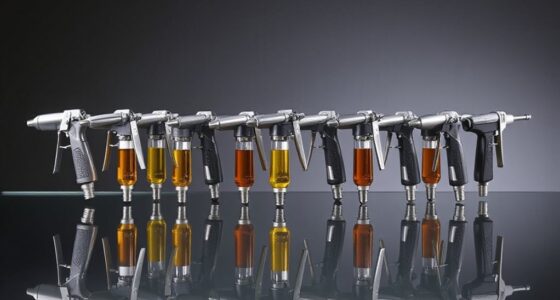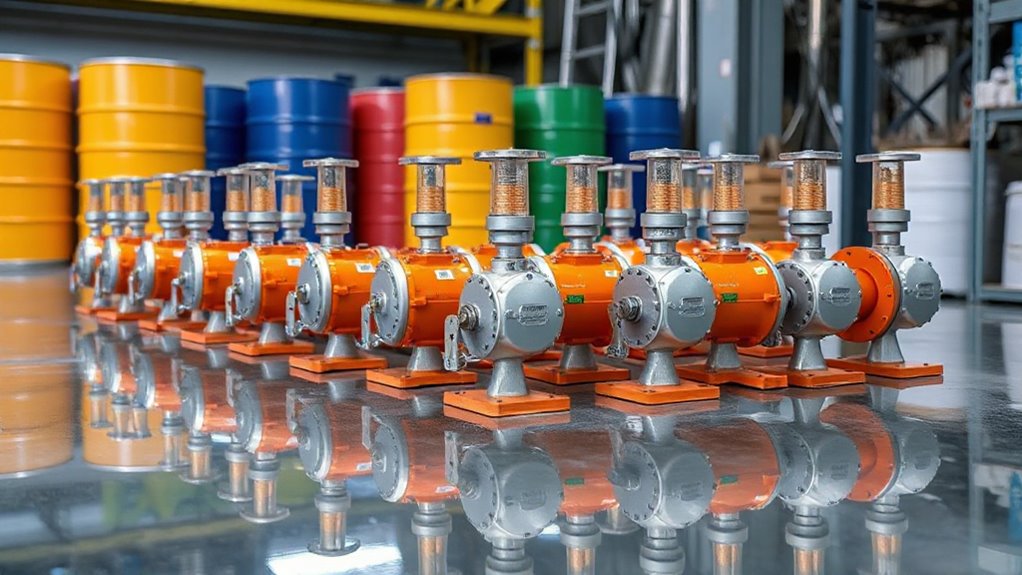
A chemical-resistant transfer pump needs to match the fluid as well as the job: a pump that handles one corrosive solution may be unsuitable for another. My best overall pick is the Little Giant 3-MD-MT-HC, a magnetic-drive option suited to buyers prioritizing chemical handling over portability. The Little Giant TE-5-MD-SC stands out for semi-corrosive applications, while the Pumpoasis 12V diaphragm pump offers a portable route for compatible liquids. The main tradeoffs are powered flow and setup versus manual simplicity, plus chemical compatibility versus versatility. Read on for the full breakdown, selection criteria, and guidance on checking pump materials against your fluid.

Get business pricing on garage and car supplies
- Business-only prices and quantity discounts
- Tax-exempt purchasing
- Multiple users, one account, clear invoices
Complete the kit


Key Takeaways
- Magnetic-drive Little Giant pumps lead for fixed chemical-transfer setups: the 3-MD-MT-HC and 5-MD-HC are more specialized choices than portable drum pumps, but the fluid must match their materials.
- The TE-5-MD-SC fills a different compatibility niche: its semi-corrosive designation should not be treated as approval for every aggressive chemical.
- Manual rotary pumps favor simple drum transfer: the TALFIT, TRUPOW, TERA PUMP Chemical-Resistant Rotary Drum Pump, and TRDRUM40 avoid electrical power, with the tradeoff of hand operation.
- Portable electric and diaphragm models solve different problems: the 12V TERA PUMP and Pumpoasis options suit mobile setups, while the NC FL-540B is a 115V distribution-style diaphragm pump.
- Flow figures alone do not establish suitability: compatibility charts, seals, concentration, temperature, viscosity, and duty cycle matter as much as advertised capacity.
| Little Giant TE-5-MD-SC Semi-Corrosive Chemical Pump, 115/230V, 1200 GPH |  | Best Overall for Continuous In-Line Recirculation | Voltage: 115/230 V | Frequency: 50/60 Hz | Power: 1/10 HP; 220 W at 50 Hz, 325 W at 60 Hz | VIEW ON AMAZON | See Our Full Breakdown |
| Pumpoasis 12V Diaphragm Sprayer Pump, 2.5 GPM, 60 PSI |  | Best for Portable 12V Spraying | Voltage: 12 V | Flow rate: 2.5 GPM | Adjustable pressure: 0–60 PSI | VIEW ON AMAZON | See Our Full Breakdown |
| Little Giant 3-MD-MT-HC 115V Magnetic Drive Chemical Pump |  | Best Compact Pump for Hot, Corrosive Fluids | Voltage and current: 115 V; 1.3 A | Power: 1/25 HP; 94 W | Flow rate: 8.3 GPM | VIEW ON AMAZON | See Our Full Breakdown |
| TALFIT Manual Rotary Drum Pump, 10 GPM, for 15–55 Gallon Drums |  | Best Value for Mild-Chemical Drum Transfers | Operation: Manual rotary | Drum capacity: 15–55 gallons | Stated flow rate: 10 GPM | VIEW ON AMAZON | See Our Full Breakdown |
| TERA PUMP Chemical-Resistant Rotary Drum Pump |  | Best Adjustable-Fit Manual Drum Pump | Operation: Manual rotary | Flow rate: Up to 10 GPM | Drum capacity: 15–55 gallons (50–205 L) | VIEW ON AMAZON | See Our Full Breakdown |
| NC FL-540B Chemical Distribution Diaphragm Pump, 115V, 40 L/min | 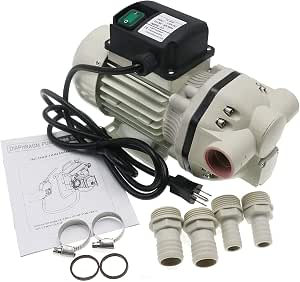 | Best for AdBlue and AUS 32 Transfer | Pump type: Diaphragm | Voltage: AC 115V | Current: 2.8A | VIEW ON AMAZON | See Our Full Breakdown |
| TRUPOW Manual Rotary Drum Pump for 15–55 Gallon Drums, 10 GPM |  | Best Manual High-Flow Drum Pump | Model: RP90P | Operation: Hand rotary | Power source: Manual | VIEW ON AMAZON | See Our Full Breakdown |
| Little Giant 5-MD-HC 115V Chemical Pump |  | Best for Corrosive In-Line Circulation | Application: In-line, non-submersible circulation of corrosive chemicals | Flow rate: 1,050 GPH at 0-ft lift | Shutoff: 27.5 ft | VIEW ON AMAZON | See Our Full Breakdown |
| TERA PUMP TRDRUM40 Heavy-Duty Manual Drum Pump |  | Best for Controlled Manual Drum Dispensing | Operation: Manual lever-action | Maximum flow rate: 5.5 gallons per minute | Drum compatibility: 15–55 gallons (50–205 liters) | VIEW ON AMAZON | See Our Full Breakdown |
| TERA PUMP Chemical-Resistant 12V Electric Drum Pump |  | Best 12V Powered Drum Option | Power source: Corded electric, 12V AC adapter | Maximum flow rate: 4.2 gallons per minute | Maximum lifting height: 2.8 feet | VIEW ON AMAZON | See Our Full Breakdown |
| chemical resistant transfer pump | Flow rate |
|---|---|
| Little Giant TE-5-MD-SC Semi-C | 1200 GPH at 1-ft lift; 20 GPM |
| Pumpoasis 12V Diaphragm Spraye | 2.5 GPM |
| Little Giant 3-MD-MT-HC 115V M | 8.3 GPM |
| TALFIT Manual Rotary Drum Pump | — |
| TERA PUMP Chemical-Resistant R | Up to 10 GPM |
| NC FL-540B Chemical Distributi | 40 L/min |
| TRUPOW Manual Rotary Drum Pump | 10 gallons per minute (35 liters per minute) |
| Little Giant 5-MD-HC 115V Chem | 1,050 GPH at 0-ft lift |
| TERA PUMP TRDRUM40 Heavy-Duty | — |
| TERA PUMP Chemical-Resistant 1 | — |
More Details on Our Top Picks
Little Giant TE-5-MD-SC Semi-Corrosive Chemical Pump, 115/230V, 1200 GPH
The Little Giant TE-5-MD-SC is my strongest fit for fixed installations that need steady recirculation of compatible, mildly corrosive liquids. Its seal-less magnetic drive avoids a shaft seal as a potential leak path, while the glass-filled polypropylene housing and alumina ceramic shaft components suit chemical service better than a general-purpose water pump. The dual-voltage motor also offers more installation flexibility than the 115V-only Little Giant 3-MD-MT-HC.
That extra flexibility comes with a larger, heavier pump and a lower stated flow rate than the 3-MD-MT-HC. The TE-5 is for in-line, non-submersible use, not drawing directly while submerged. Its plug arrives separate from the pump, so electrical setup needs attention before commissioning. I would choose it for compatible mild chemicals and recirculation, not assume it can handle every corrosive fluid.
Pros:- Seal-less magnetic drive removes a conventional shaft-seal leak path.
- Glass-filled polypropylene and 99.5% alumina ceramic components are selected for compatible chemical service.
- 115/230V operation accommodates more electrical setups than the 115V-only Little Giant 3-MD-MT-HC.
- Rotating pump head supports servicing without special tools.
Cons:- Non-submersible in-line design rules out direct use inside a tank or drum.
- Separate plug is not installed, adding electrical setup work.
- At 15.7 lb, it is heavier than the compact 3-MD-MT-HC.
Best for: Operators setting up an in-line recirculation loop for compatible mildly corrosive solutions who want dual-voltage capability and a serviceable pump head.
Not ideal for: Buyers needing a submersible pump, a ready-to-plug connection, or materials verified for a specific aggressive chemical without checking compatibility.
- Voltage:115/230 V
- Frequency:50/60 Hz
- Power:1/10 HP; 220 W at 50 Hz, 325 W at 60 Hz
- Flow rate:1200 GPH at 1-ft lift; 20 GPM
- Maximum lifting height:29.3 ft shut-off
- Connections:1-inch FNPT intake; 1/2-inch MNPT discharge
- Materials:Glass-filled polypropylene; 99.5% alumina ceramic shaft and thrust washers
- Dimensions and weight:11.16 × 5.2 × 7.2 in; 15.7 lb
- Cord:6 ft; separate plug, not installed
Our verdict“Choose the TE-5-MD-SC for a fixed, dual-voltage recirculation system handling compatible mildly corrosive liquids, but not for submersible transfer.”
Pumpoasis 12V Diaphragm Sprayer Pump, 2.5 GPM, 60 PSI
The Pumpoasis 12V diaphragm pump is the portable choice here for sprayer, irrigation, RV, and boat setups that need adjustable pressure rather than high-volume drum emptying. Its 0–60 PSI adjustment and automatic pressure switch can regulate delivery as a spray wand opens and closes; the manual TERA PUMP Chemical-Resistant Rotary Drum Pump has no comparable pressure control, but does not depend on a battery or electrical supply.
This pump’s chemical-resistant diaphragm is a useful feature, not a guarantee of compatibility with every chemical: check the fluid and wetted-material suitability before use. The stated maximum lifting height is only 8 ft, despite a separate 114 ft claim in the product information, so I would plan around the specified 8 ft figure. It also needs balanced inlet and outlet flow to avoid frequent switch cycling. For large-volume transfer, a 10 GPM drum pump is a better match.
Pros:- Adjustable 0–60 PSI output suits varied spraying and water-delivery tasks.
- Automatic pressure switch can stop the pump when demand closes.
- Self-priming capability is listed up to 10 ft.
- Includes 1/2-in and 3/4-in hose adapters and an inlet filter.
Cons:- Maximum lifting height is listed as 8 ft, conflicting with a separate 114 ft claim.
- Unbalanced inlet and outlet flow can cause frequent pressure-switch cycling.
- At 2.5 GPM, it is slower for drum emptying than the manual TERA PUMP Chemical-Resistant Rotary Drum Pump’s stated rate of up to 10 GPM.
Best for: 12V sprayer and mobile-equipment owners who need adjustable pressure for compatible liquids and can provide a stable, balanced plumbing setup.
Not ideal for: Buyers transferring full drums quickly, working without a 12V power source, or relying on a high lift beyond the specified 8 ft.
- Voltage:12 V
- Flow rate:2.5 GPM
- Adjustable pressure:0–60 PSI
- Current:8 A
- Self-priming height:10 ft
- Maximum lifting height:8 ft listed
- Pump type and motor:Diaphragm; all-copper motor
- Material:Plastic body; chemical- and corrosion-resistant diaphragm
- Hose adapters:1/2 in and 3/4 in
Our verdict“Pick this 12V model for pressure-controlled spraying with compatible liquids, not for fast drum transfer or applications needing a dependable high lift.”
Little Giant 3-MD-MT-HC 115V Magnetic Drive Chemical Pump
Where the TE-5-MD-SC prioritizes dual-voltage flexibility and higher stated flow, the Little Giant 3-MD-MT-HC is the more compact choice for compatible corrosive chemicals at temperatures up to 200°F. Its glass-filled Ryton housing and impeller, alumina ceramic components, and Viton O-ring provide a clearly specified material package for demanding service. At 6 lb, it is much easier to fit into a tight installation than the 15.7-lb TE-5.
The tradeoff is capacity: the 3-MD-MT-HC is rated at 8.3 GPM, compared with the TE-5’s stated 20 GPM. It also runs on 115V only, and no switch is included, so this is not a ready-made plug-and-play system. I’d select it when temperature tolerance, corrosion-resistant materials, and compact service access matter more than throughput or dual-voltage options.
Pros:- Specified for compatible fluid temperatures up to 200°F.
- Glass-filled Ryton, alumina ceramic, and Viton components target corrosive-fluid service.
- Compact 6-lb build and rotatable head help with tight installations.
- Seal-less magnetic drive and tool-free fasteners support maintenance access.
Cons:- 8.3 GPM stated flow is below the TE-5-MD-SC’s 20 GPM figure.
- 115V-only motor offers less electrical flexibility than the TE-5-MD-SC.
- No switch is included, and it is limited to in-line, non-submersible installation.
Best for: Process operators needing a compact, non-submersible pump for compatible corrosive fluids up to 200°F, especially where installation space is limited.
Not ideal for: Buyers needing higher throughput, dual-voltage operation, a supplied switch, or a pump for fluids whose compatibility with the listed materials has not been confirmed.
- Voltage and current:115 V; 1.3 A
- Power:1/25 HP; 94 W
- Flow rate:8.3 GPM
- Maximum lifting height:16.2 ft shut-off
- Maximum fluid temperature:200°F
- Connections:1/2-inch MNPT intake and discharge
- Wetted materials:Glass-filled Ryton housing and impeller; 99.5% alumina ceramic shaft and thrust washers; Viton O-ring
- Dimensions and weight:8.25 × 3.94 × 5.23 in; 6 lb
- Cord and certification:6-ft cord with 3-prong plug; CSA certified to US and Canadian standards
Our verdict“Choose the 3-MD-MT-HC when compact size and hot-fluid material compatibility outweigh the lower flow rate and 115V-only setup.”
TALFIT Manual Rotary Drum Pump, 10 GPM, for 15–55 Gallon Drums
The TALFIT Manual Rotary Drum Pump makes sense when the job is moving compatible mild chemicals from a standard 15–55 gallon drum without a powered setup. Its PP and PPS construction is described as corrosion-resistant, and manual operation avoids the electrical connections required by the Little Giant TE-5-MD-SC and 3-MD-MT-HC. The stated 10 GPM rate also makes it a more direct fit for drum dispensing than the smaller-flow Pumpoasis diaphragm pump.
That simplicity has limits: the 10 GPM figure is stated rather than tied to a specified fluid or operating condition, and the user must provide the rotary effort. Unlike the TERA PUMP Chemical-Resistant Rotary Drum Pump, the TALFIT data does not specify a reversible flow direction or suction-tube length, making fit and transfer setup less detailed. It is best reserved for listed compatible fluids, not assumed suitable for every corrosive chemical.
Pros:- Manual operation needs no electricity or motor wiring.
- Stated 10 GPM flow rate suits routine drum dispensing.
- PP and PPS construction is described as corrosion-, aging-, and heat-resistant.
- Listed for a range of liquids, including coolants, cleaners, fertilizers, and mild chemicals.
Cons:- Rotary operation requires ongoing manual effort.
- Designed for 15–55 gallon drums, limiting container compatibility.
- Product data does not specify a suction-tube length or reversible pumping.
Best for: Workshops and maintenance teams transferring compatible mild chemicals or other listed liquids from 15–55 gallon drums without an electrical supply.
Not ideal for: Users needing powered, unattended transfer, a specified adjustable suction tube, or documented compatibility with highly corrosive chemicals.
- Operation:Manual rotary
- Drum capacity:15–55 gallons
- Stated flow rate:10 GPM
- Materials:Polypropylene (PP) and polyphenylene sulfide (PPS)
- Listed liquid types:Water, diesel exhaust fluid, diesel, kerosene, oils, coolants, cleaners, fertilizers, and mild chemicals
- Weight:4.6 lb
- Warranty:1 year manufacturer
Our verdict“Choose the TALFIT for straightforward, electricity-free dispensing of compatible liquids from standard drums, but not for highly corrosive fluids or powered transfer.”
TERA PUMP Chemical-Resistant Rotary Drum Pump
The TERA PUMP Chemical-Resistant Rotary Drum Pump stands apart from the TALFIT by specifying a segmented suction tube extending to 49.5 inches, which gives buyers a clearer fit for different drum depths. Its polypropylene body, Ryton vane, and Viton seal are identified materials for compatible liquids, and the pump can move fluid in either direction at up to 10 GPM. As a manual pump, it also avoids the power and wiring needs of the Little Giant magnetic-drive models.
Its chemical resistance is not universal: the product is explicitly not suitable for gasoline, and other fluids still need material-compatibility checks. Rotary pumping requires ongoing manual effort, so this is not the choice for unattended or continuous transfer. Drum fit is also specific: it is designed for 15–55 gallon barrels with a 2-inch bung opening. I’d favor it over the TALFIT when tube length and reversible flow matter more than a simpler specification set.
Pros:- Segmented suction tube extends to 49.5 inches for varied drum depths.
- Pumps in either direction at up to 10 GPM.
- Glass-filled polypropylene, Ryton, and Viton materials are specified for compatible-liquid use.
- Manual operation works without electricity.
Cons:- Not suitable for gasoline, and compatibility with other chemicals must be checked.
- Manual rotary operation requires continued user effort.
- Limited to 15–55 gallon drums with a compatible 2-inch bung opening.
Best for: Users transferring compatible liquids from 15–55 gallon drums who need an adjustable-length suction tube and the option to pump in either direction.
Not ideal for: Gasoline handlers, buyers using drums without a compatible 2-inch bung, or operations needing automatic or continuous powered transfer.
- Operation:Manual rotary
- Flow rate:Up to 10 GPM
- Drum capacity:15–55 gallons (50–205 L)
- Suction tube:Segmented; extends up to 49.5 in
- Drum opening:2-inch bung opening
- Pump materials:Glass-filled polypropylene body; Ryton vane; Viton seal
- Outlet:Two-piece spout with 3/4-inch BSP threads
- Weight:2.11 kg
- Fluid restriction:Not suitable for gasoline
Our verdict“Choose the TERA PUMP when adjustable reach and reversible manual transfer matter, provided the liquid and drum opening are compatible.”
NC FL-540B Chemical Distribution Diaphragm Pump, 115V, 40 L/min
The NC FL-540B makes the most sense when you want powered transfer of AdBlue or AUS 32 and need a pump body described as resistant to urea, acids, alkalis, and corrosion. Its 40 L/min flow rate, self-priming action, and dry-running capability offer more flexibility than the hand-powered TRUPOW RP90P, while the built-in pressure switch and heat protector add useful safeguards during routine transfer. The tradeoff is a narrower operating brief: the liquid must be free of hard particles, and continuous operation beyond three hours is not recommended. Product guidance also conflicts about irrigation and sprayer use, so I would stick to its listed compatible fluids rather than assume broader suitability. Choose it for compatible, relatively clean fluids—not for solids or long unattended runs.
Pros:- Fluororubber pump body is described as resistant to urea, acids, alkalis, and corrosion.
- Self-priming and dry-running capability provide flexibility during setup and fluid transfer.
- Built-in pressure switch and heat protector add operating safeguards.
- 40 L/min flow rate is faster than many small manual transfer options.
Cons:- Pumped liquid must be free of impurities and hard particles.
- Continuous operation beyond three hours is not recommended.
- Application guidance conflicts about irrigation and sprayer use.
Best for: Operators transferring clean AdBlue or AUS 32 who want self-priming electric operation and built-in pressure and heat protection.
Not ideal for: Users handling particle-laden liquids, needing all-day continuous pumping, or relying on clear guidance for irrigation and sprayer applications.
- Pump type:Diaphragm
- Voltage:AC 115V
- Current:2.8A
- Flow rate:40 L/min
- Maximum pressure:40 PSI (2.75 bar)
- Pump body material:Fluororubber
- Compatible fluids:AdBlue, AUS 32, water
- Maximum fluid temperature:60 °C
Our verdict“Choose the FL-540B for clean AdBlue or AUS 32 transfer with electric convenience, but skip it for solids or extended continuous duty.”
TRUPOW Manual Rotary Drum Pump for 15–55 Gallon Drums, 10 GPM
The TRUPOW RP90P is the lineup’s manual pick for buyers who want a fast drum transfer without a power source. Its advertised 10 GPM flow rate and PP-and-PPS construction suit water, DEF, alkaline chemicals, organic solvents, and mild to moderately corrosive liquids. Against the electric NC FL-540B, it gives up powered operation and built-in controls, but avoids dependence on a 115V outlet and keeps the setup hand-operated. That makes it practical for remote drum handling, provided the fluid is within its compatibility limits. It is not a universal chemical pump: gasoline and high-viscosity liquids are specifically out, and manual rotary operation still requires the user to supply the effort. I would choose it over the slower TERA PUMP TRDRUM40 when compatible-fluid flow is the priority.
Pros:- Manual operation needs no electricity or complicated power setup.
- Advertised flow rate reaches 10 gallons per minute.
- PP and PPS construction is described as corrosion-, aging-, and heat-resistant.
- Compatible with water, DEF, alkaline chemicals, organic solvents, and mild to moderately corrosive fluids.
Cons:- Not suitable for gasoline.
- Not suitable for high-viscosity liquids.
- Hand operation requires ongoing effort during transfer.
Best for: Workshops and agricultural users moving compatible, low-viscosity fluids from 15–55 gallon drums where electrical power is unavailable.
Not ideal for: Users transferring gasoline, thick liquids, or fluids needing powered, unattended operation.
- Model:RP90P
- Operation:Hand rotary
- Power source:Manual
- Flow rate:10 gallons per minute (35 liters per minute)
- Drum capacity:15–55 gallons
- Materials:Polypropylene (PP) and PPS
- Weight:4.6 pounds
- Compatible fluids:Water, DEF, alkaline chemicals, organic solvents, and mild to moderately corrosive liquids
Our verdict“Pick the RP90P for high-flow manual transfer of compatible liquids from standard drums, not for gasoline or thick fluids.”
Little Giant 5-MD-HC 115V Chemical Pump
For fixed installations circulating demanding chemicals, the Little Giant 5-MD-HC is the most specialized option here. Its seal-less magnetic drive avoids a conventional shaft seal, a meaningful design choice when leakage is a concern, and the pump is described for highly corrosive acids, alkalis, and solvents. With up to 1,050 GPH at zero lift and a 27.5-foot shutoff, it is better suited to in-line circulation than the drum-focused TRUPOW RP90P or TERA PUMP TRDRUM40. That specialization is also its main limitation: it is non-submersible, requires 115V power, and needs compatible plumbing connections. Its 200°F liquid-temperature ceiling may rule out some processes, so chemical compatibility and operating conditions need checking before selection.
Pros:- Seal-less magnetic drive design avoids a conventional shaft seal.
- Designed for in-line circulation of highly corrosive acids, alkalis, solvents, and other chemicals.
- Service access is described as easy, without special tools.
- Motor includes thermal protection.
Cons:- Limited to in-line, non-submersible use.
- Requires a 115V power supply.
- Maximum liquid temperature of 200°F may not suit every chemical process.
Best for: Facilities needing a serviceable, 115V in-line pump for circulating compatible corrosive chemicals in a fixed setup.
Not ideal for: Drum-transfer buyers, users needing a submersible pump, or processes exceeding its 200°F maximum liquid temperature.
- Application:In-line, non-submersible circulation of corrosive chemicals
- Flow rate:1,050 GPH at 0-ft lift
- Shutoff:27.5 ft
- Maximum liquid temperature:200°F
- Voltage:115V
- Power:240 Watts
- Discharge size:1/2-inch MNPT
- Intake size:1-inch FNPT
Our verdict“Choose the 5-MD-HC for compatible corrosive-chemical circulation in a fixed 115V line, not for portable drum pumping.”
TERA PUMP TRDRUM40 Heavy-Duty Manual Drum Pump
The TERA PUMP TRDRUM40 favors control and reach over the high output of the TRUPOW RP90P. Its lever action, 47.2-inch flexible hose, and nozzle holder make it easier to direct a manual transfer into a receiving container, while the segmented suction tube fits 15–55 gallon drums. The product is listed for fuels, oils, chemicals, and potable water, giving it a broader stated use range than the RP90P, which excludes gasoline. But the TRDRUM40’s 5.5 GPM maximum is notably below TRUPOW’s 10 GPM claim, and moving liquid still depends on repeated manual operation. The plastic construction and need to remove E85 after use also call for attention to fluid compatibility and cleanup. I’d favor it when hose handling matters more than maximum throughput.
Pros:- Lever action transfers up to 5.5 gallons per minute without electricity.
- Three-piece telescopic suction tube fits 15–55 gallon drums.
- 47.2-inch flexible hose includes an integrated nozzle holder.
- BPA-free design is described as suitable for potable water.
Cons:- Manual operation requires user effort throughout transfer.
- Maximum flow rate is lower than the TRUPOW RP90P’s advertised 10 GPM.
- E85 should be removed from the pump after use.
Best for: Users dispensing compatible fluids from 15–55 gallon drums who value a flexible hose, nozzle holder, and manual control.
Not ideal for: Buyers prioritizing the fastest manual transfer, or users who need electric pumping or do not want to manage E85 cleanup.
- Operation:Manual lever-action
- Maximum flow rate:5.5 gallons per minute
- Drum compatibility:15–55 gallons (50–205 liters)
- Suction tube:Three-piece segmented telescopic tube, approximately 34.4 inches
- Bung adapter:Built-in 2-inch NPS
- Discharge hose length:47.2 inches
- Material:Plastic
- Warranty:1 year against manufacturer defects
Our verdict“Choose the TRDRUM40 for controlled manual dispensing from drums when its hose and nozzle holder matter more than maximum flow.”
TERA PUMP Chemical-Resistant 12V Electric Drum Pump
The TERA PUMP 12V electric drum pump is the powered choice for users handling listed fluids such as gasoline, diesel, kerosene, DEF, and agricultural chemicals from standard drums. Its 4.2 GPM maximum flow is lower than the manual TRUPOW RP90P’s advertised 10 GPM, but a 12V supply can reduce the repeated effort required by the TRDRUM40’s lever. The adjustable suction tube fits 15–55 gallon drums, and the adapter supports 2-inch NPT or buttress openings. The tradeoff is limited lift: it reaches only 2.8 feet and will not reach the bottom of IBC containers. Flow also falls with more viscous liquids, so this is best matched to low-viscosity fluids and drum work rather than thick products or larger bulk tanks.
Pros:- Handles listed fluids including gasoline, diesel, kerosene, DEF, and agricultural chemicals.
- 12V powered operation avoids continuous hand pumping.
- Adjustable suction tube fits 15–55 gallon drums.
- Adapter connects to 2-inch NPT or buttress openings, and the handle has a flow-control lock.
Cons:- Will not reach the bottom of IBC containers.
- Maximum lifting height is 2.8 feet.
- Flow rate decreases with more viscous liquids.
Best for: Mobile operators who need powered transfer of compatible, low-viscosity fluids from 15–55 gallon drums and have a 12V supply.
Not ideal for: IBC users, buyers handling viscous fluids, or anyone needing higher lift or the flow rate claimed for the TRUPOW RP90P.
- Power source:Corded electric, 12V AC adapter
- Maximum flow rate:4.2 gallons per minute
- Maximum lifting height:2.8 feet
- Suction tube length:Adjustable from 22.6 to approximately 34 inches
- Compatible containers:15–55 gallon drums
- Included adapter:2-inch NPT to 2-inch buttress
- Material:Plastic
- Warranty:1-year limited
Our verdict“Choose this TERA PUMP for powered, low-viscosity transfer from standard drums when 12V power is available, but not for IBCs.”

How We Picked
I ranked these pumps by how clearly their design fits chemical transfer: the stated chemical-duty or semi-corrosive positioning, drive type, power needs, intended container, and the practical limits implied by each format. I gave more weight to specialized chemical-handling designs than to general-purpose convenience, while distinguishing pumps intended for fixed installations from drum-mounted and portable options. The product names and supplied specifications establish the comparison points, but they do not confirm compatibility with every fluid.
That is why the lineup favors a magnetic-drive chemical pump for the overall position, with the TE-5-MD-SC close behind for less aggressive service. The ranking then separates powered distribution pumps from manual drum pumps rather than treating their flow claims as directly comparable. I also considered setup complexity, portability, and likely buyer fit; where chemical compatibility, materials, or performance details are not specified, I treat that as a reason to verify before purchase rather than assume a match.
Factors to Consider When Choosing Chemical Resistant Transfer Pump
Before choosing by flow rate or voltage, I would start with the fluid and the transfer conditions. Pump materials, seals, concentration, temperature, and the receiving setup can change which design is safe and practical.
Match Every Wetted Material to the Exact Fluid
“Chemical resistant” is not a universal material rating, so I would check the manufacturer’s compatibility information for the exact chemical, concentration, and temperature. The wetted path includes more than the pump body: seals, hoses, valves, fittings, and any dip tube can set the limit. A solution compatible at room temperature may behave differently when heated or concentrated. Avoid choosing from a broad label such as chemical-duty or semi-corrosive alone. If the compatibility chart does not cover the fluid or operating conditions, ask the manufacturer before buying. This extra check is more useful than choosing a pump solely because it has a higher flow figure.
Choose a Drive Style for the Job Site
Fixed installations with a suitable power source can make an electric magnetic-drive pump a sensible choice, while drum pumps and 12V models are easier to position around containers or mobile equipment. Manual rotary pumps avoid dependence on mains power and electrical connections, but each transfer requires physical effort. A 12V pump still needs a compatible power supply and safe cable placement; portability does not remove electrical or fluid-handling risks. Think about where the source drum sits, how far the liquid must travel, and whether the receiving vessel can be positioned nearby. A pump that fits the work area can be more useful than one with a higher stated capacity.
Treat Flow Rate as a Starting Point, Not a Promise
Published flow figures usually describe favorable conditions and may not reflect a real installation with hose length, lift, bends, or a restrictive nozzle. Viscosity and fluid temperature can also affect how quickly a pump moves liquid. Before sizing, estimate the amount transferred per task and the time available, then check the manufacturer’s performance information for the expected head and fluid. Do not compare a drum pump’s stated gallons per minute directly with a pump rated under a different setup. Oversizing can add cost and make controlled dispensing harder, while undersizing can prolong transfers and encourage extended operation beyond the pump’s intended duty cycle.
Check Container Fit, Priming, and Transfer Control
Drum-mounted pumps are convenient only when the tube, opening, and drum geometry fit the container in use. Check the specified drum range and opening dimensions, along with how the pump is primed and stopped. Manual rotary designs give the operator direct control but can still spill if the outlet hose is not secured or the receiving vessel is too small. Powered pumps may move fluid faster, so shutoff arrangements and a stable hose connection deserve attention. A common mistake is to plan for the source container but overlook where the hose drains and how residual liquid will be contained.
Balance Convenience Against Maintenance and Downtime
Consider how the pump will be flushed, drained, stored, and inspected between uses. A pump dedicated to one compatible chemical may simplify handling, while a shared pump can create contamination risks if cleaning is incomplete. Ask whether replacement seals or other service parts are available and whether the design permits routine inspection. Manual pumps have fewer electrical requirements but still need checks for wear, leaks, and residue. A more specialized electric model can make sense for repeated transfers, but occasional drum use may not justify added installation and maintenance demands. Choose a plan for cleaning and storage before the first transfer, not after a chemical has dried in the pump.
Plan for Safe Transfer and Applicable Requirements
Review the chemical’s safety data sheet and workplace procedures before moving it, including required personal protective equipment and spill response. Confirm whether the transfer location requires bonding, grounding, ventilation, or a particular electrical rating; these needs depend on the fluid and environment. Keep the pump and hoses secured, use a compatible receiving container, and avoid unattended operation unless the equipment and procedure allow it. Do not assume that a chemically compatible pump is suitable for flammable liquids or hazardous locations. When the fluid presents a serious exposure, fire, or environmental risk, use a qualified safety or process professional to review the setup.
Frequently Asked Questions
Can I use a pump labeled chemical-resistant with any acid or solvent?
No. Chemical resistance depends on the precise fluid, its concentration, temperature, and contact time, as well as every wetted part. A pump body may tolerate a substance while its seals or hose do not. Check the manufacturer’s compatibility chart for the complete fluid path and operating conditions. If the exact chemical is not listed, request written guidance rather than relying on a general label. Also confirm whether the pump is approved for any separate hazards, such as flammable vapors.
Should I choose a magnetic-drive pump or a drum pump?
I would base that choice on installation and how often the transfer happens. Magnetic-drive models in this lineup are better aligned with powered, more fixed chemical-transfer setups, while drum pumps are built around drawing liquid from a container. Manual drum pumps avoid electrical power but require repeated hand operation; electric drum pumps add convenience and a power requirement. Compare container fit, hose routing, lift, and duty cycle before deciding. The chemical compatibility check applies to either format.
Is the highest listed flow rate the best way to choose?
Not on its own. Advertised flow can change with fluid viscosity, vertical lift, hose length, fittings, and outlet restrictions, so figures from different pump types may not be directly comparable. First estimate the transfer volume and acceptable transfer time, then check performance data under conditions close to yours. A faster pump may be harder to control when dispensing small amounts or filling narrow containers. Chemical compatibility and safe handling should take priority over a headline capacity.
When does a manual rotary pump make more sense than a powered model?
A manual rotary pump can suit occasional drum transfers where mains power is unavailable or a simple, self-contained setup is preferred. It avoids a motor and electrical supply, but hand effort and transfer time become part of the job. For frequent or larger transfers, repeated manual operation may be tiring and slow. Check the drum fit, materials, priming method, and outlet control before choosing one. Manual operation does not remove the need for chemical-compatible parts or spill precautions.
What information should I confirm before ordering a pump for a specific chemical?
Have the chemical name, concentration, operating temperature, expected transfer volume, and any relevant viscosity information ready. Ask for compatibility details covering the pump casing, seals, hose, valves, and fittings—not just the main body. Confirm the required lift, flow under your setup, power supply, duty cycle, and container fit. Check the safety data sheet and site rules for hazards that affect electrical equipment or transfer procedures. If any key material or operating limit remains unclear, pause the purchase and get manufacturer or qualified process guidance.
Conclusion
For a powered setup centered on chemical duty, my best overall pick is the Little Giant 3-MD-MT-HC; choose it only after confirming its materials suit your fluid and conditions. The best value for straightforward drum work is a manual rotary option such as the TALFIT or TRUPOW, provided their materials and fit check out. For a premium, more specialized fixed installation, compare the Little Giant 5-MD-HC with the 3-MD-MT-HC against your required capacity and setup. Beginners handling compatible liquids in drums may find a manual pump easier to set up, while the TE-5-MD-SC is the lineup’s more targeted choice for semi-corrosive service. For mobile powered transfer, compare the TERA PUMP 12V and Pumpoasis diaphragm pump; for 115V distribution, look at the NC FL-540B. Across every buyer type, the final choice should follow verified chemical compatibility, not the product label alone.