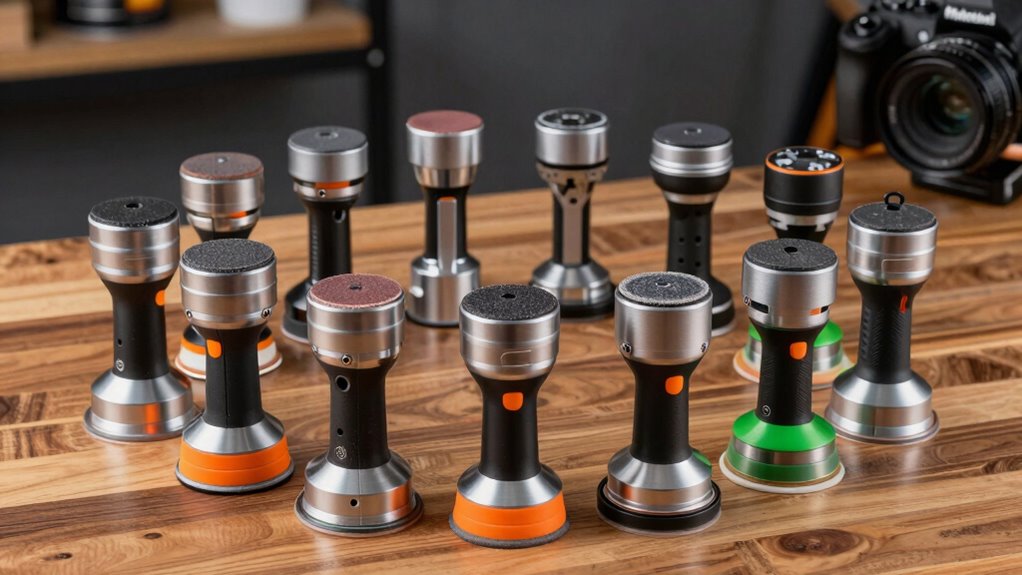

A pneumatic orbital sander can suit a shop with a capable air system, but the right choice depends on pad size, orbit, dust collection, and how much control your work needs. My best overall pick is the Dynabrade Dynorbital-Spirit 5-inch, a focused choice for buyers prioritizing a dedicated 5-inch tool from an established maker. The 3M 5-inch non-vacuum sander stands out for a defined 3/16-inch orbit, while the ZFE 1/2/3-inch kit offers more pad-size flexibility and included accessories. These options differ in specialization, setup, and versatility, and none replaces checking your compressor’s airflow requirements before buying. Read on for the full comparison and help matching a sander to your workload.

Get business pricing on garage and car supplies
- Business-only prices and quantity discounts
- Tax-exempt purchasing
- Multiple users, one account, clear invoices
Complete the kit


Key Takeaways
- The lineup splits between 5-inch sanders suited to controlled, general surface work and 6-inch models that cover more area per pass but need a compatible larger pad setup.
- The Dynabrade Dynorbital-Spirit and 3M model are more clearly specified choices than listings described mainly as professional or heavy duty; buyers should verify exact specs on less-detailed listings.
- The ZFE kit’s 1-, 2-, and 3-inch options address small-area sanding and polishing, but it is not a direct substitute for a standard 5- or 6-inch production sander.
- Several picks include dual-size plates, pads, or abrasives, which can reduce setup shopping but do not establish how the tools perform or how durable their accessories are.
- Compressor compatibility is a shared buying constraint: a sander’s air demand and required pressure matter as much as its orbit or pad diameter.


| pneumatic orbital sander | Power source | Pad diameter | Maximum speed | Weight |
|---|---|---|---|---|
| ZFE 1/2/3 Inch Random Orbital | Air-powered | — | — | — |
| Professional Air Random Orbita | Air-powered | 6 inches | — | — |
| Random Orbital Sander 5" & 6" | Pneumatic | — | — | — |
| Professional Air Random Orbita | Air-powered | 5 inches | — | — |
| Autolock 6-Inch Air Random Orb | Air-powered | — | — | — |
| 3M Non-Vacuum Random Orbital S | — | 5 inches | 12,000 RPM at 90 PSI | — |
| Professional Air Random Orbita | Air powered | 6 inches | 12,000 RPM | 1.11 kg |
| TOOLPEAK 5-Inch Air Palm Rando | Air powered | — | — | 1 kg |
| Dynabrade Dynorbital-Spirit 5- | — | 5 inches (127 mm) | 12,000 RPM | 0.65 kg |
| PROSHI 6-Inch Random Orbit Air | Air powered | 6 inches | 10,000 RPM | — |
| Chicago Pneumatic CP870 6-Inch | Compressed air | — | 10,000 rpm | 4.3 pounds |
| Ingersoll Rand 300G 6" Random | Air-powered | 6 inches | 10,000 rpm | 1.2 kg |
| Ingersoll Rand 4152 Random Orb | Air-powered | 6 inches | 12,000 rpm | 1.36 kg |
| Professional 5-inch Air Random | Air-powered | 5 inches | — | 1.06 kg |
| Autolock 5 Inches Air Random O | Air-powered | — | 12,000 rpm | 1.39 kg |
More Details on Our Top Picks
ZFE 1/2/3 Inch Random Orbital Air Sander Kit with 15 Buffing Pads and 18 Sandpapers
The ZFE stands apart from the larger sanders here because its three backing-plate sizes cover tight spots and small finishing areas that a 5- or 6-inch pad cannot reach. Its kit includes 15 buffing pads and 18 sandpapers, giving buyers more ready-to-use polishing supplies than the Autolock 6-Inch Air Random Orbital Sander listing specifies. A rated speed of 15,000 RPM supports quick spot work, while the compact 2.3-pound body is easier to position on trim or curved panels than a full-size palm sander.
The tradeoff is reach: these small plates are not a practical replacement for a 5- or 6-inch sander when removing material across broad surfaces. The listed plastic construction may also be less suited to sustained industrial use than steel-component designs. I’d choose it for localized finishing, not heavy stock removal.
Pros:- Three backing plates from 1/2 to 3 inches suit confined areas and varied detail work.
- Includes 15 buffing pads and 18 sandpapers for sanding and polishing tasks.
- 15,000 RPM rating supports fast localized finishing.
- At 2.3 pounds, the compact body is manageable for controlled spot work.
Cons:- Smallest maximum pad size makes broad-area sanding slower than with 5- or 6-inch models.
- Plastic construction may be less durable than an all-metal industrial sander.
- Requires an air compressor and suitable air supply.
Best for: Automotive detailers and woodworkers who need small-pad access for spot sanding, polishing, and work on curves.
Not ideal for: Buyers sanding large panels or removing substantial material, since the largest included backing plate is only 3 inches.
- Power source:Air-powered
- Maximum rotational speed:15,000 rpm
- Backing plate sizes:1/2, 1, and 3 inches
- Included buffing pads:15
- Included sandpapers:18
- Item weight:2.3 pounds
- Item dimensions:10.04 × 5.91 × 4.13 inches
- Model number:ARPS3SET
Our verdict“Choose the ZFE when small-area versatility and included polishing supplies matter more than the coverage of a full-size sander.”
Professional Air Random Orbital Palm Sander, Dual Action Pneumatic Sander, Low Vibration, Heavy Duty (6 inch)
This 6-inch model earns its place for work where a lightweight, low-center-of-gravity design matters more than a bundled accessory kit. At a listed 2.0 pounds, it is lighter than the 2.6-pound 5-inch Professional Air Random Orbital Palm Sander in this lineup, a useful distinction when sanding doors, body panels, or overhead surfaces. Its 12,000 RPM free speed and 3/16-inch orbit suit general finishing, while the 6-inch hook-and-loop pad covers more area per pass than the ZFE detail kit.
The downside is air demand: the listed 10.5 CFM at 90 PSI calls for a compressor that can keep up, and this is a non-vacuum design, so dust collection needs a separate plan. Product details also describe both a composite plastic body and heat-treated steel components; buyers should not read that as an all-metal housing. It is a focused sander, not a complete kit.
Pros:- Listed 2.0-pound weight favors extended vertical and overhead work.
- Six-inch pad covers panels faster than the smaller ZFE detail plates or a 5-inch sander.
- Built-in regulator allows speed adjustment.
- Heat-treated steel components are specified for the motor assembly.
Cons:- Requires 10.5 CFM at 90 PSI, which can exceed the capacity of smaller compressors.
- Non-vacuum configuration leaves dust collection to the user.
- The listing does not specify a bundle of abrasives or polishing accessories.
Best for: Auto-body and woodworking users with a compressor rated for the stated air demand who often sand vertical or overhead surfaces.
Not ideal for: Hobbyists with a small compressor or buyers who need built-in vacuum dust collection and included abrasives.
- Power source:Air-powered
- Pad diameter:6 inches
- Free speed:12,000 RPM
- Orbit diameter:3/16 inch
- Air inlet:1/4 inch
- Air pressure:90 PSI
- Average air consumption:10.5 CFM
- Item weight:2.0 pounds
- Sander type:Non-vacuum
Our verdict“Pick this model for lighter handling on larger vertical surfaces if your compressor can supply its stated airflow.”
Random Orbital Sander 5″ & 6″ Pneumatic Palm Sander with Extra 5″ Backing Plate, Sponge Polishing Pads, Sandpapers Low Vibration and Heavy Duty for Wood, Composites, Metal
This ZFE bundle is the most flexible full-size starter set among these five: it includes 5- and 6-inch backing plates, 24 sandpapers, polishing pads, microfiber cloths, and a dust bag with a 1-meter tube. That combination gives it a broader first-project setup than the bare 5-inch Professional Air Random Orbital Palm Sander, while the extra 5-inch plate offers a smaller-pad option for tighter panels. Its 10,000 RPM regulator also gives buyers a speed-control point for switching between more aggressive sanding and finishing.
Compared with the 12,000 RPM models, it is slower by specification, so buyers focused on faster panel coverage may prefer a higher-speed option. The included dust bag is not the same as a powered vacuum system, and the listing does not state air-pressure or consumption requirements. I’d favor this kit for varied home or shop jobs, while production users should check compressor compatibility and dust-control needs first.
Pros:- Includes both 5- and 6-inch backing plates for different work areas.
- Bundle includes 24 sandpapers, three polishing pads, microfiber cloths, and a dust bag.
- Integrated regulator provides speed control up to 10,000 RPM.
- Listed weight of 1.5 pounds supports light handling.
Cons:- 10,000 RPM maximum is lower than the 12,000 RPM ratings of several alternatives.
- Dust bag setup is not equivalent to a powered vacuum extraction system.
- Air pressure and air-consumption figures are not provided in the listing.
Best for: DIY woodworkers and automotive hobbyists who want two pad sizes, starter abrasives, polishing accessories, and a basic dust bag in one package.
Not ideal for: Production shops seeking documented compressor requirements, powered vacuum extraction, or a higher free speed for frequent panel work.
- Power source:Pneumatic
- Backing plate sizes:5 and 6 inches
- Maximum rotational speed:10,000 RPM
- Included sandpapers:24
- Included polishing pads:3
- Included dust collection:Dust bag with 1-meter tube
- Item weight:1.5 pounds
- Item dimensions:6 × 5.5 × 4.5 inches
Our verdict“Choose this kit for a broad mix of home and hobby projects when included accessories and two pad sizes outweigh higher speed.”
Professional Air Random Orbital Palm Sander, Dual Action Pneumatic Sander, Low Vibration, Heavy Duty
With a 5-inch hook-and-loop pad, rear exhaust, and built-in speed regulator, this model is a straightforward fit for metalwork and smaller finishing areas. Its listed 12,000 RPM free speed matches the 6-inch Professional Air Random Orbital Palm Sander, but the smaller pad offers more control on narrower parts and around welds. The product description specifically calls out residual weld material and rust, making it a more targeted choice for fabrication than the ZFE 5-and-6-inch kit, which leans toward mixed sanding and polishing jobs.
The tradeoff is coverage: a 5-inch pad takes more passes across broad panels than the 6-inch alternatives. Its listed 2.6-pound weight is also heavier than the other Professional model’s stated 2.0 pounds, which may matter over long overhead sessions. Air use is listed at 10.5 CFM at 90 PSI, so compressor capacity needs attention; the instructions also call for lubricating oil.
Pros:- Five-inch pad gives more control on smaller parts than the 6-inch models.
- Built-in regulator allows speed adjustment.
- Rear exhaust directs air away from the front working area.
- Heat-treated steel components are specified for service life.
Cons:- Smaller pad covers less area per pass than the 6-inch alternatives.
- Listed 2.6-pound weight is heavier than the comparable 6-inch Professional model.
- Requires 10.5 CFM at 90 PSI and regular lubrication.
Best for: Metal fabricators and repair users who need a compact 5-inch pad for weld cleanup, rust removal, and smaller workpieces.
Not ideal for: Users sanding broad panels for long periods or working with a compressor that cannot supply the stated 10.5 CFM at 90 PSI.
- Power source:Air-powered
- Pad diameter:5 inches
- Free speed:12,000 RPM
- Air inlet:1/4 inch
- Air pressure:90 PSI
- Average air consumption:10.5 CFM
- Exhaust:Rear
- Item weight:2.6 pounds
Our verdict“Choose this 5-inch model for controlled metal cleanup on smaller parts, not for the fastest sanding of large panels.”
Autolock 6-Inch Air Random Orbital Sander, Pneumatic Palm Sander
The Autolock is a simple match for buyers who want a 6-inch pad and adjustable speed up to 12,000 RPM for auto-body panels, furniture, wood, or metal. Its larger disc covers more surface per pass than the 5-inch Professional Air Random Orbital Palm Sander, while its stated speed is below the ZFE 1/2/3-inch kit’s 15,000 RPM—though that smaller kit is built for localized work, not panel sanding. The listed lightweight construction and low-vibration operation are useful when keeping the sander steady across a broad surface.
Its main limitation is also its defining choice: the 6-inch disc is the only listed size, so it is less adaptable around narrow edges than the ZFE kit or the two-plate ZFE 5-and-6-inch set. The product data mentions multiple accessories but does not detail their contents, and it gives no air-pressure or consumption figures. I’d treat it as a general panel sander and confirm compressor requirements before buying.
Pros:- Six-inch disc covers broad surfaces faster than a 5-inch pad.
- Adjustable speed reaches a stated maximum of 12,000 RPM.
- Designed for sanding, grinding, polishing, and waxing across several materials.
- Lightweight construction and low-vibration operation are listed.
Cons:- Only one disc size is specified, limiting access to tight or narrow areas.
- The accessory bundle is not itemized in the supplied product data.
- Air-pressure and air-consumption requirements are not stated.
Best for: Automotive and furniture users who mainly sand broad, flat surfaces and want adjustable speed on a 6-inch pneumatic tool.
Not ideal for: Buyers who need small-pad detail work, clearly itemized included accessories, or published air-consumption specifications.
- Power source:Air-powered
- Disc diameter:6 inches
- Maximum rotational speed:12,000 RPM
- Speed control:Adjustable
- Grit number:80
- Grit type:Fine
- Shape:Oval
- Amperage capacity:6 A
Our verdict“Pick the Autolock for adjustable-speed sanding across larger surfaces, provided you can confirm that your compressor suits it.”
3M Non-Vacuum Random Orbital Sander, 20317, 5 in, 3/16 in Orbit
The 3M 20317 is the strongest fit here for shops that value a controlled, repeatable finish over a broad work range. Its 5-inch pad and 3/16-inch orbit suit general sanding on wood, metal, and composites, while the precision-balanced 0.28 hp motor is designed to reduce vibration during long runs. Compared with the Dynabrade Dynorbital-Spirit 59020, it draws more air—17 SCFM versus 14 SCFM—but includes a Stikit adhesive-disc pad and can also work with compatible Hookit pads. That gives abrasive-system flexibility, though the included pad means adhesive-backed discs are the straightforward starting point. This is a non-vacuum tool, so it makes sense where dust extraction is not required or is handled separately. Its 17 SCFM demand and industrial-use focus make it a poor match for casual users or modest compressors.
Pros:- 0.28 hp precision-balanced motor is designed for smooth operation during extended sanding.
- 5-inch pad and 3/16-inch orbit provide a versatile balance of material removal and finish quality.
- Included Stikit pad supports quick changes of adhesive-backed discs.
- Aluminum body and composite cover are intended to withstand demanding shop use.
Cons:- Requires 17 SCFM at 90 PSI, more airflow than the Dynabrade Dynorbital-Spirit 59020.
- Non-vacuum configuration does not provide built-in dust extraction.
- Included Stikit pad favors adhesive-backed discs; Hookit use requires a compatible pad.
Best for: Production shops and professional finishers with a compressor capable of supplying 17 SCFM at 90 PSI who want a balanced 5-inch tool for repeated general-purpose sanding.
Not ideal for: Home users with small compressors or anyone who needs dust collection built into the sander; this model is specified as non-vacuum and requires substantial airflow.
- Power:Pneumatic, 0.28 hp
- Pad diameter:5 inches
- Orbit diameter:3/16 inch
- Maximum speed:12,000 RPM at 90 PSI
- Air consumption:17 SCFM (481 LPM)
- Working pressure:90 PSI
- Dust collection:Non-vacuum
- Included pad:5-inch Stikit low-profile disc pad
Our verdict“Choose the 3M 20317 for sustained professional finishing if your air system can meet its high airflow requirement and dust collection is handled separately.”
Professional Air Random Orbital Palm Sander, 6 inch Dual Action Pneumatic Sander
This 6-inch palm sander is the better fit when covering larger panels matters more than working in confined areas. Its 6-inch pad and 12,000 RPM maximum speed give it a wider sanding footprint than the 5-inch 3M 20317 and TOOLPEAK, which can reduce the number of passes on broad automotive or furniture surfaces. A built-in speed regulator also gives the operator a way to moderate the tool for sanding, polishing, or waxing tasks. The tradeoff is that the listed 4 CFM air consumption is unusually low for a high-speed pneumatic sander, so buyers should confirm the tool’s air requirements with its documentation and their compressor setup. The supplied details also omit an orbit size and dust-collection arrangement. It is a useful large-pad option, but less fully specified than the 3M and Dynabrade models.
Pros:- 6-inch pad covers more surface per pass than the 5-inch 3M 20317 and TOOLPEAK.
- Built-in speed regulator supports adjustment across sanding and polishing tasks.
- Lightweight, well-balanced design is intended to support extended use.
- Listed 12,000 RPM maximum speed suits fast-paced surface work.
Cons:- A 6-inch pad is less nimble on tight curves and small parts than the 5-inch options.
- The supplied product data does not state orbit size or dust-collection capability.
- Listed air consumption is 4 CFM; confirm compressor requirements before purchase.
Best for: Automotive refinishers and furniture workers who mainly sand broad surfaces and want a 6-inch pad with an integrated speed regulator.
Not ideal for: Users working on narrow or intricate parts, or buyers who need confirmed orbit and dust-collection specifications before choosing a sander.
- Power source:Air powered
- Pad diameter:6 inches
- Maximum speed:12,000 RPM
- Working pressure:90 PSI
- Air consumption:4 CFM
- Air inlet:1/4 inch
- Weight:1.11 kg
- Speed control:Built-in speed regulator
Our verdict“Pick this model for larger workpieces and adjustable speed, but verify its air and dust-collection details before committing.”
TOOLPEAK 5-Inch Air Palm Random Orbital Sander
Among these five, the TOOLPEAK is the clearest choice for buyers who want a 5-inch pneumatic sander with a stated 8 CFM air draw. That is notably below the 14 SCFM listed for the Dynabrade Dynorbital-Spirit 59020 and 17 SCFM for the 3M 20317, although compressor output should still be checked against operating pressure and real shop conditions. Its hook-and-loop pad makes abrasive changes straightforward, unlike the 3M’s included Stikit adhesive-disc setup. At 10,000 RPM, it has a lower stated maximum speed than the 12,000 RPM 3M and Dynabrade, so it is less compelling for buyers prioritizing maximum speed. The palm-grip shape and 1 kg weight favor routine hand sanding, but its fixed 5-inch size is less suitable for cramped details, and the product data does not specify an orbit diameter.
Pros:- Listed 8 CFM air consumption is lower than the 3M 20317 and Dynabrade 59020 figures.
- Hook-and-loop pad allows convenient changes between compatible discs.
- 1 kg palm-grip design is intended to limit fatigue during hand sanding.
- Dual-action operation is designed to reduce visible swirl patterns.
Cons:- 10,000 RPM maximum speed is below the 12,000 RPM listed for the 3M and Dynabrade.
- Orbit diameter and dust-collection capability are not provided in the supplied data.
- Fixed 5-inch pad is less suited to small, tight-detail work.
Best for: DIY automotive and woodworking users with a compressor suited to an 8 CFM tool who want a lightweight 5-inch sander with quick hook-and-loop disc changes.
Not ideal for: Production users who need a stated orbit size or the higher 12,000 RPM maximum speed of the 3M 20317 and Dynabrade 59020.
- Power source:Air powered
- No-load speed:10,000 RPM
- Disc diameter:5 inches (125 mm)
- Air consumption:8 CFM
- Air inlet:1/4 inch
- Weight:1 kg
- Pad type:Hook and loop
- Dimensions:6.7 × 5 × 3.7 inches
Our verdict“Choose the TOOLPEAK for a lightweight 5-inch tool and lower stated air draw, provided its unspecified orbit and dust details meet your needs.”
Dynabrade Dynorbital-Spirit 5-inch Random Orbital Sander (Model 59020)
The Dynorbital-Spirit 59020 earns its place for operators who put hand comfort and a controlled finish ahead of having a pad included in the box. Its 5-inch pad and 3/16-inch orbit match the general-purpose format of the 3M 20317, while the low-profile urethane pad, double-row bearing design, and recessed throttle are aimed at reducing vibration and pressure points. The composite body also helps shield the hand from cold exhaust air. Compared with the 3M, its listed 14 SCFM air use is lower, though it still calls for a capable shop compressor. The non-vacuum setup is convertible, but dust collection is not provided by default. It also has a lower stated motor output at 0.25 hp than the 3M’s 0.28 hp, so buyers seeking the most listed power should favor the 3M instead.
Pros:- Low-profile urethane pad and double-row bearing design target reduced vibration.
- Recessed throttle is shaped to reduce hand pressure during extended use.
- Composite body helps insulate the operator from cold exhaust air.
- 14 SCFM listed air consumption is below the 3M 20317’s 17 SCFM figure.
Cons:- Dust extraction is not included by default, despite convertible vacuum capability.
- Listed 0.25 hp motor output is lower than the 3M 20317’s 0.28 hp.
- Requires a pneumatic air supply and is not practical without shop compressor access.
Best for: Automotive and industrial finishers who use a 5-inch sander for long sessions and value vibration control, a recessed throttle, and a stated 3/16-inch orbit.
Not ideal for: Buyers who need a ready-to-use vacuum sander or who prioritize the higher listed motor power of the 3M 20317.
- Model:59020
- Pad diameter:5 inches (127 mm)
- Orbit diameter:3/16 inch (5 mm)
- Motor output:0.25 hp
- Maximum speed:12,000 RPM
- Air consumption:14 SCFM (396 LPM)
- Weight:0.65 kg
- Vacuum capability:Non-vacuum; convertible
Our verdict“Choose the Dynabrade 59020 for a comfort-focused 5-inch finishing tool, especially if you want lower stated air use than the 3M 20317.”
PROSHI 6-Inch Random Orbit Air Sander
The PROSHI is a straightforward pick for buyers who want a 6-inch pad and adjustable speed for sanding, polishing, and waxing without stepping down to a 5-inch footprint. Its hook-and-loop face supports faster disc changes than the adhesive-backed setup supplied with the 3M 20317, and speed adjustment gives it more task flexibility than the TOOLPEAK, whose listed details specify a fixed 10,000 RPM speed. The PROSHI’s stated maximum is 10,000 RPM, below the 12,000 RPM listed for the 6-inch professional palm sander and the Dynabrade 59020. The larger pad can cover broad panels efficiently, but it is less convenient on tight contours. Product data also leaves out air consumption, orbit diameter, and included accessories, making compressor planning and finish expectations harder to judge than with the more fully specified 3M or Dynabrade.
Pros:- Adjustable speed allows control across sanding, polishing, and waxing tasks.
- 6-inch pad covers broad surfaces faster than the 5-inch 3M 20317 and TOOLPEAK.
- Hook-and-loop face supports quick abrasive changes.
- Listed for use on wood, metal, plastic, and stone.
Cons:- 10,000 RPM maximum is below the 12,000 RPM specified for the professional 6-inch sander.
- Air consumption and orbit diameter are not provided in the supplied product data.
- No included accessories are listed, so pad or abrasive needs may require separate purchases.
Best for: Automotive, furniture, and general workshop users who want a 6-inch pneumatic tool with adjustable speed for sanding and light polishing tasks.
Not ideal for: Buyers who need verified air-consumption or orbit specifications, a compact tool for detailed work, or accessories included with purchase.
- Power source:Air powered
- Pad diameter:6 inches
- Maximum speed:10,000 RPM
- Speed control:Adjustable
- Pad face:Hook and loop
- Shape:Round
- Grit number listed:150
- Intended materials:Wood, metal, plastic, and stone
Our verdict“Pick the PROSHI if adjustable speed and a 6-inch pad matter more than documented air requirements or a higher maximum RPM.”
Chicago Pneumatic CP870 6-Inch (150 mm) Air Random/Rotary Sander Tool
The CP870 stands apart from the Ingersoll Rand 300G because it offers both rotary and orbital motion, giving body-shop users more flexibility for blending filler, feather edging, and preparing panels for paint. Its 10,000 rpm maximum speed supports efficient work, while the lock-off throttle and insulated grip add control during hands-on tasks. That versatility comes with a tradeoff: at 4.3 pounds, it is much heavier than the 300G, so extended overhead or all-day sanding may be tiring. It also needs a compressed-air setup, and the available details say little about grit compatibility. I’d choose it for varied automotive prep where switching motion matters, not for buyers who want a lighter, simpler finishing sander.
Pros:- Dual rotary and orbital motion suits varied body-preparation tasks.
- Maximum speed of 10,000 rpm supports efficient sanding.
- Insulated grip and lock-off throttle provide added comfort and control.
- Six-inch disc covers more area per pass than a 5-inch pad.
Cons:- At 4.3 pounds, it is relatively heavy for prolonged handheld work.
- Requires an air compressor, limiting use away from a pneumatic setup.
- Grit compatibility details are limited.
Best for: Auto-body technicians who blend filler and feather edges and want both rotary and orbital action in one air tool.
Not ideal for: Woodworkers or frequent overhead-sanding users who prioritize low weight, and buyers without a compressed-air supply.
- Power source:Compressed air
- Disc diameter:6 inches (150 mm)
- Maximum speed:10,000 rpm
- Motion:Rotary and orbital
- Air inlet:1/4-inch NPTF
- Weight:4.3 pounds
- Length:7.6 inches
Our verdict“Choose the CP870 for automotive prep that benefits from rotary and orbital action, but skip it if low weight is your priority.”
Ingersoll Rand 300G 6″ Random Orbital Air Sander
Where the Chicago Pneumatic CP870 emphasizes dual-action versatility, the Ingersoll Rand 300G is the lighter, more focused choice for finishing work. Its 1.2 kg body, contoured grip, and low-vibration design help reduce fatigue during repeated passes, while the 6-inch pad suits fine work on wood, metal, and automotive surfaces. The built-in 360-degree vacuum adapter gives dust extraction a practical role in the setup rather than making cleanup an afterthought. Its 10,000 rpm ceiling is below the 12,000 rpm listed for the IR 4152 and the 5-inch Professional model, and the 300G is described as better suited to light sanding than aggressive stock removal. I’d favor it for controlled finishing, but not for fast, heavy material removal.
Pros:- Lightweight 1.2 kg construction aids maneuverability.
- Low-vibration design and contoured grip help limit fatigue.
- Vacuum-ready 360-degree swivel adapter supports dust extraction.
- Six-inch pad covers a broad finishing area.
Cons:- Designed mainly for light sanding, so heavy removal may be slow.
- Requires an external air compressor.
- A 6-inch pad can take more passes than a larger sanding setup on broad surfaces.
Best for: Woodworkers, metal finishers, and automotive users who want a maneuverable 6-inch pneumatic sander for light finishing with vacuum hookup.
Not ideal for: Users who need aggressive material removal, a higher top speed, or a sander that can run without an air compressor.
- Power source:Air-powered
- Motor power:0.20 hp
- Pad diameter:6 inches
- Maximum speed:10,000 rpm
- Weight:1.2 kg
- Vacuum connection:Built-in 360-degree swivel adapter
- Dimensions:8 x 6.5 x 4.75 inches
Our verdict“Pick the 300G for comfortable, vacuum-ready finishing, not for heavy sanding or the highest-speed work.”
Ingersoll Rand 4152 Random Orbital Air Sander
The IR 4152 makes more sense than the 300G when speed and dust extraction take priority over the lightest possible build. It reaches 12,000 rpm and uses a 3/16-inch orbit, while its 6-inch pad and vacuum-ready design suit fine surface preparation across larger work areas. The counterbalanced composite housing is intended to keep vibration in check, and the lubrication-free motor helps avoid exhaust contaminants reaching the work surface. At 1.36 kg, it is slightly heavier than the 300G, and its dust collection advantage depends on having a compatible vacuum system; it still needs an air supply as well. I’d shortlist it for a shop with extraction already in place, while the 300G is the simpler fit for users who value lower weight and a built-in swivel adapter.
Pros:- 12,000 rpm maximum speed supports brisk surface preparation.
- Vacuum-ready pad helps capture dust when connected to a compatible system.
- Counterbalance and composite housing are designed to reduce vibration.
- Lubrication-free motor helps keep exhaust contaminants away from the work surface.
Cons:- Requires both an air supply and a compatible vacuum for dust extraction.
- Heavier than the Ingersoll Rand 300G.
- The 6-inch pad may be less convenient on narrow or confined work.
Best for: Shop users preparing automotive, metal, or wood surfaces who already have a compatible vacuum system and want a 6-inch, higher-speed sander.
Not ideal for: Occasional users without a compressor and compatible vacuum, or anyone choosing primarily for the lightest tool in this group.
- Power source:Air-powered
- Pad diameter:6 inches
- Maximum speed:12,000 rpm
- Orbit:3/16 inch
- Weight:1.36 kg
- Dust collection:Vacuum-ready
- Motor:Lubrication-free
Our verdict“Choose the IR 4152 for higher-speed, vacuum-connected surface prep if your shop already has the required air and extraction equipment.”
Professional 5-inch Air Random Orbital Palm Sander, Heavy Duty Dual Action Pneumatic Sander
This 5-inch Professional model is the more compact alternative to the 6-inch IR 4152, making it a better fit for tighter automotive panels and smaller furniture parts. Its built-in speed regulator gives the operator a way to adjust the tool for sanding, polishing, or grinding rather than relying on one fixed pace. The 12,000 rpm free speed is also higher than the IR 300G’s 10,000 rpm ceiling. Aluminum and steel construction are aimed at durability, but the stated 90 PSI working pressure and 4 CFM air consumption mean buyers should check that their compressor can keep up. At 1.06 kg, it is lighter than several options here, though prolonged handheld use can still cause fatigue. I’d pick it for controlled work on smaller surfaces, not broad-panel coverage.
Pros:- Speed regulator allows adjustment for different tasks and surfaces.
- Five-inch pad offers better access on smaller work than the 6-inch IR 4152.
- 12,000 rpm free speed exceeds the IR 300G’s listed maximum.
- Aluminum body and steel components are built for sustained shop use.
Cons:- Requires a compressor capable of supplying 4 CFM at 90 PSI.
- Five-inch pad covers less area per pass than the 6-inch options.
- Still may cause fatigue during prolonged handheld use.
Best for: Auto-body and furniture users who need adjustable speed for sanding, polishing, or grinding on smaller surfaces and have an adequate compressor.
Not ideal for: Users who routinely sand large panels and prefer a 6-inch pad, or compressor owners whose equipment cannot supply the stated air demand.
- Power source:Air-powered
- Pad diameter:5 inches
- Free speed:12,000 rpm
- Air consumption:4 CFM
- Working pressure:90 PSI
- Air inlet:1/4 inch
- Recommended hose size:3/8 inch
- Weight:1.06 kg
Our verdict“Choose this model for adjustable-speed control on smaller work, provided your compressor can meet its stated air requirements.”
Autolock 5 Inches Air Random Orbital Sander, Pneumatic Palm Sander
The Autolock is the bundle-oriented alternative to the more equipment-focused IR 4152: it pairs a 5-inch, adjustable-speed sander with sanding and polishing accessories, including sanding pads, sponge pads, and microfiber cloths. That spread makes it appealing to users moving between surface prep, polishing, and waxing without sourcing every accessory separately. Its top speed of 12,000 rpm matches the Professional 5-inch model, while the smaller disc is easier to place on compact panels than either 6-inch Ingersoll Rand. The tradeoff is that its listed details do not specify air consumption, working pressure, or dust extraction, making compressor and cleanup planning less clear. At 1.39 kg, it is also heavier than the Professional 5-inch option. I’d choose it for accessory variety, not for a documented dust-control setup.
Pros:- Includes sanding pads, sponge pads, and microfiber cloths for varied tasks.
- Adjustable speed reaches up to 12,000 rpm.
- Five-inch disc is easier to maneuver on smaller surfaces than a 6-inch pad.
- Suitable for sanding, polishing, and waxing applications.
Cons:- Requires an air compressor and is not portable without a pneumatic setup.
- Listed specifications do not provide air consumption or working pressure.
- At 1.39 kg, it is heavier than the Professional 5-inch model.
Best for: DIY auto-detailing and furniture users who want a 5-inch pneumatic tool with included sanding and polishing accessories.
Not ideal for: Buyers who need specified compressor requirements, built-in or documented vacuum extraction, or the lightest 5-inch option.
- Power source:Air-powered
- Disc diameter:5 inches
- Maximum speed:12,000 rpm
- Weight:1.39 kg
- Grit type:Fine
- Included accessories:Sanding pads, sponge pads, microfiber cloths, and manual
- Shape:Handheld
Our verdict“Pick the Autolock if included polishing and sanding accessories matter more than low weight or clearly specified air and dust requirements.”

How We Picked
I compared the 15 listed pneumatic orbital sanders by the information available in their product names and descriptions: pad diameter and included plate options, stated orbit or dual-action design, accessory scope, and how clearly each listing identifies its intended setup. I also considered practical ownership questions that affect any air tool, including compressor compatibility, dust-collection configuration, replacement-pad availability, and whether the format suits broad panels or smaller, detailed work.
The ranking favors options with a distinct, decision-useful identity rather than treating every “professional” or “heavy duty” label as proof of performance. The Dynabrade and 3M models rank highly for their recognizable product positioning and clearer stated format; the ZFE kit earns a place for unusual size flexibility, not because a larger accessory bundle makes it a better production tool. Broadly described models remain relevant alternatives, but buyers should confirm specifications such as air consumption, orbit size, included backing plate, and vacuum compatibility before choosing them.
| pneumatic orbital sander | Power source |
|---|---|
| ZFE 1/2/3 Inch Random Orbital | Air-powered |
| Professional Air Random Orbita | Air-powered |
| Random Orbital Sander 5" & 6" | Pneumatic |
| Professional Air Random Orbita | Air-powered |
| Autolock 6-Inch Air Random Orb | Air-powered |
| 3M Non-Vacuum Random Orbital S | — |
| Professional Air Random Orbita | Air powered |
| TOOLPEAK 5-Inch Air Palm Rando | Air powered |
| Dynabrade Dynorbital-Spirit 5- | — |
| PROSHI 6-Inch Random Orbit Air | Air powered |
| Chicago Pneumatic CP870 6-Inch | Compressed air |
| Ingersoll Rand 300G 6" Random | Air-powered |
| Ingersoll Rand 4152 Random Orb | Air-powered |
| Professional 5-inch Air Random | Air-powered |
| Autolock 5 Inches Air Random O | Air-powered |
Factors to Consider When Choosing Pneumatic Orbital Sander
Choosing an air sander is as much about matching the tool to the shop as it is about picking a model. I would start with the workpiece and compressor, then narrow the options by pad size, motion, dust handling, and support.
Match Pad Diameter to the Work, Not Just the Listing
A 5-inch pad is a flexible starting point for furniture parts, automotive panels, and general shop work because it can reach tighter areas than a 6-inch pad. A 6-inch sander covers more surface per pass, which can help on broad panels, but it may feel cumbersome around edges and smaller parts. The ZFE kit’s 1-, 2-, and 3-inch accessories serve a different purpose: spot sanding and polishing where a full-size pad is unwieldy. A common mistake is buying a smaller tool for its apparent versatility, then expecting it to finish large surfaces quickly. Think about the size of the surfaces you sand most often, and treat specialty pads as a supplement rather than an automatic replacement for a standard sander. Check whether your preferred abrasives and backing plates are easy to source in the chosen diameter.
Check Compressor Capacity Before Choosing a Sander
Pneumatic sanders need a steady supply of air, not simply a compressor with a high advertised maximum pressure. Compare the tool’s stated air consumption and pressure requirements with the compressor’s delivered airflow at working pressure; tank size alone does not tell you whether it can keep up. If airflow falls short, the sander may lose speed during continuous work, and the compressor may run more often than expected. Include hose diameter, fittings, regulator, and other tools sharing the line in your planning. Buyers sometimes choose a 6-inch model for coverage without checking whether their existing setup can support its demand. When a product listing does not give clear air requirements, ask the seller or consult the manufacturer’s specifications before purchase.
Understand Orbit Size and Motion for Your Finish
Orbit size affects how the abrasive moves and can change the balance between material removal and finish refinement. The 3M option here identifies a 3/16-inch orbit, giving buyers a concrete specification to compare against their finishing needs. Many other listings use broad terms such as random orbital or dual action without naming the orbit, so those labels alone do not tell you how aggressively a tool will cut. Larger orbits can be useful when speed matters, while finer finishing work may call for a more restrained motion and suitable abrasives. Do not select by orbit alone: pad diameter, abrasive grit, pressure, and operator control also affect the result. If you regularly switch between stock removal and final sanding, verify the orbit and consider whether one tool can handle both jobs to your satisfaction.
Choose Dust Handling for Your Shop Setup
Dust management affects cleanup, visibility, and the amount of airborne debris produced during sanding. The 3M model is specifically identified as non-vacuum, so it should not be mistaken for a tool with built-in or dedicated vacuum extraction. Before buying any sander, check whether it has dust ports, whether those ports match your extraction hose, and whether the intended setup requires a separate vacuum-compatible version. A non-vacuum tool may fit a shop that already uses another collection method, but it can be a poor match for enclosed work areas or frequent fine-dust sanding. Do not assume that included sanding discs or a familiar model name imply dust extraction. Plan for dust control as part of the complete setup, including suitable respiratory protection where the material and work conditions call for it.
Treat Included Accessories as Convenience, Not Proof of Value
Kits can make setup easier, but accessory counts do not establish the quality, durability, or long-term availability of pads and abrasives. The ZFE bundle is distinctive for offering several small sizes and included polishing and sanding accessories, while some dual-size listings include an extra backing plate or pads. Those extras are useful when they match the work you actually do; they add little if you will quickly replace them with a different interface or abrasive. Before paying for a bundle, check the hook-and-loop or other attachment style, backing-plate dimensions, and the sizes of replacement consumables. A bare tool with widely available compatible pads can be a better fit for a shop that already stocks abrasives. Prioritize the sander’s core specifications and service support, then treat bundled accessories as a bonus.
Weigh Serviceability and Listing Detail
An air sander is a working tool with moving parts, so maintenance instructions, replacement components, and access to manufacturer support matter over time. Models with recognizable product identities, such as the Dynabrade, 3M, Chicago Pneumatic, and Ingersoll Rand options in this lineup, may be easier to research than listings with generic names, but buyers should still verify parts and warranty details. Several listings provide little identifying information beyond size and claims such as heavy duty or low vibration. Those phrases are not substitutes for a stated orbit, air-consumption figure, speed range, or service plan. Ask whether bearings, vanes, pads, and other wear components can be sourced before choosing a tool for daily shop use. For occasional work, a simpler option may be adequate; for regular production, clear specifications and repair support can matter more than a long accessory list.
Frequently Asked Questions
Can my existing compressor run a 5- or 6-inch pneumatic orbital sander?
It depends on the compressor’s delivered airflow at the pressure the sander requires, not just the tank size or maximum pressure printed on the compressor. Compare that airflow with the tool manufacturer’s air-consumption specification and allow for losses through hoses, fittings, and shared equipment. A smaller compressor may run a sander intermittently but struggle to maintain speed during extended sanding. Because several listings in this roundup do not state full air requirements in their names, confirm the exact specifications before ordering. If the tool’s demand is not available, avoid assuming compatibility from pad size alone.
Should I choose a 5-inch or 6-inch sander for automotive panels?
A 5-inch model is generally easier to control around contours, edges, and smaller panels, while a 6-inch pad can cover a broad, relatively flat surface with fewer passes. The best fit also depends on the vehicle panel, abrasive availability, and whether your compressor can support the selected tool. In this roundup, both sizes appear across established-brand and more generically described models, so diameter alone does not identify the better-built option. Check the orbit specification and dust-collection arrangement as well. If you work across both broad panels and tight spots, a standard 5-inch tool plus a separate small-pad tool may be more practical than forcing one size to do everything.
Is a non-vacuum sander a poor choice if I already own a shop vacuum?
Not automatically, but you should confirm that the sander has a compatible dust port and that your vacuum setup can capture dust effectively. The 3M model in this roundup is explicitly described as non-vacuum, so owning a shop vacuum does not by itself make it a vacuum-connected tool. A separate collection arrangement may still suit your workspace, depending on the tool and material. If dust control is a priority, choose a model with clearly stated extraction compatibility rather than guessing from a product photo or name. Also account for the correct hose adapter and suitable respiratory protection.
When is a multi-size kit better than buying one full-size sander?
A multi-size kit makes more sense when your work includes small components, spot repairs, or polishing areas that a 5- or 6-inch pad cannot reach comfortably. The ZFE kit is the standout here for its 1-, 2-, and 3-inch format, but those smaller pads are not a fast replacement for sanding large panels. If most of your work is broad surface preparation, a dedicated full-size tool is likely the more useful primary sander. Consider the availability and attachment style of replacement pads before relying on a kit’s included accessories. Buyers may ultimately need both a standard sander and a specialty small-pad tool.
What should I verify when a listing only says “professional” or “heavy duty”?
Look for measurable specifications and practical details: orbit size, operating speed, air consumption, working pressure, backing-plate size, weight, and dust-collection arrangement. Also check what comes in the box, which replacement pads fit, and whether the manufacturer provides service parts or warranty support. In this roundup, some listings identify little beyond the size and general design, so their headline claims are not enough for a confident comparison. If the seller cannot provide the missing figures, consider a model whose specifications are clearer for your application. This is especially relevant if the tool will see frequent professional use or must match an existing compressor system.
Conclusion
For a dedicated 5-inch shop sander, my best overall pick is the Dynabrade Dynorbital-Spirit; it has a clear role in this lineup, though I would still confirm its full air and service specifications before purchase. The 3M 5-inch non-vacuum model is my choice for buyers who value a stated 3/16-inch orbit and already have a plan for dust handling. For best value in versatility, the ZFE kit is the standout when small-area sanding and polishing matter more than fast coverage on large panels. Beginners should start with the pad size and compressor compatibility they can manage, then favor a clearly specified tool over one chosen for “heavy duty” wording alone. For broad surfaces, compare the 6-inch options; for specialty detail work, consider the ZFE sizes. The right pick is the one that fits your air system, workpiece, dust plan, and replacement-pad needs.