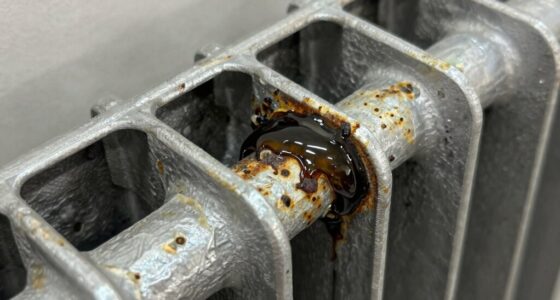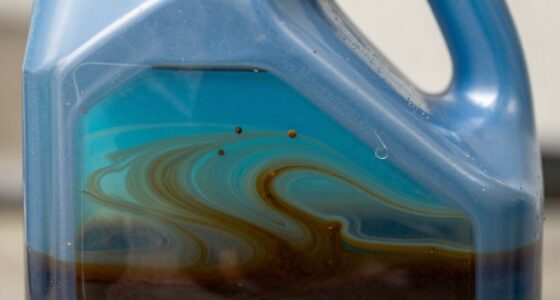

Using too much antifreeze in your coolant mix can actually backfire by impairing heat transfer, raising the freezing point, and increasing corrosion risks, which can cause severe engine damage. Conversely, too little antifreeze leaves your engine vulnerable to freezing and corrosion. Finding the right balance, typically a 50/50 mixture, guarantees proper freeze and boil protection while maintaining efficient cooling. Keep going to discover how to avoid these common mistakes and protect your engine effectively.

Get business pricing on garage and car supplies
- Business-only prices and quantity discounts
- Tax-exempt purchasing
- Multiple users, one account, clear invoices
Key Takeaways
- Overconcentrating antifreeze raises the freezing point, increasing risk of engine damage in cold temperatures.
- Excess antifreeze impairs heat transfer, causing higher engine temperatures and potential overheating.
- A mixture with too much antifreeze can lead to corrosion and deposit buildup inside the cooling system.
- Under-diluted coolant reduces freeze protection, risking system failure during cold weather.
- Proper 50/50 antifreeze-water ratio ensures reliable freeze protection without compromising cooling efficiency.
As an affiliate, we earn on qualifying purchases.
Why Using the Correct Coolant Mix Protects Your Engine
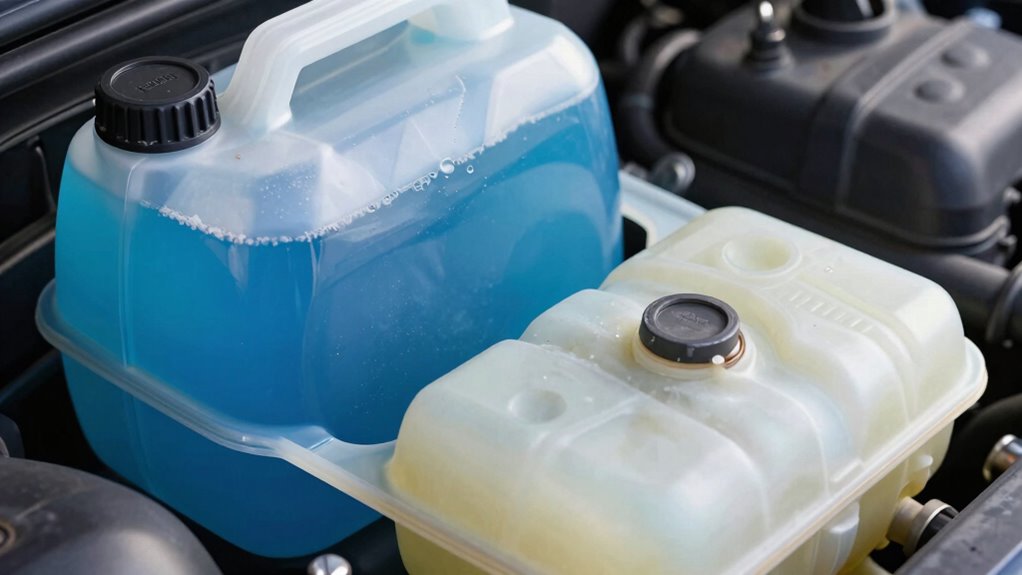
Using the correct coolant mix is essential for protecting your engine from extreme temperatures and corrosion. When you maintain a 50/50 antifreeze-to-water ratio, you guarantee ideal freeze and boil protection, even in cold weather. This mix prevents the coolant from freezing at around -34°F, keeping your engine safe during winter. It also raises the boiling point above 265°F, reducing the risk of overheating. Additionally, a proper mix offers corrosion inhibitors that protect engine parts over time. Using too much antifreeze can raise the freezing point and impair heat transfer, while too little reduces corrosion resistance. Sticking to the recommended 50/50 ratio balances protection and efficiency, helping your engine run smoothly and last longer regardless of climate.
As an affiliate, we earn on qualifying purchases.
Why a 50/50 Coolant and Water Ratio Is Best for Most Climates
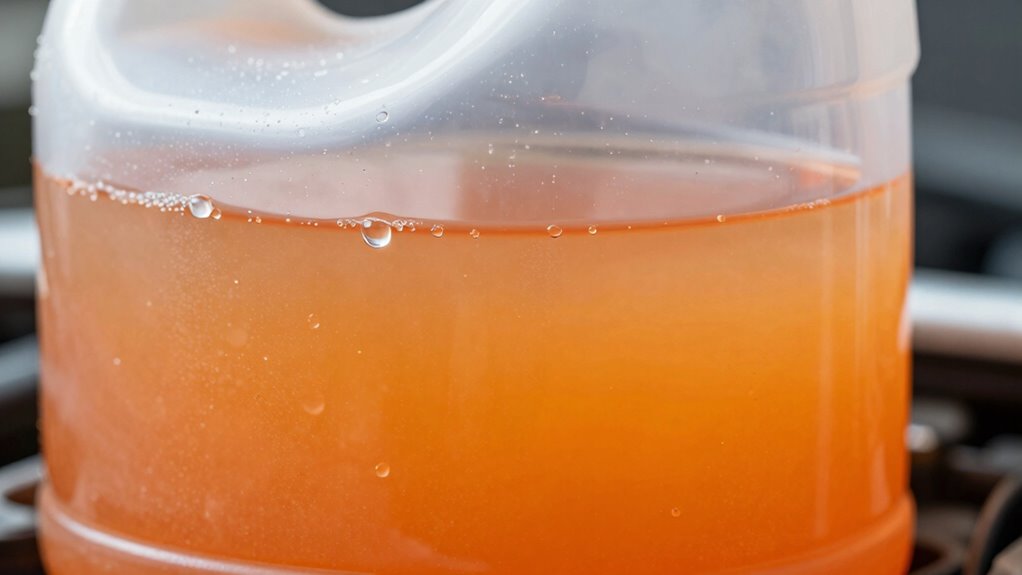
A 50/50 coolant and water mix offers ideal freeze protection down to -34°F, making it suitable for most climates. It also balances corrosion resistance with heat transfer, preventing engine damage. This proven ratio provides reliable protection without risking the issues associated with higher or lower concentrations. Additionally, maintaining the correct coolant mixture ratio is essential for optimal performance and longevity of your cooling system.
Optimal Freeze Protection Range
A 50/50 coolant and water mixture offers the ideal freeze protection for most climates because it balances antifreeze’s ability to prevent the liquid from solidifying with water’s excellent heat transfer properties. This ratio provides freeze protection down to approximately -34°F, making it suitable for a wide range of temperatures. It also raises the boiling point above that of pure water, reducing the risk of overheating. Maintaining this balance ensures your engine stays protected against freezing and boiling, without sacrificing cooling efficiency. Additionally, the 50/50 mix helps prevent corrosion thanks to built-in inhibitors. Proper mixture ratios are crucial for optimal engine performance. Overall, sticking to this perfect range offers reliable, consistent performance, making it the go-to choice for most vehicle owners in diverse climates.
Balanced Corrosion Resistance
Because a 50/50 coolant and water mixture strikes the right balance, it provides ideal corrosion resistance for most climates. This ratio contains sufficient inhibitors to protect engine parts from rust and corrosion without compromising other properties. Higher concentrations, like 70% or more, can reduce corrosion protection because they diminish the effectiveness of inhibitors. Conversely, lower concentrations below 40% may lack enough corrosion inhibitors, risking damage to metal components. The 50/50 mix ensures perfect protection by maintaining an even distribution of inhibitors, while also offering freeze and boil protection. It’s a proven standard that prevents corrosion-related failures and extends your engine’s lifespan, making it the safest choice across diverse weather conditions. Stick to the 50/50 ratio for reliable, balanced corrosion resistance.
As an affiliate, we earn on qualifying purchases.
Risks of Using Too Much Antifreeze in Your Engine
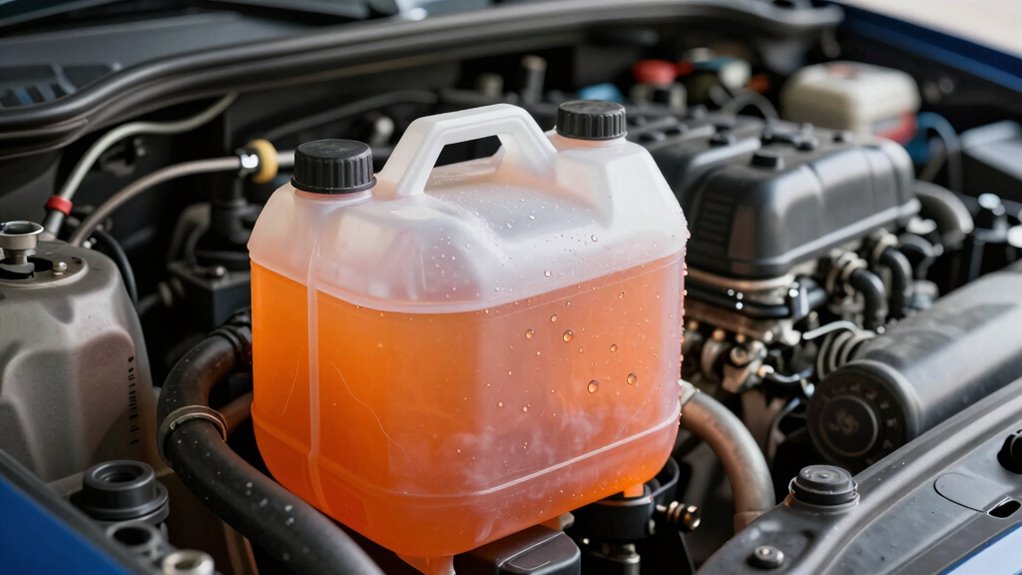
Using too much antifreeze in your engine can cause serious problems, even though it might seem like a good way to guarantee maximum freeze protection. Overconcentrating antifreeze raises the freezing point, making your coolant less effective in cold weather. It also lowers the boiling point, increasing the risk of overheating and boil-over. Excess antifreeze creates an insulating layer that impairs heat transfer, reducing your engine’s ability to cool efficiently. This can lead to higher operating temperatures and potential engine damage over time. Additionally, high concentrations can cause increased corrosion and deposit buildup, harming internal components. Using more antifreeze than recommended doesn’t provide extra protection; instead, it compromises your engine’s cooling system and overall performance. Following the proper coolant mixture guidelines ensures optimal protection and efficiency for your engine.
As an affiliate, we earn on qualifying purchases.
Why Too Little Coolant Can Leave Your Engine Vulnerable
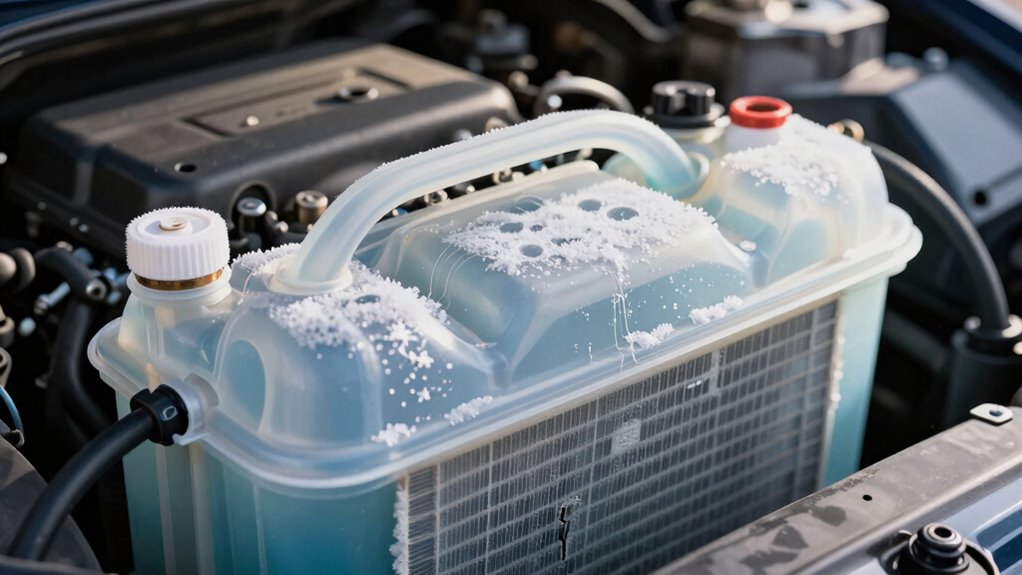
When your coolant concentration is too low, your engine becomes more vulnerable to freezing in cold weather, risking costly damage. It also increases the chances of corrosion inside the system, which can lead to leaks and failures. Additionally, insufficient coolant impairs heat transfer, making it harder for your engine to stay within safe operating temperatures. Proper coolant mixture is essential for maintaining optimal engine performance and longevity.
Reduced Freeze Resistance
Have you ever wondered why too little coolant can leave your engine vulnerable to freezing? When your coolant mixture falls below the ideal 50 percent antifreeze, its ability to resist freezing diminishes considerably. At concentrations below 40 percent, the freeze point rises, making your engine susceptible to ice formation even at moderate winter temperatures. This can lead to regional flavors influencing the coolant’s composition and effectiveness. This reduces the protective buffer that prevents engine block and radiator freeze-ups. Without enough antifreeze, the solution’s freezing point approaches that of pure water, which freezes at 32°F. As temperatures drop, your engine parts risk cracking or breaking due to ice expansion. Maintaining the right coolant concentration ensures your engine stays protected from freezing, safeguarding it against costly damage. Don’t underestimate the importance of proper coolant levels for reliable winter performance.
Increased Corrosion Risk
If your coolant mixture falls below the recommended 50 percent antifreeze, your engine becomes more vulnerable to corrosion. Antifreeze contains corrosion inhibitors that protect metal parts from rust and deterioration. When the concentration drops, these inhibitors become less effective, exposing engine components to corrosive elements in the coolant. Over time, this can lead to rust buildup, pitting, and damage to critical parts like the radiator, water pump, and cylinder heads. Insufficient antifreeze also allows moisture to accumulate, increasing the risk of electrochemical reactions that accelerate corrosion. Maintaining the proper 50/50 mixture ensures these inhibitors stay active, providing essential protection. Understanding corrosion protection is key to preventing costly engine repairs. Skimping on antifreeze might save money initially, but it leaves your engine open to costly corrosion-related failures down the road.
Impaired Heat Transfer
A coolant mixture with too little antifreeze reduces the fluid’s ability to transfer heat effectively, putting your engine at risk of overheating. Water alone has a high specific heat capacity, but when mixed with insufficient antifreeze, the overall heat transfer efficiency drops. Ethylene glycol, the main component in antifreeze, increases viscosity and lowers the coolant’s capacity to absorb and dissipate heat. This reduction in heat transfer capability can lead to engine overheating, which may cause severe damage if not addressed. This means your engine runs hotter than it should, especially under heavy load or high ambient temperatures. As heat transfer diminishes, cooling system components may struggle to maintain ideal operating temperatures. Over time, this can cause engine parts to overheat, warp, or fail. Maintaining the correct antifreeze-to-water ratio guarantees efficient heat transfer, protecting your engine from costly damage.
How High Concentrations Can Impair Cooling and Cause Overheating
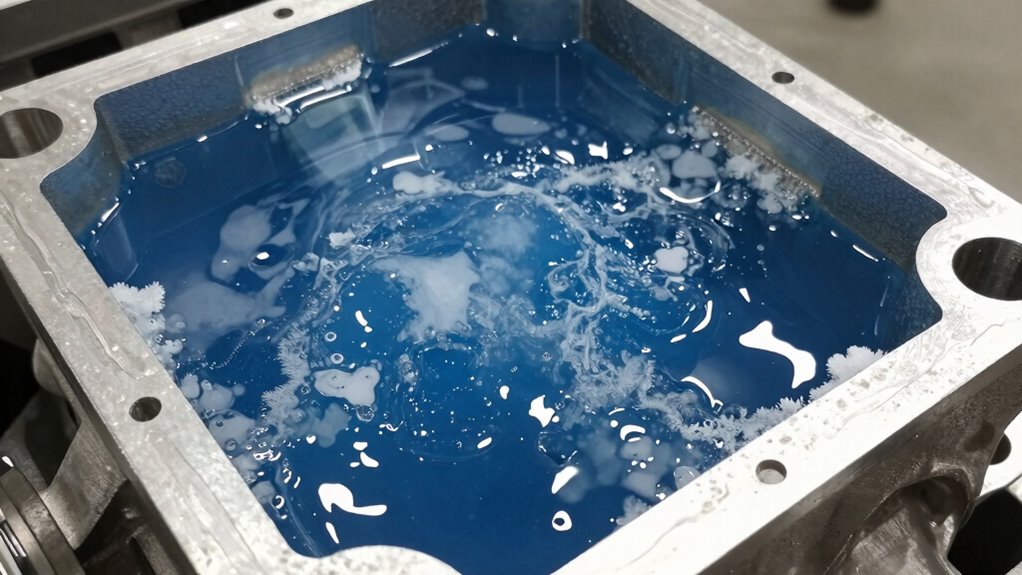
Higher concentrations of antifreeze can considerably impair your cooling system’s ability to transfer heat effectively, leading to overheating. When you add too much antifreeze, the solution’s specific heat capacity decreases, meaning it absorbs less heat from your engine. This results in the coolant being less efficient at carrying heat away, causing your engine temperature to rise. Additionally, higher antifreeze levels increase viscosity, making the coolant flow sluggish through the radiator and hoses. This hampers heat exchange and reduces cooling performance. The reduced heat transfer means your engine operates hotter than intended, risking damage or failure. Maintaining the correct coolant concentration ensures ideal heat transfer, preventing overheating while providing necessary freeze and corrosion protection. Proper coolant mixture is crucial for optimal engine cooling and performance. Avoid exceeding recommended antifreeze levels to keep your engine running smoothly.
Choosing the Right Coolant Mix for Your Climate and Conditions
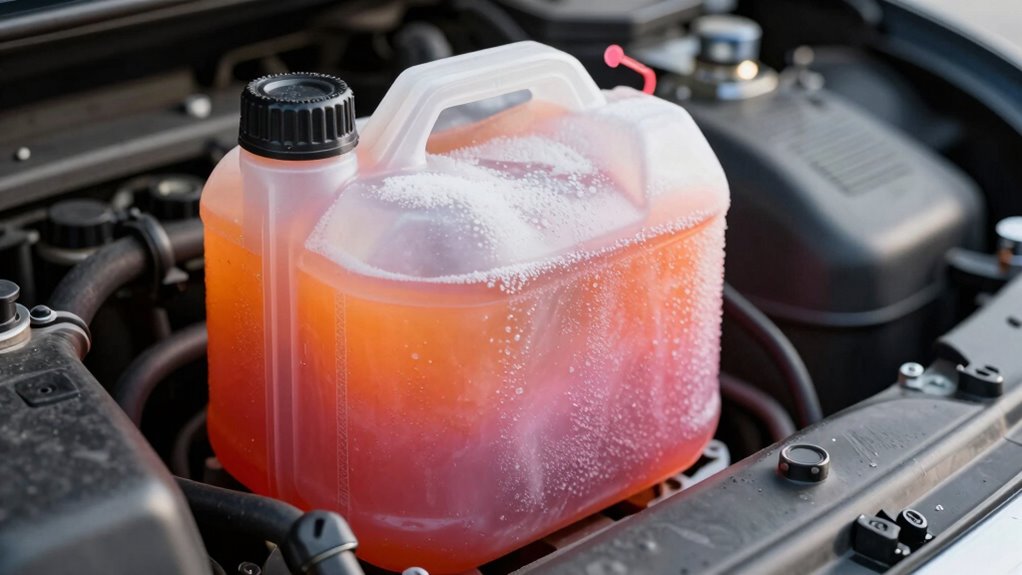
Selecting the right coolant mix depends on your climate and driving conditions. You should aim for a perfect ratio that protects against freezing and overheating without risking damage from over-concentration. Knowing the risks of too high or too low antifreeze levels helps you make the best choice for your environment. Additionally, using a high-quality heat pump can ensure more consistent temperature regulation and reduce the likelihood of freeze-related issues.
Climate Compatibility Tips
Choosing the right coolant mix depends heavily on your local climate and driving conditions. If you face harsh winters, a 50/50 mixture offers reliable freeze protection down to -34°F and prevents corrosion. In colder regions, avoid higher concentrations that can raise the freezing point, risking engine damage. For mild climates, especially where temperatures rarely dip below freezing, a lower antifreeze percentage, like 30-40%, may suffice, but ensure it still provides adequate corrosion resistance. Conversely, in hot climates, too much antifreeze reduces heat transfer, potentially causing overheating. Always consider your area’s typical temperature ranges and adjust accordingly. Regularly check your coolant’s freeze point and avoid mixing incompatible solutions to maintain optimum protection. Proper climate-based selection minimizes risks and keeps your engine running smoothly. Additionally, proper filter sizing and flow are essential for maintaining system efficiency and preventing failures.
Optimal Mixture Ratios
Matching your coolant mixture to your climate guarantees your engine stays protected and runs efficiently. The industry standard is a 50/50 antifreeze-to-water ratio, offering freeze protection down to -34°F and boiling protection up to 265°F. This mix is ideal for most regions, especially where temperatures fluctuate. If you’re in colder climates, sticking to a 50/50 blend ensures maximum protection without risking damage. Avoid over-concentrating; higher antifreeze levels above 60% can raise the freezing point, reducing protection and risking engine damage. In warmer areas, lower antifreeze percentages, like 30%, provide sufficient cooling. Remember, the right mixture balances freeze and boil protection with heat transfer, helping your engine perform reliably without unnecessary risks. Adjust your mixture based on your climate for the best results. Proper coolant mixture ratios are essential for maintaining engine health and avoiding costly repairs.
Avoiding Over-Concentration Risks
To prevent engine damage and reduce the risk of freezing or overheating, it’s vital to avoid over-concentrating your coolant mixture. Using more antifreeze than recommended doesn’t improve protection; in fact, it raises the freezing point and diminishes heat transfer efficiency. Concentrations above 60 percent offer little additional freeze resistance and can impair cooling performance, risking overheating. High concentrations also increase corrosion risks and may cause engine parts to degrade faster. Stick to the industry standard 50/50 mix for most climates, providing robust freeze and boil protection without sacrificing cooling efficiency. Adjust slightly for extreme conditions, but avoid exceeding 60 percent antifreeze. Proper balance ensures your engine stays protected and operates reliably, avoiding costly damage caused by over-concentration. Cabling solutions and proper installation practices are essential for maintaining system integrity and preventing failures.
Common Mistakes When Mixing Coolant and How to Avoid Them
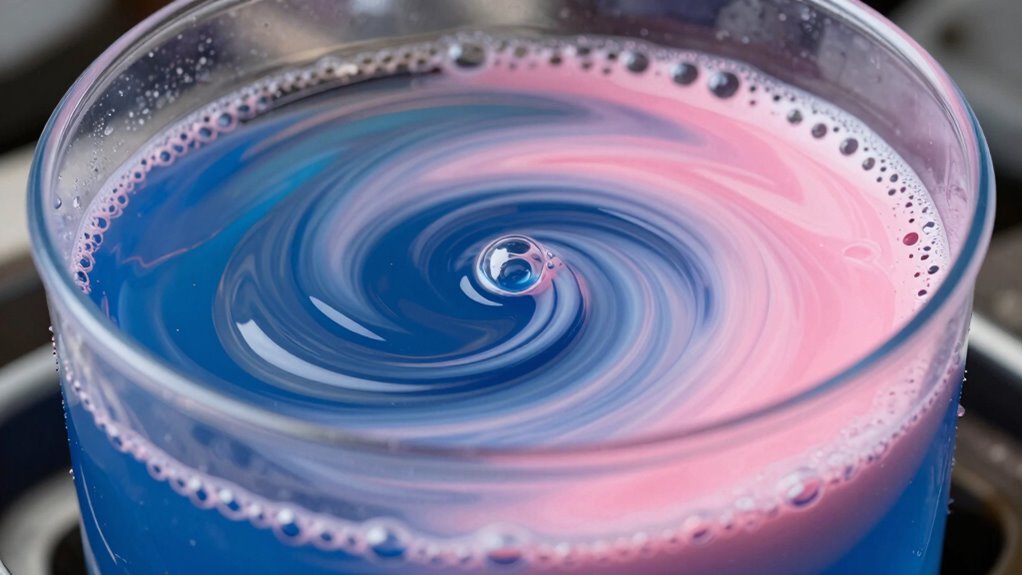
Mixing coolant improperly is a common mistake that can lead to serious engine problems. One mistake is using the wrong ratio, like exceeding 60 percent antifreeze, which raises the freezing point and reduces protection. Avoid guessing; always follow manufacturer instructions for a 50:50 mixture, providing ideal freeze and boil protection. Another error is adding water or coolant directly without mixing thoroughly, creating uneven concentrations that compromise performance. Don’t mix different types of coolant unless specified, as incompatible formulas can cause corrosion and clogging. Also, never assume a concentrate is ready for use; dilute it properly beforehand. To prevent these issues, measure carefully, stick to recommended ratios, and double-check your mixture before filling. Proper mixing guarantees your cooling system functions reliably in all weather conditions. Understanding coolant compatibility is essential to avoid damaging your engine and ensuring optimal performance.
How to Test Your Coolant Concentration and Make Adjustments
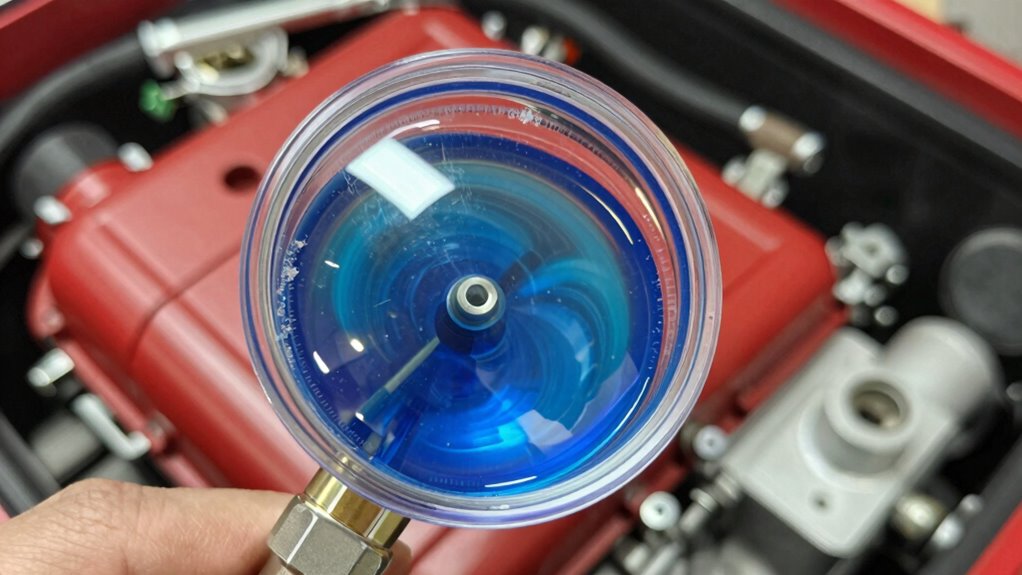
Testing your coolant concentration accurately is essential to guarantee your engine stays protected in all weather conditions. To do this, use a refractometer or coolant tester designed for this purpose. First, collect a small sample of your engine coolant when the engine is cool to avoid injury. Place a few drops on the refractometer’s prism, then look through the device to read the concentration percentage. If your mixture is below the recommended 50/50 ratio, you can add distilled water to dilute or antifreeze to adjust the mixture. Conversely, if it’s too high, drain some coolant and top off with water. Re-test after each adjustment to ensure the correct balance, aiming for a mixture that offers freeze protection without sacrificing heat transfer. Remember to always wear appropriate safety gear such as gloves and eye protection when handling coolant to prevent injury or spills.
Signs Your Coolant Mixture Is Wrong for Your Engine
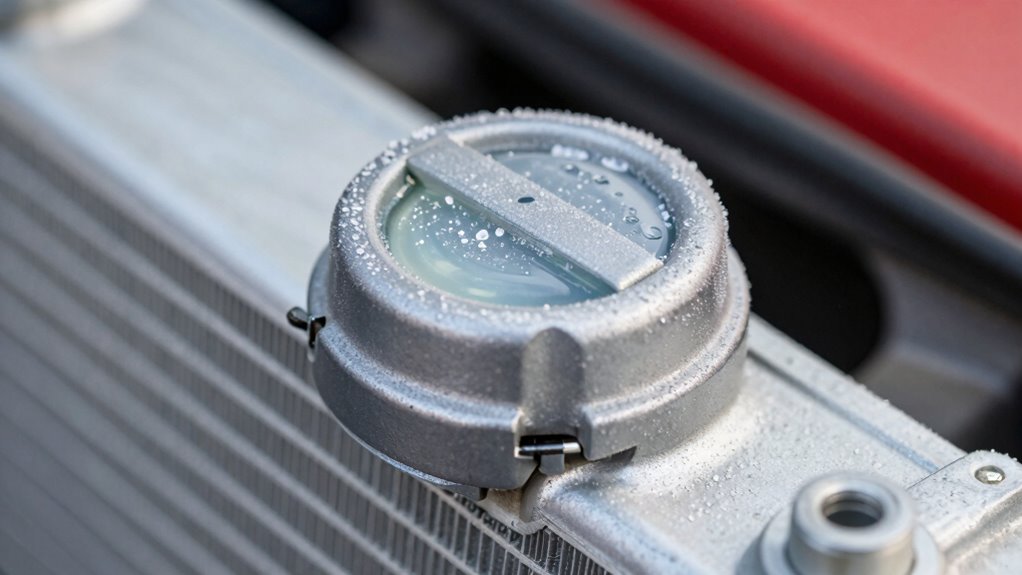
Incorrect coolant mixture can cause noticeable problems in your engine’s performance and longevity. If your coolant is too concentrated, it may lower your system’s heat transfer efficiency, leading to higher operating temperatures and increased risk of overheating. Conversely, a mixture that’s too diluted reduces corrosion protection, which can cause rust and damage to engine parts. You might notice frequent temperature fluctuations, engine overheating, or coolant leaks. Poor mixture can also cause your heater to blow lukewarm air or fail entirely. Additionally, inconsistent freezing and boiling points may lead to unexpected freeze-ups or boiling over, especially in extreme weather. Pay attention to engine temperature gauges and coolant color; any irregularities suggest your coolant mixture may be off and needs checking. Proper balance is essential for reliable engine performance. Maintaining the correct coolant-to-water ratio helps ensure optimal heat transfer and corrosion resistance, preventing costly repairs down the line.
Long-Term Benefits of Proper Coolant Concentration for Engine Health
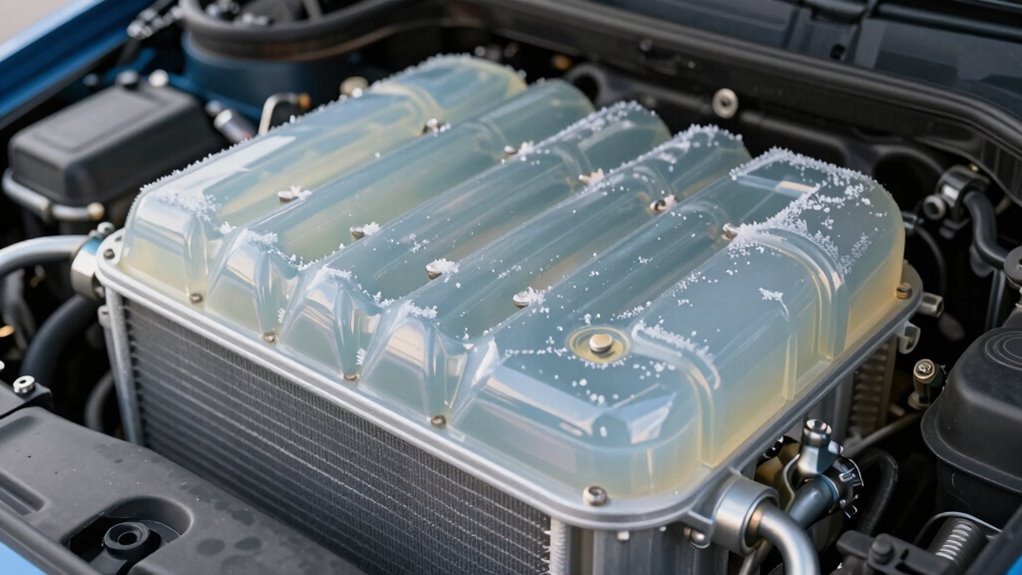
Maintaining the correct coolant concentration offers significant long-term benefits for your engine’s health. Proper mix prevents corrosion, reduces wear, and guarantees ideal thermal regulation. When you stick to the recommended 50/50 ratio, your engine resists freezing and overheating, extending its lifespan. Consistent coolant quality also minimizes deposits and corrosion inside the radiator and engine components, reducing costly repairs. Additionally, an appropriate mixture maintains proper heat transfer, preventing engine stress. Using the right concentration helps avoid the formation of damaging sludge or scale buildup. Regularly checking and adjusting your coolant keeps your engine running smoothly for years, saving you money and preventing breakdowns. Proper coolant maintenance is essential for ensuring optimal engine performance over time.
Frequently Asked Questions
What Is the Optimal Coolant Concentration for Extremely Cold Climates?
In extremely cold climates, you should aim for a coolant concentration of around 60 percent antifreeze. This ratio offers the lowest freezing point, approximately -63°F, providing ideal protection against freezing. Staying within this range prevents engine damage caused by freezing or overheating. Avoid higher concentrations, as they increase freezing points and reduce heat transfer, and lower concentrations, which compromise corrosion resistance and freeze protection.
How Does Coolant Concentration Affect Engine Corrosion Over Time?
You should maintain the recommended coolant concentration, typically around 50%, to prevent engine corrosion over time. Too low a concentration reduces corrosion inhibitors, exposing metal parts to rust and damage. Conversely, excessive antifreeze can cause other issues, but sticking to the standard mix guarantees ideal protection. Regularly check your coolant levels and mix to avoid corrosion, and use manufacturer-approved formulations for lasting engine health.
Can Mixing Different Types of Antifreeze Alter the Recommended Ratios?
Mixing different types of antifreeze can alter the recommended ratios, potentially compromising your coolant’s effectiveness. You might unintentionally create chemical reactions that reduce corrosion resistance or change the freezing and boiling points. Always check manufacturer guidelines before combining antifreeze types. Using compatible, pre-mixed solutions ensures you maintain the proper balance, preventing damage and guaranteeing ideal protection for your engine. When in doubt, stick to the recommended ratios for safety.
What Are the Long-Term Effects of Using High Antifreeze Concentrations?
A stitch in time saves nine, so don’t ignore the long-term effects of high antifreeze concentrations. Using too much antifreeze—above 60%—can cause engine damage, reduce heat transfer, and impair cooling efficiency. It might protect against freezing, but it compromises your engine’s health over time. Stick to recommended ratios to guarantee peak performance and avoid costly repairs down the line. Proper coolant use keeps your engine running smoothly for years.
How Often Should I Check and Adjust My Coolant Mixture?
You should check your coolant mixture at least once a year, especially before winter and summer seasons. Make sure the concentration stays around 50 percent for ideal protection. If you notice it’s too diluted or concentrated, adjust it promptly using a proper antifreeze tester. Regular checks prevent engine damage, overheating, or freezing, ensuring your cooling system operates efficiently year-round. Don’t forget to follow your vehicle’s manual for specific guidelines.
Conclusion
Remember, your engine’s life depends on your coolant mix. Think of it as the heartbeat of your cooling system—if you get it wrong, disaster strikes. Don’t let a simple mistake freeze your engine’s future; instead, trust the right blend to keep it running smoothly through every season. After all, isn’t your engine worth the effort to get it right? Proper coolant concentration isn’t just a choice—it’s your engine’s best defense.
Halloween Picks
halloween
As an affiliate, we earn on qualifying purchases.