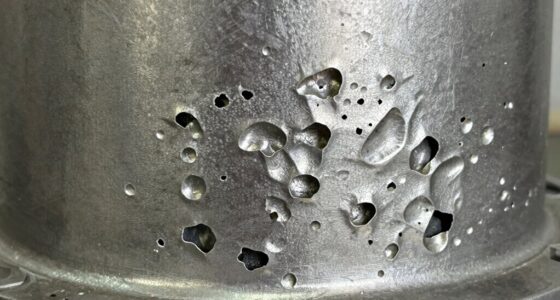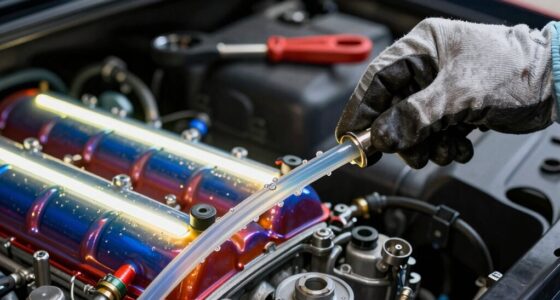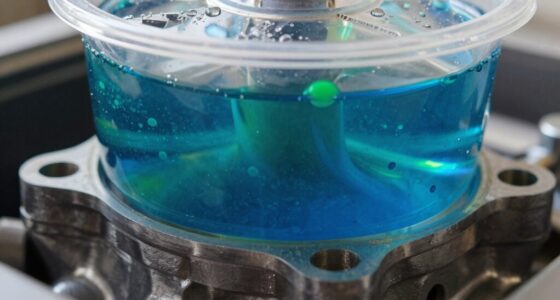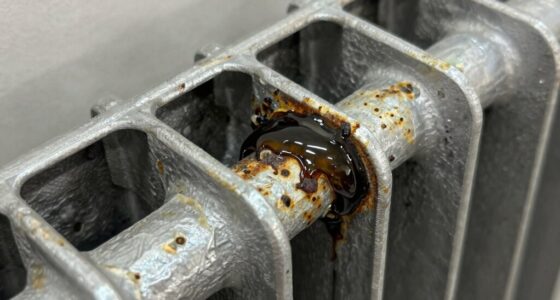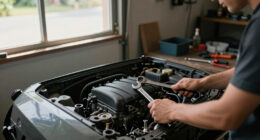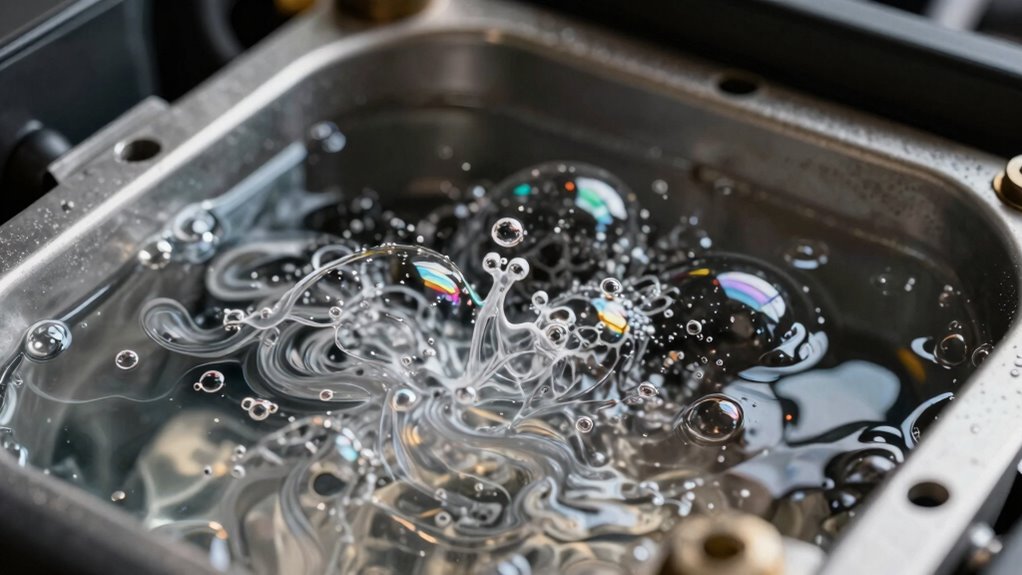
Cavitation happens in diesel engine liners when vapor bubbles form and collapse, causing wear and damage over time. To prevent this, coolant additives are used—they stabilize the coolant, reduce vapor bubble formation, and protect the liners from erosion. Proper maintenance like regular coolant checks and using the right additives can extend your engine’s life and improve performance. Keep going to discover more about how these solutions work and keep your engine running smoothly.
Open a free Amazon Business account
Business pricing, bulk buying and tax-exempt orders.
As an affiliate, we earn on qualifying purchases.
Key Takeaways
- Coolant additives help prevent vapor bubble formation that causes cavitation in engine liners.
- They stabilize coolant temperature and pressure, reducing rapid pressure changes that lead to cavitation.
- Proper additives protect liners from erosion, extending engine lifespan and reducing repair costs.
- Regular coolant maintenance with the right additives improves engine efficiency and fuel economy.
- Using effective coolant additives minimizes wear, keeps engine parts smooth, and ensures reliable performance.
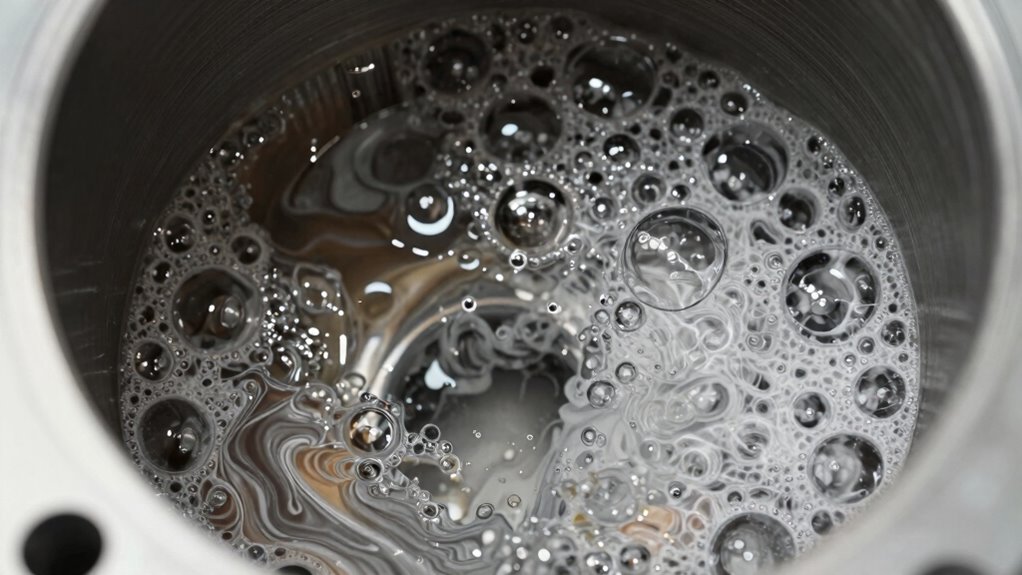
Diesel liner cavitation occurs when vapor bubbles form and collapse within the engine’s cylinder liners, leading to notable wear and potential damage. When this happens, the engine’s performance can decline, and you may notice increased fuel consumption or reduced power. Understanding cavitation is vital because it directly impacts your engine’s fuel efficiency and overall durability. The more cavitation occurs, the faster the liner surfaces wear down, which can cause costly repairs and shorten your engine’s lifespan.
Cavitation develops when the coolant or lubricant inside your engine experiences rapid pressure changes. These fluctuations create vapor bubbles that form on the surface of the cylinder liners. When these bubbles collapse, they generate powerful shockwaves that erode the material over time. This erosion not only weakens the liners but also introduces roughness and imperfections, which increase friction and heat. As a result, the engine has to work harder to maintain peak performance, decreasing fuel efficiency and putting extra stress on engine components. Engine wear accelerates when cavitation damage is left unaddressed, making preventive measures crucial.
One way to combat cavitation and protect your engine is by using specialized coolant additives. These additives help stabilize the coolant, reducing the likelihood of vapor bubble formation. They improve the coolant’s thermal stability, ensuring that pressure fluctuations don’t reach the point where cavitation begins. By doing so, you help preserve the integrity of your engine’s liners, promoting longer-lasting components and maintaining better fuel economy. When the liners are protected from cavitation damage, your engine runs smoother, with less internal wear and tear, which translates to enhanced durability and fewer repairs down the line.
Furthermore, good maintenance practices, such as regularly checking coolant levels and replacing contaminated or degraded coolants, are essential. Using the right coolant additives can greatly extend the life of your engine by preventing cavitation-related damage. This not only reduces maintenance costs but also ensures your vehicle remains fuel-efficient over time. When your engine’s components stay in good shape, you get better combustion, less friction, and an overall boost in performance.
As an affiliate, we earn on qualifying purchases.
Frequently Asked Questions
Can Coolant Additives Prevent Liner Cavitation Entirely?
Coolant additives can’t prevent liner cavitation entirely, but they can substantially reduce its chances. By improving coolant chemistry, additive formulations help maintain proper lubrication and minimize cavitation risks. You should regularly check and maintain your coolant to ensure it contains effective additives. While they don’t eliminate cavitation completely, proper coolant chemistry with the right additives can extend engine life and improve performance.
How Often Should Coolant Additives Be Applied for Cavitation Prevention?
You should apply coolant additives during your regular maintenance every 15,000 to 30,000 miles or as recommended by the manufacturer. This maintenance frequency guarantees the additive’s effectiveness in preventing liner cavitation over time. Regular application helps maintain peak coolant performance, reducing cavitation risks. Always follow your vehicle’s specific guidelines, and consider consulting a mechanic for tailored advice on additive use to maximize its benefits.
Are There Any Risks Using Coolant Additives in Diesel Engines?
Think of coolant additives as a double-edged sword—while they fight cavitation, they can also trigger unexpected chemical reactions inside your engine. These reactions might cause corrosion or deposit buildup, risking damage over time. Plus, some additives may have a negative environmental impact if not used properly. You need to weigh the benefits against these potential risks and always follow manufacturer guidelines to keep your engine safe and eco-friendly.
Do All Diesel Engines Benefit Equally From Coolant Additives?
Not all diesel engines benefit equally from coolant additives because engine compatibility varies. Some engines have specific cooling system requirements, making additive effectiveness inconsistent. You should check your engine’s manufacturer guidelines before using any additive. If compatible, you can expect improved cooling and reduced cavitation risks. However, using additives improperly or in incompatible engines might not provide benefits and could even cause damage, so always verify suitability first.
How Does Liner Cavitation Impact Long-Term Engine Durability?
Liner cavitation can profoundly harm your engine’s long-term durability by accelerating piston wear. When cavitation occurs, it damages the liner surface, reducing lubrication effectiveness and leading to increased friction. Over time, this stress weakens engine components, causing costly repairs or failure. To protect your engine, ensuring ideal coolant additives helps maintain proper lubrication and prevents cavitation-related damage, ultimately extending your engine’s lifespan.
cavitation prevention coolant additive
As an affiliate, we earn on qualifying purchases.
As an affiliate, we earn on qualifying purchases.
Conclusion
So, it’s funny how a simple coolant additive can unexpectedly save your engine from liner cavitation. Just like how a small change can make a big difference, adding the right coolant might be the coincidence you need to prevent costly repairs. Keep an eye on your engine’s health, because sometimes, the smallest tweak in your routine can lead to surprisingly smooth running. After all, it’s these little coincidences that keep your diesel engine running strong.
As an affiliate, we earn on qualifying purchases.
diesel engine maintenance coolant
As an affiliate, we earn on qualifying purchases.
As an affiliate, we earn on qualifying purchases.
NFL season / tailgating Picks
team gear
As an affiliate, we earn on qualifying purchases.