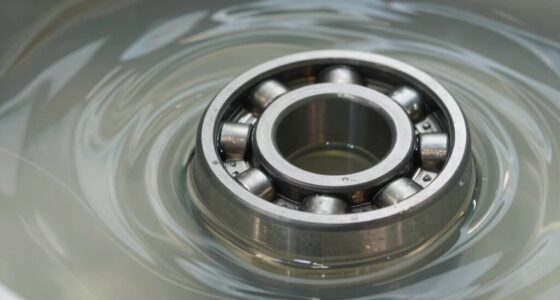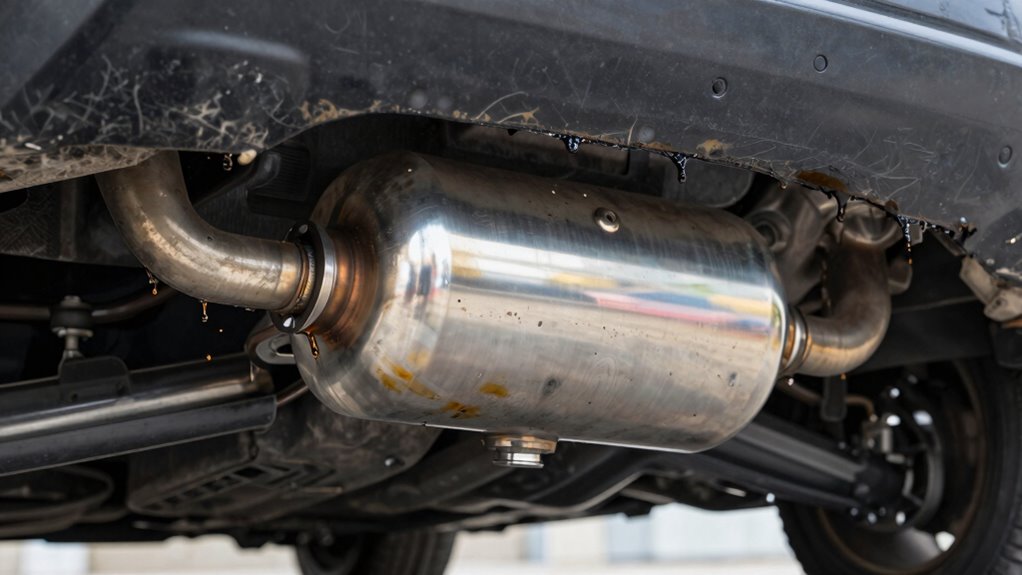

Contaminants from your engine oil and fuel issues can harm your catalytic converter by leaving behind residues that coat its surfaces. Worn piston rings, valve seals, or turbochargers burn oil, which releases tiny particles containing zinc and phosphorus—chemicals that damage catalysts. Poor-quality oils or incompatible additives can accelerate this process. Maintaining your engine and choosing the right oil helps prevent poisoning. Continue exploring to understand how oil chemistry influences catalytic converter health.

Get business pricing on garage and car supplies
- Business-only prices and quantity discounts
- Tax-exempt purchasing
- Multiple users, one account, clear invoices
Key Takeaways
- Engine oil leaks and burning introduce tiny oil particles rich in zinc and phosphorus into the exhaust, damaging the catalyst.
- Certain oil additives and low-quality oils leave residues that coat and hinder catalytic converter function.
- Metallic deposits from worn engine components form barriers, reducing oxidation and emission control efficiency.
- Incompatible or improper oil selection accelerates catalyst poisoning by increasing harmful residues and deposits.
- Regular maintenance and proper oil choice help prevent contaminant buildup, extending catalytic converter lifespan.
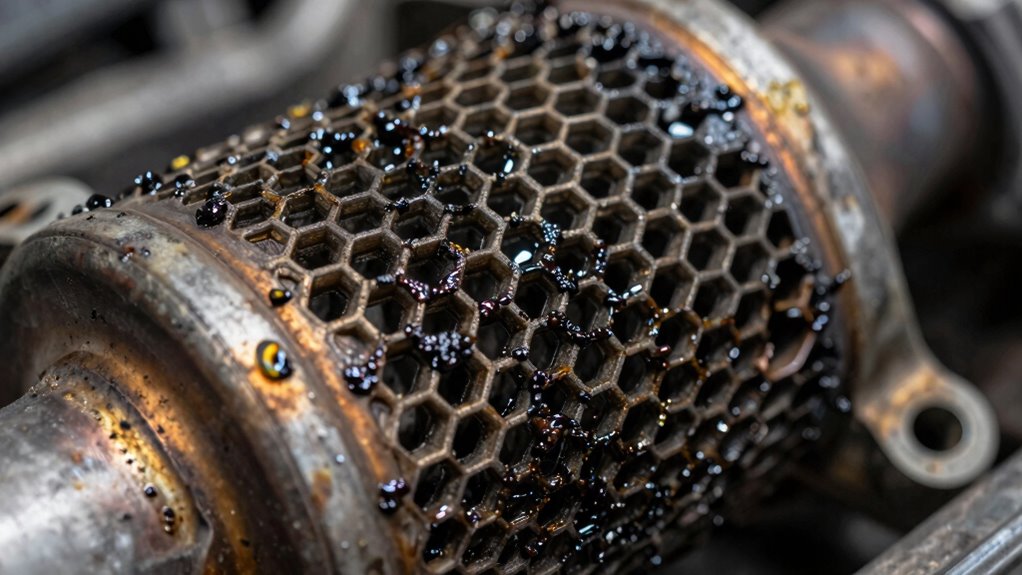
Harmful contaminants often originate from engine oil or fuel issues. If your engine is burning oil due to worn piston rings, valve seals, or turbochargers, tiny oil particles can enter the exhaust system. These particles contain chemicals like zinc and phosphorus, which are particularly damaging to oxidation catalysts. Once these contaminants reach the catalytic converter, they coat the surfaces of the catalysts, preventing them from properly facilitating the oxidation reactions. Over time, this buildup leads to a phenomenon called catalytic converter poisoning, which drastically reduces efficiency and may cause the converter to overheat or break down.
Oil chemistry plays a significant role here. Certain oils contain additives that, while beneficial for engine lubrication, can leave residues that settle on the catalysts. These residues may contain metallic compounds that aren’t easily burned off during normal operation. When these metals deposit on the oxidation catalysts, they act as a barrier, hindering the conversion of harmful gases. This process accelerates the deterioration of the catalytic converter and shortens its lifespan. Additionally, using low-quality oils or additives with incompatible chemical compositions can exacerbate the problem, making it more likely for harmful contaminants to accumulate and poison the catalysts. Understanding oil chemistry and its impact can help in selecting appropriate lubricants to minimize this issue.
You might not realize it, but regular maintenance and choosing the right oil can help prevent catalytic converter poisoning. Using high-quality, manufacturer-recommended oils minimizes the risk of depositing damaging residues on the catalysts. Also, fixing engine issues promptly—like oil leaks or excessive oil consumption—reduces the likelihood of harmful contaminants entering the exhaust system. When you pay attention to these details, you’re helping preserve the oxidation catalysts’ ability to do their job, ensuring your vehicle stays emissions-compliant and runs efficiently. In essence, understanding how oil chemistry and contaminants interact with your catalytic converter can save you money and extend the life of this essential emissions-control component.
As an affiliate, we earn on qualifying purchases.
Frequently Asked Questions
Can Synthetic Oils Cause Catalytic Converter Poisoning?
Synthetic oils generally don’t cause catalytic converter poisoning, but their effects depend on the additives used. Some additive dangers, like sulfur or phosphorus compounds, can harm the converter over time. If your synthetic oil contains these harmful additives, it could contribute to poisoning. Always choose high-quality synthetic oils with proper additive formulations to avoid damaging your catalytic converter and ensure your engine runs smoothly.
How Does Oil Age Impact Catalytic Converter Health?
As oil ages, degradation occurs, leading to contaminant buildup that can harm your catalytic converter. Over time, old oil loses its ability to properly lubricate and can release particles and chemicals that deposit on the converter’s components. This buildup blocks airflow and reduces efficiency, increasing the risk of poisoning. Regular oil changes prevent excessive degradation, helping maintain your converter’s health and ensuring ideal engine performance.
Are Certain Oil Additives More Harmful to Converters?
Certain oil additives can be more harmful to your catalytic converter because of oil additive toxicity. Some additives contain compounds that may deposit or clog the converter’s precious metals, reducing efficiency. Fuel contamination can also introduce harmful substances that damage the converter, especially if combined with aggressive additives. To protect your converter, choose oils with minimal harmful additives and guarantee your fuel remains clean and uncontaminated.
Does Frequent Oil Change Extend Converter Lifespan?
Changing your oil frequently is like giving your car a health check-up; it helps prevent oil contamination that can harm your catalytic converter. Regular oil changes remove impurities and reduce the risk of converter poisoning, consequently extending converter durability. I once ignored this advice, and my converter failed after 60,000 miles. Staying consistent with oil changes keeps your engine and converter in better shape longer, saving you money and headaches down the road.
Can Using Low-Quality Oil Damage the Catalytic Converter?
Yes, using low-quality oil can damage your catalytic converter. Low-quality oil often leads to oil contamination, which deposits harmful residues inside the converter. Over time, these deposits clog or damage the catalyst, reducing its efficiency and lifespan. To guarantee proper converter maintenance, always choose high-quality oils that burn cleaner and contain additives designed to protect your engine and emissions system. This proactive approach helps prevent costly repairs and maintains peak performance.
As an affiliate, we earn on qualifying purchases.
Conclusion
Understanding how oil chemistry can poison your catalytic converter is vital. Did you know that improperly formulated oils can cause up to 40% of catalytic converter failures? By choosing the right oil and maintaining your vehicle properly, you can prevent costly repairs and keep your emissions low. Stay informed and proactive—your engine and the environment will thank you for it. Don’t overlook the small details; they make a big difference in your car’s health.
As an affiliate, we earn on qualifying purchases.
high-quality synthetic motor oil
As an affiliate, we earn on qualifying purchases.
As an affiliate, we earn on qualifying purchases.
Halloween Picks
halloween
As an affiliate, we earn on qualifying purchases.