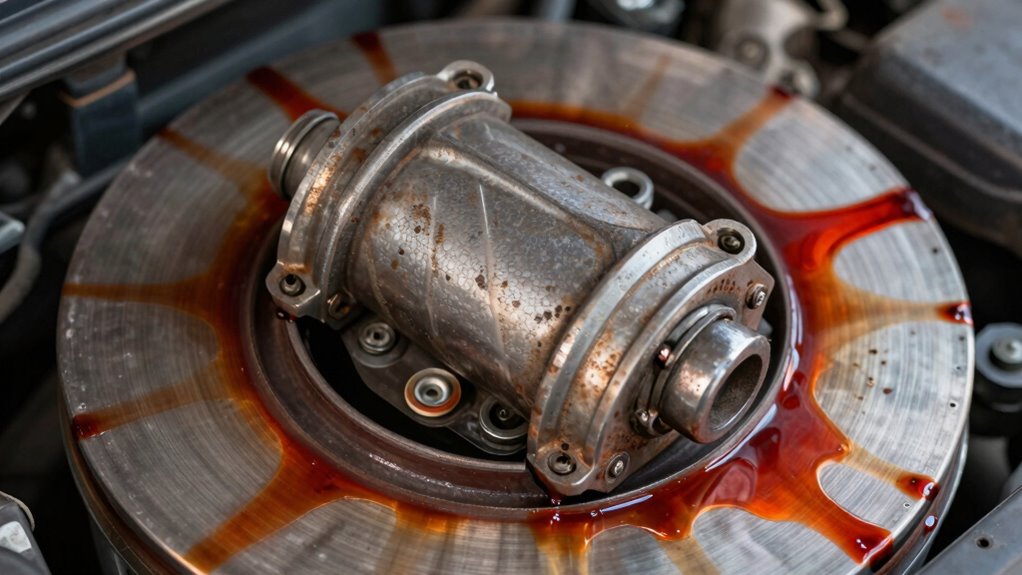

If your clutch slave cylinder is failing, watch for fluid leaks around the clutch pedal or beneath your vehicle, which indicate internal damage. You might notice a spongy or stiff pedal, or hear grinding noises when you press it. Heat patterns also matter—if the clutch pedal feels unusually hot or there’s a burning smell, the system could be overheating due to fluid leaks or internal friction. Keep an eye on these signs; understanding them will help you identify early issues before costly repairs occur.
Key Takeaways
- Fluid leaks beneath the vehicle or low clutch fluid levels indicate slave cylinder failure.
- Soft, spongy, or unresponsive clutch pedal suggests trapped air or internal damage in the slave cylinder.
- Overheating or a burning smell during operation signals hydraulic resistance and potential heat buildup.
- Grinding noises or pedal sticking can point to internal damage or seal deterioration within the slave cylinder.
- Progressive pedal stiffness and increased effort are signs of ongoing hydraulic failure and heat-related system stress.
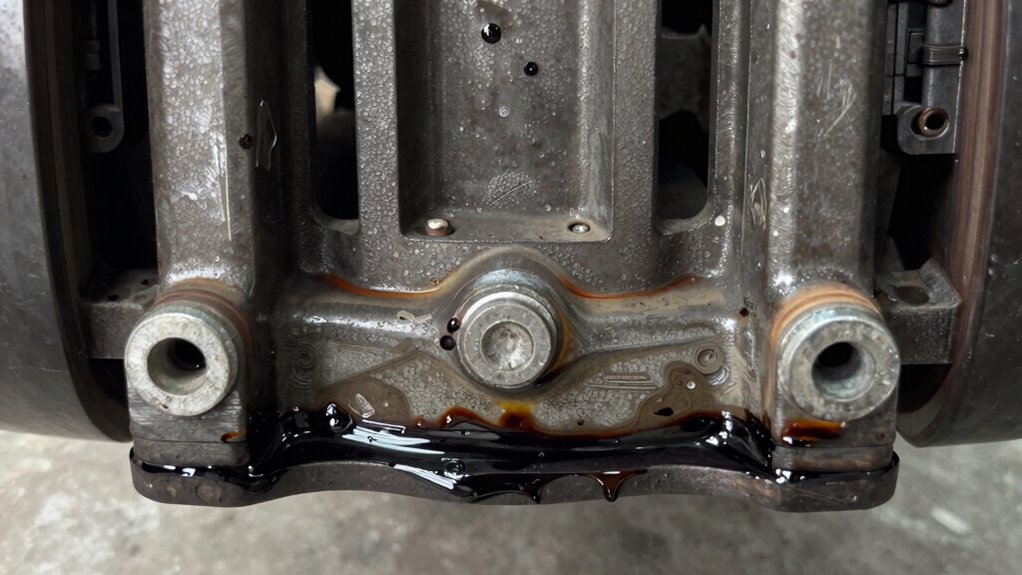
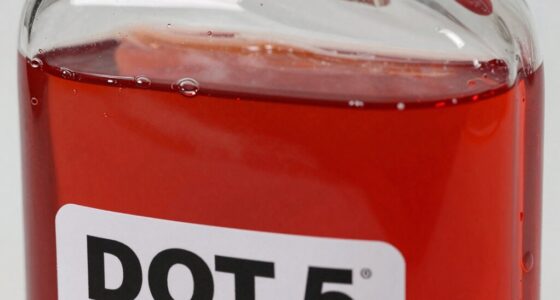
A clutch slave cylinder is a critical component in your vehicle’s clutch system, and when it fails, you’ll notice issues with shifting or loss of clutch pedal pressure. One of the most common signs of trouble is hydraulic leaks. These leaks occur when the cylinder’s seals deteriorate or become damaged, allowing brake fluid to escape. As fluid leaks out, the hydraulic pressure needed to disengage the clutch diminishes, causing the pedal to feel soft or spongy at first, then increasingly stiff or unresponsive. You might see fluid pooling beneath your vehicle or notice a low clutch fluid level in the reservoir, which is a clear indicator of a leak. If left unaddressed, hydraulic leaks can lead to complete clutch failure, making it impossible to shift gears smoothly or even engage the clutch at all. Fluid loss is often accompanied by a noticeable decline in clutch performance and can accelerate wear on other system components.
Another key indicator of clutch slave cylinder failure is pedal stiffness. When the cylinder isn’t functioning properly, the pedal might feel unusually firm or resistant when you press it. This stiffness often results from air trapped in the hydraulic lines or from internal damage within the cylinder that prevents fluid from moving freely. Over time, the stiffness can become more pronounced, making it difficult to disengage the clutch fully. You may also experience a grinding noise or a feeling that the pedal isn’t returning to its normal position after being pressed. This stiffness can lead to increased driver fatigue and compromise your ability to operate the vehicle safely.
Monitoring the heat pattern around the clutch system can also provide clues about potential issues. Excess heat often indicates ongoing hydraulic resistance or internal friction within the cylinder. When the slave cylinder overheats, it can cause the hydraulic fluid to break down or expand, further impairing clutch operation. Overheating may be caused by continuous attempts to shift gears with a failing cylinder or by fluid leaks that lead to inadequate lubrication. If you notice the clutch pedal becoming hotter than usual or feel a burning smell while driving, it’s a sign that the system is under stress and needs inspection.

K&S Technologies Hydraulic Clutch Slave Cylinder Repair Kit
Contain all parts necessary to repair and re-seal the clutch slave cylinder
As an affiliate, we earn on qualifying purchases.
As an affiliate, we earn on qualifying purchases.
Frequently Asked Questions
How Can I Prevent Clutch Slave Cylinder Failures?
To prevent clutch slave cylinder failures, regularly check and maintain the hydraulic fluid level, ensuring it’s clean and fresh. Avoid leaks and use the recommended fluid type. Also, improve heat dissipation around the clutch area by inspecting cooling mechanisms and avoiding excessive driving heat. Proper maintenance reduces stress on the cylinder, minimizes wear, and extends its lifespan, helping you avoid costly repairs down the line.
What Are the Signs of Early Clutch Slave Cylinder Wear?
You’ll notice early clutch slave cylinder wear if your hydraulic leaks develop or if your pedal feel becomes spongy or inconsistent. These signs indicate that the cylinder isn’t maintaining proper pressure, which can lead to clutch engagement issues. Pay close attention to any fluid leaks around the slave cylinder area and monitor how the pedal responds during operation, as these clues help catch problems before they worsen.
Are Aftermarket Clutch Slave Cylinders More Reliable?
Think of aftermarket clutch slave cylinders as wild horses—some may run smoothly, others buck unexpectedly. They can be more reliable if you guarantee proper clutch pedal adjustment and choose compatible hydraulic fluid types. However, quality varies, so research brands carefully. Keep an eye on performance and installation details, because even the best aftermarket parts need proper tuning to outperform OEM options and avoid future failures.
How Long Does a Clutch Slave Cylinder Typically Last?
A clutch slave cylinder typically lasts between 50,000 to 100,000 miles, depending on material durability and how well your hydraulic system is maintained. If you use high-quality parts and keep the hydraulic fluid clean, you can extend its lifespan. Regular inspections for leaks or signs of wear help prevent failure. Proper maintenance ensures your clutch operates smoothly and can substantially prolong the life of your clutch slave cylinder.
Can Clutch Slave Cylinder Issues Affect Other Transmission Components?
Think of your clutch system like a finely tuned orchestra; when one instrument falters, the whole symphony suffers. Clutch slave cylinder issues, caused by poor hydraulic fluid and inadequate heat dissipation, can indeed affect other transmission components. Leaks or pressure problems can overload the master cylinder or cause uneven gear shifts, leading to costly repairs. Address problems early to keep your transmission running smoothly and avoid a cascade of mechanical failures.

Lucas Oil 10019 Hydraulic Oil Booster and Stop Leak – 1 Quart, White, 32 Ounce
Reduces the operating temperature of hydraulic systems
As an affiliate, we earn on qualifying purchases.
As an affiliate, we earn on qualifying purchases.
Conclusion
To keep your clutch slave cylinder running smoothly, stay alert to fluid leaks and overheating signs. Regular checks can catch issues early before they turn costly. Remember, an ounce of prevention is worth a pound of cure—don’t ignore the signs of trouble. By paying attention to the fluid and heat patterns, you’ll extend your clutch’s life and avoid unexpected breakdowns. Stay proactive, and your vehicle will thank you for it.

Dorman CS360025 Clutch Slave Cylinder Compatible with Select Acura / Honda Models
Direct replacement – this clutch slave cylinder is built to match the original clutch slave in specific vehicles
As an affiliate, we earn on qualifying purchases.
As an affiliate, we earn on qualifying purchases.

Dorman CM640174 Clutch Master Cylinder Compatible with Select Pontiac/Saturn Models
Direct replacement – this clutch master cylinder is built to match the original clutch master in specific vehicles
As an affiliate, we earn on qualifying purchases.
As an affiliate, we earn on qualifying purchases.