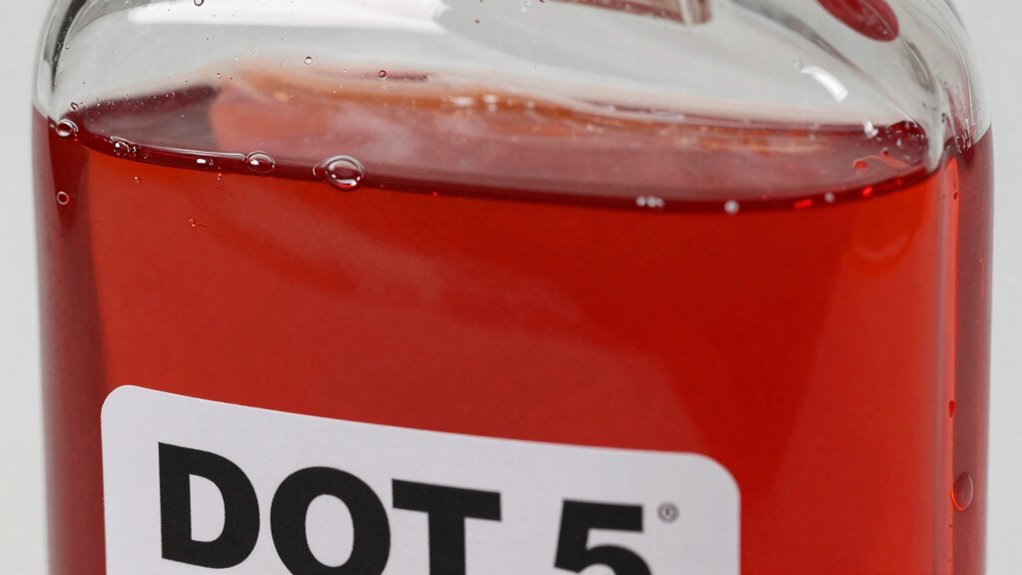
Choosing DOT 5 silicone brake fluid isn’t a simple upgrade because it has a different chemical makeup that requires careful compatibility checks with your vehicle’s system. It’s non-hygroscopic and resists moisture, but it can cause softer pedal feel and may trap air more easily during bleeding. Mixing it with glycol-based fluids can lead to brake failure. To guarantee safety and performance, understanding these differences is essential before making the switch. Keep exploring to learn what steps are necessary.

Get business pricing on garage and car supplies
- Business-only prices and quantity discounts
- Tax-exempt purchasing
- Multiple users, one account, clear invoices
Key Takeaways
- DOT 5 silicone brake fluid is incompatible with glycol-based fluids, and mixing can cause brake failure or foaming.
- It offers moisture resistance but can lead to a softer pedal feel due to higher compressibility.
- Not all vehicle systems are designed for silicone fluids; verifying manufacturer recommendations is essential.
- Silicone brake fluids are more challenging to bleed properly, requiring careful procedures to remove trapped air.
- Upgrading to DOT 5 silicone fluid isn’t straightforward and may negatively impact brake performance if not properly managed.
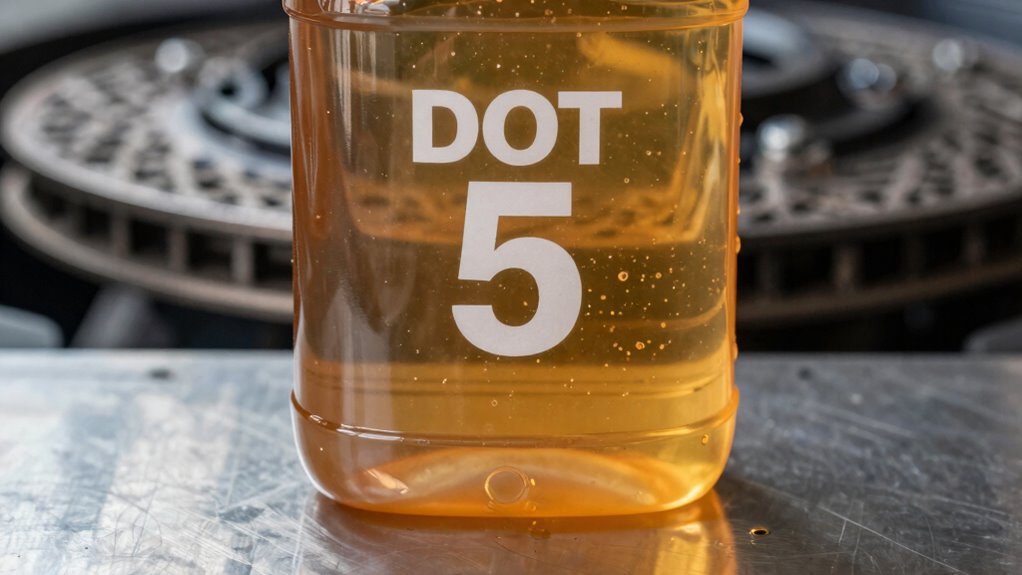
Are you wondering what sets DOT 5 silicone brake fluid apart from other types? It’s primarily its unique composition, which makes it different from traditional glycol-based fluids like DOT 3 and DOT 4. Unlike these, DOT 5 silicone brake fluid is non-hygroscopic, meaning it doesn’t absorb moisture from the air. This quality can be a significant advantage, especially if you’re looking for a fluid that resists water contamination over time. However, this also impacts brake system compatibility and maintenance considerations. Not all brake systems are designed to work with silicone-based fluids, so it’s essential to verify your vehicle’s specifications before making a switch.
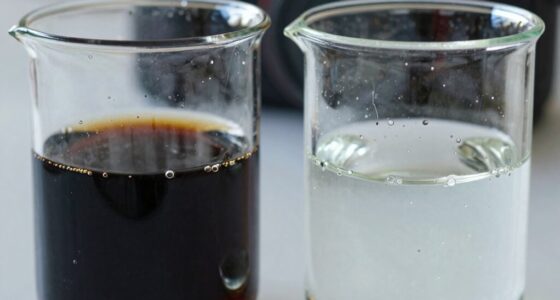
One of the biggest things to keep in mind is that DOT 5 silicone brake fluid is not compatible with the brake fluids used in most vehicles. Mixing it with glycol-based fluids can cause serious issues, such as foaming, inconsistent braking performance, or even brake failure. If your car’s manufacturer recommends or requires silicone fluid, then you’re safe to use it, but if not, you should stick with the recommended fluid type. Compatibility isn’t just about avoiding mixing fluids; it also involves understanding how silicone brake fluid interacts with various brake system components. Silicone fluids tend to be more compressible and may result in a softer pedal feel, which can be a concern for some drivers or racing applications. Additionally, fluid compatibility is crucial to maintaining brake system integrity and performance. Maintenance considerations play a fundamental role in deciding whether DOT 5 silicone brake fluid is right for you. Because it doesn’t absorb moisture, it generally requires less frequent changes than glycol-based fluids. Still, it’s essential to perform regular inspections and follow the manufacturer’s guidelines, especially if your vehicle is used in harsh conditions or for high-performance driving. Additionally, silicone-based fluids can sometimes cause air bubbles to be trapped more easily during bleeding procedures, making brake maintenance more challenging if you’re not experienced. This means that bleeding the brake system with DOT 5 might take longer or require more care to make sure all air is expelled.
As an affiliate, we earn on qualifying purchases.
Frequently Asked Questions
Can DOT 5 Silicone Brake Fluid Be Mixed With Other Brake Fluids?
You shouldn’t mix DOT 5 silicone brake fluid with other brake fluids due to compatibility concerns. Mixing risks include causing gelling, vapor lock, or brake failure. DOT 5’s different chemical composition makes it incompatible with DOT 3 or DOT 4, which are glycol-based. Always flush and replace the entire system when switching to DOT 5 to avoid these issues and guarantee your brakes function safely and effectively.
How Often Should DOT 5 Silicone Brake Fluid Be Replaced?
You should replace DOT 5 silicone brake fluid every 2 to 3 years, depending on your vehicle’s maintenance schedule. Brake fluid lifespan varies based on usage and conditions, so sticking to your maintenance schedule guarantees ideal brake performance. Regularly checking your brake fluid level and quality helps prevent moisture buildup and corrosion, keeping your braking system reliable. Don’t ignore these intervals; timely replacements maintain safety and efficiency.
Is DOT 5 Silicone Brake Fluid Suitable for Daily Driving?
You can use DOT 5 silicone brake fluid for daily driving, but it’s not ideal if you’re into race car or off-road driving. Its properties can cause issues like air bubbles and moisture retention, which compromise braking performance under extreme conditions. For regular city driving, it works fine, but for demanding environments, stick with fluids designed for high performance to guarantee safety and reliability.
What Are the Signs of Brake Fluid Contamination?
You’ll notice contamination indicators like dark or cloudy brake fluid, which signals fluid degradation. You might also feel a spongy brake pedal or experience reduced braking performance, both signs that your brake fluid isn’t functioning properly. Regularly check for these signs to catch contamination early, ensuring your braking system remains safe and effective. If you see any of these indicators, it’s time for a fluid flush or professional inspection.
Can DOT 5 Silicone Fluid Improve Braking Performance?
Sure, DOT 5 silicone fluid might seem like a magic fix for better braking performance, but don’t be fooled. It doesn’t actually increase braking power; instead, it offers benefits like stable fluid viscosity and resistance to water absorption. If you’re expecting sharper stops, you’ll be disappointed. Instead, it’s better suited for specific situations, not a straightforward upgrade. Always consider your vehicle’s needs before switching fluids.
As an affiliate, we earn on qualifying purchases.
Conclusion
Choosing DOT 5 silicone brake fluid isn’t just a simple upgrade; it’s a decision that requires careful consideration of your vehicle’s needs. Like the trusty steed of yesteryear, your car relies on the right fluid to perform flawlessly. Don’t rush into it like a cowboy in a saloon brawl—do your research, weigh the pros and cons, and verify it’s the best fit. After all, your safety depends on making the right call, just like a knight before battle.
As an affiliate, we earn on qualifying purchases.
brake system compatibility check
As an affiliate, we earn on qualifying purchases.
As an affiliate, we earn on qualifying purchases.
Fall Picks
fall essentials
As an affiliate, we earn on qualifying purchases.