
If you experience a soft pedal even when there’s no air in your brake system, a swollen brake hose could be the cause. Over time, internal damage or deterioration weakens the rubber material, causing it to expand under pressure. This expansion reduces the hose’s ability to resist internal pressure, leading to inconsistent braking feel. Recognizing the signs and understanding the causes can help you prevent failure — there’s more to uncover if you keep going.

Get business pricing on garage and car supplies
- Business-only prices and quantity discounts
- Tax-exempt purchasing
- Multiple users, one account, clear invoices
Key Takeaways
- Swollen brake hoses due to internal rubber deterioration can cause a soft pedal, mimicking air in the system.
- Internal damage weakens hose walls, reducing pressure resistance and leading to pedal softness without air presence.
- Rubber hose swelling results from age, heat, and incompatible brake fluids, compromising braking feel.
- Regular inspection detects bulges or soft spots in hoses, preventing soft pedal issues caused by swelling.
- Replacing swollen hoses restores proper pressure and pedal firmness, avoiding false diagnosis of air in the brake system.
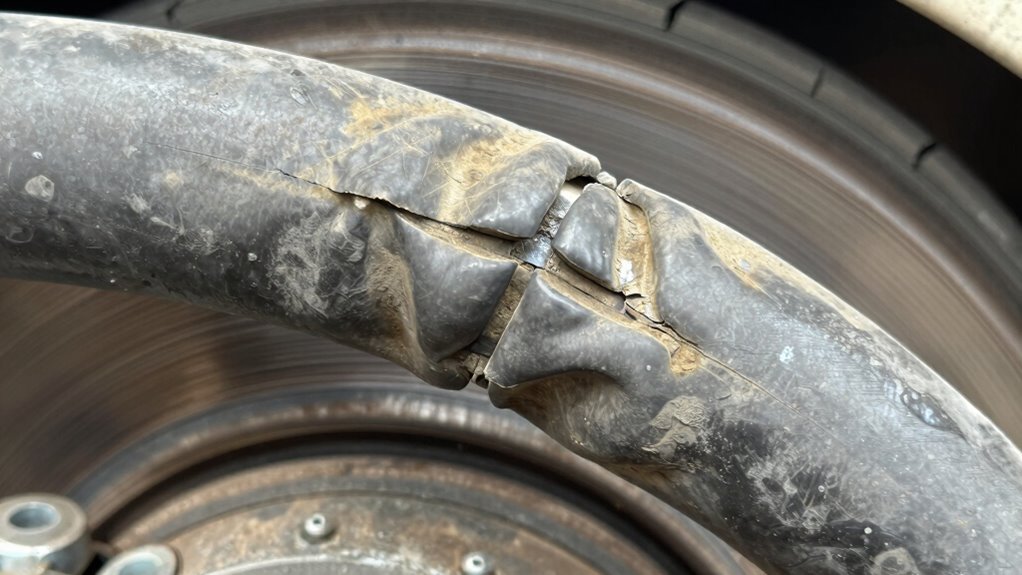
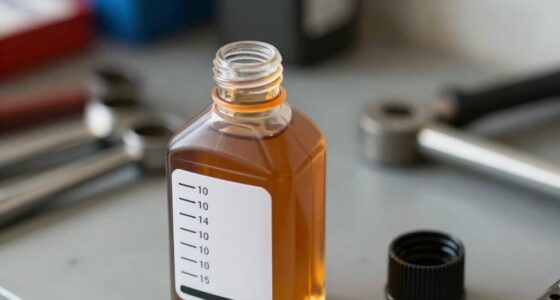
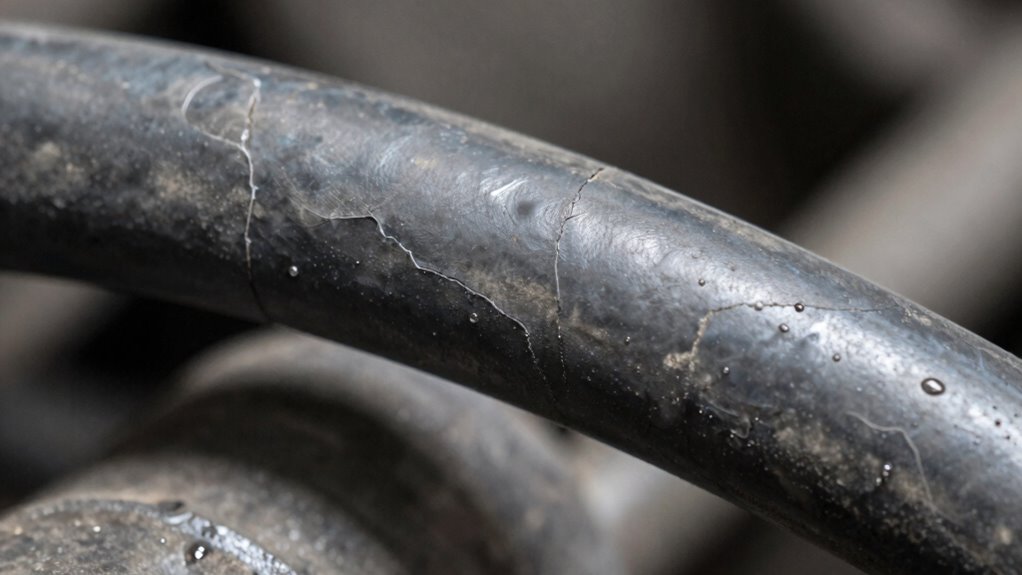
A brake hose swell occurs when the rubber material of your brake hose begins to expand or bulge due to internal damage or deterioration. This swelling isn’t just a minor inconvenience—it can compromise your braking performance and safety. When the hose material starts to weaken from age, heat, or exposure to harsh elements, it loses its ability to resist internal pressure, leading to swelling. Over time, the rubber becomes softer and less resilient, making it more susceptible to expansion under brake system pressure. Brake hose durability is crucial in preventing such issues and ensuring safe vehicle operation. One key factor that influences hose durability is the brake fluid compatibility. Not all brake fluids are created equal; some can react with the rubber compounds used in your brake hoses. Using incompatible brake fluids can accelerate the deterioration of the hose material, causing it to swell prematurely. For example, DOT 3, DOT 4, and DOT 5.1 brake fluids are generally compatible with most rubber hoses, but certain additives in specific formulations might weaken the hose over time. Ensuring you use the correct brake fluid recommended by your vehicle’s manufacturer helps maintain the integrity of the hose material and prevents swelling issues. Hose material durability plays an essential role in preventing a brake hose swell. High-quality hoses are constructed with rubber compounds designed to withstand high internal pressures and resist chemical reactions with brake fluids. These hoses often feature reinforcement layers made of braided steel or synthetic fibers for added strength and flexibility. When you choose hoses with superior material durability, you reduce the risk of swelling, cracking, or bursting. Cheaper, lower-quality hoses might initially seem cost-effective, but they tend to deteriorate faster, leading to swelling and potential brake failure. Regular inspections are fundamental in catching early signs of hose deterioration. Look for soft spots, bulges, or any visible signs of wear and tear. A swollen hose might feel spongy or soft when you squeeze it, indicating internal damage. Replacing hoses before they fail is essential to maintaining reliable braking performance. If you notice a soft pedal or inconsistent braking, don’t ignore it; it could be a sign that your hose has swollen internally and may burst under pressure.
As an affiliate, we earn on qualifying purchases.
Frequently Asked Questions
How Can I Prevent Brake Hose Swelling?
To prevent brake hose swelling, you should regularly check and maintain your brake fluid quality, ensuring it’s clean and at the proper level. Use hoses made from durable materials designed to withstand pressure and heat. Avoid exposing hoses to harsh conditions or chemicals that can weaken their structure. Routine inspections and timely replacements of worn hoses help keep your braking system reliable and prevent swelling-related issues.
What Are the Warning Signs of a Swollen Brake Hose?
A swollen brake hose is like a ticking time bomb under your car. You’ll notice warning signs like brake fluid leaks and an unusual pedal feel that’s softer or spongier than normal. If the pedal sinks or feels less responsive, it’s a clear sign something’s wrong. Stay alert for these signs, because ignoring them can compromise your safety on the road. Regular inspections help catch issues early, keeping you safe.
How Often Should Brake Hoses Be Inspected or Replaced?
You should inspect your brake hoses every 12,000 to 15,000 miles or annually, especially if you notice a soft pedal or uneven braking. Regularly check the hose material for signs of swelling, cracking, or bulges, and verify brake fluid stays clean and at proper levels. Replace hoses immediately if you see any damage, as swollen hoses can cause brake failure. Staying proactive keeps your braking system safe and reliable.
Can Brake Hose Swell Cause Braking Failure?
Yes, brake hose swell can cause braking failure by impairing fluid flow and pedal response. When hoses swell, it often relates to issues with brake fluid compatibility or hose material durability, which weakens the hoses over time. You should inspect hoses regularly for signs of swelling or deterioration and replace them if needed. Using compatible brake fluid and high-quality hoses helps prevent swelling and ensures reliable braking performance.
Are There Different Types of Brake Hoses Resistant to Swelling?
You’ll find there are different types of brake hoses resistant to swelling, mainly braided and rubber hoses. Braided hoses offer superior durability, resistance to high pressure, and less swelling, making them ideal for performance vehicles. Rubber hoses, while more affordable, tend to swell more under pressure, which can cause a soft pedal feel. If you need high-pressure compatibility and minimal swelling, braided hoses are your best choice.
As an affiliate, we earn on qualifying purchases.
Conclusion
If you notice a soft pedal or uneven braking, don’t ignore it—your brake hose might be swelling like a balloon, hiding a serious issue. A swollen hose can compromise your safety, much like a ticking time bomb ready to go off. Regular inspections and prompt repairs can prevent accidents before they happen. Stay vigilant with your brake system, because a small problem today can turn into a big one tomorrow—like a snowball gaining momentum downhill.
As an affiliate, we earn on qualifying purchases.
As an affiliate, we earn on qualifying purchases.
Evergreen bestsellers Picks
bestsellers
As an affiliate, we earn on qualifying purchases.