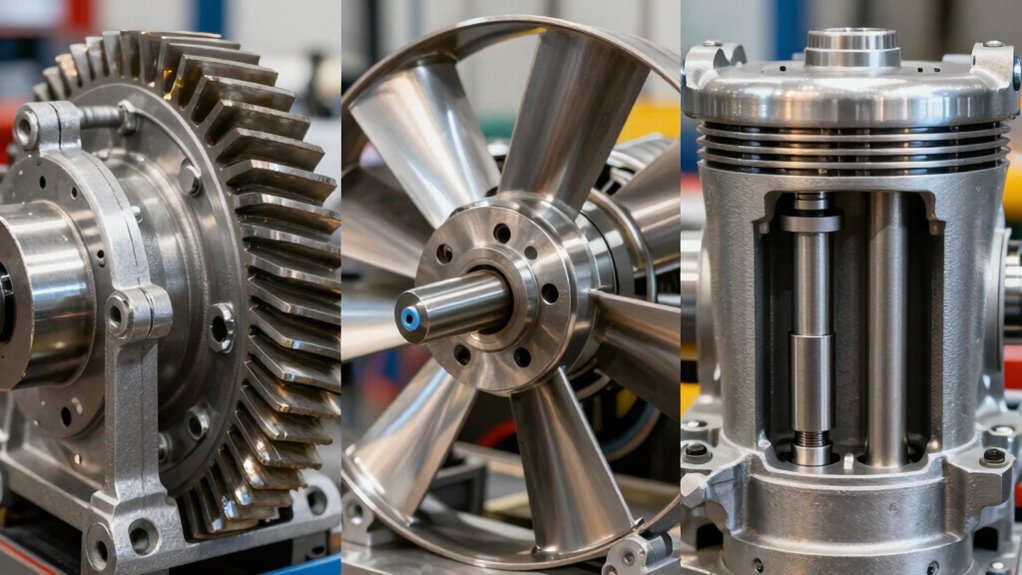
Understanding hydraulic pump types—gear, vane, and piston—is key because each needs specific oil choices for ideal performance. Gear pumps handle thicker oils and require regular checks to prevent gear wear. Vane pumps rely on lubricating oils to reduce vane friction and maintain efficiency. Piston pumps demand high-quality, high-viscosity oils to withstand high pressures and prevent seal wear. Knowing these differences helps you choose the right lubricant and maintenance plan to keep your system running smoothly. Keep exploring to learn more details.
Key Takeaways
- Gear pumps use thicker, viscous oils and require regular oil checks for gear wear prevention.
- Vane pumps benefit from lubricating oils to reduce vane friction and maintain efficiency.
- Piston pumps depend on high-quality, high-viscosity oils to handle high pressures and prevent seal wear.
- Proper oil selection and maintenance are crucial for all pump types to ensure longevity and optimal performance.
- Pump design influences oil choice, impacting heat management, lubrication, and overall system durability.
Have you ever wondered how hydraulic systems generate the power needed to move heavy loads? The answer lies in the way different hydraulic pump types harness fluid dynamics to create force. Each pump type—gear, vane, and piston—has unique characteristics that influence how fluid flows and how power is transferred. Understanding these differences is essential, especially when considering maintenance considerations, as the design impacts durability, efficiency, and the type of oil used.
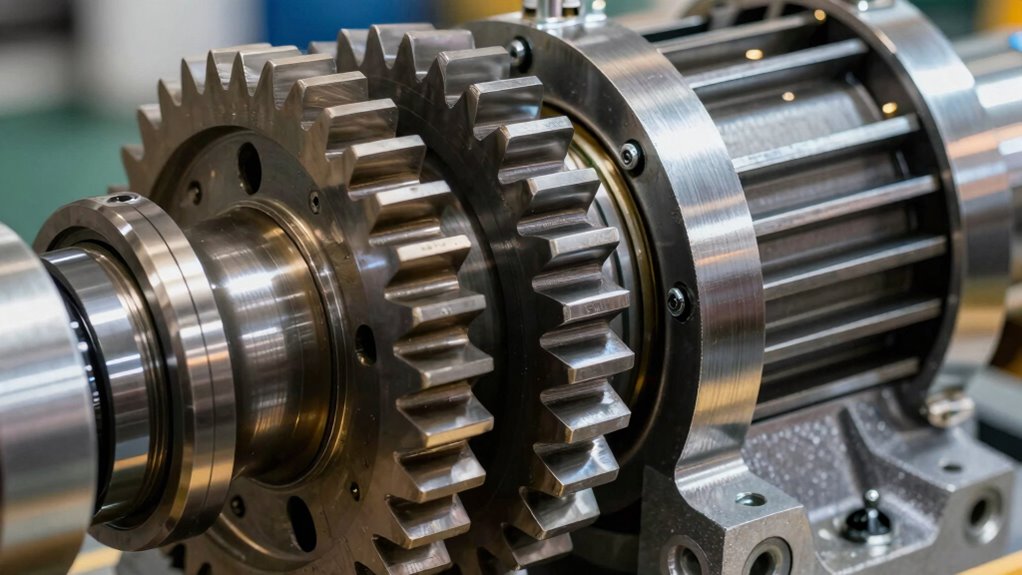
Gear pumps are among the simplest and most common. They operate by using two meshing gears that rotate to trap and move fluid from the inlet to the outlet. This design creates a steady flow, making gear pumps reliable and easy to maintain. Their straightforward construction means fewer moving parts, reducing the likelihood of breakdowns. However, the fluid dynamics involved mean that they can generate significant heat and may cause more wear over time if the oil isn’t properly maintained. Regular oil checks and timely replacements are critical to prevent gear wear and ensure smooth operation, especially since gear pumps tend to handle thicker, more viscous oils well.
Gear pumps are simple, reliable, and handle viscous oils well but require regular maintenance to prevent wear.
Vane pumps introduce a slightly more complex mechanism, using a rotor with sliding vanes that extend outward to contact the pump’s casing. As the rotor spins, the vanes trap fluid in chambers, moving it through the pump. Their design allows for a more consistent flow and better control of fluid pressure, which is advantageous in applications requiring precise motion control. Because of the sliding parts, vane pumps demand more attentive maintenance—vane wear can lead to decreased efficiency or failure if not monitored. Choosing the right oil, typically with good lubricating properties, is essential to reduce friction and prolong the life of the vanes.
Piston pumps are the most complex and capable, utilizing reciprocating pistons within cylinders to generate high pressure. These pumps excel in demanding applications where precise control and high force are necessary. Their operation relies heavily on fluid dynamics principles to create a steady, high-pressure flow. Due to their intricate internal mechanisms, piston pumps require rigorous maintenance—seal wear, piston corrosion, and lubrication issues can cause significant downtime if neglected. The oil used must be of high quality, with proper viscosity and additives to withstand the extreme pressures and reduce internal wear.
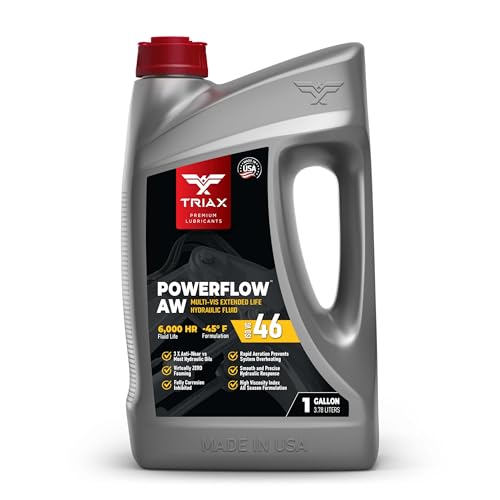
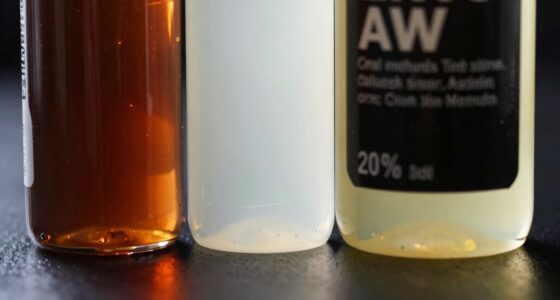
TRIAX Powerflow AW 46 Multi-Viscosity HLP Hydraulic Oil | 6,000 Hour Extended Life | Triple Anti-Wear | True All Season | Pour Point Down to -40F | Virtually Zero Foaming (1 Gallon)
Exceptionally Long Life: Designed for 6,000-hour severe service with high oxidation resistance, providing up to 3 times the…
As an affiliate, we earn on qualifying purchases.
As an affiliate, we earn on qualifying purchases.
Frequently Asked Questions
How Do Hydraulic Pump Types Affect Energy Efficiency?
You can improve your system’s energy efficiency by choosing the right hydraulic pump type. Gear pumps are simple and cost-effective but less efficient at high pressures. Vane pumps offer better efficiency and smoother operation, saving energy. Piston pumps provide the highest pump efficiency at variable pressures, leading to significant energy savings. Selecting the appropriate pump type based on your needs directly impacts your system’s overall pump efficiency and energy consumption.
Which Pump Type Is Best for High-Viscosity Oils?
Think of your hydraulic system as a vessel carrying essential energy—when dealing with high-viscosity oils, a piston pump is your steadfast captain. It offers superior viscosity compatibility and handles thick fluids efficiently. Your pump selection criteria should focus on durability, flow rate, and how well it manages viscosity challenges. With a piston pump, you guarantee steady performance, even under demanding conditions, safeguarding your system’s reliability and power.
What Maintenance Differences Exist Among Gear, Vane, and Piston Pumps?
You need to monitor seal wear closely in gear, vane, and piston pumps, as it affects performance and longevity. Gear pumps typically require minimal lubrication but need regular seal inspections. Vane and piston pumps demand stricter lubrication requirements to prevent seal wear and maintain efficiency. Regularly check for leaks, replace worn seals promptly, and make certain of proper lubrication to keep your pumps running smoothly and extend their service life.
Are Certain Pump Types More Suitable for Portable Applications?
If you love lugging around heavy machinery, then some pump types are your best friends. For portable flexibility, gear and vane pumps excel due to their compact size and lightweight design, making them ideal for on-the-go jobs. Piston pumps, on the other hand, tend to be bulkier and less suited for portability. So, if size considerations matter, gear and vane pumps are your go-to, saving your back and your time.
How Do Hydraulic Pump Types Influence System Noise Levels?
You’ll notice that pump types considerably influence system noise levels. For noise reduction and vibration control, piston pumps tend to be quieter because they operate smoothly with less vibration. Vane pumps also offer moderate noise levels and better vibration control than gear pumps, which are typically noisier due to gear engagement. Choosing the right pump for your application helps minimize noise and vibration, enhancing overall system performance and comfort.

TECHTONGDA Automatic Lubricating Oil Pump 110V Lubrication Oiler Digital Numerical Control Gear Lubrication Pump Oiler with 2L Tank Capacity for CNC Punching Lathe Cutting Milling Machine
@【Digital Display】~ The digital display panel is easy to use, intuitive and reliable. And the one button setting…
As an affiliate, we earn on qualifying purchases.
As an affiliate, we earn on qualifying purchases.
Conclusion
Understanding the differences between gear, vane, and piston hydraulic pumps helps you choose the right one for your needs. Did you know that hydraulic systems can account for up to 70% of energy consumption in heavy machinery? By selecting the proper pump type, you not only improve efficiency but also conserve on operating costs. Making informed decisions about hydraulic pumps ensures your equipment runs smoothly and reliably, keeping your projects on track and within budget.

731400 Oil Separator 731400-0000 Exhaust Filter Compatible with Elmo Rietschle VC/CLFH/VSW/CLFD Series Rotary Vane Vacuum Pumps
Part Number : 731400(also referenced as : 731400 0000 and 731400 – 0000 )
As an affiliate, we earn on qualifying purchases.
As an affiliate, we earn on qualifying purchases.

Melling-10295 Oil Pump, Wet Sump, Internal, Standard Volume, High Pressure, GM LS-Series, Each
High Pressure
As an affiliate, we earn on qualifying purchases.
As an affiliate, we earn on qualifying purchases.