
TL;DR

Get garage and car supplies delivered free — and shop member deals
- Fast, free delivery on millions of items
- Access to Prime Big Deal Days deals on October 6–7
- Prime Video, Amazon Music and more included
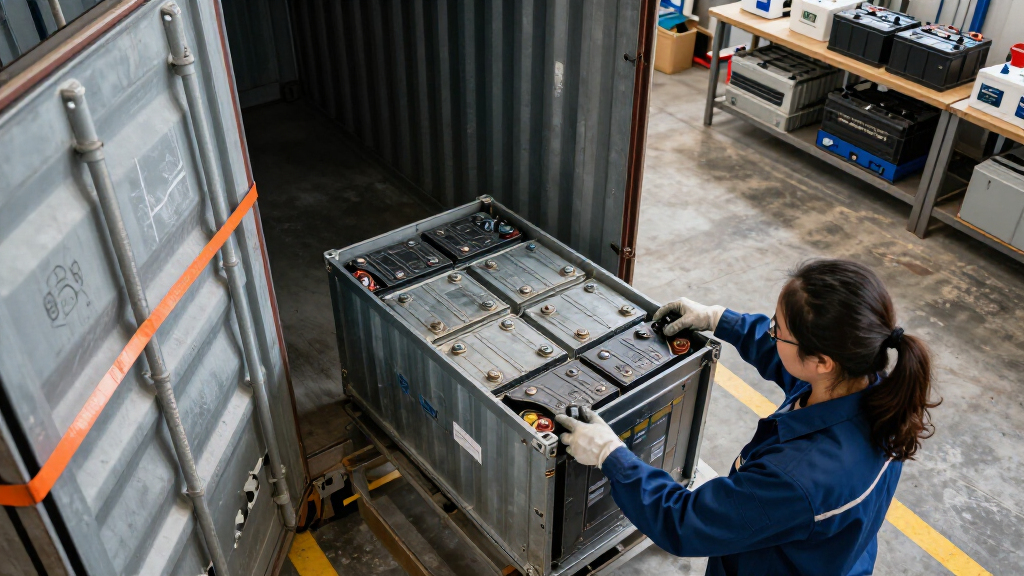
Renewance adopted DGeo’s reusable Obexion AG containers to ship multiple damaged, defective or recalled batteries together, according to a Labelmaster-sponsored case study. The company says the packaging supports higher-volume shipments with reduced transportation risk; shipment data and quantified savings were not provided.
Damaged, defective or recalled (DDR) batteries are classified as dangerous goods, the report says. It describes conventional shipping as usually requiring one battery per container, a constraint that can add cost and handling time when a company processes batteries at scale.
Renewance selected Obexion AG, a reusable, stackable container made by DGeo and designed for multiple DDR batteries. The case study says the packaging lets Renewance consolidate shipments and reduces transportation risks associated with these batteries. It does not specify the container’s capacity, the applicable transport rules, or how Renewance measures risk.
Sterling Picton, who leads solutions development for end-of-life projects at Renewance, described the packaging as designed for this use. His account supports the company’s rationale for adopting the container, but the source provides no independent assessment or before-and-after shipment data.
Consolidating End-of-Life Battery Loads
For companies handling end-of-life batteries, packaging requirements affect how many units can move in a shipment and how much handling each shipment takes. A container built to hold multiple DDR batteries could help reduce separate packaging and transport movements, subject to applicable dangerous-goods requirements and the condition of the batteries.
Renewance says the approach supports higher-volume handling at reduced risk. That is a company statement, not a quantified result in the supplied report. Without cost comparisons, incident data, or details on shipment volumes, readers cannot determine the scale of any operational or safety gains.
Why DDR Batteries Need Special Packaging
Batteries classified as damaged, defective or recalled are treated as dangerous goods, according to the case study. The report says shipping them safely usually involves one battery per container, creating added expense and handling work for organizations managing them at scale.
Renewance works with end-of-life EV and energy storage batteries. Its reported change was to use DGeo’s reusable, stackable Obexion AG container as a packaging option for multiple DDR batteries. The supplied material does not give a timeline for the adoption or describe earlier packaging trials.
““It’s a more advanced product, designed for this specific application.””
— Sterling Picton, Renewance’s solutions development lead for end-of-life projects
Savings and Safety Data Not Published
The case study does not quantify cost reductions, handling-time changes, shipment volumes or safety outcomes. It also does not identify the relevant jurisdictions, describe the regulatory approvals or testing for the container, or set out which battery conditions the packaging can accommodate.
The report is sponsored by Labelmaster and presents Renewance’s experience. The supplied material does not include independent verification, comparison data, or details on whether the container is used across all of Renewance’s shipments.
Further Shipment Results Awaited
The supplied report does not announce a next milestone or provide a schedule for further results. More information on container capacity, deployment scale, costs and measured safety performance would help readers assess the impact of the packaging change.
Any wider use would depend on the specific batteries and applicable dangerous-goods shipping requirements. The source does not state whether Renewance or DGeo plans to publish additional operational data.
Key Questions
What changed in Renewance’s battery shipping approach?
According to a Labelmaster-sponsored case study, Renewance adopted reusable Obexion AG containers designed to hold multiple damaged, defective or recalled batteries, allowing consolidated shipments.
Who makes the Obexion AG container?
The case study identifies DGeo as the maker of the reusable, stackable container.
What benefits does Renewance report?
Renewance says the packaging supports higher-volume handling at reduced risk. The supplied report does not quantify the claimed benefits.
How much money or time did the change save?
The source provides no cost, time or shipment figures, so the amount of any savings is unknown.
Does the report establish that the container reduces incidents?
No incident data or independent safety evaluation is included in the supplied material. The risk reduction is presented as Renewance’s stated benefit, not as a measured outcome in the report.
Source: rss
Fall Picks
fall essentials
As an affiliate, we earn on qualifying purchases.