TL;DR

Get business pricing on garage and car supplies
- Business-only prices and quantity discounts
- Tax-exempt purchasing
- Multiple users, one account, clear invoices
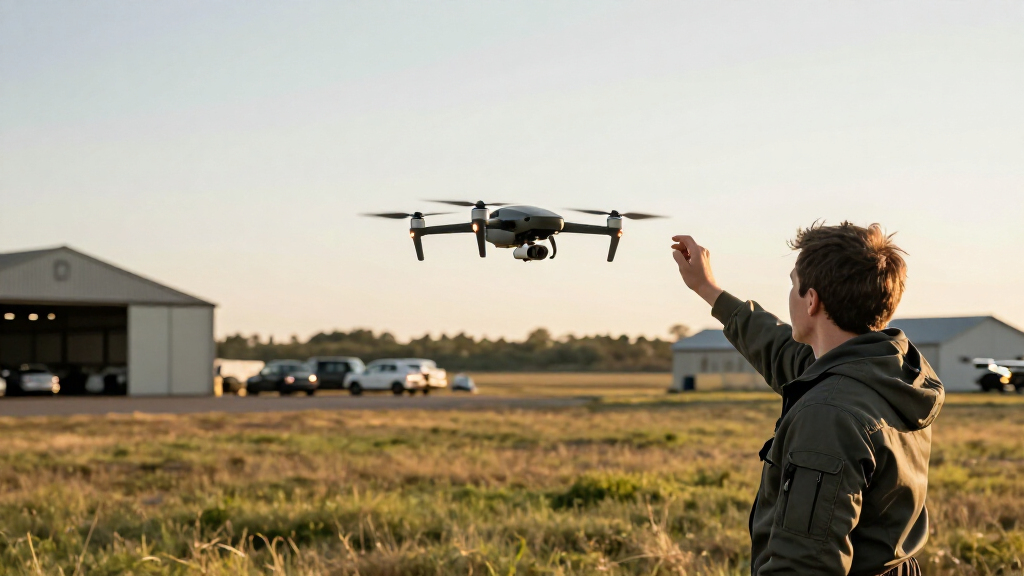
Li-S Energy says one of its 382 Wh lithium-sulfur battery packs powered the Pegasus drone for a test flight of almost two hours and more than 75 km in Queensland. The aircraft met its expected performance and landed with battery capacity remaining, according to the company. The partners will analyze the flight data; longer five- to eight-hour missions are a projection, not a result of this test.
Li-S Energy says one of its lithium-sulfur battery packs powered the Pegasus drone for almost two hours and more than 75 kilometres during a test flight over Queensland, completing the flight-test work for an Australian aviation technology project. The company said the drone met expected performance and landed with battery capacity remaining; partners will now analyze the flight data and assess the aircraft’s commercial potential.
The flight used a 382 Wh lithium-sulfur battery pack supplied by Li-S Energy, an Australian cell developer. Pegasus is a twin-motor drone with a five-metre wingspan. V-TOL Aerospace developed its airframe and power systems, while Halocell Energy fabricated a perovskite solar array mounted along the wings. Li-S Energy supplied the battery packs and battery management system.
According to the report, Li-S Energy’s battery management system is integrated with V-TOL’s power management system. The systems manage power for the twin motors and aircraft controls and can also manage input from the solar array. The test flight used 1.1 kilograms of lithium-sulfur cells. Pegasus was designed to carry two Li-S Energy packs, but this endurance flight used a single pack.
Li-S Energy has filed two patent applications arising from the project, covering its battery management system and battery pack design. The partners say the completed flight marks the end of the project’s development and flight-test work under the Australian government’s Emerging Aviation Technology Partnership program.
A Longer-Range Test for Electric Drones
The flight gives the project partners a real-world endurance result for a drone powered by a lithium-sulfur pack, rather than a performance estimate based only on cell specifications. If further testing supports the result, longer flight times could help operators cover more ground per mission for mapping, surveillance, agriculture, utilities and environmental monitoring. Those uses are among the applications the company identifies for the platform; the test itself does not establish commercial readiness or operating costs.
Li-S Energy also makes a comparison with a conventional lithium-polymer drone battery. It says its 1.1 kilograms of lithium-sulfur cells delivered 80% more range and flight time on an equal cell-weight basis than a Tattu 6S pack rated at 16,000 mAh and 355 Wh, which the company puts at about 1.85 kilograms and 192 Wh/kg. That is a company benchmark, not an independently reported head-to-head flight result. The comparison excludes pack housings and battery management systems and assumes flight time scales linearly with cell energy.
The distinction matters because battery weight, packaging, control systems and the aircraft’s operating conditions all affect usable flight time. The near-two-hour flight confirms that the aircraft completed this particular test; it does not by itself verify Li-S Energy’s broader equal-weight comparison across other drones or mission profiles.
As an affiliate, we earn on qualifying purchases.
Three Partners Built Pegasus
Pegasus was developed by three Australian companies: V-TOL Aerospace, Li-S Energy and Halocell Energy. V-TOL led the aircraft design and power systems, Li-S Energy provided the battery technology and management system, and Halocell made the wing-mounted solar array. The integration of these systems was part of the project’s development and flight-testing work.
The project received a grant of just over A$1.35 million from the Australian government through its Emerging Aviation Technology Partnership program, with the three companies matching the grant, according to the source report. The flight completes the project’s development and test phase, but the partners say they still need to review performance data and assess commercial prospects.
Li-S Energy says a future configuration using two battery packs and improved Halocell solar arrays could support five- to eight-hour missions covering 250 kilometres. That is a projected capability, not a demonstrated result from the reported flight. The current test lasted almost two hours and covered more than 75 kilometres.
As an affiliate, we earn on qualifying purchases.
Commercial Performance Still Under Review
The partners have not yet published detailed flight data, including the precise duration, speed, payload, weather conditions, route profile or amount of energy drawn from the battery and solar array. The report describes the flight as almost two hours and more than 75 kilometres, and says the aircraft landed with capacity to spare, citing Li-S Energy. It does not provide an independently verified measurement of the remaining charge.
It is also unclear when a two-pack configuration might be tested, whether the projected five- to eight-hour missions will be achieved, or what commercial availability, pricing and certification requirements would apply. The company’s 80% comparison uses stated assumptions and excludes pack and management-system weight; the report does not identify an independent assessment of that calculation.
high capacity lithium-sulfur batteries for drones
As an affiliate, we earn on qualifying purchases.
As an affiliate, we earn on qualifying purchases.
Partners to Review Flight Data
The project partners say they will analyze the flight data to characterize Pegasus’s performance and assess its commercial potential. They are aiming for future platform sales, but the source report gives no sales timetable or confirmed customer orders.
Further milestones could include tests with both battery packs and improved solar arrays, which Li-S Energy says may support longer missions. Until those tests and the data review are reported, the five- to eight-hour duration and 250-kilometre range remain company projections rather than confirmed flight results.
As an affiliate, we earn on qualifying purchases.
Key Questions
How long did the Pegasus drone fly?
Li-S Energy reported that the drone flew for almost two hours over Queensland and covered more than 75 kilometres. The source does not provide a more precise duration.
What battery powered the test flight?
The flight used a single 382 Wh lithium-sulfur battery pack supplied by Li-S Energy. The company also supplied the battery management system.
Did the test demonstrate five- to eight-hour flights?
No. The reported flight lasted almost two hours. Li-S Energy says a future configuration with two packs and improved solar arrays could enable five- to eight-hour missions, but that capability has not been demonstrated in the reported test.
What will the project partners do next?
The partners plan to analyze the flight data, characterize the aircraft’s performance and assess its commercial potential. They have said they are aiming for future platform sales but have not announced a schedule.
Source: rss
Halloween Picks
halloween
As an affiliate, we earn on qualifying purchases.