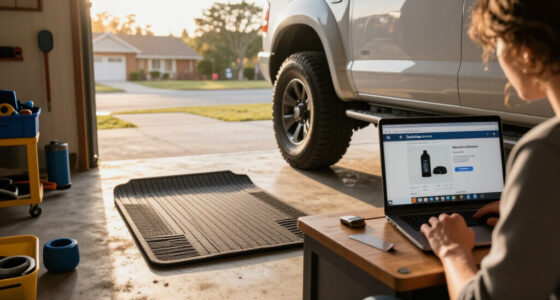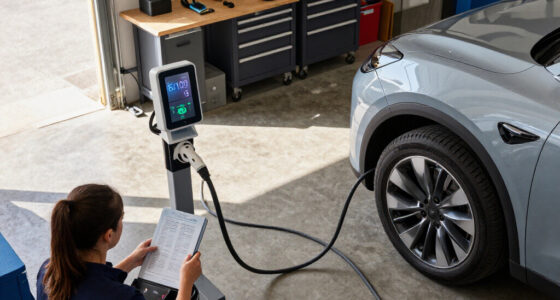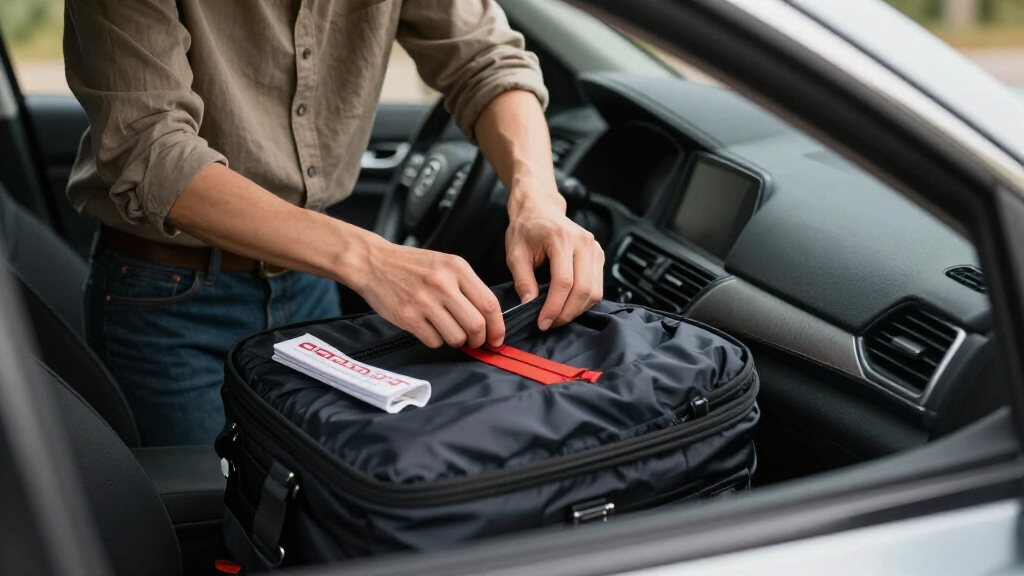
Choosing a car emergency kit comes down to control versus convenience. A DIY kit lets you select supplies for your vehicle, climate, passengers, and trips; a prepacked kit puts a ready-to-store collection together with one purchase. The tradeoff is that building your own takes research and time, while a boxed kit can leave gaps or include low-quality items. Drivers who want specific, reliable equipment are better served by a DIY kit. Those who want a quick starting point for routine local driving may prefer a prepacked one, provided they check its contents before relying on it.

Get business pricing on garage and car supplies
- Business-only prices and quantity discounts
- Tax-exempt purchasing
- Multiple users, one account, clear invoices

Portable Car Jump Starter with 150 PSI Air Compressor and Emergency Kit
- ✔ Peak current: 6000A
- ✔ Maximum pressure: 150 PSI
- ✔ Engine compatibility: Up to 10L gas and 10L diesel engines
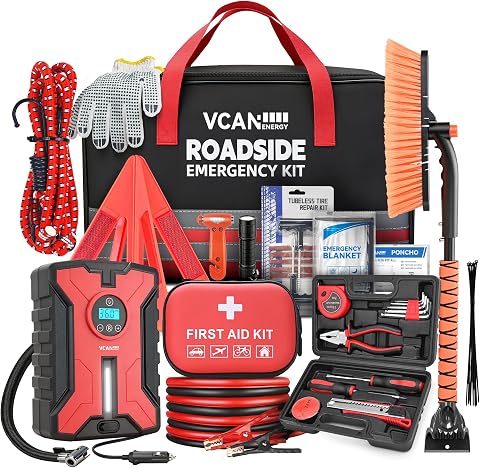
Car Emergency Safety Kit with Air Compressor, Jumper Cables, First Aid Kit, Snow Brush, and Ice Scraper
- ✔ Number of pieces: 170
- ✔ Jumper cable length: 12 ft
- ✔ Jumper cable gauge: 8 gauge

Car Roadside Emergency Kit with Jumper Cables, Air Compressor, Headlamp, and Safety Supplies
- ✔ Storage: Blow-molded case
- ✔ Included equipment: Jumper cables, air compressor, headlamp, tow ropes, rainwear, gloves, and first-aid bandages
- ✔ Other tools: Screwdrivers, safety hammers, and PVC tape
At a Glance
| Criteria | DIY Car Emergency Kit | Prepacked Car Emergency Kit | Winner |
|---|---|---|---|
| Coverage and customization | Choose supplies for your car, region, passengers, and likely emergencies. | Provides a general assortment; contents vary and may omit items you need. | A |
| Convenience | Requires shopping, comparing products, and assembling the kit. | Fast to purchase and store; check the contents before use. | B |
| Item quality | You control brands, specifications, and expiration dates. | Quality varies by kit, and some tools may be basic or unsuitable. | A |
| Cost and value | Costs vary; buying only useful items can improve value, though quality gear costs more. | One upfront purchase can be economical, but extras may go unused. | Depends |
| Readiness and maintenance | You must organize the kit and track supplies yourself. | A bundled set is easy to keep together, but supplies still need inspection and replacement. | B |
| Fit for different vehicles and trips | Can be tailored for winter travel, electric vehicles, family needs, or long trips. | Convenient baseline for common situations; less suited to unusual needs without additions. | A |
Portable Car Jump Starter with 150 PSI Air Compressor and Emergency Kit
For drivers who want to address two common immobilizing problems with one powered device, this is the clearest all-in-one choice in the group. It combines a battery-powered jump starter with a 150 PSI air compressor, then adds an LED light and USB power bank. Unlike the other two kits, its starter does not depend on another vehicle being present to supply power, according to the description. That makes it the most self-contained option on paper, though buyers should verify the instructions and operating limits before relying on it.The listed 6000A peak current and claimed support for engines up to 10L gas or diesel offer a compatibility reference, while spark-proof and reverse-polarity protections may help reduce risks from incorrect connections. Its accessories include a reflective triangle, tire repair kit, first-aid kit, tow rope, and emergency blanket, so the package covers more than power alone. Compared with the VCANENERGY kit, however, it specifies neither jumper-cable length nor a large first-aid count. Its battery capacity and charging time are also missing, leaving us unable to judge how long it stores power or how quickly it can be made ready again.At 7 pounds, it is heavier than a small accessory pouch, and its 14-by-5-by-11-inch form needs a suitable trunk space. The other two kits rely on vehicle-powered inflators or provide less complete power details, but they may make more sense for shoppers who prioritize a simpler storage kit. We rank this first for the combination of independent jump-starting, tire inflation, and stated electrical protections; buyers should still confirm engine compatibility and charging arrangements.
Pros:
- Combines a battery-powered jump starter and 150 PSI air compressor
- Lists compatibility with engines up to 10L gas and diesel
- Includes spark-proof, reverse-polarity, over-current, over-voltage, and short-circuit protections
- Adds an LED light, USB power bank, reflective triangle, and tire repair kit
Cons:
- Weighs 7 pounds and needs space for its 14 x 5 x 11-inch form
- Battery capacity and charging time are not specified
- Does not state jumper-cable length or gauge
Best for: Drivers who want one portable powered unit for jump-starting and tire inflation, plus a selection of roadside accessories.
Not ideal for: Drivers who need a lightweight, low-volume kit or require a stated battery capacity and recharge time before choosing.
Bottom line: We rank this first for its combination of a battery-powered jump starter, tire inflator, and stated protections, provided its size and unspecified battery capacity suit your needs.
“We rank this first for its combination of a battery-powered jump starter, tire inflator, and stated protections, provided its size and unspecified battery capacity suit your needs.”
Car Emergency Safety Kit with Air Compressor, Jumper Cables, First Aid Kit, Snow Brush, and Ice Scraper
The VCANENERGY kit stands out for buyers who want to know more about the physical contents before choosing. Its listing specifies 12-foot, 8-gauge jumper cables, a 138-piece first-aid kit, and a 22-piece car tool set. That is more concrete than the broad roadside kit’s unspecified cable and accessory details. It also includes a snow brush and ice scraper, making it a more season-aware bundle for drivers who routinely face winter conditions.The 12V digital inflator has a PSI setting, automatic shutoff, LED light, and three nozzles. Automatic shutoff can help prevent overshooting a chosen pressure, but the product description gives neither the maximum pressure nor inflation rate. That omission makes it harder to compare against the other two: the portable jump starter states a 150 PSI maximum, while the broad kit does not supply compressor figures either. This model also relies on a vehicle’s 12V outlet, so it is less self-contained than the battery-powered starter pick when the car battery or electrical system is unavailable.We place it second because its cable and first-aid specifications are unusually useful, while it still combines several relevant categories in a trunk bag. The two-year warranty is another stated point of comparison, though it does not answer questions about inflator performance. Compared with the first-place option, it trades independent jump-starting power and a stated pressure ceiling for more detail about cables and medical supplies. Choose it when those details and the winter tools matter more than an all-in-one powered unit.
Pros:
- Specifies 12-foot, 8-gauge jumper cables
- Includes a 138-piece first-aid kit and 22-piece car tool kit
- Digital inflator offers PSI setting, automatic shutoff, LED light, and three nozzles
- Includes snow brush and ice scraper and lists a two-year warranty
Cons:
- Inflator maximum pressure and inflation rate are not specified
- Inflator uses a 12V outlet rather than an independent battery
- Storage bag dimensions and total kit weight are not provided
Best for: Drivers seeking a bundled kit with specified jumper-cable dimensions, a large listed first-aid set, and snow-clearing tools.
Not ideal for: Drivers who need a battery-powered jump starter or want the inflator’s maximum pressure and speed stated up front.
Bottom line: We recommend this for buyers who value specified cable details, extensive first aid, and winter tools, as long as the 12V inflator’s missing performance figures are acceptable.
“We recommend this for buyers who value specified cable details, extensive first aid, and winter tools, as long as the 12V inflator’s missing performance figures are acceptable.”
Car Roadside Emergency Kit with Jumper Cables, Air Compressor, Headlamp, and Safety Supplies
This kit takes the broadest traditional roadside-kit approach: it groups jumper cables, an air compressor, a headlamp, tow ropes, rainwear, gloves, and bandages in a blow-molded case. That assortment makes it a practical starting point for drivers who want visibility, basic protection, and tools for common roadside situations in one place. In contrast with the VCANENERGY kit, the description does not state cable length or gauge, and it gives less detail about the first-aid supplies. In contrast with the jump-starter pick, it does not describe an integrated battery-powered starter.The blow-molded case is the clearest storage advantage: it gives the equipment a defined container that can be kept together in a vehicle. The assortment also spans more vehicle categories than a car-only bundle, with compatibility listed for motorcycles, trucks, ATVs, boats, RVs, vans, SUVs, and tractors. That broad claim does not establish that every included tool suits every vehicle, so buyers should check individual components against their own setup.We rank this third because its range is appealing but its technical and contents details are the thinnest of the three. The compressor’s capacity and the jumper cables’ length are not stated, and the description does not enumerate the kit precisely. Those gaps matter when a buyer needs to know whether a cable can reach or whether an inflator meets a particular tire’s requirements. Choose it as a general-purpose collection of basics when compact case storage and varied supplies matter more than detailed specifications.
Pros:
- Combines jumper cables and an air compressor with a headlamp and tow ropes
- Adds rainwear, gloves, first-aid bandages, and safety tools
- Uses a blow-molded case for keeping supplies together
- Lists compatibility across cars and several other vehicle types
Cons:
- Cable length and compressor specifications are not provided
- The exact kit contents are not fully detailed
- No battery-powered jump starter is described
Best for: Drivers who want a compact, general roadside assortment with visibility, weather protection, basic tools, and a storage case.
Not ideal for: Shoppers who need documented jumper-cable dimensions, compressor performance, or a clearly enumerated first-aid inventory.
Bottom line: We see this as a useful compact basics kit for broad roadside coverage, but buyers should verify the cable and compressor details before depending on them.
“We see this as a useful compact basics kit for broad roadside coverage, but buyers should verify the cable and compressor details before depending on them.”
As an Amazon Associate we earn from qualifying purchases.
Key Differences
The biggest difference is how much responsibility you want before an emergency. With a DIY kit, you decide what belongs in the car: a suitable tire inflator, correctly rated jumper cables or a jump starter, a first-aid kit, and seasonal supplies, for example. That control matters because vehicle requirements differ. A compact car, a vehicle with a spare tire, and an electric vehicle may call for different equipment. The work is up front, and an incomplete shopping list can create its own gaps.
A prepacked kit reduces that effort by bundling common items, often in a carrying case. It can be a sensible base for short, familiar drives, but the label does not guarantee that it covers your needs or that every tool is robust. Check the item list, dimensions, ratings, and instructions; add or replace anything unsuitable. On cost, neither approach always wins: a bundle may cost less than buying comparable items separately, while a targeted DIY kit avoids paying for tools you already own or will not use.
Detailed Comparison
Coverage and customization (DIY Car Emergency Kit wins — major)
DIY wins; major gap. You can match supplies to your car, local weather, regular routes, and passengers. A general kit cannot know whether you need cold-weather gear, extra child supplies, or equipment suited to a particular tire setup. That flexibility makes DIY the stronger choice for remote trips and specific vehicle needs, as long as you use a checklist and do not overlook basics.
Convenience (Prepacked Car Emergency Kit wins — moderate)
Prepacked wins; moderate gap. One purchase gets a collection into the trunk with little preparation. DIY requires comparing products, gathering them, and storing them together. The convenience advantage shrinks if you have to replace unsuitable contents or buy missing essentials, so read the inventory before purchasing.
Item quality (DIY Car Emergency Kit wins — moderate)
DIY wins; moderate gap. You choose the specifications and brands of important equipment, such as a tire inflator or jump starter. Prepacked sets vary: a bundle may include useful basics, but its tools can be undersized for your vehicle or difficult to use. Inspect ratings and instructions, and do not assume a low price means every component is dependable.
Cost and value (moderate difference)
Depends; moderate gap. A prepacked set can be the cheaper route to a basic assortment, particularly if its items are all useful. DIY can deliver better value when it avoids duplicates and focuses spending on items that fit your car. For either approach, judge cost against the contents and suitability rather than the number of pieces listed on the box.
Readiness and maintenance (Prepacked Car Emergency Kit wins — minor)
Prepacked wins slightly; minor gap. A case keeps bundled items together and can be easy to store, while a DIY collection may spread across the trunk unless you organize it. Neither is ready indefinitely: batteries need charging or replacement, first-aid supplies can expire, and seasonal items should match current conditions. Put a recurring reminder on your calendar to inspect the kit.
Fit for different vehicles and trips (DIY Car Emergency Kit wins — moderate)
DIY wins; moderate gap. A tailored kit can account for tire type, vehicle starting needs, passenger health, and trip length. A general kit works as a baseline for common roadside problems, but a long winter drive or remote route calls for more planning. Follow the vehicle manual and check tool compatibility before packing or using equipment.
DIY Car Emergency Kit: Pros and Cons
Pros:
- Tailor contents to the vehicle, climate, passengers, and routes.
- Choose the quality and specifications of key tools.
- Avoid paying for duplicate or irrelevant items.
Cons:
- Takes time to research, buy, and organize.
- Easy to miss an essential item without a checklist.
- Requires personal tracking of condition, charge, and expiration dates.
Prepacked Car Emergency Kit: Pros and Cons
Pros:
- Quick to buy and store as one collection.
- Can provide a lower-cost starting set of common supplies.
- Case or pouch helps keep items together.
Cons:
- Contents may not suit a particular car or climate.
- Tool quality and specifications vary by kit.
- May contain unnecessary items while omitting useful ones.
Who Should Choose What
Choose DIY Car Emergency Kit if:
- You drive in severe weather, on long routes, or far from services.
- Your vehicle has particular tire, battery, or equipment requirements.
- You want to select dependable tools and already know what your car needs.
Choose Prepacked Car Emergency Kit if:
- You need a basic kit quickly for routine local driving.
- You prefer one purchase and are willing to inspect the contents afterward.
- The kit’s listed tools match your vehicle and the items are useful to you.
Skip both if: You expect a kit alone to make roadside repairs safe. For hazards such as a vehicle fire, dangerous traffic exposure, or an injury, move to a safe location and contact emergency or roadside services; do not attempt work beyond your skills.
Value for Money
Paying more for a prepacked kit is worthwhile when the bundle includes tools you need, with specifications that match your vehicle, and saves you time assembling a comparable set. A high piece count by itself is weak value if many items are redundant or low quality. A DIY kit often makes better use of a larger budget because you can direct it toward suitable equipment and supplies for your actual trips. For a tight budget, compare a basic bundle’s contents with the cost of the essentials you would otherwise buy; choose the cheaper route only when it covers those needs.
Final Verdict
For most drivers who are willing to spend a little time preparing, a DIY car emergency kit is the better long-term choice: it can match the vehicle and the conditions, and lets you prioritize quality where it matters. Choose a prepacked kit if speed and simplicity matter more, but inspect it and fill any gaps before storing it in the car. The deciding factor is whether the included equipment genuinely fits your vehicle and driving. If it does, the bundle can be good value; if it does not, build your own.
Frequently Asked Questions
Is a prepacked car emergency kit enough for everyday driving?
It may cover common needs, but check its contents against your vehicle manual, local weather, and regular routes. Add missing essentials and confirm that tools are appropriately rated before depending on them.
What should a DIY car emergency kit include?
Start with a first-aid kit, flashlight, reflective warning equipment, gloves, water, and weather-appropriate supplies. Consider tire and battery equipment only after checking your vehicle’s requirements, tool compatibility, and the instructions for safe use.
Is a DIY car emergency kit cheaper than a prepacked one?
Not always. A bundle may cost less than buying equivalent items separately, while DIY avoids spending on items you do not need. Compare useful contents and quality rather than total item count.
How often should I check my car emergency kit?
Inspect it at least a few times a year and before a long trip. Check expiration dates, replace used supplies, and verify that batteries are charged and seasonal items still suit the forecast.