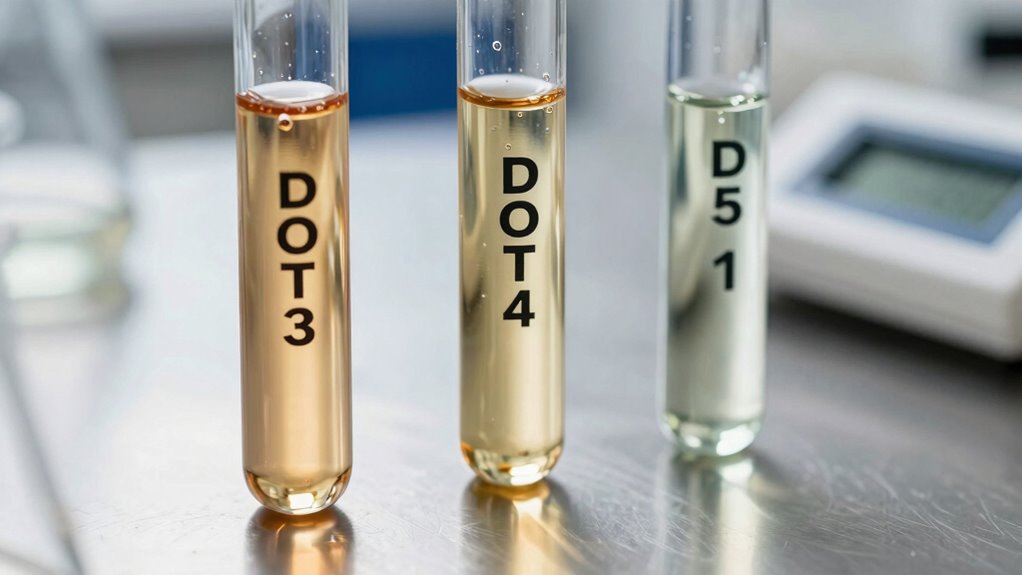
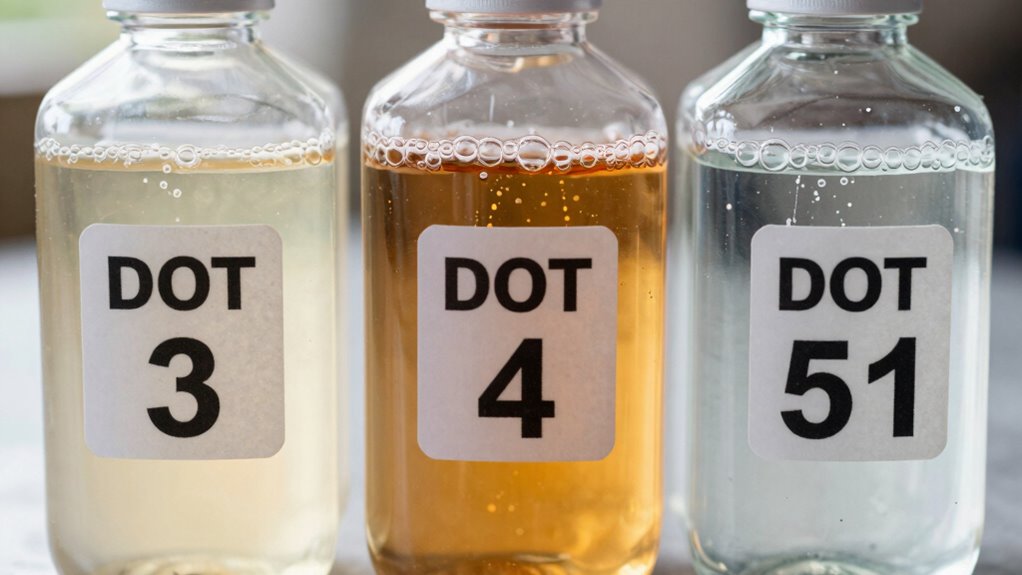
When comparing DOT 3, DOT 4, and DOT 5.1 brake fluids, the key difference lies in their boiling points. DOT 5.1 has the highest dry boiling point at around 518°F, making it best for high-performance driving. DOT 4 follows at about 446°F, and DOT 3 has a lower boiling point at 401°F. Choosing the right fluid depends on your driving style and vehicle needs—continue exploring to find the best fit.
Key Takeaways
- DOT 5.1 has the highest dry boiling point (≥518°F), followed by DOT 4 (≥446°F), then DOT 3 (≥401°F).
- Higher boiling points reduce vapor lock risk and improve brake performance under extreme heat.
- DOT 3 and DOT 4 are suitable for daily driving; DOT 5.1 is better for high-performance or spirited driving.
- Wet boiling points are lower than dry points; choosing higher-rated fluids offers better safety margins.
- Compatibility and manufacturer recommendations should guide the selection, not just boiling point ratings.

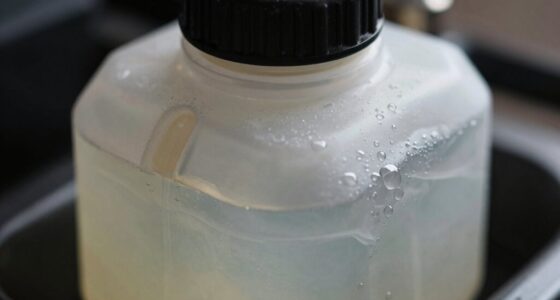
Prestone AS401 DOT 3 Synthetic Brake Fluid – 32 oz.
Provides an extra margin of safety in extreme braking conditions (packaging may vary)
As an affiliate, we earn on qualifying purchases.
As an affiliate, we earn on qualifying purchases.
Why Boiling Points Matter When Choosing Brake Fluids
Boiling points are critical when choosing brake fluids because they determine how well the fluid can resist vaporization under heat. When brakes are applied, friction generates intense heat, which can cause the fluid to vaporize if its boiling point is too low. Vaporized brake fluid creates air pockets in the system, leading to spongy brakes and reduced stopping power. Using a fluid with a high boiling point guarantees it remains liquid even under extreme temperatures, maintaining consistent brake performance. This is especially important in high-demand situations like spirited driving or towing, where heat buildup is more intense. Selecting a brake fluid with an adequate boiling point helps prevent vapor lock, keep your braking system reliable, and ensure safety during demanding driving conditions. Additionally, understanding free floating systems can help you choose the right brake fluid that suits your vehicle’s design and performance needs.

Valvoline DOT 3 & 4 Synthetic Brake Fluid with High Boiling Point, Corrosion Protection, Vapor Lock Resistance, Compatible with ABS, Disc and Drum Brake Systems, 12oz
Ideal for hydraulic and disc brakes
As an affiliate, we earn on qualifying purchases.
As an affiliate, we earn on qualifying purchases.
Which Brake Fluid Has the Highest Boiling Point? DOT 3, DOT 4, or DOT 5.1?
Among the brake fluids, DOT 5.1 has the highest boiling point, making it ideal for demanding applications. Its dry boiling point is at least 518°F, far exceeding DOT 3 and DOT 4. This means it can withstand higher temperatures without vaporizing, reducing brake fade during intense driving. Additionally, exploring content formats can help in understanding how different formulations impact performance. – DOT 4’s dry boiling point is at least 446°F, higher than DOT 3 but lower than DOT 5.1. – DOT 3’s dry boiling point starts at 401°F, making it suitable for everyday driving but less heat-resistant. – The wet boiling point, which accounts for moisture, narrows these gaps but DOT 5.1 remains the leader overall. This high boiling point makes DOT 5.1 the top choice for high-performance or heavy-duty use, especially in racing or mountainous terrains.
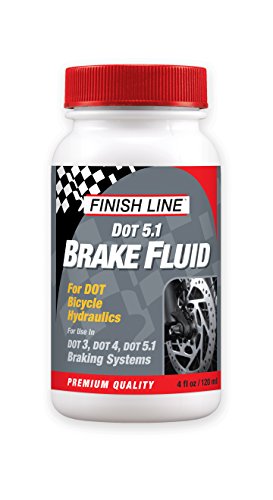
Finish Line High Performance DOT 5.1 Bicycle Brake Fluid – Premium Low Viscosity Hydraulic Disc Brake Fluid for Superior Lever Response and Consistent Performance – 4oz Bottle
Engineered for Bicycles: Specifically formulated for use in all hydraulic disc brake systems
As an affiliate, we earn on qualifying purchases.
As an affiliate, we earn on qualifying purchases.
How to Pick the Best Brake Fluid for Your Driving Style
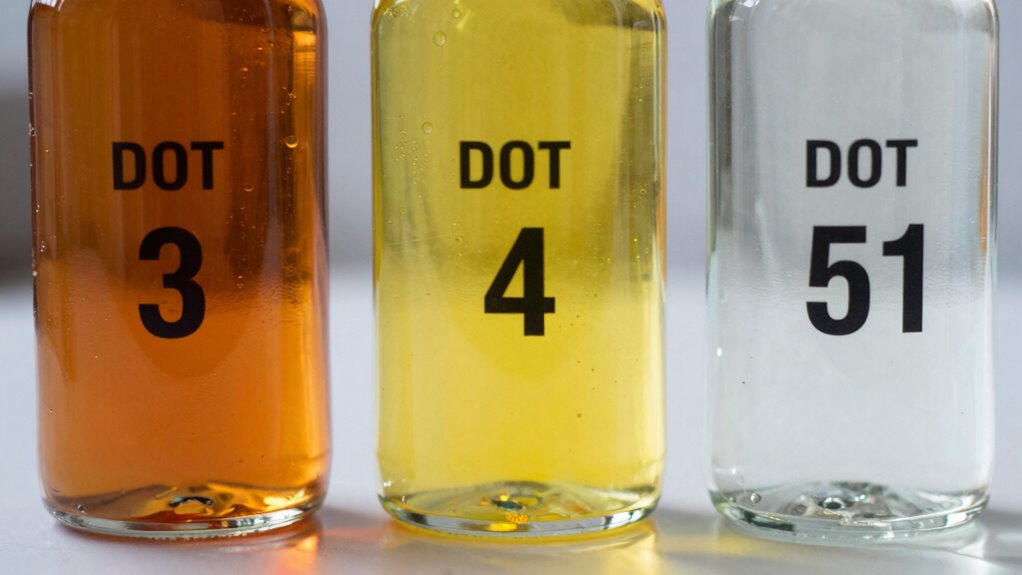
Choosing the right brake fluid depends on your driving style and the conditions you typically encounter. If you mainly drive in urban settings with moderate braking, DOT 3 or DOT 4 should suffice. They handle everyday use and are economical options. For spirited driving or frequent braking, like on mountain roads or during track days, opt for DOT 4 or DOT 5.1 with higher boiling points to prevent vapor lock. If you race or push your vehicle hard, consider high-performance fluids like DOT 5.1 or specialized racing fluids with even higher boiling points. Also, check your vehicle’s manual for manufacturer recommendations. Remember, using the correct fluid guarantees top-notch braking performance and safety, especially under demanding conditions. Regularly inspect and replace your brake fluid to maintain peak performance. Additionally, understanding the boiling points of different brake fluids is crucial for selecting the appropriate type based on your driving conditions.

DEDC Universal Auto Brake Fluid Extractor, Power Steering Oil Change Replacement Tool, Brake and Clutch Fluid Drained Bleeder Tool Equipment Kit for Car Motorcycle
Premium Material: made up of premium plastic bottle, 2m silicone hose, metal shut off valve and some parts….
As an affiliate, we earn on qualifying purchases.
As an affiliate, we earn on qualifying purchases.
Frequently Asked Questions
Can DOT 5 Silicone Brake Fluid Be Mixed With Glycol-Based Fluids Safely?
You shouldn’t mix DOT 5 silicone brake fluid with glycol-based fluids. Silicone-based DOT 5 is hydrophobic and incompatible with glycol fluids like DOT 3, 4, or 5.1. Mixing them can cause seal damage, reduce brake performance, and lead to system failure. Always stick to the specified brake fluid type for your vehicle, and if you need to switch, fully flush the system first to avoid contamination.
How Does Moisture Absorption Affect the Boiling Point Over Time?
Moisture absorption lowers your brake fluid’s boiling point over time, making it less resistant to heat. As glycol-based fluids like DOT 3, 4, and 5.1 absorb water, their wet boiling points decrease, risking vapor lock and brake failure under high temperatures. You need to flush and replace your brake fluid regularly to maintain peak performance, especially if your vehicle operates under demanding conditions or in humid environments.
Is a Higher Boiling Point Always Better for Street Driving?
A higher boiling point isn’t always better for street driving. If you primarily use your vehicle on the street, a fluid with a high wet boiling point, like DOT 4 or DOT 5.1, provides enough heat resistance during normal use. However, excessively high boiling points are more critical in racing or heavy-duty conditions. For everyday driving, choose a fluid that balances performance with compatibility and moisture management.
What Are the Risks of Using a Brake Fluid With a Lower Boiling Point?
Using a brake fluid with a lower boiling point risks vapor lock, which can cause your brake pedal to feel spongy or go to the floor. When braking under high heat, such as downhill driving or heavy braking, the fluid can vaporize, reducing braking effectiveness. This increases your risk of accidents. Consequently, always choose a brake fluid with a boiling point suitable for your driving conditions to guarantee safety.
How Do Boiling Points Impact Brake Fade During Extended Braking?
Imagine your brake system as a delicate dance—higher boiling points keep that dance smooth during extended stops. When brake fluid heats up beyond its boiling point, it produces vapor, causing brake fade, like a dancer losing rhythm. Using fluids with higher boiling points resists vapor formation longer, maintaining pedal feel and stopping power. So, selecting the right fluid guarantees your brake performance stays steady, even under intense braking conditions.
Conclusion
Choosing the right brake fluid is like selecting the foundation of a sturdy bridge—you want strength and reliability beneath your feet. DOT 3, DOT 4, and DOT 5.1 each symbolize different levels of resilience, mirroring your driving style and needs. Remember, the true value isn’t in marketing claims but in understanding what each fluid offers. When you pick wisely, you’re building trust and safety into every journey, ensuring your vehicle’s heart keeps beating steady and true.